






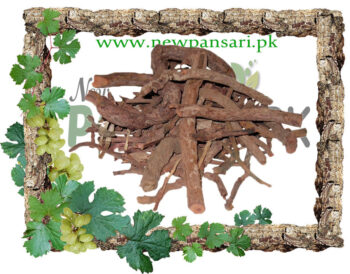
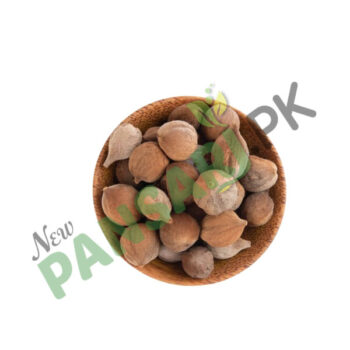
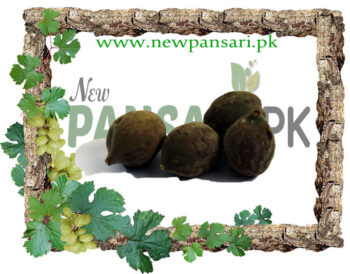
- DigestionRespiratory
- HealthSkin & Hair
- Heart & Liver
- Antioxidant & Anti-inflammatory
- Triphala Ingredient
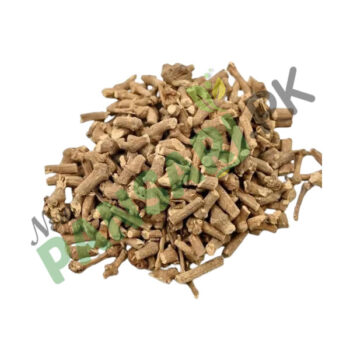
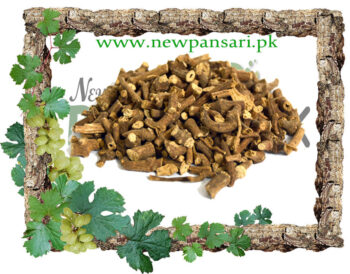
Elephant Teeth Hathi ke dant ہاتھی کے دانت Elephantopus scaber 100% Pure
Price range: ₨750.00 through ₨5,050.00
21 sold in last 9 hours
Hurry! Over 12 people have this in their carts
- Stomach issues – mild stomach pain, diarrhea
- Fever and malaria support (used alongside other herbs)
- Inflammation & body pains
- Wound cleaning (external use)
- General body cleansing (detox-like use in traditional practice)
... people are viewing this right now
Elephant Teeth (Ivory Tusks): History, Structure, and Conservation Importance
Elephant Teeth, commonly referred to as Hathi Ke Dant (ہاتھی کے دانت), are among the most distinctive anatomical features of elephants. These tusks are actually elongated incisor teeth that continue growing throughout much of an elephant’s life. Found in both the African and Asian elephant species, tusks have played an important role in elephant behavior, survival, and ecological adaptation for thousands of years.
Today, elephant tusks are widely studied by wildlife researchers, conservationists, zoologists, and students interested in animal biology
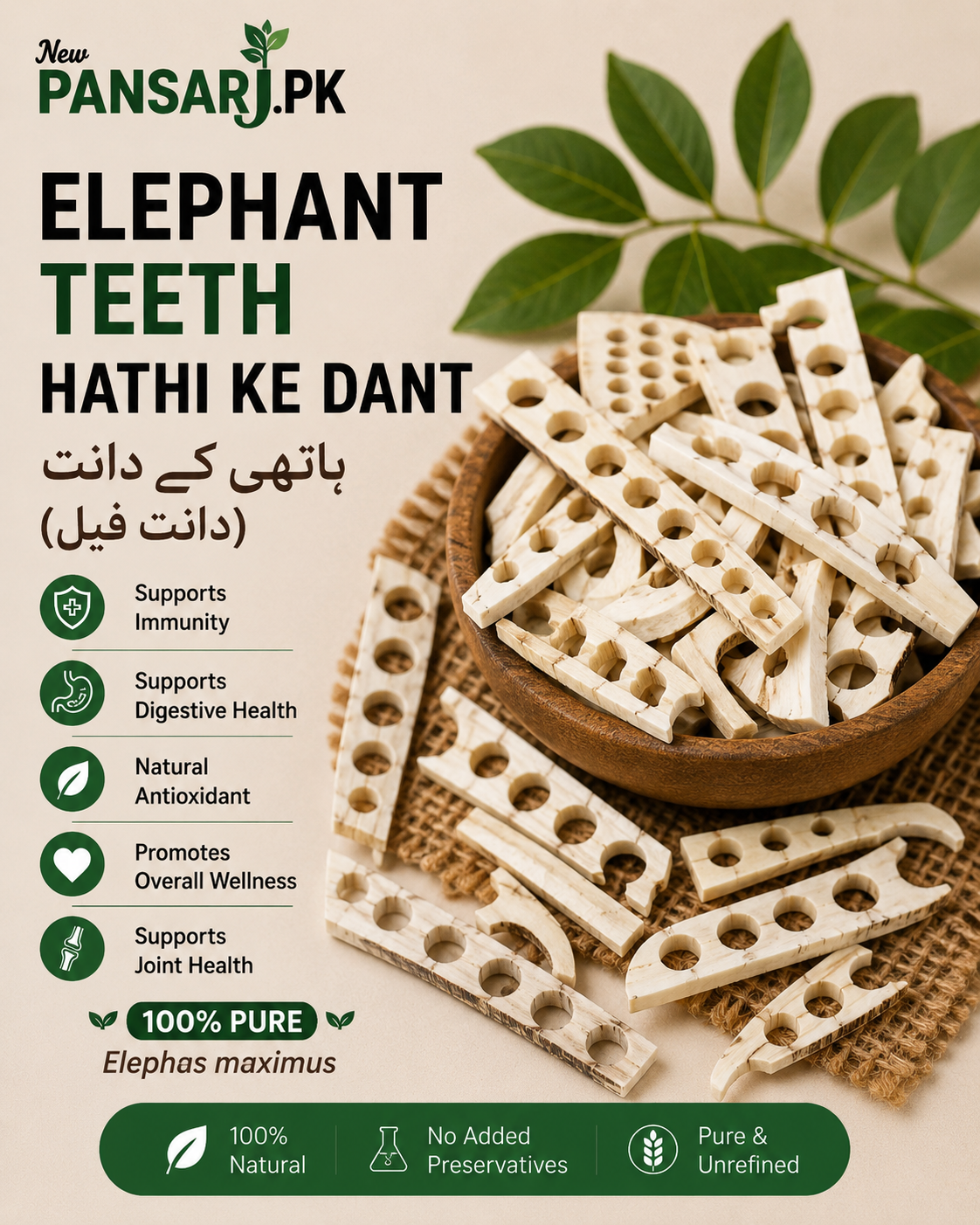
and natural history. Due to international wildlife protection efforts, elephant tusks are primarily discussed in educational, scientific, historical, and conservation contexts.
What Are Elephant Tusks?
Elephant tusks are modified upper incisor teeth composed mainly of dentine, a hard tissue commonly known as ivory. Unlike most mammalian teeth, elephant tusks continue growing throughout the animal’s lifetime. They emerge during early development and gradually increase in length and thickness as the elephant ages.
Tusks are used by elephants for a variety of natural purposes, including:
- Digging for water and minerals
- Stripping bark from trees
- Moving obstacles
- Lifting and carrying objects
- Defense against predators
- Social interactions within elephant groups
These functions make tusks an important survival tool in the wild.
Physical Characteristics of Elephant Teeth
Elephant tusks possess several unique characteristics:
Continuous Growth
Unlike ordinary teeth, tusks grow continuously throughout an elephant’s life. Older elephants generally have larger and heavier tusks.
Ivory Composition
Tusks consist primarily of dentine, which forms the material commonly known as ivory. This dense structure provides strength and durability.
Natural Variations
Each tusk differs in:
- Length
- Shape
- Weight
- Curvature
- Color
These differences are influenced by genetics, age, diet, environment, and species.
Species Differences
African elephants generally develop larger tusks than Asian elephants, although variations occur among individuals.
Importance of Tusks in Elephant Ecology
Tusks contribute significantly to the ecological role of elephants. By digging water holes, breaking branches, and modifying vegetation, elephants help shape ecosystems and create resources used by many other animal species.
Wildlife experts often describe elephants as “ecosystem engineers” because their activities influence forests, grasslands, and water availability for numerous plants and animals.
Historical Significance
Throughout history, elephant tusks have appeared in various cultures, artistic traditions, and historical records. Ancient civilizations documented elephants and their tusks in artwork, literature, architecture, and folklore.
Today, museums, educational institutions, and natural history collections preserve historical elephant-related artifacts for scientific and cultural study.
Modern Conservation Efforts
Elephants face numerous challenges, including:
- Habitat loss
- Human-wildlife conflict
- Climate change
- Illegal poaching
Because of these threats, international conservation organizations work to protect elephant populations through habitat preservation, anti-poaching initiatives, research programs, and public education campaigns.
Many countries enforce strict regulations governing elephant ivory and related products to support wildlife conservation and biodiversity protection.
Educational and Scientific Value
Elephant tusks are valuable for scientific research in areas such as:
- Wildlife biology
- Zoology
- Ecology
- Evolutionary studies
- Conservation science
- Veterinary research
Researchers examine tusks to understand elephant growth patterns, migration history, environmental conditions, and population health.
Why Are Elephants Important?
Elephants are among the world’s most iconic animals and play a vital role in maintaining ecological balance. Their movements help disperse seeds, create pathways through vegetation, and support biodiversity across large landscapes.
Protecting elephants contributes to the preservation of entire ecosystems and benefits countless other species that share their habitats.
Fascinating Facts About Elephant Tusks
- Tusks are actually modified incisor teeth.
- Elephant tusks can continue growing throughout life.
- Some elephants naturally have smaller tusks or no tusks at all.
- Tusks can weigh several kilograms depending on age and species.
- Elephants often show a preference for using one tusk more than the other, similar to human handedness.
- Tusks help elephants access food and water in challenging environments.
Conservation Awareness
Modern wildlife conservation emphasizes the importance of protecting elephants in their natural habitats. Educational awareness helps communities understand the ecological value of elephants and the need for sustainable conservation practices.
Through conservation programs, habitat management, and scientific research, organizations worldwide continue working to ensure the survival of elephant populations for future generations.
Conclusion
Elephant Teeth (Hathi Ke Dant – ہاتھی کے دانت) are remarkable biological structures that play an essential role in the lives of elephants. Beyond their physical appearance, tusks contribute to survival, ecosystem health, scientific research, and wildlife education. Understanding the significance of elephant tusks helps promote greater appreciation for these magnificent animals and supports ongoing conservation efforts aimed at protecting one of the world’s most important wildlife species.
| Form | Whole ( ثابت ), Grounded ( کٹی ہوی ), Powder ( پسا ہوا ) |
|---|---|
| Quantity | 10GM, 50GM, 100GM |
Related Products
White Mica Abrak Safeed 100% Natural Mineral
Price range: ₨150.00 through ₨1,050.00
- Supports bone and joint health
- aids digestion
- boosts immunity
- promotes skin health
- reduces inflammation
- natural detoxifier
- enhances overall wellness
Arugula Seeds (Tukhm-e-Tara Mera) Eruca sativa 100% Pure
Price range: ₨60.00 through ₨700.00
- Rich in nutrients: Vitamins, minerals, and antioxidants.
- Good for digestion: High in fiber.
- Heart health: Helps blood flow and lowers blood pressure.
- Anti-inflammatory: Reduces inflammation.
- Strong bones: Contains calcium and vitamin K.
- Weight management: Low calorie, keeps you full.
- Healthy skin & hair: Supports repair and growth.
Long Pepper Root (Peeplamool) 100% Pure Piper longum
Price range: ₨170.00 through ₨1,050.00
- Boosts digestion
- improves appetite
- relieves cold and cough
- supports respiratory health
- reduces inflammation
- enhances metabolism
- natural antioxidant
Yellow Sulfur (Amla Saar Gandhak) 100% Pure
Price range: ₨180.00 through ₨1,300.00
- Supports skin health
- aids digestion
- boosts immunity
- promotes liver and kidney function
- reduces inflammation
- natural detoxifier
- enhances overall wellness
Barley (Joo) Hordeum vulgare 100% Pure
Price range: ₨150.00 through ₨750.00
- Good for digestion – helps your stomach and bowels.
- Lowers cholesterol – supports heart health.
- Controls blood sugar – slows sugar absorption.
- Helps with weight – keeps you full longer.
- Hydrating & refreshing – caffeine-free and good for detox.
- Rich in nutrients – contains vitamins and minerals for bones and skin.
Almond Straw (Badam Ki Khali) 100% Natural Prunus dulcis
Price range: ₨100.00 through ₨800.00
- May help heart and brain health
- Supports skin, teeth, and bones
- Could help control blood sugar and weight
- May aid digestion
- Can improve soil when used as compost
- Sometimes used as animal feed
Wall Flower Seeds Tukhm-e-Todri Surkh 100% Pure Cheiranthus cheiri
Price range: ₨110.00 through ₨910.00
- Supports digestion
- boosts immunity
- aids respiratory health
- reduces inflammation
- promotes detoxification
- enhances overall wellness
- natural antioxidant
Vetiver (Khus) 100% Pure Natural Chrysopogon zizanioides Root
Price range: ₨120.00 through ₨800.00
- Reduces stress and anxiety
- promotes relaxation
- cools the body
- improves sleep quality
- supports skin health
- boosts immunity
- natural detoxifier
- enhances overall wellness
Alkanet Root || Majeeth مجیٹھ Alkanna tinctoria 100% Pure
Price range: ₨150.00 through ₨700.00
- Helps skin heal – good for cuts, burns, and wounds.
- Reduces skin inflammation – soothes redness and irritation.
- Fights microbes – can help prevent minor infections.
- Rich in antioxidants – protects skin from damage.
- Natural dye – used to color cosmetics and soaps.
Beleric (Beherra) | Baheda Beleric Myrobalan | Bastard Myrobalan 100%
Price range: ₨100.00 through ₨850.00


Acacia Tree Bark (Chaal Kikar) babul bark 100% Pure Vachellia nilotica Acacia nilotica
Price range: ₨100.00 through ₨500.00
- Stops bleeding & heals wounds – due to its astringent properties.
- Helps digestion – useful for diarrhea and stomach issues.
- Good for gums and teeth – strengthens gums.
- Anti-inflammatory & antimicrobial – helps with skin infections.
- Industrial uses – used in tanning leather, making dyes, and as firewood.
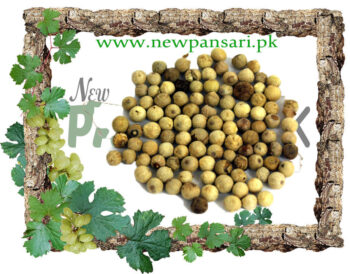
White Pepper (Safed Mirch) 100% Pure Natural Whole Spice
Price range: ₨70.00 through ₨1,550.00
- Aids digestion
- improves metabolism
- boosts immunity
- supports respiratory health
- reduces inflammation
- promotes heart health
- natural antioxidant
- enhances overall wellness
Reviews
There are no reviews yet.