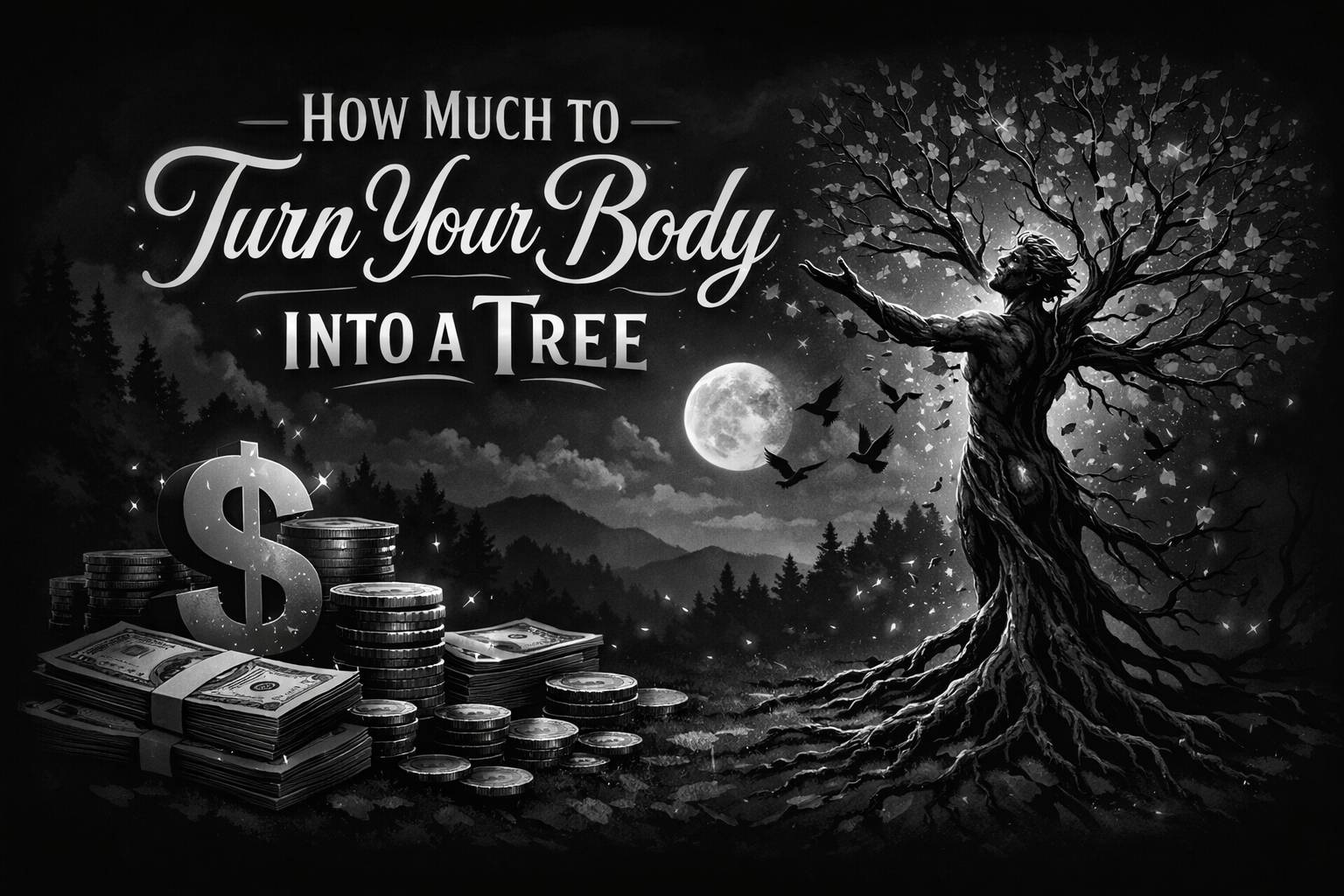
The phrase “turn your body into a tree” sounds startling at first—almost mythic. Are we talking about fantasy, art, fashion, eco-memorials, or symbolism? In practice, people usually mean one of several safe, non-literal interpretations: using body art to look tree-like, creating an immersive costume or performance piece, commissioning a symbolic portrait or sculpture, or planning a nature-centered memorial that represents renewal and growth. Each path carries its own costs, timelines, and ethical considerations.
This page breaks down what people actually mean, how much each approach typically costs, and what factors influence the price, all without promoting unsafe or irreversible actions. Think of this as a practical, realistic guide to the idea of becoming a tree—artistically, symbolically, or ceremonially.
Understanding the Idea: What “Turning Your Body Into a Tree” Usually Means
Before talking money, it’s important to clarify intent. The phrase can point to several very different projects:
- Body art that visually transforms skin into bark, roots, or leaves
- Costume design or cosplay that makes the wearer look like a tree
- Performance art or installation using materials and makeup
- Symbolic memorials, where a tree represents a person’s life or legacy
- Digital or sculptural art depicting a human-tree hybrid
Each option exists on a spectrum—from temporary and playful to permanent and deeply meaningful—and that spectrum drives the cost.
Option 1: Tree-Inspired Body Art (Paint, Makeup, and Temporary Designs)
What This Involves
Temporary body paint or theatrical makeup can transform a person into a tree for a photo shoot, stage performance, festival, or short film. Artists use airbrush techniques, textured paints, shading, and prosthetics (like latex bark overlays) to create realism.
Typical Costs
- Basic body paint (partial coverage): $100–$300
- Full-body professional paint: $400–$1,000
- High-detail effects with prosthetics: $1,200–$3,000
Prices depend on artist reputation, time required, and whether prosthetics are custom-made.
Cost Influencers
- Duration of wear (longer wear needs higher-grade materials)
- Detail level (simple vines vs. hyper-realistic bark texture)
- Event type (stage, film, editorial shoots cost more)
Why People Choose This
It’s non-permanent, expressive, and safe—ideal for one-time transformations or storytelling through visuals.
Option 2: Tree Tattoos and Permanent Body Art
What This Involves
Some people interpret “turning your body into a tree” as covering parts of the body with tree imagery—roots wrapping around limbs, branches extending along the spine, or leaves integrating with anatomy.
This is not about literal transformation but symbolism: growth, resilience, ancestry, or connection to nature.
Typical Costs
- Small tree tattoo: $150–$500
- Medium design (arm, calf, shoulder): $800–$2,500
- Large-scale work (back, full sleeve): $4,000–$15,000+
Large projects are usually done over multiple sessions.
Cost Influencers
- Artist expertise and style
- Complexity and shading
- Geographic location
- Number of sessions required
Long-Term Considerations
- Touch-ups every 5–10 years may add to lifetime cost
- Aftercare products and time off work
Option 3: Tree Costumes and Wearable Art
What This Involves
Costume designers and wearable-art creators can build tree-like outfits using fabric, foam, recycled materials, or lightweight frames. These are common in theater, festivals, parades, and environmental activism.
Typical Costs
- DIY costume: $50–$300
- Mid-range custom costume: $500–$2,000
- High-end wearable art piece: $3,000–$10,000+
Cost Influencers
- Material quality (natural fibers vs. synthetics)
- Structural complexity
- Whether the costume is reusable
Why This Appeals
It offers dramatic impact without permanence and can be reused or adapted for future performances.
Option 4: Performance Art and Conceptual Projects
What This Involves
In performance art, “turning into a tree” might be expressed through movement, costume, staging, and symbolism. The artist’s body becomes a medium representing ecological themes, climate change, or human-nature relationships.
Typical Costs
- Small self-funded performance: $500–$2,000
- Gallery-supported project: $3,000–$15,000
- Large installation with grants: $20,000–$100,000+
Cost Influencers
- Venue fees
- Lighting, sound, and documentation
- Collaborators (musicians, designers, videographers)
Funding Notes
Many performance artists offset costs through grants, residencies, or sponsorships rather than personal spending.
Option 5: Sculptural or Digital Representations of the Body as a Tree
What This Involves
Instead of altering the body itself, some people commission sculptures, paintings, or digital art that merge their likeness with tree forms. This can be deeply personal and avoids physical alteration altogether.
Typical Costs
- Digital illustration: $200–$1,500
- Traditional painting: $1,000–$8,000
- Custom sculpture: $5,000–$50,000+
Cost Influencers
- Artist reputation
- Medium and size
- Level of realism
This option is popular for legacies, gifts, or eco-themed storytelling.
Option 6: Nature-Centered Memorials and Symbolic Tree Projects
What This Involves
Some people use “turn my body into a tree” metaphorically, meaning creating a living symbol—a tree planted in someone’s honor, or a memorial that represents continuity with nature.
Typical Costs
- Tree planting in honor of a person: $50–$500
- Memorial tree with plaque: $500–$5,000
- Land conservation or grove dedication: $10,000–$100,000+
Cost Influencers
- Location and land rights
- Type and maturity of tree
- Ongoing maintenance
This approach focuses on symbolism, sustainability, and remembrance.
Why Costs Vary So Widely
The price of “turning your body into a tree” ranges from under $100 to six figures because it depends on:
- Permanence (temporary vs. lifelong representation)
- Scale (small design vs. immersive environment)
- Craft (amateur vs. master artist)
- Purpose (personal expression vs. public display)
In many cases, time and expertise matter more than materials.
Emotional and Cultural Value Beyond Money
People don’t pursue these projects for novelty alone. Common motivations include:
- Expressing identity or values
- Honoring ancestry or loss
- Advocating for environmental causes
- Exploring art, fantasy, or transformation
Because of this, many say the emotional return outweighs the financial cost.
Budgeting Wisely for Your Vision
If you’re exploring this idea creatively, consider:
- Start small with temporary or digital formats
- Consult multiple artists for quotes and concepts
- Clarify intent before committing money
- Plan long-term costs, not just the upfront price
A clear vision can save thousands.
Ethical and Safety Considerations
It’s essential to approach any body-centered concept responsibly:
- Avoid unsafe or irreversible practices
- Choose licensed, reputable professionals
- Respect your physical and emotional well-being
- Remember that symbolism doesn’t require harm
Powerful transformation can happen through art and imagination alone.
So, How Much Does It Really Cost?
Here’s a simplified overview:
- Temporary transformation: $100–$3,000
- Permanent body art: $1,000–$15,000+
- Costumes and wearable art: $300–$10,000+
- Fine art or sculpture: $200–$50,000+
- Symbolic tree memorials: $50–$100,000+
There is no single price—only a range shaped by meaning, scale, and craft.
Final Thoughts: Becoming a Tree Without Losing Yourself
“Turning your body into a tree” is ultimately a poetic idea. Whether expressed through paint, ink, fabric, performance, or living symbols, it’s about connection—to nature, to stories, to growth over time.
The most meaningful versions don’t chase extremes. They choose thoughtful expression, skilled artistry, and personal truth. And in that sense, the real cost isn’t measured only in money, but in intention, care, and creativity.