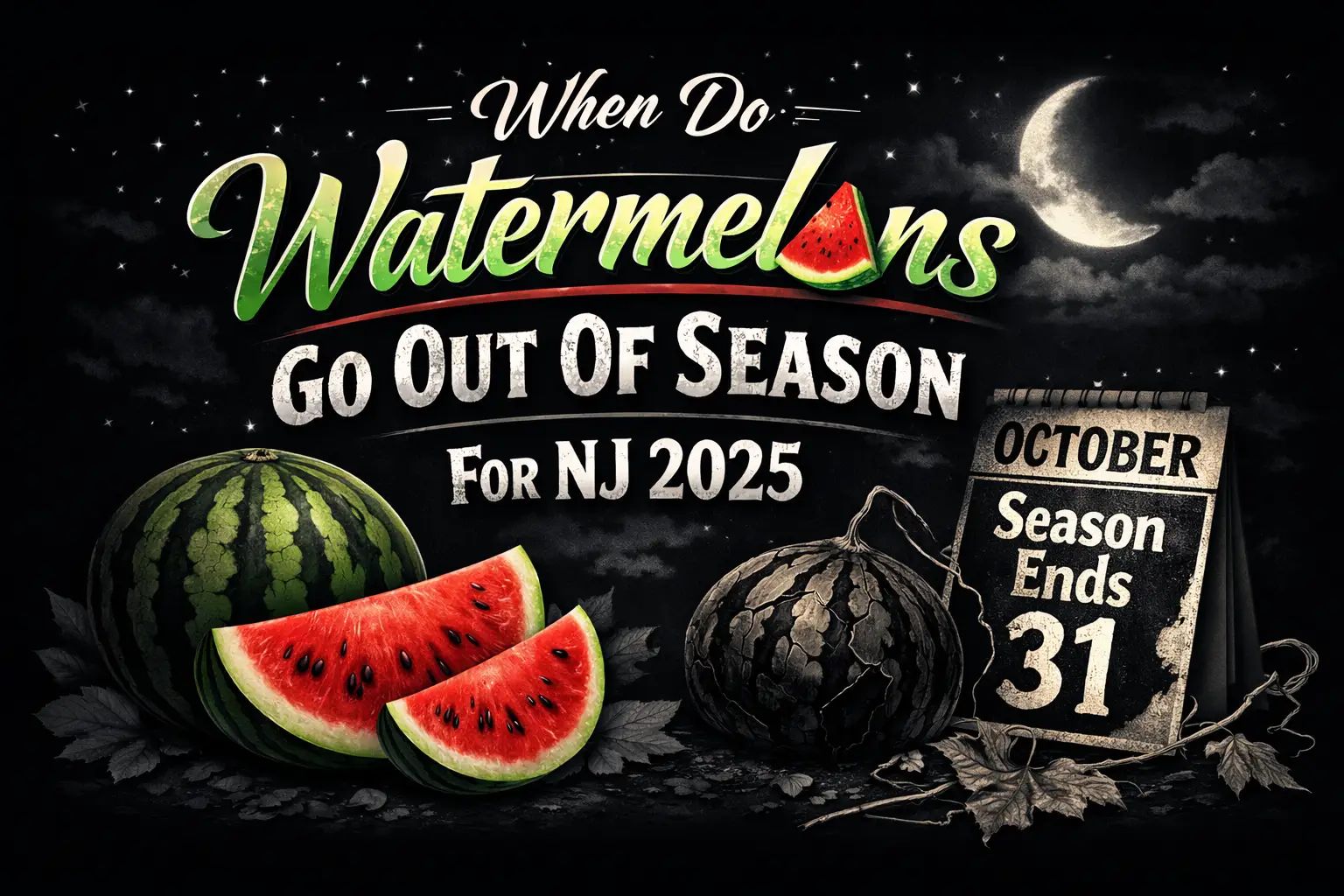
Watermelon is one of the quintessential tastes of summer in the United States. Its vibrant red flesh, hydrating sweetness, and refreshing crispness make it a summer staple — ideal for picnics, cookouts, farmers markets, and backyard gardens alike. But in New Jersey, as in many temperate regions, watermelon is a seasonal fruit. That means it thrives under specific climate conditions, and there comes a point in the yearly cycle when locally grown melons are no longer available — the watermelon season ends and the fruit goes “out of season.”
Understanding when watermelons go out of season in New Jersey in 2025 requires insight into how watermelons grow, how the New Jersey climate affects watermelon cultivation, and how commercial and home garden harvests fit into the seasonal calendar.
The Seasonal Nature of Watermelons
Watermelons (Citrullus lanatus) are warm-season crops that require long periods of heat, abundant sunshine, and relatively frost-free conditions to grow and mature. Unlike many fruits that can ripen after harvesting, watermelon does not continue to sweeten once picked — so timing is crucial. In practical terms, this means watermelon production and peak freshness are tied closely to warm months in temperate climates like New Jersey.
A typical watermelon plant needs between 70 to 100 days from planting to harvest, depending on variety and growing conditions.
Understanding the New Jersey Growing Calendar
Before we talk about when watermelons go out of season, we should first understand the New Jersey growing calendar — that is, when watermelon plants are planted, grow, and are harvested locally.
When Watermelons Are Planted
In New Jersey, watermelons are planted relatively late compared to other warm-season crops, due to the need for consistent warm soil temperatures (at least 70°F). Planting too early risks frost damage and poor germination.
Most growers plant watermelons or transplant seedlings between late May and early June, after the last frost date has passed and soils have warmed sufficiently.
For example:
- Indoor seeds can be started between late April and early May, then transplanted outside once frost threat is gone.
- Direct sowing into outdoor fields typically happens in early June.
From this planting window, growers can expect mature fruit to develop by late July through August and into September — depending on the length of the season and which watermelon varieties are used.
Typical Watermelon Harvest Dates in New Jersey
Given the growing window, watermelon harvest in New Jersey usually falls into a few overlapping phases:
Early Harvest Period
Some early or smaller varieties (for example, ‘Sugar Baby’) may be ready as early as late July.
Peak Harvest Season
The bulk of the watermelon harvest typically occurs in August — this is by far the most abundant period for local watermelon availability at farms, markets, and roadside stands.
Late Harvest
In good weather years and with long-season varieties, harvest can extend into September. In New Jersey’s climate, fields may still be producing harvested fruit well into early fall before cooler weather slows vine growth dramatically.
From various agricultural calendars, watermelon is often listed alongside other summer crops like squash and eggplants, which are abundant in August through September.
What “Out of Season” Means
When we say watermelons are “out of season,” we are referring to the time when locally grown, field-fresh watermelons are no longer available — primarily because the weather is too cool for cultivation and the harvest season has passed. It does not necessarily mean watermelons are completely unavailable in markets — they may still be imported from warmer regions — but they are no longer moving out of New Jersey farms at peak freshness.
Outdoor Cultivation Deadline
In New Jersey’s climate, warm-season crops like watermelon cannot survive frost. Once average temperatures begin to drop consistently in late September and October, the vines start to die back, and fields are pulled out. By this point, harvest is finished or rapidly winding down.
Therefore, watermelons grown within New Jersey itself go out of season typically by late September to early October — when daytime temperatures cool and night frosts become increasingly likely.
Why the Watermelon Season Ends When It Does
Several environmental and biological factors determine why watermelons go out of season when they do in New Jersey:
Sensitivity to Frost and Cool Weather
Watermelon vines are highly sensitive to temperatures below about 50°F. Once nights turn cool in late fall, the vines cannot continue growing, fruit stops ripening, and melons left on vines are at risk of frost damage.
Sunlight and Heat Requirements
Watermelons require full sun and warm temperatures (generally between 70°F and 90°F) to develop sugars and grow to full size. Shorter days and lower sun angles in fall slow growth and reduce sugar production, which results in poor quality fruit if harvested past its peak.
Daylight and Growing Degree Days
Because watermelons rely on cumulative heat units — known as growing degree days — to ripen, cooler fall temperatures simply do not provide enough warmth for late-season melons to mature. This biological reality essentially sets a natural deadline for the watermelon season.
Farmers Market and Retail Availability
Even if watermelon plants have finished producing locally, watermelons may remain available in supermarkets or grocery stores — but these melons are most often sourced from outside New Jersey (from states like Florida, Texas, Georgia, and even international imports).
Imported melons may be available year-round, but they often:
- Have longer travel times (affecting freshness)
- May be harvested earlier to survive transport (affecting flavor)
- Often arrive from regions that can grow watermelons later or earlier in the year due to warmer climates
This is why, although watermelons can be bought outside of summer in retail settings, they are usually best — in flavor, texture, and price — during the local harvest season: mid-summer through early autumn.
How to Tell Watermelons Are Truly Out of Season
Here are practical signals that watermelon season has ended in New Jersey:
Pricing and Supply Increase
After the local season ends, watermelon prices often increase because supply from nearby fields declines. Retailers may still offer fruit, but at higher cost or with more limited variety.
Quality and Flavor Drop
Out-of-season watermelons often do not have the same sweetness and texture as field-fresh, locally harvested melons. Because they may be harvested early for shipping, their sugar development can be lower.
Farmers Markets Stop Offering Watermelons
Local markets and roadside produce stands — the most reliable sources of truly local watermelon — tend to stop listing watermelon as a weekly item by late September. Seeing fewer or no watermelon stands is a clear sign the season is done.
Varietal Differences: Short-Season vs Long-Season Watermelons
Not all watermelons have the same growth timeline. Some are bred to mature more quickly — sometimes in as little as 70 days — while others may take 90 days or more to reach maturity.
Gardeners and small growers sometimes choose early-maturing varieties (like Sugar Baby) so they can harvest and enjoy melons earlier in the season. Larger varieties (such as Black Diamond or Jubilee) may take longer but yield bigger fruits.
These varietal differences can slightly alter the exact window of availability — but all New Jersey-grown watermelons will still finish by early autumn at the latest.
Backyard Gardeners: What 2025 Means for You
For home gardeners in New Jersey who want to grow watermelons in 2025, here is a quick seasonal plan:
Spring (April–May):
- Start seeds indoors or prepare soil once frost danger passes.
Early Summer (June):
- Transplant seedlings and provide consistent warmth and water.
Mid–Late Summer (July–August):
- Harvest fruit once ripe — typically late July through August.
Early Autumn (September):
- Final harvests; season wraps up.
Fall (late September–October):
- Vines die back and local production is finished.
It’s worth noting that specific planting and harvest dates can vary year-to-year based on weather conditions such as a cooler or warmer summer. But even in a long, warm season, New Jersey’s climate simply cannot support watermelon production past the first frosts of fall.
The Bottom Line: When Do Watermelons Go Out of Season in NJ for 2025?
In New Jersey in 2025, the watermelon season — for local, field-fresh melons — essentially runs from **late July through September. By late September to early October, watermelons are generally considered out of season locally.
After that point:
- Farms have finished harvesting,
- Cooler weather halts fruit development, and
- Most melons found in markets are sourced from out of state or internationally.
In short:
In New Jersey, watermelons go out of native season by late September/early October 2025.
This seasonal rhythm is rooted in the physiological needs of watermelon plants and the climate rhythms of the Northeast — and while imported melons may remain available, they won’t match the quality and freshness of locally harvested fruit.