Bananas are one of the most popular fruits in the world. They are affordable, widely available, nutritious, and incredibly versatile in cooking and baking. Whether you’re making smoothies, banana bread, pancakes, or simply enjoying them as a snack, bananas are a staple in many households.
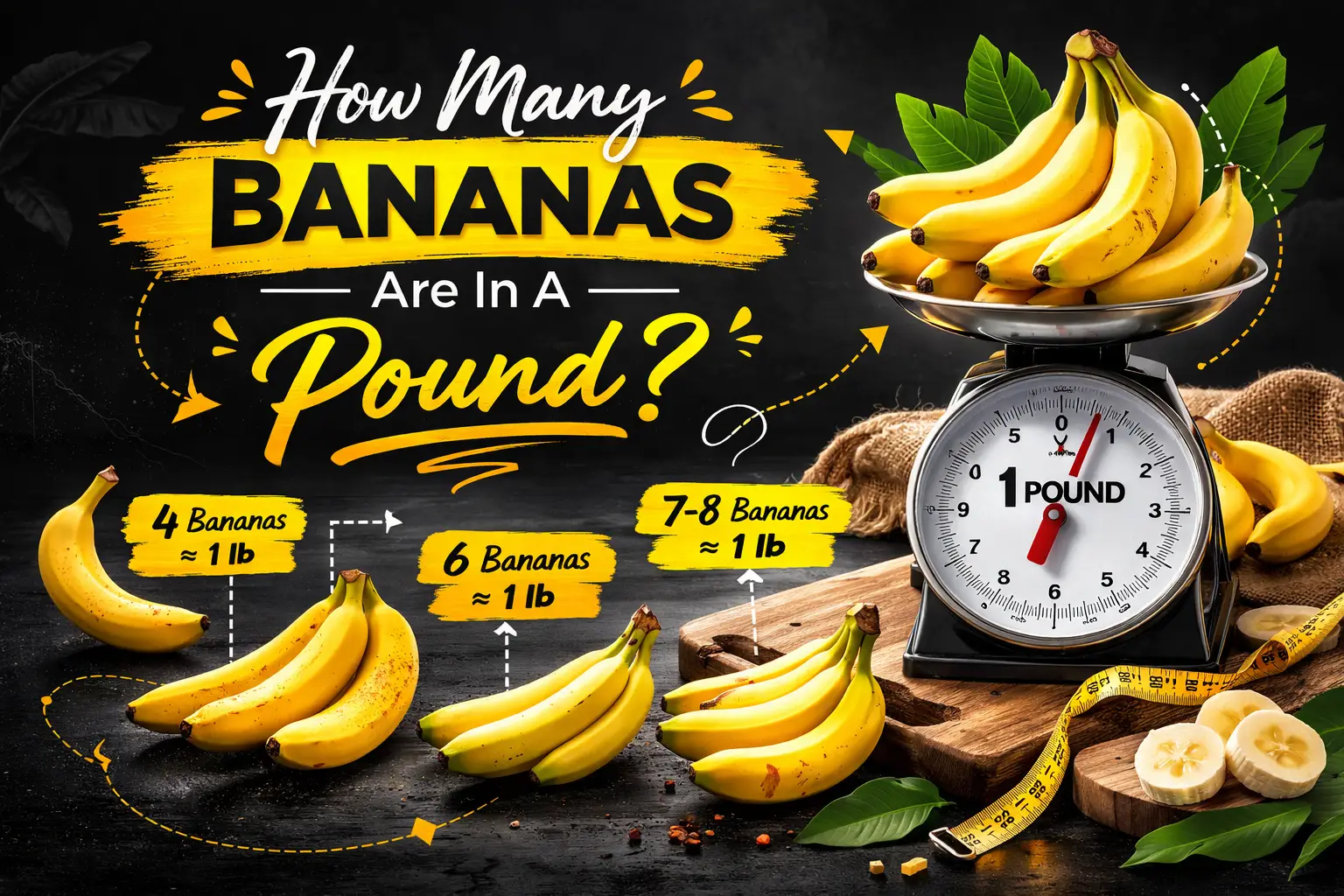
However, when following recipes or buying fruit in bulk, a common question often arises: How many bananas are in a pound?
This seemingly simple question actually has a few different answers depending on the size of the bananas, their ripeness, and whether you’re measuring them peeled or unpeeled. Understanding these factors can help you shop more accurately, follow recipes properly, and avoid food waste.
In this in-depth guide, we will explore banana weights, sizes, conversions, cooking uses, nutritional aspects, and practical tips for measuring bananas correctly.
Understanding the Average Weight of a Banana
To determine how many bananas make up a pound, we first need to understand the average weight of a single banana.
Bananas vary in size from small to extra-large. Grocery stores usually sell medium-sized bananas, which are the most common reference when discussing weight.
Here are typical banana weights:
- Small banana (6 inches or less): about 3–4 ounces
- Medium banana (7–8 inches): about 4–5 ounces
- Large banana (8–9 inches): about 5–6 ounces
- Extra-large banana (9 inches or more): about 6–7 ounces
Since 1 pound equals 16 ounces, we can estimate how many bananas are needed to reach one pound.
How Many Bananas Are in One Pound?
The number of bananas in a pound depends mainly on their size.
Here are the most common estimates:
Small bananas:
About 4–5 small bananas equal one pound.
Medium bananas:
About 3 medium bananas equal one pound.
Large bananas:
About 2–3 large bananas equal one pound.
Extra-large bananas:
About 2 bananas equal one pound.
In general, when you are shopping at a grocery store, you can assume that 3 medium bananas weigh roughly one pound.
This estimate works well for most cooking and baking purposes.
Why Banana Size Matters
Bananas are not standardized in size, which is why weight can vary significantly. Factors that influence banana size include:
- The banana variety
- Growing conditions
- Ripeness
- Harvest timing
- Packaging and sorting
For example, bananas grown in tropical regions may be larger than those grown in smaller plantations. Some varieties are naturally shorter but thicker, while others are long and slim.
Because of this variation, recipes sometimes list ingredients like “2 cups mashed bananas” instead of specifying the number of bananas.
Banana Weight With and Without Peel
Another factor that affects banana weight is the peel.
A banana peel can make up about 30–35% of the total weight of the fruit. That means the edible portion weighs less than the whole banana.
For example:
- A medium banana with peel: about 4.5 ounces
- Edible banana without peel: about 3 ounces
Using this information, one pound of bananas (with peel) provides approximately:
- 10–11 ounces of edible banana
This detail becomes important when baking or measuring ingredients.
Banana Measurements for Cooking and Baking
Many recipes require bananas in mashed or sliced form rather than whole fruit. Understanding measurement conversions can make cooking much easier.
Here are some common banana measurement equivalents:
- 1 pound of bananas = about 3 medium bananas
- 1 medium banana = about ½ cup mashed
- 2 medium bananas = about 1 cup mashed
- 3 medium bananas = about 1½ cups mashed
- 4 medium bananas = about 2 cups mashed
If a recipe calls for 1 cup mashed bananas, you typically need 2 medium bananas.
For banana bread recipes, which often require 1½ cups mashed bananas, you will usually need 3 medium bananas, which is close to one pound.
How Grocery Stores Sell Bananas
Most grocery stores sell bananas by the pound rather than by the piece. This pricing method allows customers to buy the exact quantity they need.
A typical banana bunch weighs between 1.5 and 2.5 pounds depending on the number and size of the bananas.
For example:
- A small bunch: 4 bananas (about 1.3–1.5 pounds)
- A medium bunch: 5 bananas (about 2 pounds)
- A large bunch: 6–7 bananas (about 2.5–3 pounds)
If you need one pound, simply select three medium bananas.
Why Recipes Sometimes Use Weight Instead of Quantity
Professional chefs and bakers often prefer measuring ingredients by weight rather than quantity. This approach is more accurate because fruit sizes can vary.
For example, if a recipe requires 12 ounces of banana, using a kitchen scale ensures consistent results.
Without weighing, using bananas that are too large or too small could alter the moisture level of the recipe.
This is particularly important for:
- Banana bread
- Muffins
- Pancakes
- Cakes
- Smoothies
- Desserts
Using too many bananas can make baked goods overly dense or wet.
Banana Varieties and Their Weight Differences
Not all bananas are the same. There are several varieties grown around the world, and each type has different sizes and weights.
Cavendish Bananas
Cavendish bananas are the most common type sold in supermarkets. These are the classic yellow bananas most people recognize.
Medium Cavendish bananas typically weigh about 4–5 ounces each, meaning three bananas equal roughly one pound.
Lady Finger Bananas
Lady Finger bananas are smaller and sweeter.
Because they are smaller, it may take 5–6 Lady Finger bananas to equal one pound.
Plantains
Plantains look similar to bananas but are larger and starchier. They are commonly used in cooking rather than eaten raw.
A single plantain may weigh 8–12 ounces, meaning only one or two plantains equal one pound.
Red Bananas
Red bananas are shorter but thicker than Cavendish bananas. Their weight is often similar to medium bananas, so about three red bananas may equal one pound.
Ripeness and Weight Changes
Bananas change significantly as they ripen. While the overall weight remains relatively stable, the water content and texture change.
Stages of ripeness include:
Green bananas
Firm and starchy
Yellow bananas
Sweet and ready to eat
Yellow with brown spots
Very sweet and soft
Brown bananas
Extremely soft and ideal for baking
As bananas ripen, their starch converts into sugar, making them sweeter and softer. Overripe bananas are perfect for recipes like banana bread and muffins because they mash easily and provide natural sweetness.
However, ripeness does not significantly change how many bananas equal a pound.
Nutritional Value of One Pound of Bananas
Bananas are packed with nutrients and provide many health benefits. Understanding the nutritional value of one pound of bananas can be helpful for meal planning.
Approximately one pound of bananas (about 3 medium bananas) contains:
Calories: about 300–330 calories
Carbohydrates: about 80–85 grams
Fiber: about 9 grams
Potassium: about 1,200 mg
Vitamin C: about 30 mg
Vitamin B6: about 1 mg
Bananas are also naturally fat-free and cholesterol-free.
Key Health Benefits
Bananas offer several health advantages:
Good source of potassium
Potassium helps regulate blood pressure and supports heart health.
Supports digestion
Bananas contain fiber that promotes healthy digestion.
Provides natural energy
Their natural sugars provide a quick energy boost.
Rich in vitamins
Bananas contain vitamin B6, vitamin C, and magnesium.
Because of these benefits, bananas are popular among athletes, students, and anyone needing a quick snack.
Tips for Buying Bananas by the Pound
When buying bananas, a few simple tips can help you get the right amount and avoid waste.
Check the Color
If you plan to eat bananas immediately, choose bright yellow bananas.
If you want them to last longer, choose slightly green bananas so they ripen over time.
Estimate the Weight
Remember the simple rule:
Three medium bananas ≈ one pound
This makes it easy to estimate the quantity without a scale.
Avoid Damaged Fruit
Look for bananas without large bruises, splits, or leaks.
Minor brown specks are normal and often indicate sweetness.
Storing Bananas Properly
Proper storage helps bananas stay fresh longer.
At Room Temperature
Bananas ripen best at room temperature. Avoid refrigerating them while they are still green.
In the Refrigerator
Once bananas are fully ripe, you can place them in the refrigerator to slow down further ripening. The peel may darken, but the fruit inside will remain good.
Freezing Bananas
Bananas freeze very well. Simply peel them, slice them, and store them in an airtight container.
Frozen bananas are excellent for:
- Smoothies
- Ice cream alternatives
- Baking recipes
Common Recipes That Use a Pound of Bananas
Many recipes conveniently use about one pound of bananas.
Banana Bread
Most classic banana bread recipes call for three medium bananas, which is roughly one pound.
Smoothies
Smoothie recipes often use 1–2 bananas, so one pound can make several servings.
Pancakes
Banana pancake batter usually requires one mashed banana, meaning one pound can make multiple batches.
Banana Muffins
Muffin recipes often require two or three bananas, again close to a pound.
Understanding banana weight helps ensure recipes turn out perfectly.
How to Measure Bananas Without a Scale
If you don’t have a kitchen scale, you can still measure bananas accurately.
Use these simple approximations:
- 1 cup mashed bananas = 2 medium bananas
- 1½ cups mashed bananas = 3 medium bananas
- 1 pound bananas = 3 medium bananas
These guidelines work well for most recipes.
Fun Facts About Bananas
Bananas are fascinating fruits with a rich history.
Bananas are technically berries, according to botanical classification.
They are one of the most widely consumed fruits in the world.
Bananas float in water because they are less dense than water.
The banana plant is actually a large herb, not a tree.
The inside of a banana peel can be used for polishing plants or soothing insect bites.
These fun facts make bananas even more interesting beyond their culinary uses.
Final Answer: Bananas Per Pound
To summarize everything:
- 1 pound of bananas ≈ 3 medium bananas
- 4–5 small bananas ≈ 1 pound
- 2–3 large bananas ≈ 1 pound
For most everyday purposes, remembering the simple rule that three medium bananas equal about one pound will give you a reliable estimate.
This guideline is especially useful for grocery shopping, cooking, baking, and meal preparation.
Conclusion
Understanding how many bananas are in a pound is surprisingly useful in everyday life. Whether you’re preparing banana bread, blending smoothies, or simply buying fruit at the grocery store, knowing the relationship between banana size and weight helps you make accurate decisions.
Although bananas vary in size, the general rule remains simple: about three medium bananas make one pound. Smaller bananas may require four or five, while large bananas may require only two or three.
By learning common banana measurement conversions, understanding peel weight, and recognizing size differences, you can confidently use bananas in any recipe without guesswork.
Next time you’re at the store or in the kitchen, you’ll know exactly how many bananas you need to reach a pound.