Health is a multidimensional concept that goes far beyond the absence of physical illness. In recent years, greater attention has been given to psychological well-being, particularly mental health and emotional health. Although these terms are often used interchangeably in everyday conversation, they are not the same. Mental health and emotional health are closely connected yet distinct aspects of overall well-being. Understanding their similarities and differences is essential for developing a balanced, healthy life.
This article provides a detailed comparison and contrast of mental health and emotional health, explaining their meanings, components, similarities, differences, and their roles in shaping human behavior, relationships, and quality of life.
Understanding Mental Health
Mental health refers to a person’s overall psychological well-being. It includes how individuals think, reason, perceive reality, process information, and make decisions. Mental health influences how people cope with stress, relate to others, work productively, and contribute to society.
A person with good mental health can think clearly, solve problems effectively, and maintain a sense of balance even during challenging situations. Mental health is not simply the absence of mental illness; rather, it is a state of well-being in which an individual realizes their abilities, can cope with normal stresses of life, and functions effectively.
Mental health also encompasses clinical conditions such as depression, anxiety disorders, bipolar disorder, schizophrenia, and other psychological disorders. These conditions can affect mood, thinking patterns, perception, and behavior, often requiring professional intervention such as therapy, counseling, or medication.
Understanding Emotional Health
Emotional health refers to a person’s ability to understand, express, manage, and regulate their emotions in a healthy and constructive way. It involves awareness of feelings, emotional resilience, empathy, and the capacity to form meaningful relationships.
Someone who is emotionally healthy can recognize their emotions, whether positive or negative, and express them appropriately. Emotional health does not mean being happy all the time. Instead, it means being able to experience a wide range of emotions, including sadness, anger, fear, and joy, without feeling overwhelmed or losing control.
Emotional health plays a key role in how individuals handle stress, communicate with others, and respond to life events. It also affects self-esteem, confidence, and the ability to recover from emotional setbacks.
Core Components of Mental Health
Mental health is made up of several interconnected components that shape how individuals think and function.
Cognitive functioning is a major component, involving memory, attention, reasoning, and problem-solving skills. Emotional regulation, though closely tied to emotional health, is also part of mental health because emotions influence thought processes.
Behavioral control is another important aspect, as mental health affects how people act in various situations. Decision-making ability, impulse control, and adaptability are all influenced by mental well-being.
Mental health also includes psychological resilience, which allows individuals to cope with stress, trauma, and change without long-term dysfunction.
Core Components of Emotional Health
Emotional health centers on emotional awareness and emotional regulation. Self-awareness allows individuals to identify what they are feeling and why they are feeling that way. This awareness helps prevent emotional suppression or explosive emotional reactions.
Emotional regulation involves managing emotions in healthy ways, such as calming oneself during stress or expressing anger constructively rather than destructively.
Empathy is another core component of emotional health. Emotionally healthy individuals can understand and respond to the emotions of others, strengthening interpersonal relationships.
Self-acceptance and self-esteem also contribute to emotional health, enabling individuals to value themselves while acknowledging imperfections.
Similarities Between Mental Health and Emotional Health
Mental health and emotional health share many similarities and are deeply interconnected. Both are essential components of overall psychological well-being and significantly influence how individuals experience life.
One major similarity is their impact on stress management. Poor mental health or emotional health can make it difficult to cope with stress, leading to burnout, anxiety, or emotional exhaustion. Conversely, strong mental and emotional health promotes resilience and effective coping strategies.
Both mental and emotional health affect relationships. Difficulties in either area can lead to communication problems, conflict, withdrawal, or isolation. Healthy mental and emotional states support empathy, understanding, and positive social interactions.
Another similarity is that both can be improved through similar practices such as therapy, mindfulness, self-care, healthy routines, social support, and lifestyle changes. Activities like exercise, adequate sleep, and relaxation techniques benefit both mental and emotional well-being.
Differences in Focus and Scope
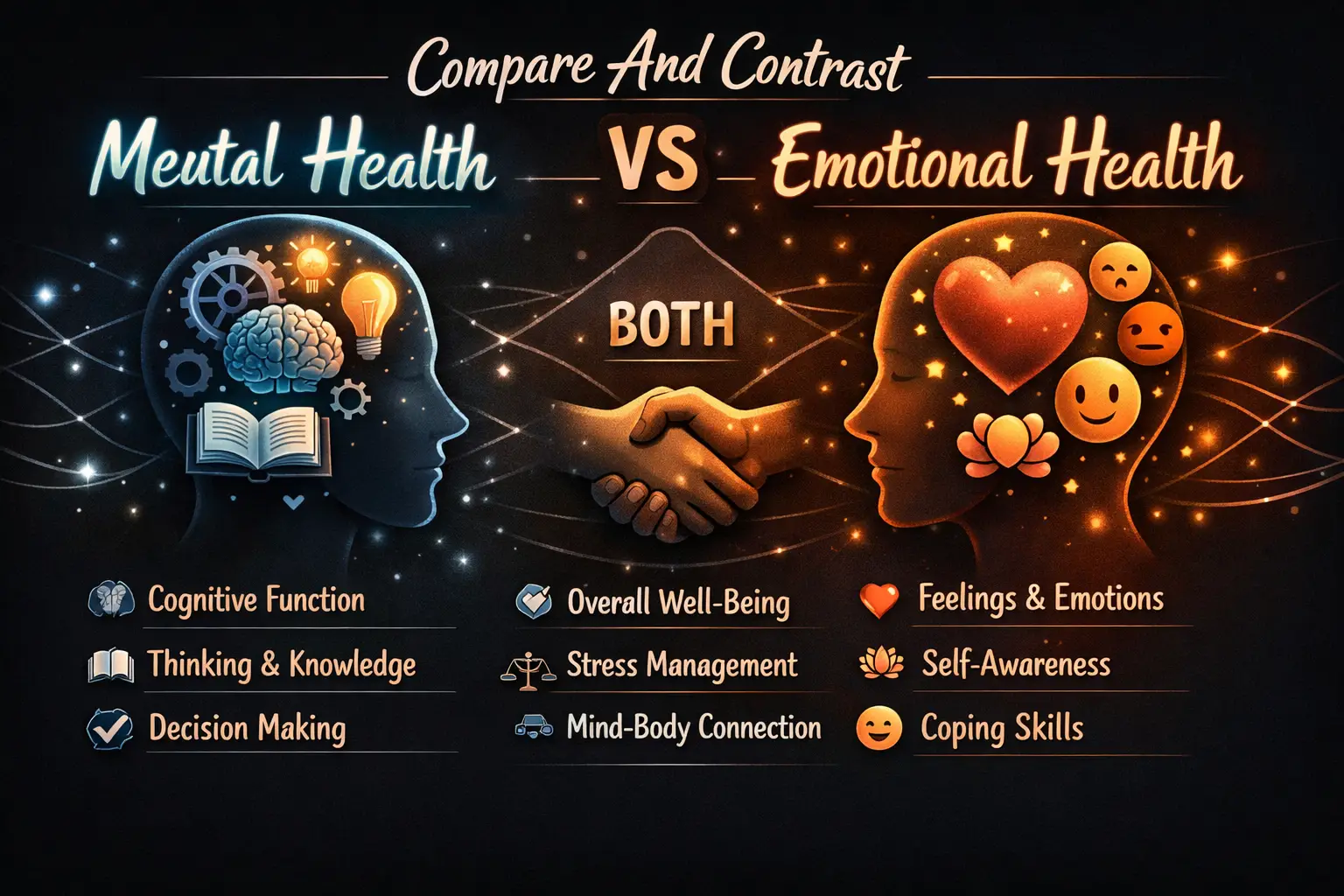
Despite their similarities, mental health and emotional health differ in focus and scope. Mental health has a broader psychological scope, encompassing cognitive processes, perception, reasoning, and mental disorders. Emotional health, on the other hand, focuses more narrowly on emotions and how they are experienced and expressed.
Mental health includes conditions that may not directly involve emotions, such as cognitive impairments or psychotic disorders. Emotional health primarily deals with emotional responses, mood regulation, and emotional expression.
Another key difference lies in assessment. Mental health is often evaluated by mental health professionals using diagnostic criteria, clinical assessments, and standardized tools. Emotional health is more subjective and is often assessed through self-reflection, emotional awareness, and interpersonal feedback.
Role in Daily Functioning
Mental health plays a crucial role in daily functioning by influencing concentration, productivity, decision-making, and problem-solving. Poor mental health can impair academic or work performance, reduce motivation, and make everyday tasks feel overwhelming.
Emotional health affects daily functioning by shaping emotional responses to events and interactions. Individuals with poor emotional health may experience mood swings, emotional outbursts, emotional numbness, or difficulty maintaining relationships.
While mental health determines how well a person can think and function, emotional health determines how well a person can feel and relate to others. Together, they shape overall behavior and life satisfaction.
Impact on Physical Health
Both mental and emotional health have a strong connection to physical health. Chronic mental stress can weaken the immune system, increase the risk of cardiovascular disease, and contribute to sleep disorders.
Poor emotional health can also manifest physically through symptoms such as headaches, digestive problems, fatigue, and muscle tension. Suppressed or unmanaged emotions often lead to psychosomatic illnesses.
Conversely, good mental and emotional health can promote healthier lifestyle choices, better sleep patterns, and improved physical resilience.
Mental Health Disorders vs Emotional Challenges
Mental health disorders are clinically recognized conditions that significantly interfere with thinking, mood, or behavior. These disorders often require professional diagnosis and treatment.
Emotional challenges, while serious, may not always meet the criteria for a mental disorder. Emotional struggles such as grief, heartbreak, disappointment, or frustration are common human experiences. While they can be intense, they are often temporary and can be managed through emotional support, self-care, and coping strategies.
However, unresolved emotional challenges can sometimes develop into mental health disorders if left unaddressed, highlighting the close relationship between the two.
Influence on Relationships and Social Life
Mental health influences how individuals perceive others, interpret social cues, and respond in relationships. Conditions such as anxiety or depression can lead to social withdrawal, mistrust, or misinterpretation of others’ intentions.
Emotional health directly affects communication, emotional expression, and conflict resolution. Emotionally healthy individuals can express their needs clearly, listen empathetically, and navigate disagreements calmly.
Healthy relationships require both mental clarity and emotional balance, making both forms of health equally important.
Strategies to Improve Mental Health
Improving mental health often involves a combination of professional support and personal practices. Therapy and counseling help individuals understand thought patterns and develop healthier coping mechanisms.
Lifestyle changes such as regular exercise, adequate sleep, and balanced nutrition support brain function and emotional stability. Mindfulness practices, meditation, and stress management techniques also play an important role.
Seeking social support and reducing stigma around mental health are crucial steps toward maintaining psychological well-being.
Strategies to Improve Emotional Health
Emotional health can be improved by developing emotional awareness and emotional intelligence. Practices such as journaling, reflection, and mindfulness help individuals identify and process emotions.
Learning healthy communication skills enables individuals to express emotions constructively. Setting boundaries, practicing self-compassion, and allowing oneself to experience emotions without judgment are also important.
Building supportive relationships and seeking emotional support during difficult times strengthens emotional resilience.
Interdependence of Mental and Emotional Health
Mental health and emotional health do not exist independently. Emotional struggles can affect thinking patterns, while cognitive distortions can intensify emotional distress.
For example, negative thought patterns associated with poor mental health can lead to feelings of hopelessness or anger. Similarly, unmanaged emotions can cloud judgment and impair decision-making.
Achieving overall well-being requires attention to both mental and emotional health, recognizing that improvement in one area often supports improvement in the other.
Importance in Modern Society
In today’s fast-paced and demanding world, mental and emotional health have become increasingly important. Social pressures, digital overload, economic uncertainty, and global challenges place significant strain on psychological well-being.
Understanding the distinction between mental and emotional health helps individuals identify their needs more accurately and seek appropriate support. It also encourages a more holistic approach to health that values both thinking and feeling.
Conclusion
Mental health and emotional health are closely related yet distinct aspects of overall well-being. Mental health focuses on cognitive processes, psychological functioning, and mental disorders, while emotional health centers on emotional awareness, expression, and regulation.
Both are essential for leading a balanced, fulfilling life. Mental health enables clear thinking and effective functioning, while emotional health allows individuals to connect with themselves and others in meaningful ways.
By recognizing their similarities and differences, individuals can take a more comprehensive approach to self-care, ensuring not only a healthy mind but also a healthy emotional life.