Grape tomatoes may be small in size, but they are packed with flavor, vitamins, minerals, fiber, and antioxidants. Often overshadowed by their larger counterparts like beefsteak or Roma tomatoes, grape tomatoes are increasingly popular due to their sweet taste, convenient bite-size shape, and versatility in salads, snacks, and cooking. In this in-depth article, we explore every aspect of grape tomatoes’ nutrition profile, health benefits, how they compare with other tomato types, and practical ways to include them in your diet.
What Are Grape Tomatoes?
Grape tomatoes are a variety of tomato that are typically small, oval, and resemble grapes—hence their name. They are known for:
- Sweetness and low acidity compared to many other tomato varieties
- Firm texture, making them ideal for salads, roasting, or eating raw
- Convenient size, which makes portioning effortless
These characteristics have made grape tomatoes a popular choice for healthy eating and snacking.
Why Nutrition Matters
Before analyzing the data, it’s worth understanding why the nutritional profile of grape tomatoes is significant. Nutrition data tells us:
- What micronutrients and macronutrients a food provides
- How it supports bodily functions
- Potential health benefits or considerations
- Appropriate ways to integrate it into balanced meal planning
Understanding grape tomato nutrition helps you make informed choices for weight management, immunity, heart health, digestion, and overall well-being.
Grape Tomatoes: Nutritional Breakdown
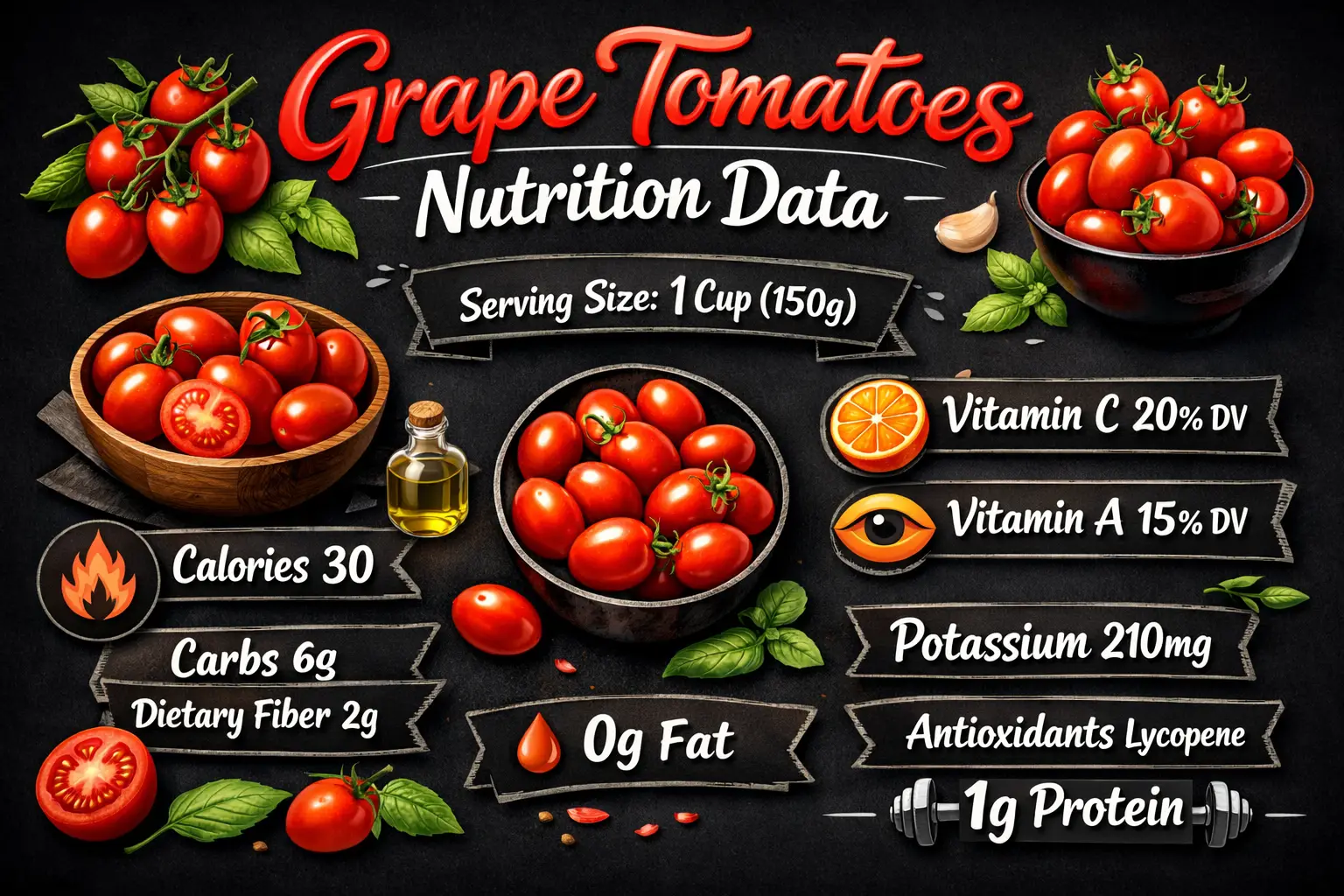
Below is the approximate nutrition data for one cup (about 149 grams) of grape tomatoes. Note that values can vary slightly based on growing conditions and ripeness.
Macronutrients
| Nutrient | Amount per 1 cup (149g) | % Daily Value* |
|---|---|---|
| Calories | ~31 kcal | 2% |
| Protein | 1.5 g | 3% |
| Carbohydrates | 6.8 g | 2% |
| Dietary Fiber | 2.2 g | 8% |
| Sugars | 4.7 g | N/A |
| Total Fat | 0.4 g | <1% |
| Saturated Fat | 0 g | 0% |
*Percent Daily Values are based on a 2,000-calorie diet.
This breakdown shows that grape tomatoes are:
- Very low in calories
- Low in carbohydrates
- Negligible in fat
- Moderate in fiber
These attributes make them an excellent food choice for weight maintenance and nutrient-dense eating.
Vitamins
Grape tomatoes are rich in several essential vitamins:
- Vitamin C: ~24 mg (~40% DV)
A powerful antioxidant important for immune defense, skin health, and collagen production. - Vitamin A (as beta-carotene): ~1025 IU (~20% DV)
Essential for eye health, skin integrity, and immune system function. - Vitamin K: ~18 mcg (~22% DV)
Important for blood clotting and bone health. - Vitamin B9 (Folate): ~15 mcg (~4% DV)
Supports DNA synthesis and cell division.
Other B vitamins like niacin and B6 are present, but in smaller amounts.
Minerals
Important minerals in grape tomatoes include:
- Potassium: ~427 mg (~9% DV)
Helps maintain blood pressure balance and muscle function. - Manganese: ~0.1 mg (~8% DV)
Plays a role in bone formation, metabolism, and antioxidant defenses. - Magnesium: ~18 mg (~5% DV)
Important for muscle and nerve function.
Smaller amounts of iron, phosphorus, and copper are also present.
Phytochemicals and Antioxidants
Grape tomatoes contain several beneficial plant compounds:
- Lycopene: A powerful antioxidant linked to reduced risk of certain cancers and heart disease.
Lycopene is what gives tomatoes their red color. - Beta-carotene: Converts to vitamin A in the body and supports vision and immune health.
- Quercetin and Kaempferol: Flavonoids that have anti-inflammatory and antioxidant properties.
These phytochemicals extend the health benefits of tomatoes beyond basic nutrition.
Health Benefits of Grape Tomatoes
1. Heart Health
Grape tomatoes contribute to cardiovascular health through:
- Low sodium and cholesterol-free profile
- Potassium content, which supports healthy blood pressure
- Lycopene, which has been associated with lower LDL (bad cholesterol) and reduced oxidative stress
The combination of vitamins, fiber, and antioxidants helps promote heart health and reduce risk factors for cardiovascular disease.
2. Immune Support
Vitamin C and vitamin A from grape tomatoes help:
- Strengthen immune cell function
- Support skin and mucosal barriers
- Reduce inflammation
Regular consumption may help your body defend against infections.
3. Eye Health
The beta-carotene and vitamin A in grape tomatoes are essential for:
- Maintaining good vision
- Reducing risk of age-related macular degeneration
- Supporting overall eye function
4. Digestive Health
Dietary fiber in grape tomatoes:
- Aids healthy bowel movements
- Supports gut microbiota
- Helps maintain stable blood sugar levels after meals
5. Anti-Inflammatory and Antioxidant Activity
The antioxidants lycopene and flavonoids in grape tomatoes help:
- Reduce oxidative damage to cells
- Lower chronic inflammation
- Protect against environmental toxins
These properties are linked to reduced risk of several chronic diseases, including cancer.
6. Weight Management
At just ~31 calories per cup, grape tomatoes make:
- A satisfying, low-calorie food
- A nutrient-dense option for meals and snacks
- A way to increase vegetable intake without added fat or calories
This makes them ideal for weight loss or weight maintenance plans.
Grape Tomatoes Versus Other Tomato Varieties
While all tomatoes share core nutritional benefits, some differences exist.
Grape Tomatoes vs. Cherry Tomatoes
| Feature | Grape Tomatoes | Cherry Tomatoes |
|---|---|---|
| Shape | Elongated | Round |
| Taste | Slightly sweeter | Slightly more acidic |
| Skin | Thicker | Thinner |
| Shelf life | Longer | Shorter |
Nutritionally, they are similar, but grape tomatoes often have a firmer texture and longer shelf life.
Grape Tomatoes vs. Roma Tomatoes
Roma tomatoes are larger and have:
- More pulp and fewer seeds
- Slightly higher total carbohydrates per tomato due to size
But when compared ounce for ounce, nutrient density is comparable.
Grape Tomatoes vs. Beefsteak Tomatoes
Beefsteak tomatoes are large and juicy with:
- Higher water content
- More calories per tomato due to size
Again, per gram, the nutrition is similar—though the eating experience differs.
How Grape Tomatoes Fit Into Different Diets
Grape tomatoes are versatile and compatible with many dietary patterns.
Vegan and Vegetarian Diets
They are plant-based, nutrient-dense, and rich in antioxidants—ideal for vegan/vegetarian plans.
Mediterranean Diet
The Mediterranean diet emphasizes tomatoes, olive oil, leafy greens, and lean proteins. Grape tomatoes fit perfectly.
Keto Diet
While low in carbs, grape tomatoes should be consumed in moderation on strict ketogenic plans due to natural sugars and carbs.
Diabetic Diet
The fiber and low glycemic load make grape tomatoes suitable for blood sugar management when portioned appropriately.
Gluten-Free and Paleo
Tomatoes are naturally gluten-free and paleo-friendly, making grape tomatoes safe for these eating plans.
Incorporating Grape Tomatoes Into Your Meals
Fresh and Raw
- Toss into salads or grain bowls
- Add to sandwiches and wraps
- Snack with hummus or low-fat dip
Roasted or Grilled
Roasting enhances sweetness and flavor:
- Mix with olive oil, garlic, and herbs
- Roast at 200°C (400°F) for 10–15 minutes
- Use as a side dish or pasta topping
Sauteed or Stir-Fried
Quick sauté in olive oil with basil and balsamic vinegar makes a savory side.
In Salsa and Bruschetta
Chop grape tomatoes with onions, cilantro, lime, and olive oil for fresh salsa. Pair with whole-grain crackers or grilled meats.
In Omelets and Frittatas
Add halved grape tomatoes to eggs for colorful, nutrient-packed breakfasts.
Storage and Handling
How to Store Grape Tomatoes
- At room temperature: Best for 2–3 days if you intend to eat soon
- In the refrigerator: Keeps for up to 1 week
- Keep out of direct sunlight to maintain flavor
How to Wash
Before eating:
- Rinse under cool running water
- Gently pat dry
- Remove stems if present
Avoid pre-cut storage—cut tomatoes deteriorate faster.
Safety Considerations
Allergies and Sensitivities
Tomato allergies are rare but possible. Symptoms may include itching, swelling, or digestive discomfort. Seek medical advice if reactions occur.
Solanine Content
Tomatoes belong to the nightshade family. Solanine levels in ripe tomatoes are very low and safe for most people but may cause sensitivity in a small percentage of individuals.
Pesticide Residues
Consider choosing organic grape tomatoes to reduce exposure to conventional pesticide residues.
Frequently Asked Questions (FAQs)
Are grape tomatoes good for weight loss?
Yes. They are low in calories and high in fiber and water content, helping promote fullness and nutrient intake.
Do grape tomatoes have more nutrients than regular tomatoes?
Per gram, their nutrient content is similar. Flavor, texture, and sweetness vary more than nutrition levels.
Can grape tomatoes help prevent cancer?
While no single food can prevent cancer, antioxidants like lycopene are associated with lower risk when part of a diet rich in fruits and vegetables.
How many grape tomatoes should I eat daily?
A serving of about 1 cup (149 g) provides significant nutrients. Including them daily as part of a balanced diet is beneficial.
Conclusion
Grape tomatoes are small in size but big in nutrition. They provide an excellent mix of vitamins, minerals, fiber, and antioxidants, all while being low in calories and fat. Whether you’re seeking heart health benefits, immune support, weight management, or simply a tasty way to boost your vegetable intake, grape tomatoes are a nutritious choice that can complement a wide range of diets.
By understanding and appreciating their nutrient profile, you can make the most of this versatile vegetable (technically a fruit) in your meals. Start adding grape tomatoes to your salads, roasting them with olive oil and herbs, or simply snacking on them raw—the possibilities are vast, healthy, and delicious.
If you’d like more recipe ideas, meal plans featuring grape tomatoes, or research summaries on tomato phytochemicals, feel free to ask!