Grape tomatoes may be small, but they pack a powerful nutritional punch. These bite-sized, oblong tomatoes are known for their sweet flavor, firm texture, and convenience. Whether tossed into salads, roasted with herbs, blended into sauces, or enjoyed straight from the container, grape tomatoes are a versatile and nutrient-dense addition to almost any diet.
In this comprehensive guide, we’ll explore the complete nutrition profile of grape tomatoes, including calories, macronutrients, vitamins, minerals, antioxidants, and health benefits. We’ll also look at how they compare to other tomato varieties, how to incorporate them into your diet, and why they are considered a heart-healthy and weight-friendly food.
What Are Grape Tomatoes?
Grape tomatoes are a variety of small tomatoes shaped like grapes. They are typically sweeter and less watery than cherry tomatoes, with a thicker skin and firmer flesh. Their compact size makes them convenient for snacking and cooking.
Like all tomatoes, grape tomatoes belong to the species Solanum lycopersicum. They are technically classified as fruits because they develop from the flower of the tomato plant and contain seeds, although they are commonly used as vegetables in culinary contexts.
Calorie Content of Grape Tomatoes
One of the most appealing aspects of grape tomatoes is their low calorie count. They are ideal for those looking to manage weight or increase nutrient intake without consuming excess calories.
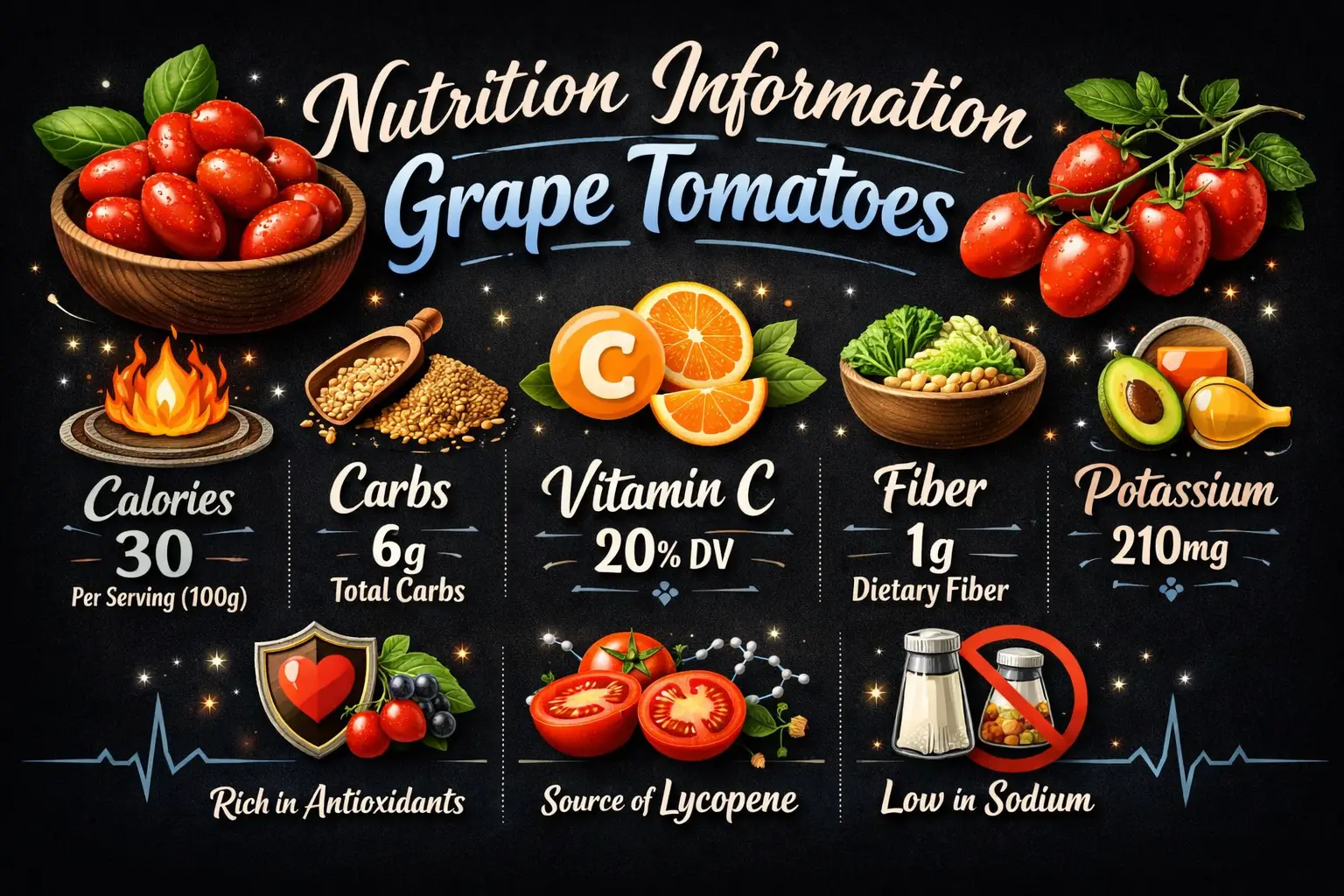
Nutrition per 1 cup (approximately 150 grams) of grape tomatoes:
- Calories: 27–35
- Water content: About 94–95%
Because they are so low in calories and high in water, grape tomatoes are highly satiating. They provide volume and flavor without significantly impacting daily caloric intake.
Macronutrient Breakdown
Understanding the macronutrient profile helps clarify how grape tomatoes fit into various dietary patterns.
Carbohydrates
- Total carbohydrates: 5–7 grams per cup
- Dietary fiber: 1.5–2 grams
- Natural sugars: 3–5 grams
The carbohydrates in grape tomatoes come primarily from natural sugars like glucose and fructose, along with dietary fiber. The fiber content supports digestive health and contributes to feelings of fullness.
Because they are low in total carbohydrates, grape tomatoes are suitable for low-carb and ketogenic-style diets when consumed in moderate portions.
Protein
- Protein: 1–1.5 grams per cup
While not a significant source of protein, grape tomatoes do contribute small amounts. When combined with other plant-based foods such as beans, nuts, or whole grains, they support overall protein intake.
Fat
- Total fat: Less than 0.5 grams
- Saturated fat: Negligible
Grape tomatoes are virtually fat-free. However, pairing them with healthy fats—such as olive oil, avocado, or nuts—can enhance the absorption of fat-soluble nutrients like vitamin A and certain antioxidants.
Vitamin Content of Grape Tomatoes
Grape tomatoes are rich in essential vitamins, particularly vitamin C and vitamin A. Their vibrant red color also signals the presence of powerful antioxidants.
Vitamin C
- Approximately 20–25% of the recommended daily intake per cup
Vitamin C is a potent antioxidant that:
- Supports immune function
- Promotes healthy skin
- Enhances iron absorption
- Protects cells from oxidative stress
Regular consumption of grape tomatoes can help maintain strong immunity and reduce inflammation.
Vitamin A (as Beta-Carotene)
- Around 15–20% of the recommended daily intake per cup
Vitamin A plays a critical role in:
- Eye health
- Skin integrity
- Immune response
- Reproductive health
Beta-carotene, the precursor to vitamin A found in tomatoes, gives them their red-orange hue.
Vitamin K
Grape tomatoes provide small but meaningful amounts of vitamin K, which:
- Supports blood clotting
- Helps maintain bone health
B Vitamins
They contain small quantities of B vitamins, including:
- Folate (Vitamin B9)
- Vitamin B6
- Thiamin (B1)
- Niacin (B3)
Folate is especially important for cell growth and DNA formation, making it essential during pregnancy and for overall cellular health.
Mineral Profile
Although not extremely high in minerals, grape tomatoes contribute important micronutrients to the diet.
Potassium
- Approximately 250–300 mg per cup
Potassium is essential for:
- Regulating blood pressure
- Maintaining fluid balance
- Supporting nerve and muscle function
A potassium-rich diet is associated with a lower risk of hypertension and cardiovascular disease.
Magnesium
Magnesium supports:
- Muscle function
- Nerve transmission
- Energy production
While grape tomatoes are not a major magnesium source, they contribute to overall intake.
Iron
They contain small amounts of iron. When paired with vitamin C-rich foods (like the tomatoes themselves), iron absorption improves.
Lycopene: The Star Antioxidant
Perhaps the most important nutritional component of grape tomatoes is lycopene. Lycopene is a powerful carotenoid antioxidant responsible for the red color of tomatoes.
Benefits of Lycopene
Research has linked lycopene consumption with:
- Reduced risk of heart disease
- Lower levels of LDL (bad) cholesterol
- Reduced oxidative stress
- Potential protection against certain cancers, particularly prostate cancer
Interestingly, lycopene becomes more bioavailable when tomatoes are cooked and consumed with fat. Roasting grape tomatoes in olive oil can significantly increase lycopene absorption.
Antioxidant Power
Beyond lycopene, grape tomatoes contain other antioxidants such as:
- Beta-carotene
- Lutein
- Zeaxanthin
- Vitamin C
These antioxidants help neutralize free radicals, reducing inflammation and protecting against chronic diseases such as heart disease and certain cancers.
Hydration Benefits
With a water content of approximately 94–95%, grape tomatoes contribute to daily hydration. Consuming water-rich fruits and vegetables supports:
- Kidney function
- Skin health
- Temperature regulation
- Digestive efficiency
In hot climates or during active lifestyles, hydrating foods like grape tomatoes can be especially beneficial.
Fiber and Digestive Health
The fiber in grape tomatoes, although moderate, plays a valuable role in digestive wellness.
Benefits of fiber include:
- Supporting regular bowel movements
- Promoting healthy gut bacteria
- Reducing constipation
- Helping regulate blood sugar levels
Including grape tomatoes in salads, wraps, and grain bowls increases total daily fiber intake in an easy and enjoyable way.
Blood Sugar Impact
Grape tomatoes have a low glycemic index. Their combination of natural sugars, fiber, and water results in a minimal impact on blood glucose levels.
This makes them suitable for:
- People with diabetes
- Individuals managing insulin resistance
- Those following balanced blood sugar diets
Pairing them with protein or healthy fats further stabilizes blood sugar response.
Heart Health Benefits
Several nutritional components of grape tomatoes support cardiovascular health:
- Potassium helps regulate blood pressure
- Lycopene reduces oxidative damage
- Vitamin C supports vascular integrity
- Fiber contributes to cholesterol management
Regular tomato consumption has been associated with a reduced risk of heart disease due to these combined effects.
Weight Management Support
Because grape tomatoes are:
- Low in calories
- High in water
- Contain fiber
- Naturally sweet
They are an excellent snack for weight management. Replacing calorie-dense snacks with grape tomatoes can reduce overall calorie intake while maintaining satiety.
Their natural sweetness can also satisfy cravings for sugary foods in a healthier way.
Skin and Anti-Aging Benefits
The antioxidants in grape tomatoes contribute to healthy, glowing skin.
Vitamin C promotes collagen production, which:
- Improves skin elasticity
- Reduces wrinkles
- Enhances wound healing
Lycopene may also help protect the skin against UV damage by reducing oxidative stress.
Bone Health
While not a primary source of bone-building nutrients, grape tomatoes contribute:
- Vitamin K
- Small amounts of calcium
- Potassium
Vitamin K is essential for bone mineralization and works alongside calcium and vitamin D to maintain strong bones.
Immune System Support
The combination of vitamin C, vitamin A, and antioxidants strengthens immune defense. Regular consumption supports the body’s ability to fight infections and recover from illness.
Incorporating grape tomatoes into daily meals can help maintain consistent immune-supporting nutrient intake.
Comparison With Other Tomato Varieties
Grape tomatoes are nutritionally similar to cherry tomatoes and larger slicing tomatoes. However, slight differences exist:
- Grape tomatoes tend to be slightly lower in water than cherry tomatoes.
- Their firmer texture may mean a slightly more concentrated flavor.
- Nutrient differences are minimal and largely influenced by ripeness and growing conditions.
Overall, all tomato varieties offer comparable health benefits.
Raw vs. Cooked Grape Tomatoes
Raw
Eating grape tomatoes raw preserves vitamin C, which can degrade with heat. Raw consumption is ideal for maximizing immune-supporting nutrients.
Cooked
Cooking increases lycopene bioavailability. Roasting, sautéing, or simmering grape tomatoes enhances their antioxidant benefits, especially when paired with healthy fats.
For optimal nutrition, include both raw and cooked forms in your diet.
Organic vs. Conventional
Some people prefer organic grape tomatoes to reduce pesticide exposure. Nutritionally, organic and conventional tomatoes are similar in vitamin and mineral content.
Washing tomatoes thoroughly under running water helps remove surface residues.
Potential Considerations
Although grape tomatoes are safe and healthy for most people, certain individuals should consider the following:
Acid Reflux
Tomatoes are acidic and may trigger heartburn in sensitive individuals.
Nightshade Sensitivity
Tomatoes belong to the nightshade family. Some people with autoimmune conditions report sensitivity, although scientific evidence is limited.
Allergies
Tomato allergies are rare but possible. Symptoms may include itching, swelling, or digestive discomfort.
How to Add Grape Tomatoes to Your Diet
Here are simple and nutritious ways to enjoy grape tomatoes:
- Toss them into green salads
- Roast with olive oil and herbs
- Add to pasta dishes
- Skewer for grilled kebabs
- Blend into fresh salsa
- Include in omelets or scrambled eggs
- Use as a topping for avocado toast
- Pack them as a portable snack
Their versatility makes them easy to incorporate into daily meals.
Storage Tips
To maintain nutritional quality:
- Store at room temperature for best flavor
- Avoid refrigeration unless fully ripe and at risk of spoiling
- Wash just before use
- Keep away from direct sunlight
Proper storage preserves both taste and nutrient density.
Are Grape Tomatoes Good for Kids?
Yes. Their small size, sweetness, and bright color make them appealing to children. They provide essential nutrients that support growth and development.
For young children, consider cutting them in halves or quarters to reduce choking risk.
Final Thoughts
Grape tomatoes are a nutrient-dense, low-calorie food rich in vitamins, minerals, antioxidants, and hydration-supporting water content. They offer meaningful amounts of vitamin C, vitamin A, potassium, and lycopene—each contributing to immune support, heart health, skin vitality, and chronic disease prevention.
Their low glycemic impact, weight-management benefits, and culinary versatility make them a valuable addition to nearly any dietary pattern. Whether eaten raw for maximum vitamin C or cooked for enhanced lycopene absorption, grape tomatoes provide substantial health benefits in a small, flavorful package.
Including grape tomatoes regularly in your meals is a simple, delicious way to improve overall nutrition and support long-term wellness.