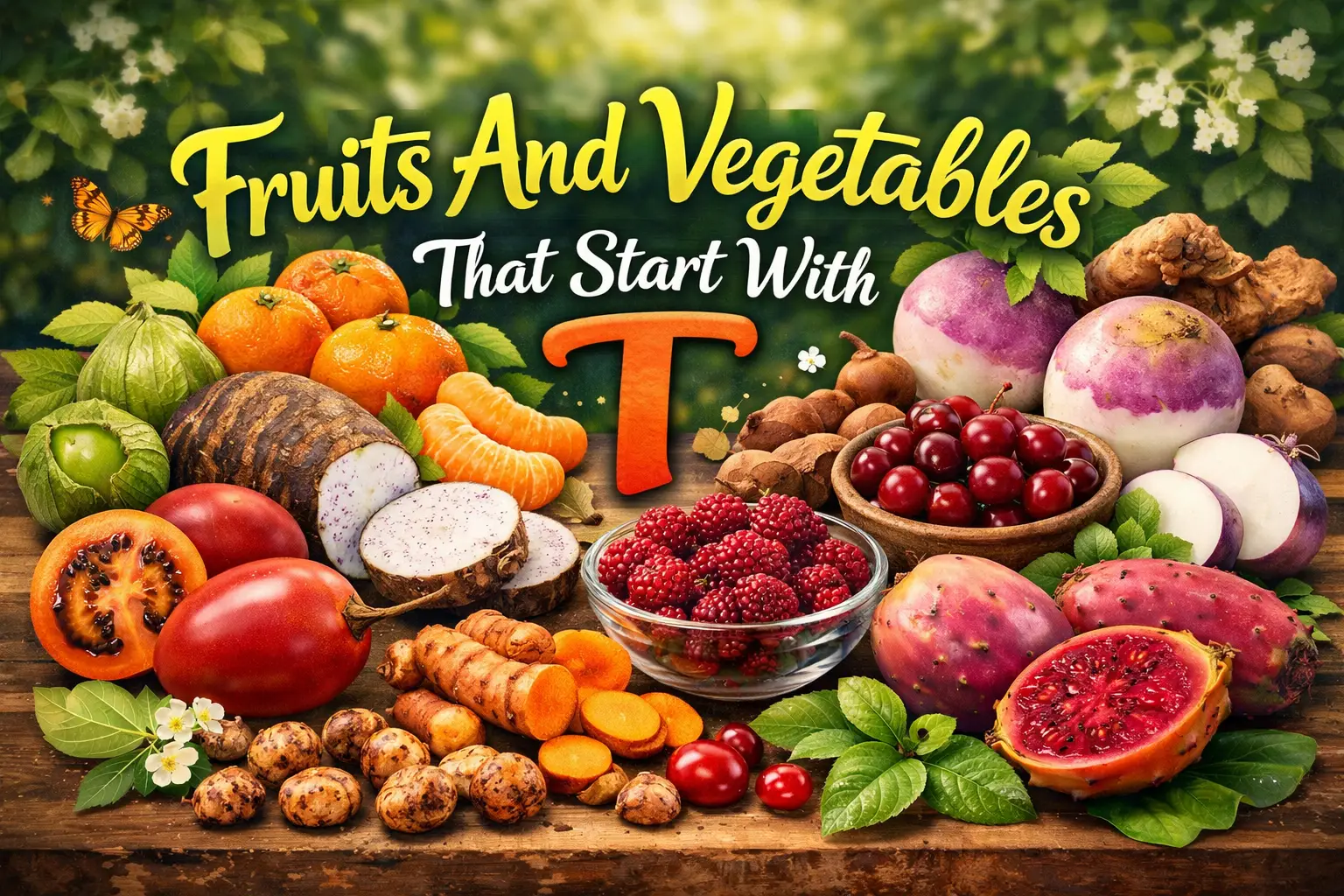
Fruits and vegetables are essential parts of a healthy diet, offering vitamins, minerals, antioxidants, fiber, and countless health benefits. While many people are familiar with common produce like apples, bananas, carrots, and spinach, there are also many interesting fruits and vegetables that begin with specific letters of the alphabet. One such category is foods that start with the letter T.
From sweet tropical fruits to nutritious vegetables used in cuisines around the world, foods beginning with T offer diverse flavors, textures, and health benefits. Some are widely known, while others are unique regional ingredients that may be less familiar but equally valuable.
In this comprehensive guide, we will explore a variety of fruits and vegetables that start with T, their nutritional value, culinary uses, and health benefits.
Why Fruits and Vegetables Are Important
Before diving into specific foods, it’s important to understand why fruits and vegetables play such a crucial role in our diet.
They provide:
- Essential vitamins such as Vitamin A, C, K, and several B vitamins
- Important minerals like potassium, magnesium, and iron
- Dietary fiber for digestive health
- Antioxidants that protect cells from damage
- Natural compounds that help reduce the risk of chronic diseases
Eating a variety of fruits and vegetables ensures your body receives a wide range of nutrients necessary for optimal health.
Now let’s explore some fruits and vegetables that begin with T.
Tamarind
Tamarind is a tropical fruit widely used in Asian, African, and Latin American cuisines. It grows in brown pods that contain sticky pulp and seeds.
Flavor and Characteristics
Tamarind has a distinct sweet and sour flavor, making it a popular ingredient in sauces, chutneys, candies, and beverages.
The pulp is dark brown and sticky with a tangy taste that adds depth to many dishes.
Nutritional Benefits
Tamarind contains:
- Vitamin C
- B vitamins
- Magnesium
- Potassium
- Dietary fiber
It also contains powerful antioxidants that may help reduce inflammation.
Culinary Uses
Tamarind is commonly used in:
- Sauces and marinades
- Soups and curries
- Beverages
- Chutneys and condiments
In many cuisines, it provides the sour element that balances spicy and savory flavors.
Tangerine
Tangerines are small citrus fruits closely related to oranges. They are known for their bright orange color, juicy segments, and sweet flavor.
Characteristics
Tangerines have thinner skin than regular oranges, making them easier to peel. They are often seedless and perfect for quick snacks.
Nutritional Benefits
Tangerines are rich in:
- Vitamin C
- Vitamin A
- Fiber
- Potassium
They also contain antioxidants that support immune health and skin health.
How to Eat Tangerines
Tangerines can be enjoyed in many ways:
- Fresh as a snack
- Added to fruit salads
- Blended into smoothies
- Used in desserts and baked goods
Their refreshing sweetness makes them a favorite fruit worldwide.
Tomato
Although tomatoes are often treated as vegetables in cooking, they are technically fruits because they develop from the flower of a plant and contain seeds.
Tomatoes are one of the most widely used ingredients in global cuisine.
Varieties of Tomatoes
There are many types of tomatoes, including:
- Cherry tomatoes
- Roma tomatoes
- Beefsteak tomatoes
- Heirloom tomatoes
Each variety differs in size, flavor, and use in cooking.
Nutritional Value
Tomatoes are rich in:
- Vitamin C
- Vitamin K
- Potassium
- Folate
They are also a major source of lycopene, a powerful antioxidant associated with heart health and reduced cancer risk.
Culinary Uses
Tomatoes are incredibly versatile and used in:
- Sauces
- Salads
- Soups
- Sandwiches
- Pasta dishes
They can be eaten raw, roasted, grilled, or cooked into countless recipes.
Tomatillo
Tomatillo is a small green fruit commonly used in Mexican cuisine. It resembles a tomato but is covered in a papery husk.
Flavor Profile
Tomatillos have a slightly tart and citrus-like flavor, which makes them ideal for sauces and salsas.
Nutritional Benefits
Tomatillos provide:
- Vitamin C
- Vitamin K
- Fiber
- Antioxidants
They are low in calories but packed with nutrients.
Common Uses
Tomatillos are commonly used in:
- Green salsa (salsa verde)
- Mexican sauces
- Stews and soups
- Grilled dishes
Their tangy taste adds brightness to many meals.
Turnip
Turnips are root vegetables belonging to the cabbage family. They are grown in temperate climates and have been cultivated for thousands of years.
Appearance and Taste
Turnips are typically round with white flesh and purple tops. Their flavor is mildly sweet with a slight peppery bite.
Young turnips are tender and slightly sweet, while mature ones have a stronger flavor.
Nutritional Benefits
Turnips are rich in:
- Vitamin C
- Fiber
- Potassium
- Calcium
They are also low in calories, making them a healthy addition to many diets.
Culinary Uses
Turnips can be prepared in many ways:
- Roasted
- Mashed
- Boiled
- Added to soups and stews
Both the root and the leafy greens are edible and nutritious.
Turmeric Root
Turmeric root is a bright orange root vegetable closely related to ginger. It is widely known for its medicinal and culinary uses.
Unique Characteristics
Turmeric has an earthy, slightly bitter flavor and is often dried and ground into powder.
It gives foods a vibrant yellow color and is a key ingredient in many spice blends.
Nutritional and Health Benefits
Turmeric contains curcumin, a compound known for its powerful anti-inflammatory and antioxidant properties.
It may help:
- Reduce inflammation
- Support joint health
- Improve digestion
- Boost immunity
Culinary Uses
Turmeric is commonly used in:
- Curries
- Rice dishes
- Soups
- Herbal teas
- Smoothies
Fresh turmeric root can also be grated into recipes.
Taro Root
Taro root is a starchy root vegetable widely used in tropical and subtropical regions.
Appearance
Taro has brown skin with white or purple-speckled flesh. When cooked, it becomes soft and slightly sweet.
Nutritional Value
Taro root contains:
- Fiber
- Vitamin E
- Potassium
- Magnesium
- Resistant starch
It supports digestive health and provides long-lasting energy.
Popular Uses
Taro is used in many dishes around the world:
- Stews and soups
- Chips and snacks
- Mashed root dishes
- Desserts and bubble tea
It is a staple ingredient in many Asian and Pacific cuisines.
Tamarillo
Tamarillo, also known as the tree tomato, is a small egg-shaped fruit native to South America.
Taste and Texture
The flavor of tamarillo is sweet and tangy, somewhat similar to a blend of tomato and passion fruit.
Nutritional Benefits
Tamarillos are rich in:
- Vitamin A
- Vitamin C
- Iron
- Fiber
They are low in calories and beneficial for heart health.
Culinary Uses
Tamarillos can be eaten:
- Fresh with a spoon
- In fruit salads
- In sauces and chutneys
- As a dessert topping
Their vibrant flavor makes them a unique addition to meals.
Tangelo
Tangelo is a citrus fruit created by crossing a tangerine and a grapefruit or pomelo.
Appearance and Taste
Tangelos are known for their juicy flesh, bright orange skin, and slightly tangy sweetness.
They often have a small knob-like protrusion at the stem end.
Nutritional Benefits
Tangelos provide:
- Vitamin C
- Fiber
- Potassium
- Antioxidants
They help strengthen the immune system and support heart health.
Ways to Enjoy Tangelos
Tangelos are commonly eaten:
- Fresh
- In fruit salads
- As juice
- In desserts
Their refreshing flavor makes them a popular winter fruit.
Tiger Nuts
Despite the name, tiger nuts are not actually nuts. They are small root vegetables known as tubers.
History
Tiger nuts have been consumed for thousands of years, dating back to ancient Egypt.
Nutritional Profile
They contain:
- Fiber
- Healthy fats
- Magnesium
- Iron
- Vitamin E
Tiger nuts are also naturally gluten-free and dairy-free.
Uses
Tiger nuts are used in:
- Snacks
- Plant-based milk
- Flour for baking
- Traditional drinks like horchata
They have a sweet, nutty flavor and chewy texture.
Tree Tomato
Tree tomato is another name for tamarillo, but in some regions the term is used for slightly different cultivated varieties.
Characteristics
The fruit grows on small trees and has smooth red or yellow skin.
Flavor
It offers a tart yet sweet taste, making it suitable for both sweet and savory dishes.
Health Benefits
Tree tomatoes are high in:
- Vitamins A, C, and E
- Antioxidants
- Fiber
These nutrients support eye health, immunity, and digestion.
Turkish Rocket
Turkish rocket is a leafy green vegetable related to arugula.
Flavor
It has a peppery and slightly bitter taste, which adds depth to salads and cooked dishes.
Nutritional Value
This leafy green contains:
- Vitamin A
- Vitamin C
- Calcium
- Iron
Leafy greens like Turkish rocket are excellent for overall health.
Culinary Uses
It can be used in:
- Salads
- Stir-fries
- Soups
- Pasta dishes
Its bold flavor pairs well with citrus, olive oil, and garlic.
Tropical Apricot
Tropical apricot is another name sometimes used for loquat, a fruit grown in warm climates.
Appearance and Flavor
It looks similar to a small apricot and has a sweet, slightly tangy flavor.
Nutritional Benefits
Tropical apricots provide:
- Vitamin A
- Vitamin C
- Fiber
- Antioxidants
They support immune function and skin health.
Uses
These fruits are often used in:
- Jams and preserves
- Desserts
- Fruit salads
- Fresh snacks
Tips for Including These Foods in Your Diet
Adding new fruits and vegetables to your meals can improve both flavor and nutrition. Here are some simple tips.
Try New Recipes
Experiment with global recipes that feature ingredients like tamarind, taro, or tomatillo.
Add Them to Smoothies
Fruits like tangerines, tangelos, and tamarillos can add sweetness and nutrients to smoothies.
Roast or Grill Vegetables
Vegetables like turnips and taro develop delicious flavors when roasted or grilled.
Use Them in Salads
Fresh fruits and leafy vegetables can make salads more colorful and nutritious.
Final Thoughts
Exploring fruits and vegetables that start with T reveals an impressive variety of flavors, textures, and health benefits. From the tangy sweetness of tangerines and tangelos to the earthy richness of taro root and turmeric, these foods can enhance both your meals and your overall nutrition.
Many of these ingredients are staples in traditional cuisines around the world, proving that healthy foods can also be diverse and exciting. Incorporating them into your diet not only expands your culinary experience but also helps ensure you receive a broad spectrum of essential nutrients.
Whether you are preparing a vibrant salad, a flavorful curry, or a refreshing fruit snack, fruits and vegetables starting with T offer plenty of delicious possibilities.