Bananas are one of the most popular fruits in the world. Whether you’re baking banana bread, preparing smoothies, tracking your grocery budget, or planning a recipe that calls for a specific weight, you may find yourself asking: How many bananas are in a pound?
The answer isn’t as straightforward as it seems because banana size varies significantly. In this detailed guide, we’ll break down everything you need to know—from average weights and size variations to practical kitchen conversions and shopping tips. By the end, you’ll have a clear understanding of how to estimate bananas by weight with confidence.
The Short Answer: How Many Bananas Are in One Pound?
On average:
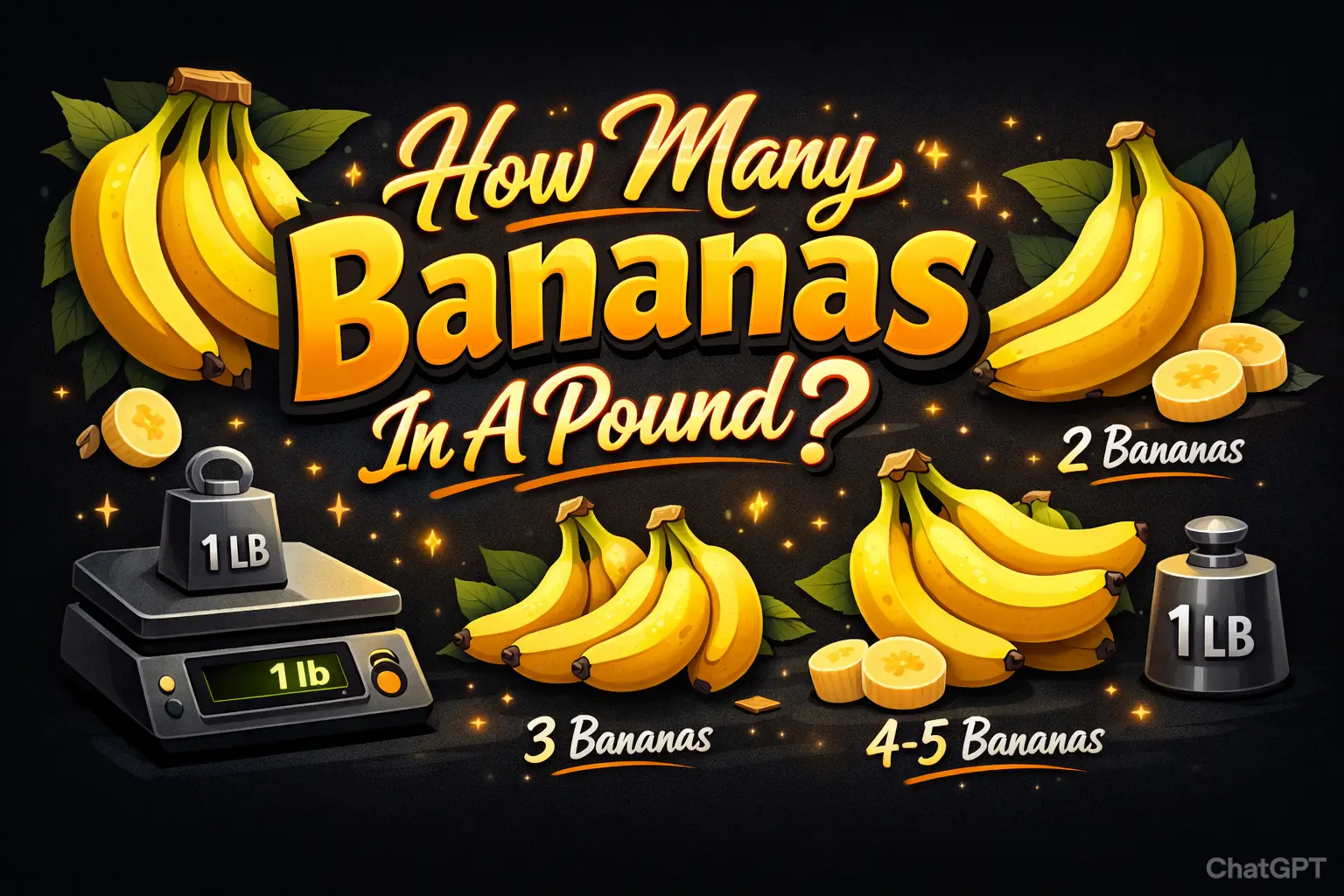
- 2 to 3 medium bananas equal approximately 1 pound.
However, the exact number depends on the size and ripeness of the bananas. Larger bananas weigh more, while smaller bananas weigh less. Therefore, one pound could be:
- 2 large bananas
- 3 medium bananas
- 4 small bananas
Understanding these size differences helps ensure accuracy when cooking or budgeting.
Understanding Banana Sizes and Weights
Bananas are categorized into different sizes based on length. These size categories directly influence how many bananas make up a pound.
Small Bananas
- Length: 6 to 7 inches
- Weight: About 3–4 ounces (85–113 grams) each
It typically takes 3 to 4 small bananas to reach one pound (16 ounces).
Medium Bananas
- Length: 7 to 8 inches
- Weight: About 4–5 ounces (113–140 grams) each
You’ll usually need 2 to 3 medium bananas for one pound.
Large Bananas
- Length: 8 to 9 inches
- Weight: About 5–6 ounces (140–170 grams) each
Only 2 large bananas often equal one pound.
Extra-Large Bananas
- Length: 9 inches or more
- Weight: 6–8 ounces (170–225 grams) each
In some cases, just 2 extra-large bananas may exceed one pound.
Why Banana Weight Varies
Banana weight isn’t fixed. Several factors influence how much a banana weighs.
1. Size and Variety
The most common banana variety sold in supermarkets is the Cavendish. However, even within this type, size can vary due to growing conditions and harvesting practices.
2. Ripeness
As bananas ripen:
- Moisture levels change
- Sugar content increases
- Texture softens
While weight doesn’t drastically change, slight variations can occur due to water loss over time.
3. Peel vs. Edible Portion
A banana’s peel makes up about 35–40% of its total weight. That means when you buy one pound of bananas, you’re not getting a full pound of edible fruit.
For example:
- 1 pound of whole bananas equals roughly 10–12 ounces of peeled banana flesh
This distinction is important in recipes that require exact fruit weight without the peel.
Converting Bananas to Cups and Ounces
In cooking, you may need to convert bananas into measurements like cups or ounces. Here’s a practical breakdown:
- 1 medium banana (peeled) = about ½ cup mashed
- 2 medium bananas = about 1 cup mashed
- 3 medium bananas = about 1½ cups mashed
Since 2–3 medium bananas equal one pound, you can estimate:
- 1 pound of bananas ≈ 1 to 1½ cups mashed banana
This conversion is especially helpful for baking banana bread or muffins.
How Many Bananas in a Pound for Recipes?
Different recipes call for bananas by count or weight. Here’s how to plan accurately.
Banana Bread
Most banana bread recipes require 3 medium bananas. That equals roughly 1 to 1¼ pounds of whole bananas.
If you’re buying bananas specifically for baking, one pound may not be enough—you’ll likely need slightly more.
Smoothies
A typical smoothie uses 1 medium banana (about 4–5 ounces).
If you have one pound of bananas (2–3 medium), you can make about 2–3 smoothies.
Fruit Salads
Fruit salads often use sliced bananas for texture and sweetness. One pound of bananas yields approximately:
- 10–12 ounces peeled
- Enough for 3–4 servings of fruit salad
Banana Pancakes or Waffles
Recipes usually call for 1–2 bananas. So one pound can easily cover a standard breakfast batch.
Buying Bananas by the Pound
Bananas are often sold by weight in grocery stores. Prices are typically displayed per pound. Knowing how many bananas are in a pound helps you estimate your total cost.
For example:
If bananas cost $0.60 per pound and you select:
- 2 large bananas (about 1 pound), you’ll pay around $0.60
- 3 medium bananas (about 1 pound), same price
- 5–6 small bananas (closer to 1½ pounds), you’ll pay more
Visually estimating weight becomes easier once you understand average sizes.
How to Estimate a Pound Without a Scale
If you don’t have a kitchen scale, you can use visual cues.
Method 1: Use Your Hand
A medium banana is roughly the size of an adult hand from palm to fingertips. Three hand-length bananas usually weigh about a pound.
Method 2: Compare to Known Items
A pound is about the weight of:
- A standard can of soup
- A small hardcover book
- A football (roughly)
Holding bananas and comparing their combined weight to familiar items can help approximate one pound.
Method 3: Count by Size
Use this quick reference:
- 2 large bananas ≈ 1 pound
- 3 medium bananas ≈ 1 pound
- 4 small bananas ≈ 1 pound
This is the simplest and most reliable rule of thumb.
Organic vs. Conventional: Does It Affect Weight?
The weight difference between organic and conventional bananas is minimal. Growing practices may influence size slightly, but the average count per pound remains similar.
Organic bananas are often slightly smaller in some regions, meaning you may need 3–4 instead of 2–3 to reach a pound.
Banana Varieties and Weight Differences
Although Cavendish bananas dominate most markets, other varieties may differ in size and weight.
Plantains
Plantains are larger and heavier than standard bananas. One plantain can weigh 7–12 ounces. Therefore, one pound might equal:
- 1 to 2 plantains
Baby Bananas (Manzano or Lady Finger)
These are smaller and sweeter. It may take:
- 4 to 6 baby bananas to equal one pound
Understanding the type of banana you’re purchasing is important for accuracy.
Nutritional Perspective: One Pound of Bananas
If you’re tracking nutrition, here’s what one pound roughly contains (whole bananas):
- Calories: About 400–450
- Carbohydrates: 100–115 grams
- Fiber: 10–12 grams
- Potassium: Over 1,200 mg
Keep in mind that the edible portion is slightly less than the total weight.
Storage Considerations
If you buy bananas by the pound, you’ll want them to stay fresh.
Room Temperature
Bananas ripen best at room temperature. Avoid refrigeration unless fully ripe.
Refrigeration
Once ripe, you can refrigerate bananas to slow further ripening. The peel may darken, but the inside remains fresh.
Freezing
If you buy too many bananas:
- Peel them
- Slice them
- Freeze in airtight containers
One pound of bananas freezes well for smoothies and baking.
Cost Planning: How Many Pounds Should You Buy?
Planning depends on household needs.
For a Single Person
If you eat 1 banana per day:
- Buy 1½ to 2 pounds weekly
For a Family of Four
If everyone eats one banana daily:
- 4 bananas per day
- About 3 pounds every few days
For Baking Projects
Banana bread often requires 3–4 bananas. Buying 1½ pounds ensures you have enough ripe fruit.
Common Mistakes When Estimating Banana Weight
Even experienced cooks make mistakes.
Assuming All Bananas Weigh the Same
Size varies significantly, so avoid counting blindly without considering length and thickness.
Ignoring the Peel Weight
If a recipe calls for 1 pound of peeled bananas, you’ll need to buy slightly more than one pound of whole bananas.
Overbuying Ripe Bananas
Ripe bananas spoil quickly. Plan carefully to avoid waste.
Practical Conversion Chart
Here’s a quick reference:
- 1 pound bananas = 2–3 medium bananas
- 1 pound bananas (peeled) = 10–12 ounces edible fruit
- 1 medium banana = ½ cup mashed
- 2 medium bananas = 1 cup mashed
- 3 medium bananas = 1½ cups mashed
Keep this chart in mind when shopping or cooking.
Frequently Asked Questions
Is one banana a pound?
No. A single banana typically weighs 4–6 ounces. It would take 2–3 average bananas to make one pound.
How many bananas are 2 pounds?
Approximately:
- 4–6 medium bananas
- 3–4 large bananas
- 6–8 small bananas
How many bananas equal 16 ounces?
Sixteen ounces equals one pound. So the answer remains 2–3 medium bananas.
Does banana ripeness affect weight significantly?
Not dramatically, but very overripe bananas may lose slight moisture weight over time.
Final Thoughts: The Simple Rule to Remember
So, how many bananas are in a pound?
The simplest answer to remember is:
About 2 to 3 medium bananas equal one pound.
While exact numbers vary depending on size, this rule of thumb works in most situations. Whether you’re baking, budgeting, meal prepping, or simply curious, understanding banana weight conversions makes shopping and cooking much easier.
By recognizing size differences, peel weight, and recipe requirements, you can confidently estimate how many bananas you need—without overbuying or falling short.
Next time you’re standing in the produce aisle wondering how many bananas make a pound, you’ll know exactly what to pick.