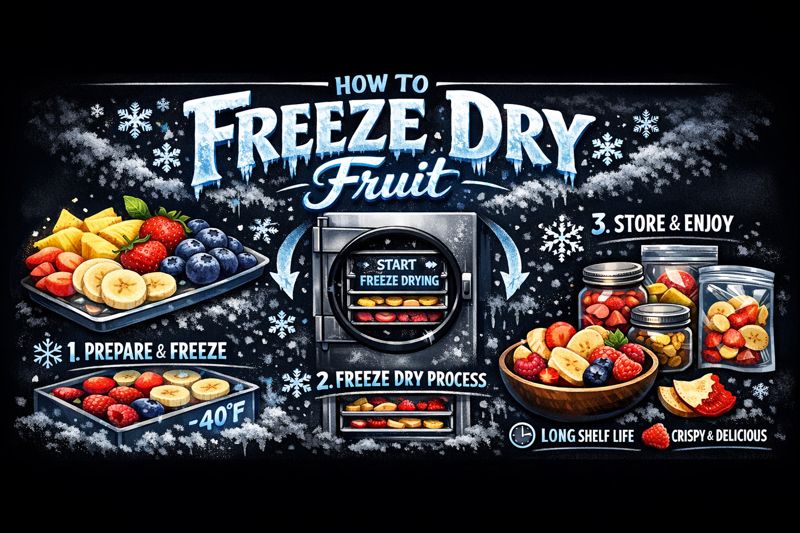
Freeze drying fruit is one of the best ways to preserve fresh produce while maintaining its flavor, color, shape, and much of its nutritional value. Whether you want lightweight snacks for hiking, long-term food storage, ingredients for baking, or simply a fun kitchen project, freeze drying fruit can be both practical and rewarding. This guide explains exactly how freeze drying works, how to do it at home, the equipment you need, step-by-step instructions, common mistakes, and expert tips to achieve professional-quality results.
What Is Freeze Drying and How Does It Work?
Freeze drying, also called lyophilization, is a food preservation process that removes moisture from food by freezing it and then placing it under a vacuum so the ice turns directly into vapor. This process is known as sublimation.
Unlike dehydration, which uses heat to evaporate water, freeze drying works at very low temperatures. Because of this, the fruit’s structure remains intact. The cells don’t collapse, which is why freeze-dried fruit retains its original shape and rehydrates so well when water is added.
The Three Main Stages of Freeze Drying
Freezing Stage
The fruit is frozen solid, usually at temperatures below -40°F (-40°C). The water inside the fruit forms ice crystals.
Primary Drying (Sublimation)
Under vacuum pressure, the frozen water transitions directly from ice to vapor without becoming liquid. This removes most of the moisture.
Secondary Drying (Desorption)
Any remaining bound water molecules are removed at slightly warmer temperatures, resulting in extremely dry fruit with a moisture content typically below 2%.
Why Freeze Dry Fruit Instead of Other Methods?
Freeze drying has several advantages over canning, dehydrating, or freezing alone.
Superior Nutrient Retention
Freeze drying preserves a high percentage of vitamins, antioxidants, and enzymes compared to heat-based drying methods.
Long Shelf Life
Properly stored freeze-dried fruit can last 20 to 25 years without refrigeration.
Lightweight and Portable
With almost all water removed, freeze-dried fruit is extremely light, making it ideal for travel, camping, and emergency kits.
Excellent Taste and Texture
Freeze-dried fruit often tastes very close to fresh fruit and has a satisfying crunchy texture.
Fast Rehydration
When water is added, freeze-dried fruit rehydrates quickly and closely resembles fresh fruit.
Can You Freeze Dry Fruit at Home?
Yes, freeze drying fruit at home is absolutely possible, but the method you choose depends on your budget, time, and desired results.
Home Freeze Dryers
The most effective way to freeze dry fruit at home is with a dedicated freeze dryer. These machines are designed specifically for the freeze-drying process and produce the best results.
Pros
- Professional-quality freeze-dried fruit
- Precise temperature and pressure control
- Long shelf life results
Cons
- High upfront cost
- Requires space and electricity
Using a Freezer (Partial Method)
A regular freezer can be used for a very basic form of freeze drying, but the results are not as consistent and the shelf life is much shorter.
Pros
- No special equipment needed
- Low cost
Cons
- Takes weeks
- Not true freeze drying
- Higher risk of spoilage
Dry Ice Method
Some advanced DIY enthusiasts use dry ice to freeze dry fruit. While effective, this method requires strict safety precautions and careful handling.
Best Fruits for Freeze Drying
Almost all fruits can be freeze dried, but some work better than others.
Fruits That Freeze Dry Exceptionally Well
- Strawberries
- Apples
- Bananas
- Blueberries
- Raspberries
- Mangoes
- Pineapple
- Peaches
Fruits That Require Extra Preparation
- Grapes (need slicing or piercing)
- Cherries (must remove pits)
- Citrus fruits (high moisture content)
Fruits to Avoid or Use Carefully
- Watermelon (very high water content)
- Very ripe or overripe fruit
Equipment and Supplies Needed
Before you start freeze drying fruit, gather the following tools.
Essential Equipment
- Freeze dryer (or alternative method setup)
- Sharp knife or mandoline slicer
- Cutting board
- Baking trays or freeze dryer trays
Optional but Helpful Supplies
- Lemon juice or ascorbic acid (to prevent browning)
- Food-grade gloves
- Mylar bags or vacuum-seal bags
- Oxygen absorbers
Step-by-Step Guide: How to Freeze Dry Fruit Using a Home Freeze Dryer
Step 1: Choose High-Quality Fruit
Select ripe but firm fruit. Avoid fruit with bruises, mold, or signs of spoilage. Freshness directly impacts taste and texture.
Step 2: Wash the Fruit Thoroughly
Rinse fruit under cool running water to remove dirt, pesticides, and bacteria. Gently pat dry with a clean towel.
Step 3: Peel and Core if Necessary
Remove peels, stems, seeds, and pits where appropriate. Some peels, such as apple or pear skins, can be left on if desired.
Step 4: Slice the Fruit Evenly
Uniform slices ensure even drying. Most fruits should be sliced between ¼ inch and ½ inch thick. Smaller fruits like blueberries can be left whole but should be pierced to allow moisture to escape.
Step 5: Prevent Browning
Dip light-colored fruits such as apples, bananas, and peaches in a mixture of water and lemon juice or ascorbic acid for a few minutes. This step helps preserve color and flavor.
Step 6: Arrange Fruit on Trays
Place fruit pieces in a single layer without overlapping. Proper airflow is essential for efficient freeze drying.
Step 7: Pre-Freeze the Fruit (Optional but Recommended)
Pre-freezing fruit in a regular freezer helps speed up the freeze-drying process and improves texture.
Step 8: Load the Freeze Dryer
Insert the trays into the freeze dryer according to the manufacturer’s instructions. Make sure the door seal is clean and secure.
Step 9: Start the Freeze-Drying Cycle
Select the appropriate settings for fruit. Most machines automatically control temperature and vacuum levels. A typical cycle can take 20 to 40 hours depending on fruit type and thickness.
Step 10: Check for Complete Dryness
When the cycle finishes, test a few pieces by breaking them in half. They should snap cleanly and feel completely dry. If any moisture remains, add extra drying time.
Step 11: Cool and Package Immediately
Allow fruit to cool briefly, then package it right away to prevent moisture absorption.
How to Freeze Dry Fruit Without a Freeze Dryer
Freezer Method
- Slice fruit thinly and evenly.
- Place on parchment-lined trays.
- Freeze at the coldest freezer setting.
- Leave fruit uncovered for 2 to 3 weeks.
- Test for dryness and store in airtight containers.
This method produces a product closer to dehydrated fruit than true freeze-dried fruit but can still be useful for short-term storage.
Dry Ice Method
- Place fruit in a breathable container.
- Cover with dry ice in a well-ventilated area.
- Allow sublimation to occur over 24 to 48 hours.
- Remove fruit and package immediately.
Extreme caution is required when handling dry ice.
Proper Storage of Freeze-Dried Fruit
Storage is just as important as the drying process.
Best Storage Containers
- Mylar bags with oxygen absorbers
- Vacuum-sealed bags
- Airtight glass jars
Ideal Storage Conditions
- Cool temperature
- Low humidity
- Dark environment
Proper storage prevents moisture absorption and preserves quality.
Shelf Life of Freeze-Dried Fruit
When stored correctly, freeze-dried fruit can last 20 to 25 years. Short-term storage in jars or vacuum bags typically lasts 1 to 5 years.
Common Mistakes to Avoid
Overloading Trays
Overlapping fruit prevents even drying.
Skipping Pre-Freezing
This can lead to uneven texture and longer drying times.
Storing Without Oxygen Absorbers
Oxygen causes flavor loss and nutrient degradation.
Using Overripe Fruit
Overripe fruit often dries poorly and can develop off-flavors.
Tips for Better Freeze-Dried Fruit
- Cut fruit uniformly for consistent results
- Label packages with dates and contents
- Experiment with mixed fruit blends
- Crush freeze-dried fruit into powders for smoothies and baking
Creative Ways to Use Freeze-Dried Fruit
Freeze-dried fruit is incredibly versatile.
- Healthy snacks for kids and adults
- Toppings for yogurt, cereal, and oatmeal
- Ingredients in trail mix and energy bars
- Flavoring for cakes, frostings, and macarons
- Emergency food storage
Is Freeze Drying Fruit Worth It?
Freeze drying fruit requires time, preparation, and sometimes financial investment, but the rewards are substantial. You gain long-lasting, nutritious, lightweight food that tastes amazing and can be used in countless ways. For gardeners, homesteaders, outdoor enthusiasts, and health-conscious individuals, freeze drying fruit is one of the most effective preservation methods available.
Final Thoughts
Learning how to freeze dry fruit opens the door to better food preservation, reduced waste, and healthier eating. With the right preparation, equipment, and storage methods, you can produce high-quality freeze-dried fruit that rivals store-bought versions. Whether you are preserving seasonal harvests or creating convenient snacks, freeze drying fruit is a skill that pays off for years to come.