Using fresh herbs in DIY candles is a beautiful way to combine fragrance, natural aesthetics, and handcrafted creativity. Herbal candles can bring nature indoors, enhance relaxation, support aromatherapy goals, and elevate home décor. However, working with fresh herbs also requires careful planning, preparation, and safety awareness to ensure your candles are not only stunning but also safe and functional.
This comprehensive guide will walk you through everything you need to know about using fresh herbs in candles, from selecting the right herbs and preparing them properly to candle-making methods, scent pairing, safety precautions, and creative design ideas. Whether you are a beginner or an experienced candle maker, this article will give you the confidence and knowledge to work with fresh herbs effectively.
Why Use Fresh Herbs in DIY Candles
Fresh herbs add a sensory and visual depth that dried botanicals and synthetic fragrances often cannot replicate. When used correctly, they can transform a simple candle into a multi-dimensional experience.
Fresh herbs bring several benefits to candle making. They provide natural beauty, subtle aromatherapy properties, and a handcrafted, organic feel that appeals to eco-conscious and wellness-focused candle lovers. Herbs like rosemary, lavender, basil, mint, thyme, and sage are particularly popular because of their recognizable scent profiles and symbolic meanings.
Herbal candles are often associated with relaxation, mindfulness, ritual practices, seasonal décor, and personalized gifts. When thoughtfully designed, they can feel both luxurious and grounded, making them ideal for home use or small-batch selling.
Understanding the Difference Between Fresh and Dried Herbs in Candles
Before working with fresh herbs, it is essential to understand how they differ from dried herbs in candle making.
Fresh herbs contain moisture, plant oils, and organic compounds that can affect how a candle burns. This moisture can cause issues such as mold growth, poor burning performance, or even safety hazards if not properly addressed. Dried herbs, on the other hand, are more stable and predictable.
That said, fresh herbs can still be used successfully when prepared correctly. Many candle makers choose to partially dry or infuse fresh herbs before incorporating them into candles to reduce moisture while preserving their essence.
Understanding this balance is key to creating herbal candles that are both beautiful and safe.
Choosing the Right Fresh Herbs for Candle Making
Not all herbs are suitable for candle making. Selecting the right herbs is the first step toward success.
Herbs with woody stems and aromatic oils tend to perform better than delicate or water-heavy plants. Rosemary is a top choice due to its sturdy structure and invigorating scent. Lavender is another favorite, though it is often partially dried before use. Sage, thyme, oregano, bay leaf, and eucalyptus are also commonly used.
Avoid herbs that are extremely moist, fragile, or prone to rapid decay, such as cilantro or parsley, unless they are fully dehydrated or infused. Always ensure herbs are free from pesticides and thoroughly cleaned before use.
When harvesting herbs from your garden, choose healthy, unblemished leaves and stems. If purchasing fresh herbs, opt for organic varieties whenever possible.
Preparing Fresh Herbs for Candle Use
Proper preparation is the most critical step when using fresh herbs in candles. Skipping this step can lead to mold growth, uneven burning, or safety risks.
Start by gently washing the herbs under cool water to remove dirt and debris. Pat them dry with a clean towel and allow them to air dry completely. Even if you plan to use herbs labeled as “fresh,” removing surface moisture is essential.
Next, consider one of the following preparation methods:
Air-drying involves hanging herbs upside down in a warm, well-ventilated space for several days to a few weeks. This method preserves aroma while reducing moisture.
Oven-drying can speed up the process. Place herbs on a baking sheet lined with parchment paper and dry them at the lowest oven setting with the door slightly open.
Infusing herbs in oil or wax is another effective approach. Fresh herbs can be gently heated in a carrier oil or melted wax, then strained out. This allows you to capture their aromatic properties without embedding plant material in the candle.
For beginners, partial drying or infusion is often the safest and most reliable option.
Safety Considerations When Using Fresh Herbs in Candles
Safety should always be a top priority when making candles with herbs. Fresh plant material is flammable and can pose a fire risk if placed too close to the wick.
Never allow herbs to touch or surround the wick directly. Floating herbs near the flame can ignite, causing excessive flickering or soot. To prevent this, herbs should be embedded along the sides of container candles or used decoratively on the surface away from the wick.
Using container candles rather than pillar candles is strongly recommended when working with herbs. Glass or ceramic containers help contain heat and reduce the risk of fire.
Additionally, always conduct a burn test before using or gifting herbal candles. Observe how the candle burns over several hours to ensure stability and safety.
If you are selling candles, be transparent about ingredients and include clear burning instructions.
Best Wax Types for Herbal Candles
Choosing the right wax can significantly impact how herbs perform in your candles.
Soy wax is a popular choice because it burns cleanly, holds fragrance well, and complements natural ingredients. It has a lower melting point, which helps preserve herbal aromas.
Beeswax is another excellent option, especially for herbal and botanical candles. It has natural air-purifying properties and pairs well with herbs like rosemary, thyme, and sage. Beeswax burns hotter, so extra caution is needed when adding botanicals.
Coconut wax blends offer a creamy appearance and excellent scent throw, making them ideal for infused herbal candles.
Avoid paraffin wax if your goal is a natural or eco-friendly candle, as it can overpower delicate herbal notes.
How to Incorporate Fresh Herbs into Candles
There are several methods for incorporating fresh herbs into candles, each with its own advantages.
Embedding herbs along the sides of container candles is a popular visual technique. Once the wax has partially cooled and thickened, herbs can be gently pressed against the inside of the container before the final pour.
Layered candles allow you to add herbs between wax layers, creating a floating botanical effect without exposing them to direct flame.
Infused candles involve steeping herbs in melted wax, then straining them out before pouring. This method focuses on scent rather than visual appeal and is one of the safest options.
Surface decoration is another approach, where herbs are lightly placed on top of the candle once the wax has cooled slightly. These should remain decorative and not interfere with the wick.
Pairing Fresh Herbs with Essential Oils
While fresh herbs have subtle aromas, they often benefit from pairing with essential oils to enhance scent throw.
For example, rosemary pairs beautifully with lemon or eucalyptus essential oil. Lavender can be enhanced with chamomile or bergamot. Mint blends well with spearmint or citrus oils. Sage complements cedarwood and clary sage.
When adding essential oils, follow recommended usage rates for candle making to avoid overpowering the wax or creating a fire hazard.
Combining herbs and essential oils allows you to create balanced, complex scents that feel both natural and intentional.
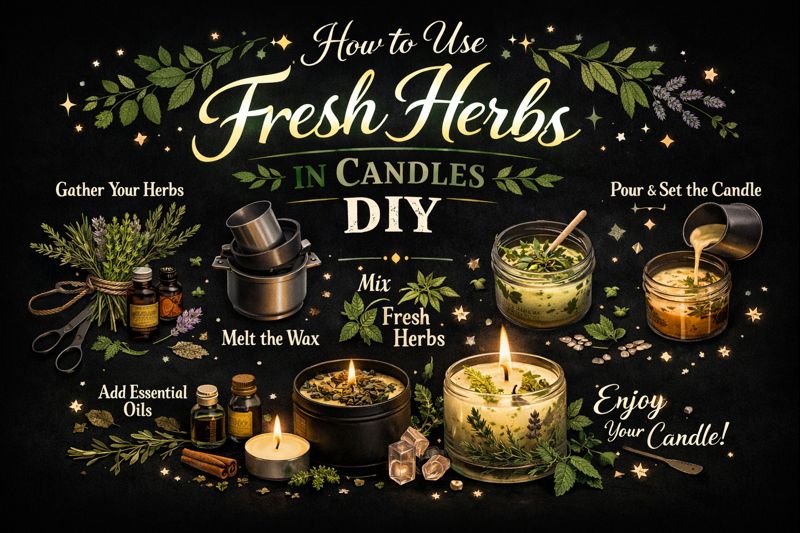
Step-by-Step Guide to Making a Fresh Herb Candle
Begin by preparing your herbs through drying or infusion. Measure your wax and melt it using a double boiler. While the wax melts, prepare your container by securing the wick in the center.
If infusing herbs, add them to the melted wax and allow them to steep at low heat for 30 to 60 minutes, then strain thoroughly.
Allow the wax to cool slightly before adding essential oils. Stir gently to distribute fragrance evenly.
Pour the wax into the container. If embedding herbs, wait until the wax thickens before placing them along the sides. Ensure the wick remains centered.
Let the candle cool completely at room temperature. Trim the wick before lighting and perform a test burn.
Creative Design Ideas for Herbal Candles
Herbal candles offer endless creative possibilities. Seasonal themes are particularly popular, such as rosemary and pine for winter, basil and lemon for summer, or sage and eucalyptus for spring.
You can create intention-based candles for relaxation, focus, cleansing, or meditation using symbolic herbs and scent pairings.
Transparent glass containers highlight botanical details beautifully, while ceramic vessels add an earthy, handcrafted feel.
You can also experiment with color by using natural dyes or mica powders to complement the herbs used.
Common Mistakes to Avoid
One of the most common mistakes is using herbs that are too fresh and moist, leading to mold or poor burning. Another is overcrowding the candle with botanicals, which increases fire risk.
Avoid placing herbs near the wick or using large pieces that can shift during burning. Overheating wax during infusion can also destroy delicate herbal properties.
Skipping burn tests is another critical mistake. Every new herbal candle design should be tested thoroughly before regular use.
How to Store and Care for Herbal Candles
Herbal candles should be stored in a cool, dry place away from direct sunlight. Excess heat can cause herbs to discolor or lose fragrance.
If your candle contains visible herbs, consider covering it when not in use to prevent dust accumulation.
Over time, herbal scents may soften, especially in candles without added essential oils. This is normal and part of their natural charm.
Are Fresh Herb Candles Good for Gifts and Selling
Fresh herb candles make thoughtful, personalized gifts, especially for holidays, housewarmings, and wellness-themed occasions.
If selling, ensure your candles meet local safety and labeling regulations. Include clear instructions such as trimming the wick, keeping the candle away from drafts, and discontinuing use when wax reaches a certain level.
Handcrafted herbal candles appeal strongly to eco-conscious consumers, but quality and safety must always come first.
Final Thoughts on Using Fresh Herbs in DIY Candles
Using fresh herbs in DIY candles is a rewarding and creative practice that bridges nature, craftsmanship, and sensory experience. While it requires more care than standard candle making, the results can be truly special when done correctly.
By choosing the right herbs, preparing them properly, prioritizing safety, and experimenting with thoughtful design, you can create candles that are not only beautiful but meaningful and enjoyable to use.
Whether you are crafting for personal enjoyment, gifting, or small-scale selling, herbal candles offer a unique way to bring the essence of nature into everyday life. With patience, creativity, and respect for the materials, your fresh herb candles can become a signature expression of your DIY artistry.