Pomegranate is one of the most intriguing fruits in the world. With its thick ruby-red skin and jewel-like seeds inside, it looks almost too beautiful to eat. But beyond its appearance, many people wonder: what does pomegranate taste like?
The answer is more layered than you might expect. Pomegranate offers a complex balance of sweetness and tartness, a refreshing burst of juice, and a subtle depth that makes it unique among fruits. Its flavor can vary depending on the variety, ripeness, and growing region, but at its best, it delivers a vibrant, sweet-tangy experience unlike anything else.
In this detailed guide, we’ll explore everything about the taste of pomegranate — from its flavor profile and texture to how it compares with other fruits and how ripeness affects its taste.
The Basic Flavor Profile of Pomegranate
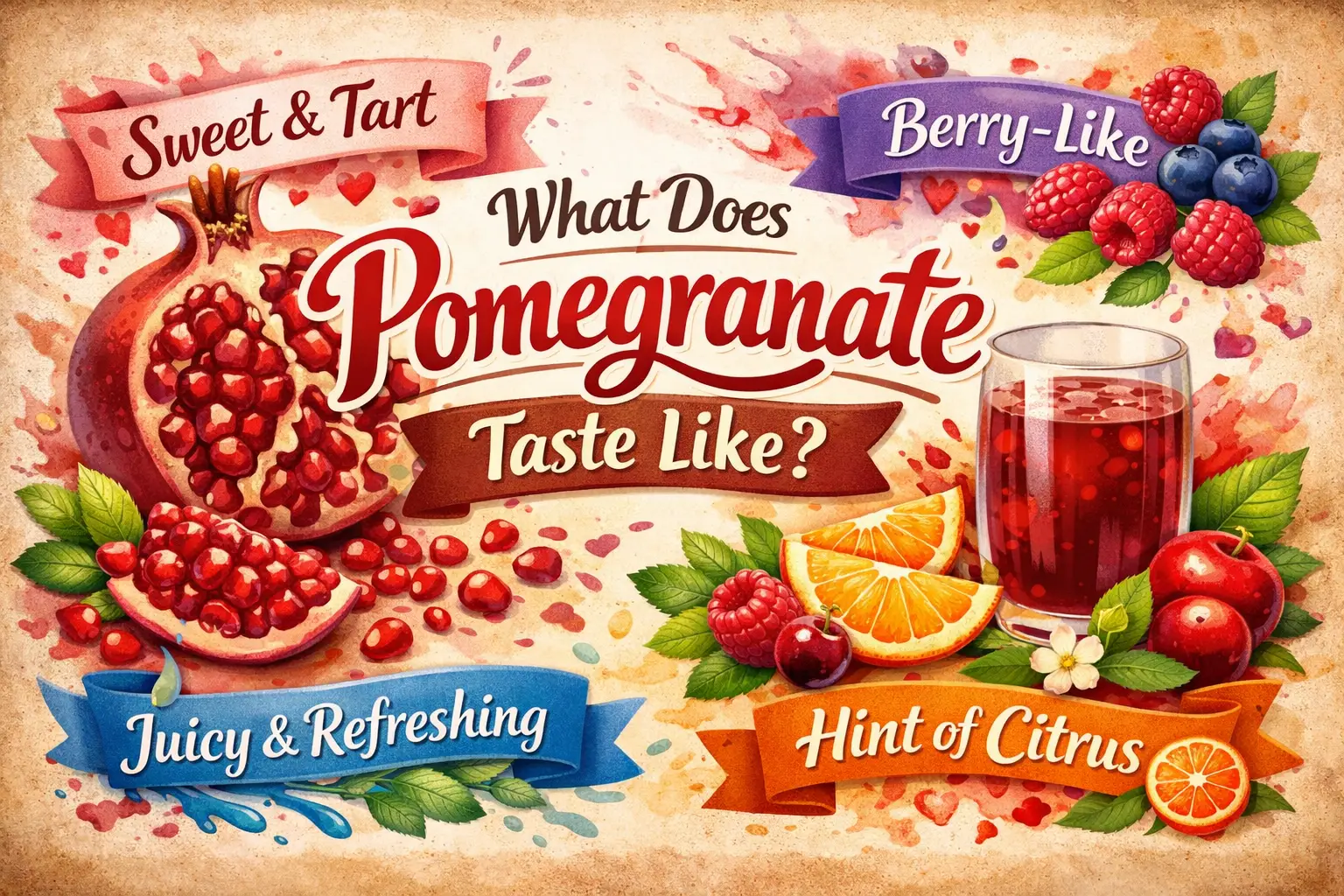
At its core, pomegranate has a sweet-tart flavor. That means it combines sugary sweetness with a noticeable tang or acidity. Think of it as a refreshing burst of juice that dances between bright and rich.
Here’s what most people notice when they first taste pomegranate:
- A sharp, tangy opening
- Followed by a pleasant natural sweetness
- A juicy, slightly wine-like finish
- Mild floral undertones in some varieties
The balance between sweet and tart is what makes pomegranate so addictive. Unlike fruits that are purely sweet (like bananas) or purely sour (like lemons), pomegranate lives comfortably in between.
The Taste of the Arils (Seeds)
When people talk about eating pomegranate, they are usually referring to the edible arils — the small, ruby-colored pods inside the fruit. Each aril contains juice and a tiny white seed.
The arils are:
- Juicy
- Crisp when bitten
- Bursting with sweet-tart liquid
- Slightly crunchy due to the inner seed
The juice inside each aril delivers the fruit’s signature flavor. When you bite into it, the thin outer membrane pops and releases a refreshing splash of juice.
The inner seed is edible and adds a mild nutty note. Some people love the added crunch, while others prefer to extract only the juice.
Sweet vs Tart: How the Balance Changes
Not all pomegranates taste the same. The flavor depends heavily on ripeness and variety.
When It’s Fully Ripe
A perfectly ripe pomegranate is:
- More sweet than sour
- Rich and deeply fruity
- Balanced and smooth
The sweetness becomes more pronounced, and the tartness feels refreshing rather than sharp.
When It’s Slightly Underripe
An underripe pomegranate tends to taste:
- More acidic
- Sharply tangy
- Less sweet
It may still be enjoyable if you prefer sour flavors, but it won’t have the full rounded sweetness of a ripe fruit.
When It’s Overripe
An overripe pomegranate can taste:
- Slightly fermented
- Less vibrant
- Sometimes bitter
Freshness is key for the best flavor.
Does Pomegranate Taste More Sweet or Sour?
Most people describe pomegranate as leaning slightly toward sweet, but with a strong tart backbone.
If you enjoy fruits like:
- Cranberries
- Red grapes
- Cherries
- Raspberries
You’ll likely enjoy pomegranate. It shares some similarities with these fruits but has a distinct brightness that sets it apart.
Some varieties are bred specifically to be sweeter, while others maintain a bold tangy punch.
Texture: A Big Part of the Experience
Taste is only part of the story. Texture plays a huge role in how pomegranate feels in your mouth.
When you eat pomegranate arils, you experience:
- A crisp outer pop
- A burst of cool juice
- A soft crunch from the inner seed
This layered texture makes it more interactive than many fruits. It’s not soft like a peach or smooth like a mango. It’s crisp, juicy, and slightly crunchy all at once.
For some people, the crunchy seed adds interest. For others, it’s something they need to get used to.
Does Pomegranate Taste Like Juice?
Pomegranate juice is widely available in stores, but it doesn’t taste exactly like fresh arils.
Fresh arils taste:
- Brighter
- Lighter
- More refreshing
- Slightly less concentrated
Packaged juice often tastes:
- Stronger
- Deeper
- More tannic
- Sometimes sweeter or more sour depending on added ingredients
When the juice is extracted and concentrated, it can develop a bold, almost wine-like richness.
Flavor Notes: Breaking It Down
If we describe pomegranate like a professional food taster, its flavor includes:
- Bright acidity
- Natural fructose sweetness
- Mild berry-like undertones
- Subtle floral hints
- Slight tannin dryness (especially in juice form)
The tannins give pomegranate juice a faint drying sensation, similar to red wine or strong tea. This is part of what makes it feel complex rather than simply sweet.
How Pomegranate Compares to Other Fruits
Understanding pomegranate’s taste becomes easier when we compare it to familiar fruits.
Compared to Apples
Apples are usually either sweet or tart, but they don’t have the juicy burst that pomegranate offers. Pomegranate feels more vibrant and layered.
Compared to Oranges
Oranges are sweeter and more citrus-forward. Pomegranate is less citrusy and more berry-like, with deeper complexity.
Compared to Cranberries
Cranberries are much more sour. Pomegranate shares some tartness but balances it with noticeable sweetness.
Compared to Grapes
Red grapes are sweeter and softer. Pomegranate is tangier and more textured.
What Influences the Taste of Pomegranate?
Several factors affect how a pomegranate tastes.
Variety
Different cultivars have different sugar levels. Some are intensely sweet, while others are distinctly tart.
Climate
Pomegranates grown in hot, dry climates tend to develop more concentrated sweetness. Regions such as parts of the Middle East, Mediterranean areas, and South Asia are well known for flavorful fruit.
Soil Quality
Mineral-rich soil can enhance the fruit’s complexity and depth.
Harvest Timing
Fruits picked too early won’t reach full sweetness, while those picked too late may lose brightness.
Cultural Appreciation of Pomegranate Flavor
Pomegranate has been cultivated for thousands of years. Ancient civilizations valued it not only for nutrition but also for flavor.
In regions like the Middle East and South Asia, pomegranate is used in:
- Fresh salads
- Chutneys
- Rice dishes
- Yogurt sauces
- Desserts
Its sweet-tart profile makes it versatile in both savory and sweet recipes.
In some cultures, dried pomegranate seeds (anardana) are used as a spice, adding a tangy punch to curries and marinades.
Does Everyone Like the Taste?
Pomegranate’s flavor is generally well loved, but taste preferences vary.
People who enjoy:
- Sweet fruits with a tangy twist
- Bright, refreshing flavors
- Juicy bursts of flavor
Usually love pomegranate.
Those who prefer only very sweet fruits without acidity may find it slightly sharp.
The crunchy seed texture can also be a deciding factor for some.
How to Tell If It Will Suit Your Taste
If you’re unsure whether you’ll like pomegranate, ask yourself:
- Do I enjoy sweet and sour candy?
- Do I like berries with tartness?
- Do I enjoy cranberry juice when it’s slightly sweetened?
If the answer is yes, there’s a strong chance you’ll enjoy pomegranate.
Seasonal Influence on Taste
Pomegranate season typically falls in autumn in many regions. During peak season, the fruit is at its sweetest and juiciest.
Out-of-season pomegranates may taste less vibrant due to storage and transport conditions.
Buying during peak harvest time increases your chances of experiencing its best flavor.
The Aftertaste
One of the most interesting aspects of pomegranate is its clean finish.
After swallowing, you may notice:
- A lingering mild sweetness
- A faint tang
- A slight dryness on the tongue
This layered aftertaste contributes to its sophisticated profile.
How Cooking Changes the Flavor
When pomegranate is cooked or reduced (such as in pomegranate molasses), the flavor intensifies.
It becomes:
- Sweeter
- Richer
- Slightly caramelized
- More concentrated
The tartness mellows, and the fruit takes on a deeper, almost syrupy complexity.
Children vs Adults: Different Taste Experiences
Children often focus on the sweetness and enjoy the juicy pop. Adults tend to appreciate the balance between tartness and sweetness, noticing the more subtle undertones.
This makes pomegranate a fruit that can appeal across age groups.
The Emotional Experience of Eating Pomegranate
Flavor isn’t just about chemistry — it’s about experience.
Eating pomegranate can feel:
- Refreshing on a warm day
- Festive due to its vibrant color
- Satisfying because of the interactive texture
- Luxurious due to its jewel-like appearance
The sensory combination of taste, texture, and color enhances enjoyment.
Final Answer: What Does Pomegranate Taste Like?
So, what does pomegranate taste like?
It tastes like a vibrant balance of sweet and tart, delivered in juicy bursts with a slight crunch. It combines berry-like brightness with subtle floral notes and a refreshing acidity. Depending on ripeness and variety, it can lean sweeter or tangier, but it always carries a lively, refreshing character.
If you enjoy fruits that are refreshing, complex, and not overly sugary, pomegranate is likely to become one of your favorites.
Its flavor is bold yet balanced, bright yet deep, sweet yet tangy — a rare harmony that has captivated people for thousands of years.
Once you taste a perfectly ripe pomegranate, it’s easy to understand why it has remained one of the most treasured fruits across cultures and generations.