



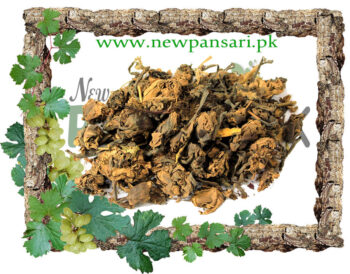


- Helps digestion
- Controls sugar
- Boosts immunity
- Good for heart and liver
- Helps skin and breathing
Thyme Leaves | Dry thyme Leaves | Barg e Ajwain Thymus genus 100% Pure
Price range: ₨450.00 through ₨2,050.00
17 sold in last 8 hours
Hurry! Over 15 people have this in their carts
Brand: New Pansari
صعتر, صعتر فارسی
- Rich in antioxidants
- Supports respiratory health
- Anti-inflammatory properties
- Aids digestion
- Relieves cough and cold symptoms
- Improves skin health
- Supports heart health
- Contains antimicrobial properties
- May aid in lowering blood pressure
- Boosts immunity
- Eases menstrual discomfort
- Enhances cognitive function and memory
-
اجوائن کے پتے
... people are viewing this right now
Thyme Leaves | Dry Thyme (Barg-e-Ajwain) – خشک اجوائن کے پتے
Thyme Leaves (Dry Thyme / Barg-e-Ajwain) are aromatic dried leaves of the Thymus genus, widely used as a culinary herb and traditional botanical ingredient. Thyme is known for its pleasant earthy, slightly minty, warm, and herbal aroma and is commonly used to season meats, vegetables, soups, sauces, breads, and savory dishes.
In South Asian markets, the term Barg-e-Ajwain (برگِ اجوائن) may be used for certain aromatic leaves, although common names can vary between regions and should not be confused with the seeds commonly known as ajwain.
What Is Dry Thyme?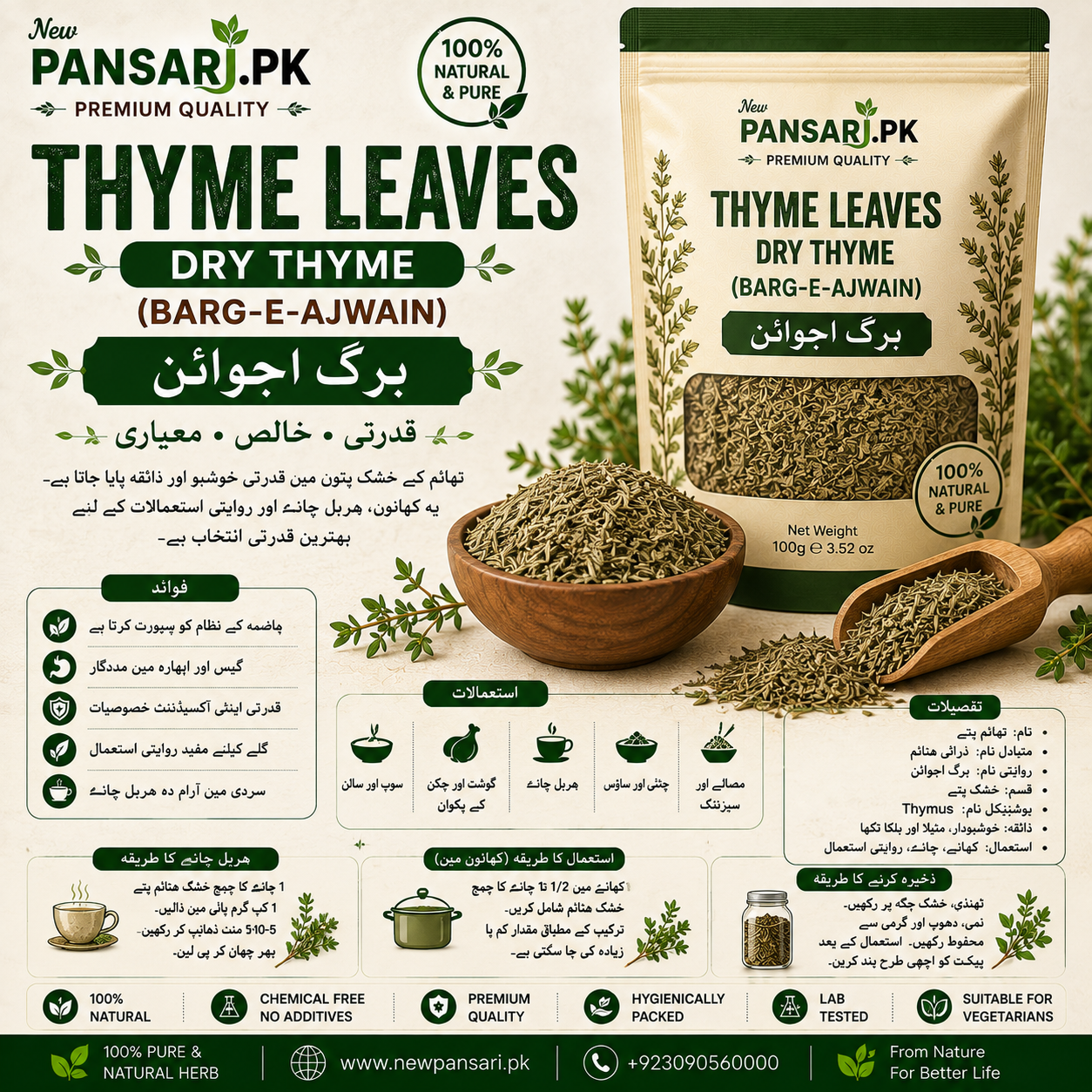
Thyme is a small aromatic herb belonging to the Lamiaceae family. Several species and varieties are used as culinary herbs, with Thymus vulgaris being one of the best-known culinary types.
The leaves are harvested, dried, and prepared for use as a seasoning. Drying reduces moisture while preserving much of the herb’s characteristic fragrance and flavor.
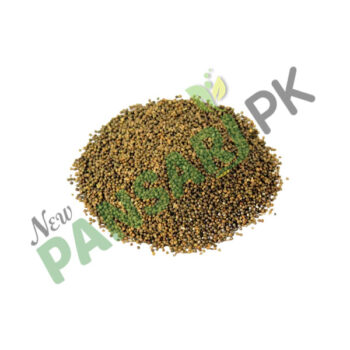
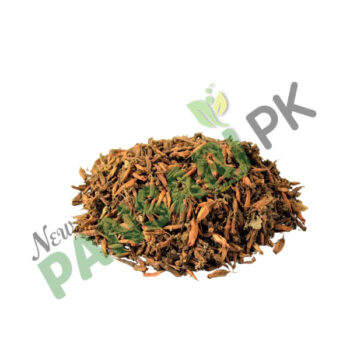
Dry thyme is typically green to grayish-green and has a concentrated herbal aroma compared with fresh leaves.
Flavor and Aroma
Thyme has a distinctive flavor profile that combines:
- Earthy herbal notes
- Mild mint-like freshness
- Subtle peppery character
- Warm aromatic notes
- Slightly woody undertones
Because dried thyme is more concentrated than fresh thyme, a relatively small amount can provide noticeable flavor to a dish.
Culinary Uses of Dry Thyme
Dry Thyme is a versatile kitchen herb and can be used in many recipes.
Popular applications include:
- Grilled and roasted meats
- Chicken dishes
- Fish and seafood
- Soups
- Stews
- Pasta sauces
- Roasted vegetables
- Potatoes
- Rice dishes
- Baked foods
- Marinades
- Homemade spice blends
- Herbal teas and culinary infusions
Thyme pairs particularly well with garlic, black pepper, rosemary, oregano, lemon, and olive oil.
Dry Thyme for Meat and Chicken
Thyme is commonly used as a seasoning for chicken, lamb, beef, and other savory dishes. It can be mixed with salt, black pepper, garlic, and oil to create a simple marinade or dry rub.
When roasting meat or vegetables, dried thyme can be added directly to the seasoning mixture before cooking.
Thyme in Soups and Stews
The warm herbal flavor of thyme works especially well in soups, broths, and slow-cooked stews. It can add depth without dominating the other ingredients.
For dishes cooked for a long time, thyme can be added during cooking so its aroma gradually infuses throughout the recipe.
Traditional Herbal Use
Thyme has a long history of traditional use in different cultures. Historically, thyme preparations have been used as herbal infusions and traditional botanical remedies.
Thyme contains naturally occurring aromatic compounds, including thymol and carvacrol, which contribute to its characteristic fragrance.
However, culinary use and traditional use should not be confused with established medical treatment. Dry Thyme is primarily offered as a culinary herb unless a product is specifically formulated and labeled for another purpose.
Nutritional and Botanical Characteristics
As a dried culinary herb, thyme is used in relatively small quantities. It can contribute small amounts of naturally occurring plant compounds and micronutrients to the diet, although it should not be relied upon as a primary nutritional source.
Its main culinary value comes from its concentrated aroma and flavor.
Product Features
- Natural dried thyme leaves
- Aromatic culinary herb
- Commonly known as Dry Thyme
- Traditionally referred to in some markets as Barg-e-Ajwain
- Green to grayish-green dried appearance
- Strong, pleasant herbal aroma
- Suitable for meats, vegetables, soups, sauces, and marinades
- Convenient pantry ingredient
How to Use Dry Thyme
Add Dry Thyme directly to food during cooking or sprinkle a small amount over finished dishes. Because dried herbs are concentrated, begin with a modest quantity and adjust according to taste.
For homemade seasoning blends, combine thyme with other herbs and spices such as rosemary, oregano, garlic, black pepper, and parsley.
Storage Instructions
Store Dry Thyme in an airtight container in a cool, dry place away from direct sunlight, heat, and moisture.
Keep the container tightly closed to preserve the herb’s volatile aromatic compounds. Avoid storing it near steam or strong-smelling spices.
For best flavor, use within the recommended shelf life and replace the herb when its aroma becomes noticeably weak.
Choosing Quality Thyme Leaves
High-quality dried thyme should have a pleasant, characteristic herbal aroma and a reasonably green to grayish-green appearance. The leaves should be properly dried and free from excessive moisture, mold, insects, and foreign material.
When purchasing Barg-e-Ajwain, customers should check the product’s botanical identification because regional common names may refer to different plants.
Important Information
The name Barg-e-Ajwain can vary in meaning across South Asian markets. It should not automatically be assumed to mean the leaves of the same plant that produces common ajwain seeds. For accurate identification, customers should check the botanical name on the product packaging.
If using thyme as a food ingredient, choose a product specifically labeled as food-grade culinary thyme.
Why Choose Dry Thyme from New Pansari?
New Pansari offers Thyme Leaves | Dry Thyme (Barg-e-Ajwain) as a convenient aromatic herb for everyday cooking.
Its earthy, warm, and mildly minty flavor makes it an excellent addition to meat, chicken, vegetables, soups, stews, sauces, marinades, and homemade spice blends. Proper storage helps preserve the natural aroma and flavor of the dried leaves.
Product Name
Thyme Leaves | Dry Thyme (Barg-e-Ajwain)
Botanical Name
Thymus spp. — culinary thyme commonly includes Thymus vulgaris
Common Names
Thyme Leaves, Dry Thyme, Thyme Herb, Barg-e-Ajwain, برگ اجوائن, Dried Thyme Leaves
Product Type
Dried Culinary Herb / Botanical Ingredient
Disclaimer
This product is primarily intended as a culinary herb. Traditional uses of thyme should not be interpreted as proven medical benefits. Common names such as “Barg-e-Ajwain” can vary regionally, so verify the botanical identity when purchasing. This product is not intended to diagnose, treat, cure, or prevent any disease.
| Quantity | 50GM, 100GM, 250GM |
|---|---|
| Form | Whole ( ثابت ), Grounded ( کٹی ہوی ), Powder ( پسا ہوا ) |
Related Products
Madras Leaf Flower Seeds (Tukhm-e-Kanucha) Phyllanthus Maderaspatensis Seeds (Kanocha) 100% Pure
Price range: ₨180.00 through ₨1,750.00
- Easy to grow and maintain
- Enhances garden aesthetics with vibrant flowers
- Attracts pollinators like bees and butterflies
- Improves air quality around home or garden
- Can be grown in pots, gardens, or balconies
Axle Wood Flower (Gul-e-Dhawa) Anogeissus latifolia 100% Pure
Price range: ₨150.00 through ₨600.00
- Helps breathing – may ease cough and mild asthma.
- Aids digestion – can reduce bloating and stomach discomfort.
- Good for skin – soothes minor skin irritations.
- Relaxing aroma – used in incense or oils for stress relief.
- Anti-inflammatory – may reduce minor inflammation.
Water Lily Flower (Gul-e-Neelofer, Kanwal Ka Phool) 100% Pure
Price range: ₨120.00 through ₨800.00
- Promotes relaxation
- reduces stress and anxiety
- supports skin health
- aids digestion
- boosts immunity
- improves sleep quality
- natural detoxifier
- enhances overall wellness
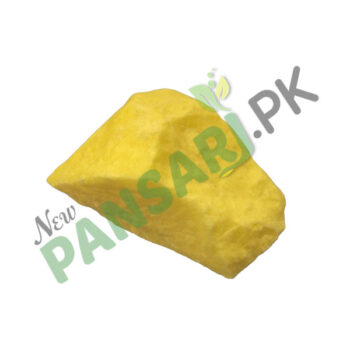
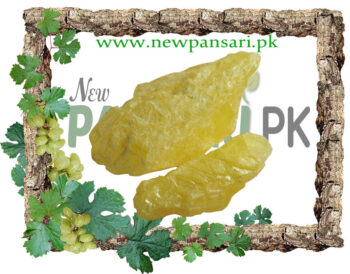
Yellow Sulfur (Amla Saar Gandhak) 100% Pure
Price range: ₨180.00 through ₨1,300.00
- Supports skin health
- aids digestion
- boosts immunity
- promotes liver and kidney function
- reduces inflammation
- natural detoxifier
- enhances overall wellness


Almond Straw (Badam Ki Khali) 100% Natural Prunus dulcis
Price range: ₨100.00 through ₨800.00
- May help heart and brain health
- Supports skin, teeth, and bones
- Could help control blood sugar and weight
- May aid digestion
- Can improve soil when used as compost
- Sometimes used as animal feed

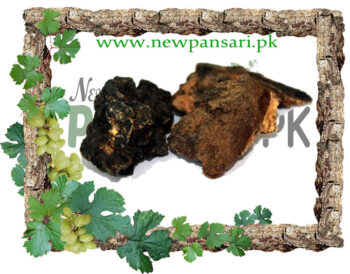
Betel Nut Flower (Gul Supari) Areca Catechu Flower 100% Natural
Price range: ₨120.00 through ₨550.00
- Digestive Aid
- Anti-inflammatory Properties
- Antioxidant Effects
- Respiratory Support
- Skin HealthMild Stimulant
Vetiver (Khus) 100% Pure Natural Chrysopogon zizanioides Root
Price range: ₨120.00 through ₨800.00
- Reduces stress and anxiety
- promotes relaxation
- cools the body
- improves sleep quality
- supports skin health
- boosts immunity
- natural detoxifier
- enhances overall wellness
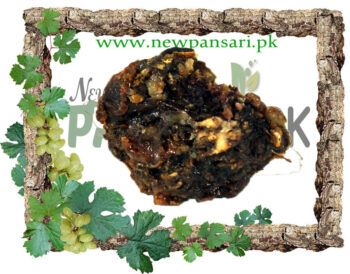
Asafoetida (Hing) 100% Natural
Price range: ₨400.00 through ₨7,200.00
- Good for digestion: Reduces gas, bloating, and constipation.
- Helps in cough & cold: Clears chest congestion and soothes throat.
- Reduces menstrual cramps: Eases pain during periods.
- Anti-inflammatory: Helps with joint pain.
- Fights bad breath: Acts as a natural mouth freshener.
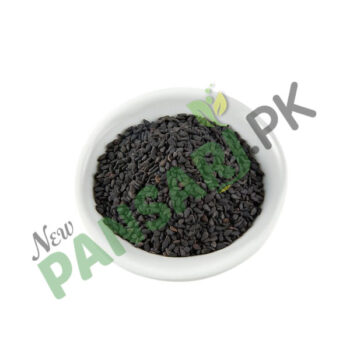
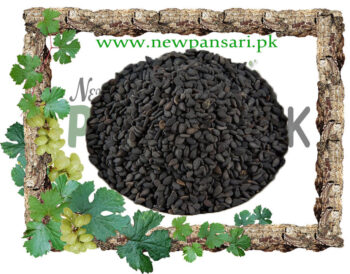
Basil Seeds (Tukham Banalga) 100% Pure تخم بلنگو Ocimum basilicum
Price range: ₨200.00 through ₨1,150.00
- Good for digestion – helps with constipation.
- Helps in weight loss – makes you feel full.
- Controls blood sugar – good for diabetics.
- Healthy heart – reduces cholesterol.
- Good for skin – antioxidants fight aging.
- Reduces inflammation – helps with swelling and pain.
- Cooling effect – soothes body heat.


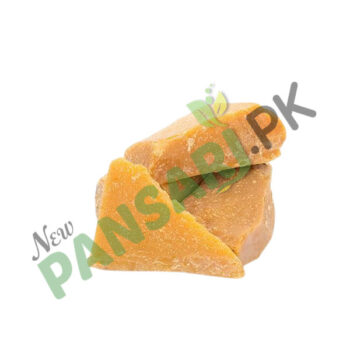
Lodh Tree (Lodh Pathani) Symplocos racemosa 100% Pure
Price range: ₨100.00 through ₨850.00
- helps in treating digestive disorders
- supports skin health
- reduces inflammation
- aids in weight management
- improves immunity
- promotes liver health
- helps in wound healing.
Reviews
There are no reviews yet.