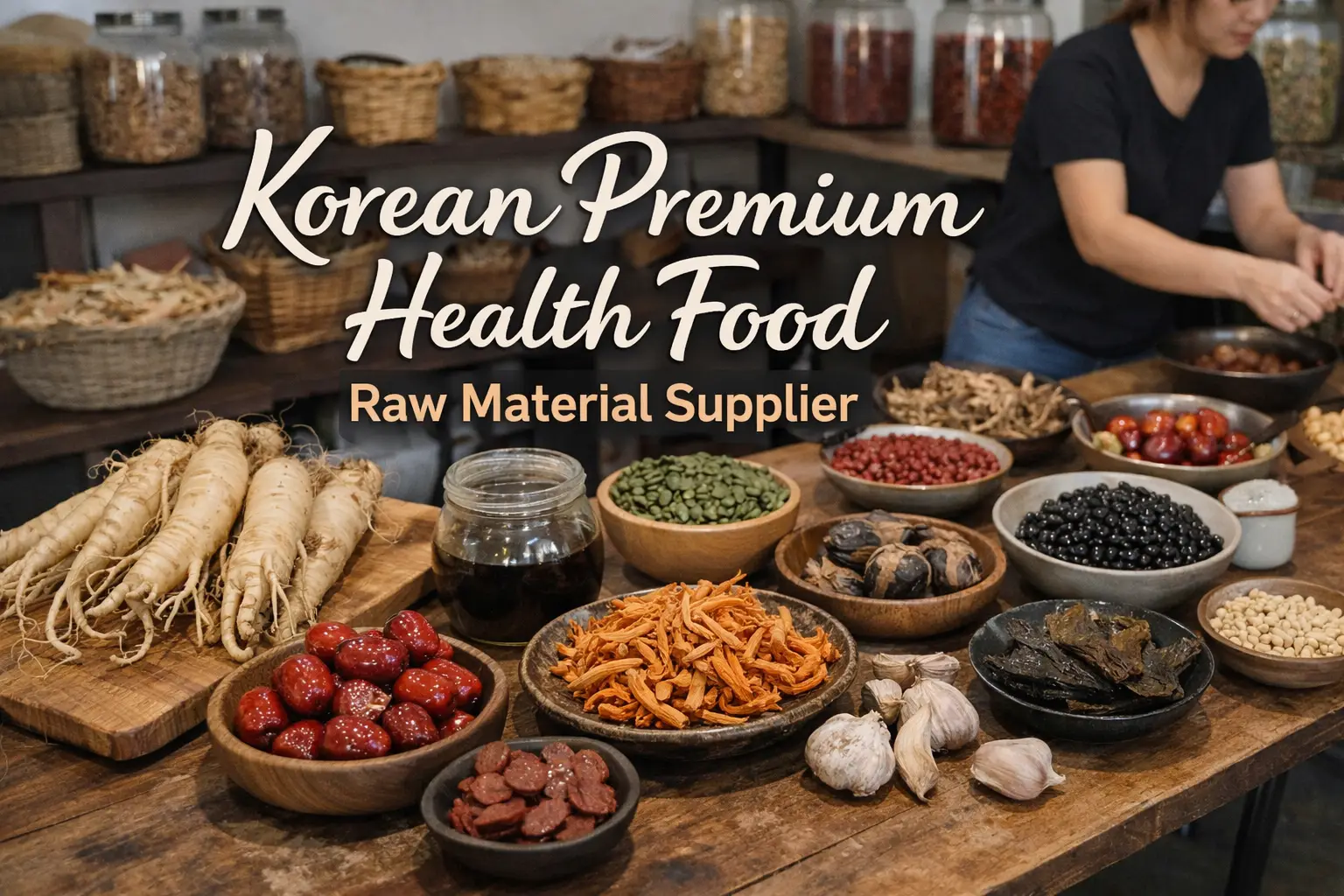
The global health and wellness industry has witnessed remarkable growth over the past decade, and South Korea has emerged as one of the most influential players in the premium health food sector. A Korean premium health food raw material supplier is not simply a distributor of ingredients; it is a strategic partner that provides scientifically validated, high-quality, traceable, and functional raw materials to manufacturers across the world.
From traditional botanical extracts such as red ginseng to cutting-edge probiotic strains and marine collagen peptides, Korean suppliers are shaping global trends in functional nutrition. This comprehensive guide explores the structure, strengths, sourcing strategies, quality standards, innovation practices, and global competitiveness of Korean premium health food raw material suppliers.
The Rise of Korea in the Global Health Food Market
South Korea’s reputation for excellence in beauty and skincare has extended into the functional food and nutraceutical industry. Consumers worldwide now associate Korean products with innovation, safety, and premium quality.
Government-backed initiatives, strong research institutions, and strict regulatory oversight have contributed to this reputation. The Korean health functional food industry operates under guidelines from the Ministry of Food and Drug Safety (MFDS), ensuring compliance with safety, labeling, and efficacy standards.
Korean suppliers serve domestic brands and international nutraceutical manufacturers, exporting to markets such as North America, Southeast Asia, Europe, and the Middle East.
What Defines a Premium Health Food Raw Material Supplier?
A premium supplier is defined by more than the ingredient itself. Several core factors distinguish Korean premium suppliers:
Scientific Validation
Premium suppliers invest heavily in clinical trials, R&D partnerships, and laboratory testing. Ingredients are often supported by peer-reviewed research or human studies to substantiate health claims.
Traceability and Transparency
Traceability from farm to finished extract is critical. Korean suppliers often maintain vertically integrated supply chains or long-term contracts with local farmers to ensure consistent quality.
Advanced Processing Technology
Korean companies use advanced extraction techniques such as low-temperature extraction, fermentation, enzyme hydrolysis, and membrane filtration to preserve bioactive compounds.
Strict Quality Control
Quality assurance includes microbial testing, heavy metal analysis, pesticide residue checks, and standardized active compound levels.
Key Categories of Korean Premium Health Food Raw Materials
Korean suppliers typically specialize in high-demand functional categories.
Red Ginseng Extract
Red ginseng is arguably Korea’s most famous health ingredient. It is often associated with the brand reputation of organizations such as Korea Ginseng Corporation, known for premium ginseng products.
Korean red ginseng is steamed and dried to enhance its ginsenoside content. Premium raw material suppliers standardize extracts to specific ginsenoside concentrations, ensuring consistent potency for manufacturers.
Benefits associated with red ginseng include immune support, energy enhancement, and cognitive function improvement.
Probiotics and Postbiotics
Korea has developed a strong reputation in the probiotic sector. Suppliers offer proprietary strains targeting digestive health, immunity, and metabolic balance.
Premium suppliers differentiate themselves by offering:
- Clinically studied strains
- Stability testing under various environmental conditions
- Shelf-life documentation
- Customized strain blends
Collagen Peptides
Marine collagen, particularly derived from fish scales, is a popular export ingredient. Korean suppliers refine collagen peptides into low-molecular-weight forms for enhanced absorption.
Collagen raw materials are widely used in:
- Beauty supplements
- Joint health formulations
- Functional beverages
- Powder sachets
Herbal Extracts
Beyond ginseng, Korean suppliers provide extracts from:
- Hovenia dulcis (often used in liver support formulations)
- Angelica gigas
- Green tea catechins
- Fermented botanical blends
Fermentation technology is a distinctive advantage in Korea, enhancing bioavailability and reducing bitterness.
Functional Mushrooms
Mushrooms such as reishi, cordyceps, and shiitake are extracted and standardized for beta-glucan content. Korean suppliers often cultivate mushrooms in controlled environments to ensure purity and consistency.
Sourcing and Agricultural Excellence
Premium suppliers understand that high-quality raw materials begin at the agricultural stage. Korea’s mountainous terrain and four-season climate contribute to unique soil conditions favorable for medicinal herbs.
Many suppliers:
- Operate contracted farms
- Use organic or pesticide-controlled cultivation methods
- Implement Good Agricultural Practices (GAP)
- Conduct soil and water testing
Sustainability practices are also gaining importance, with suppliers adopting eco-friendly farming techniques and minimizing environmental impact.
Research and Development Capabilities
Korean premium suppliers invest significantly in R&D. Partnerships with universities and biotechnology institutes allow suppliers to:
- Develop novel extraction methods
- Identify bioactive markers
- Conduct stability testing
- Perform clinical evaluations
Some companies establish in-house research centers with advanced chromatography and spectrometry equipment for precise compound analysis.
Innovation also extends to product format development. Suppliers provide raw materials optimized for:
- Gummies
- Soft gels
- Stick packs
- Powder sachets
- Functional beverages
Regulatory Compliance and Certifications
Korean suppliers targeting international markets must comply with multiple regulatory standards.
Common certifications include:
- GMP (Good Manufacturing Practice)
- ISO 22000
- HACCP
- Halal certification
- Kosher certification
For exports to the United States, suppliers align with FDA requirements. For European markets, they comply with EFSA guidelines.
MFDS approval adds another layer of credibility, particularly for ingredients classified as Health Functional Foods within Korea.
Quality Control Systems
Premium Korean suppliers operate rigorous quality control systems.
Testing typically includes:
- Heavy metals (lead, arsenic, mercury, cadmium)
- Microbial contamination
- Pesticide residues
- Active ingredient standardization
- Moisture content
- Stability testing
Some suppliers utilize third-party laboratory verification to strengthen credibility in global markets.
Quality control extends to packaging. Oxygen-barrier packaging and moisture-proof storage ensure raw material stability during shipping.
OEM and ODM Services
In addition to supplying raw materials, many Korean companies offer OEM (Original Equipment Manufacturing) and ODM (Original Design Manufacturing) services.
This allows international brands to:
- Develop customized formulations
- Access proprietary ingredient blends
- Launch private-label supplements
- Scale production efficiently
An example of a prominent Korean manufacturer active in functional ingredients and supplement development is COSMAX, known primarily in cosmetics but also involved in health functional product manufacturing.
These integrated services position Korean suppliers as strategic partners rather than simple ingredient exporters.
Global Export Strength
Korean premium health food raw material suppliers export to diverse markets.
United States
High demand exists for:
- Red ginseng extracts
- Probiotics
- Collagen peptides
American brands value Korea’s clinical research and standardization.
Southeast Asia
Countries like Vietnam, Thailand, and Malaysia import Korean raw materials for local supplement brands. Halal certification is particularly important in Muslim-majority markets.
Middle East
The Middle East shows increasing demand for immune-boosting ingredients and beauty supplements.
Europe
European buyers focus heavily on regulatory compliance and scientific validation. Suppliers with strong documentation have competitive advantages.
Technological Advantages
Korean suppliers utilize advanced extraction and processing technologies:
- Supercritical CO2 extraction
- Enzyme-assisted extraction
- Fermentation bioconversion
- Spray drying and freeze drying
Fermentation is a unique strength of Korean suppliers. Inspired by traditional Korean fermentation practices, modern biotechnology methods enhance nutrient absorption and stability.
Sustainability and Ethical Practices
Sustainability has become central to supplier evaluation.
Premium Korean suppliers increasingly focus on:
- Eco-friendly cultivation
- Reduced water consumption
- Renewable energy use
- Sustainable marine sourcing for collagen
- Waste reduction programs
International buyers now demand Environmental, Social, and Governance (ESG) reporting, and Korean suppliers are adapting accordingly.
Competitive Advantages of Korean Suppliers
Several factors distinguish Korean premium health food raw material suppliers from competitors in China, Europe, or North America.
Brand Trust
Korea has built strong global credibility in quality-driven industries.
Innovation Culture
The fast-paced innovation environment in Korea encourages rapid development of new ingredient technologies.
Government Support
Government export initiatives and funding programs help suppliers expand internationally.
Integration of Tradition and Science
Korea uniquely combines centuries-old herbal knowledge with modern scientific validation.
Challenges Facing Korean Suppliers
Despite strengths, challenges exist:
- Rising production costs
- Intense competition from lower-cost markets
- Regulatory complexity across countries
- Supply chain disruptions
To remain competitive, suppliers must continue investing in automation, R&D, and digital supply chain systems.
Future Trends in Korean Health Food Raw Materials
Several emerging trends are shaping the future:
Personalized Nutrition
Suppliers are developing customizable ingredient blends tailored to individual health data.
Postbiotics and Paraprobiotics
Beyond live bacteria, suppliers are offering non-viable microbial components with health benefits.
Plant-Based Innovation
Plant-based proteins and botanical extracts continue gaining traction.
Beauty-from-Within
Nutricosmetics remain a dominant trend, especially collagen, hyaluronic acid, and antioxidant blends.
Clean Label Movement
Buyers prefer minimal processing, non-GMO, and additive-free ingredients.
Selecting the Right Korean Premium Supplier
When choosing a supplier, international buyers should evaluate:
- Certification portfolio
- Clinical evidence
- Production capacity
- Export experience
- Traceability documentation
- Customization capability
- Lead times
- MOQ requirements
On-site audits and third-party inspections are recommended for large-volume contracts.
Building Long-Term Partnerships
Korean suppliers emphasize relationship-building. Business culture values trust, long-term commitment, and consistent communication.
Successful partnerships often involve:
- Joint R&D projects
- Co-branded ingredient marketing
- Shared regulatory planning
- Ongoing quality audits
Strong communication ensures smooth product launches and regulatory approvals.
Conclusion
A Korean premium health food raw material supplier represents far more than a bulk ingredient source. These suppliers combine scientific validation, strict quality control, innovative processing technologies, and strong global export capabilities to deliver premium-grade functional ingredients.
From red ginseng extracts and probiotic strains to marine collagen and fermented botanicals, Korean suppliers play a pivotal role in shaping global nutraceutical trends. Their commitment to quality, traceability, research, and sustainability positions them as trusted partners in an increasingly competitive health food industry.
As global consumers continue prioritizing preventive health and functional nutrition, Korean premium raw material suppliers are well-positioned to lead the next phase of innovation. By blending traditional wisdom with modern biotechnology, they provide a model of excellence that continues to influence the international health food market.