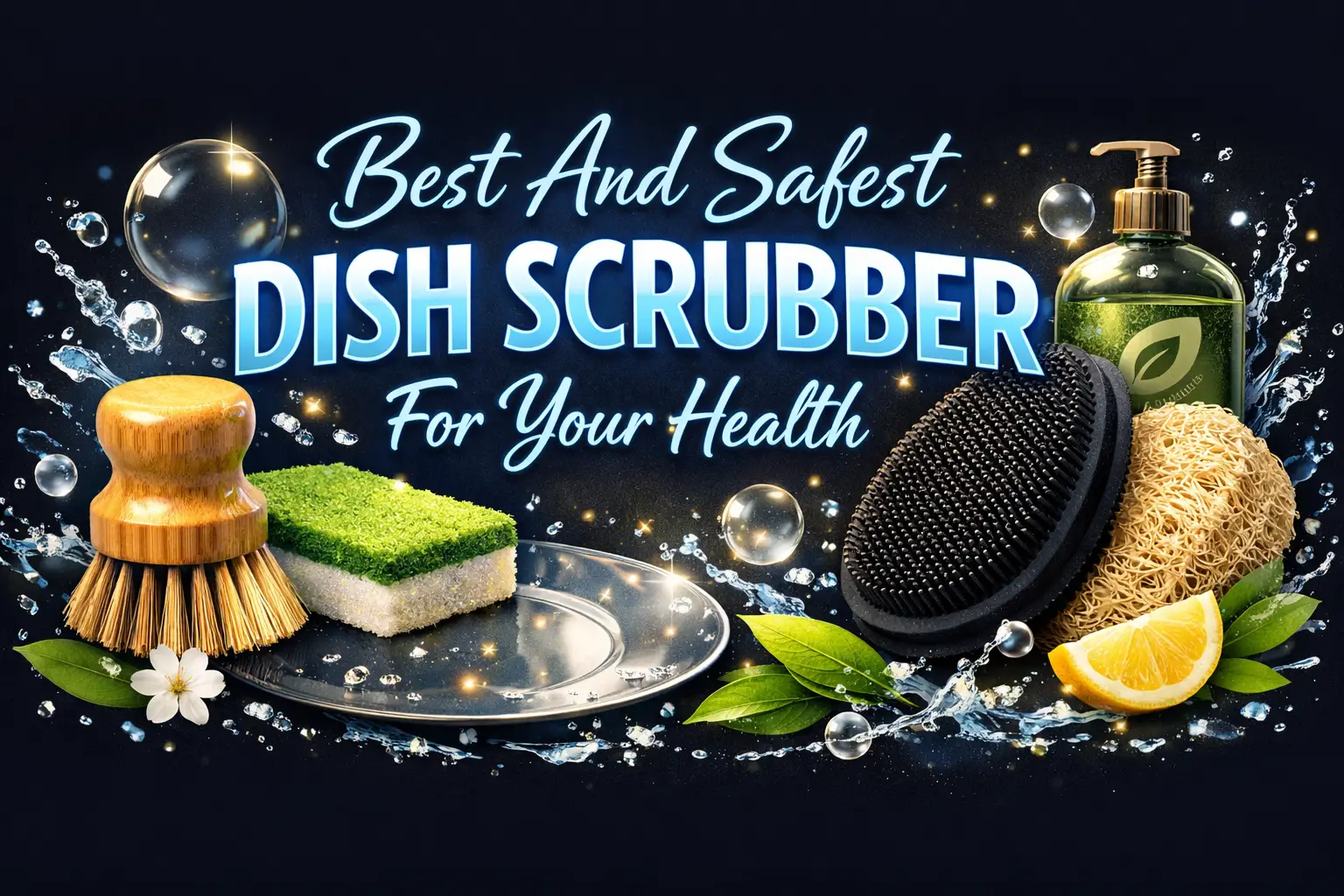
Keeping dishes clean is one of the most basic domestic chores, yet the tools we use for washing — especially dish scrubbers — can affect not only our home hygiene but also our health and the environment. A good dish scrubber doesn’t just remove food particles and grease; it resists bacterial growth, minimizes chemical exposure, and lasts long without degrading into harmful microplastics.
In this detailed guide, we explore what makes a dish scrubber safe for your health, the best options available, materials to avoid, and practical tips to maintain scrubbers so they don’t become a source of contamination themselves.
Why Choosing the Right Dish Scrubber Matters
The dish scrubber is constantly exposed to food residue, grease, water, and bacteria. Over time, if poorly chosen or poorly maintained, a scrubber can become:
- A breeding ground for bacteria like E. coli and Salmonella
- A source of unpleasant odors
- A carrier of chemicals that may leach into your dishes
- A contributor to microplastic pollution
Your choice of dish scrubber impacts:
- The cleanliness of your dishes
- Exposure to harmful microbes
- Chemical safety
- Environmental footprint
Choosing the safest dish scrubber isn’t just about cleaning efficiency — it’s about health, sustainability, and long-term value.
Criteria for Safe and Healthy Dish Scrubbers
Before recommending specific scrubbers, let’s define what makes a dish scrubber safe and healthy:
✅ 1. Antibacterial or Mold-Resistant Material
Scrubbers that either resist bacterial growth or dry quickly to inhibit bacteria are safer.
✅ 2. Non-Toxic and Chemical-Free
Some scrubbers are made with harmful chemicals (e.g., antibacterial agents like triclosan) that can leach into dishes or the environment.
✅ 3. Durable and Long-Lasting
Frequent replacement can be wasteful and may increase your exposure to bacteria if neglected.
✅ 4. Easy to Clean and Dry Quickly
Stagnant moisture encourages mold and bacterial growth. A scrubber that dries fast stays healthier.
✅ 5. Eco-Friendly
Materials that biodegrade cleanly or can be recycled reduce environmental impact and microplastic pollution.
Common Dish Scrubber Materials: Pros and Cons
Understanding materials helps you make a safer choice. Here’s a breakdown:
🔹 Plastic Scrubbers
Pros:
- Affordable
- Effective against greasy residue
Cons:
- Can harbor bacteria in crevices
- Break down into microplastics
- Often made from PVC/nylon — not biodegradable
Health Note: Plastic scrubbers that don’t dry well can sustain bacterial growth.
🔹 Sponge-Scrubber Hybrids
Pros:
- Soft side for gentle cleaning
- Scrubby side for tougher grime
Cons:
- Sponge portion gets smelly quickly
- Needs frequent replacement
- Often synthetic
Health Tip: These require very frequent cleaning (daily disinfecting) to remain safe.
🔹 Natural Fiber Scrubbers
Materials like:
- Coconut husk
- Loofah
- Sisal
- Cotton
Pros:
- Biodegradable
- Breathable, dries relatively quickly
- No harmful chemicals
Cons:
- May wear out faster than synthetic scrubbers
- Some fibers can be too abrasive for delicate surfaces
Safety: Natural fibers tend to be less hospitable to bacteria when dry.
🔹 Silicone Scrubbers
Pros:
- Highly durable
- Non-porous — resists bacterial growth
- Easy to clean and dry
Cons:
- Still plastic (though more inert)
- Can be pricier
Health Benefit: Silicone scrubbers can often be boiled or disinfected, which keeps them hygienic.
Top Safe Dish Scrubber Options (Health-Focused)
Here are the best choices if you want maximum health safety without compromising cleaning power.
🥇 1. Silicone Dish Scrubber Pads
Why They’re Great:
- Non-porous surface resists bacteria
- Easy to rinse and dries fast
- Often heat-resistant (boil or microwave dry)
Ideal For:
- Everyday dishwashing
- Babies’ feeding supplies
- Glassware and delicate cookware
Health Advantage: Because water doesn’t soak into silicone, bacteria don’t thrive like they do in sponge materials.
🥈 2. Natural Coconut Fiber Scrubbers
Why They’re Great:
- 100% natural and compostable
- Slight texture makes them effective against grease
- Lightweight and breathable
Ideal For:
- Pots and pans
- Vegetable cleaning
Health Advantage: Coconut fiber resists microbial growth because it dries quickly and lacks plastic pores.
🥉 3. Loofah Dish Brushes
Why They’re Great:
- Strong but gentle fibers
- Fully biodegradable
- Can be trimmed to wash hard-to-reach areas
Great For:
- Light to medium cleaning
- Kitchen and even bath uses
Health Advantage: Loofah is all-natural and doesn’t trap bacteria the way dense foam sponges do.
🟩 4. Wooden Dish Brushes with Natural Bristles
Why They’re Great:
- Sustainable wood body
- Replaceable brush heads
- Natural bristles that dry quickly
Ideal For:
- Heavy pans
- Everyday dishwashing
Health Advantage: Wood has natural antimicrobial properties if cared for well (kept dry).
🟦 5. Stainless Steel or Plant-Based Steel Wool Alternatives
Why They’re Great:
- Excellent for stuck-on food
- Long-lasting
- No chemical coatings
Ideal For:
- Cast iron
- Oven racks
- Grills
Health Tip: Regular steel wool can rust; plant-based alternatives avoid that hazard.
How to Maintain Your Dish Scrubber Safely
Even the best scrubber can become unsanitary without care. Here’s a super-practical routine:
⚡ Daily Rinse
After each use:
- Rinse in hot water
- Squeeze out excess water
- Shake off moisture
☀️ Air Dry Upright
Place scrubbers in a position where:
- Air can circulate
- They are not sitting in water
Drying quickly prevents mold and bacterial colonies.
🔥 Weekly Disinfecting
Depending on material:
Silicone:
- Boil for a few minutes
- Or microwave wet for 1–2 min (supervised)
Natural Fiber or Wooden Brushes:
- Soak in a mild vinegar solution
- Rinse and air dry immediately
Avoid:
Bleach or harsh chemicals because they can harm dish surfaces and leave residues.
🗓️ Regular Replacement
Even the safest scrubber needs replacement:
- Natural scrubs: every 3–4 weeks
- Silicone scrubbers: every 2–3 months (or when visibly worn)
- Wooden brushes: brush heads every 2–3 months
A worn scrubber harbors more bacteria than a clean one.
Materials to Avoid for Health Reasons
Not all scrubbers are created equal. Some are best left out of your kitchen:
❌ Foam Sponges with Synthetic Fillers
- They trap water and grime
- Harbor bacteria
- Hard to fully clean
❌ Scrubbers With Antibacterial Chemicals
Some products include embedded chemicals like triclosan. These may:
- Disrupt gut flora if residues transfer
- Promote antibiotic resistance
- Be harmful to aquatic life when washed down the drain
❌ PVC or Non-Recyclable Plastics
- Take centuries to decompose
- Break into microplastics
- Enter the food chain
- Contribute to environmental and human health issues
Dish Scrubber Safety and Sensitive Populations
Some groups benefit even more from careful selection:
👶 Families with Babies
Tiny hands, mouths, and developing immune systems make hygiene essential.
- Use silicone or natural scrubbers only
- Sanitize baby bottle brushes regularly
- Avoid chemical-treated scrubbers
👩⚕️ Immunocompromised People
Clean tools reduce risk of infection from foodborne pathogens.
- Prefer non-porous scrubbers
- Disinfect often
- Replace at signs of wear
🧼 Those With Sensitive Skin
Scrubber fibers can irritate skin:
- Choose softer natural fibers
- Use gloves
- Avoid harsh metals
Eco-Friendly and Healthier Kitchen Habits Beyond Scrubbers
Choosing a safe dish scrubber is a step toward a healthier kitchen. But combine it with other habits:
🍋 Use Mild, Natural Dish Soaps
Highly scented or chemical-loaded soaps can irritate skin and leave residues.
Better Choices:
- Plant-based soaps
- Minimal fragrance
- Phosphate-free formulas
💧 Wash Dishes Promptly
Letting food dry on dishes creates harder cleaning and increased bacteria.
🧽 Clean Sink and Dish Area Frequently
A dirty sink — even with a sanitary scrubber — is a source of contamination.
Real-World Comparison: Which Scrubber to Choose?
Here’s a quick reference when deciding which dish scrubber fits your home:
| Need | Best Material | Why |
| Daily dishes & health safety | Silicone | Dries fast, resists bacteria |
| Deep grease or stuck food | Coconut Fiber / Loofah | Abrasive yet natural |
| Heavy cookware | Wooden brush with natural bristles | Durable without trapping bacteria |
| Environmentally responsible | Natural fibers | Biodegradable |
| Delicate glassware | Soft silicone | Gentle and hygienic |
Common Myths About Dish Scrubbers and Hygiene
Let’s bust some myths so you don’t fall for marketing hype:
Myth: Antibacterial scrubbers are healthier
Not always. Embedded antibacterial agents leak into waterways and may promote resistance. Better to clean scrubbers properly and choose materials that dry fast.
Myth: Natural scrubbers are less effective
Natural fibers like coconut and loofah are quite good — sometimes even better than synthetic ones — especially with greasy trays and pots.
Myth: You just need hot water to sanitize
Hot water alone helps but doesn’t always remove biofilms or microbes embedded in porous materials. Combining heat with material choice is key.
Conclusion: A Healthier, Cleaner Kitchen Starts With Your Scrubber
Choosing the right dish scrubber might seem like a small detail, but it’s foundational to your kitchen’s hygiene. You want something that:
✔ Removes grease and food residue
✔ Dries quickly
✔ Resists bacteria and mold
✔ Isn’t loaded with chemicals
✔ Lasts long and is eco-friendly
Whether you pick a silicone scrubber, natural fiber pad, or wooden brush, the benefits — improved health, reduced germs, and less waste — are immediate and lasting.
Make your scrubber clean your dishes without contaminating them, and you’ll notice the difference in overall kitchen hygiene, reduced odors, and fewer replacements — all of which mean healthier living and less waste.