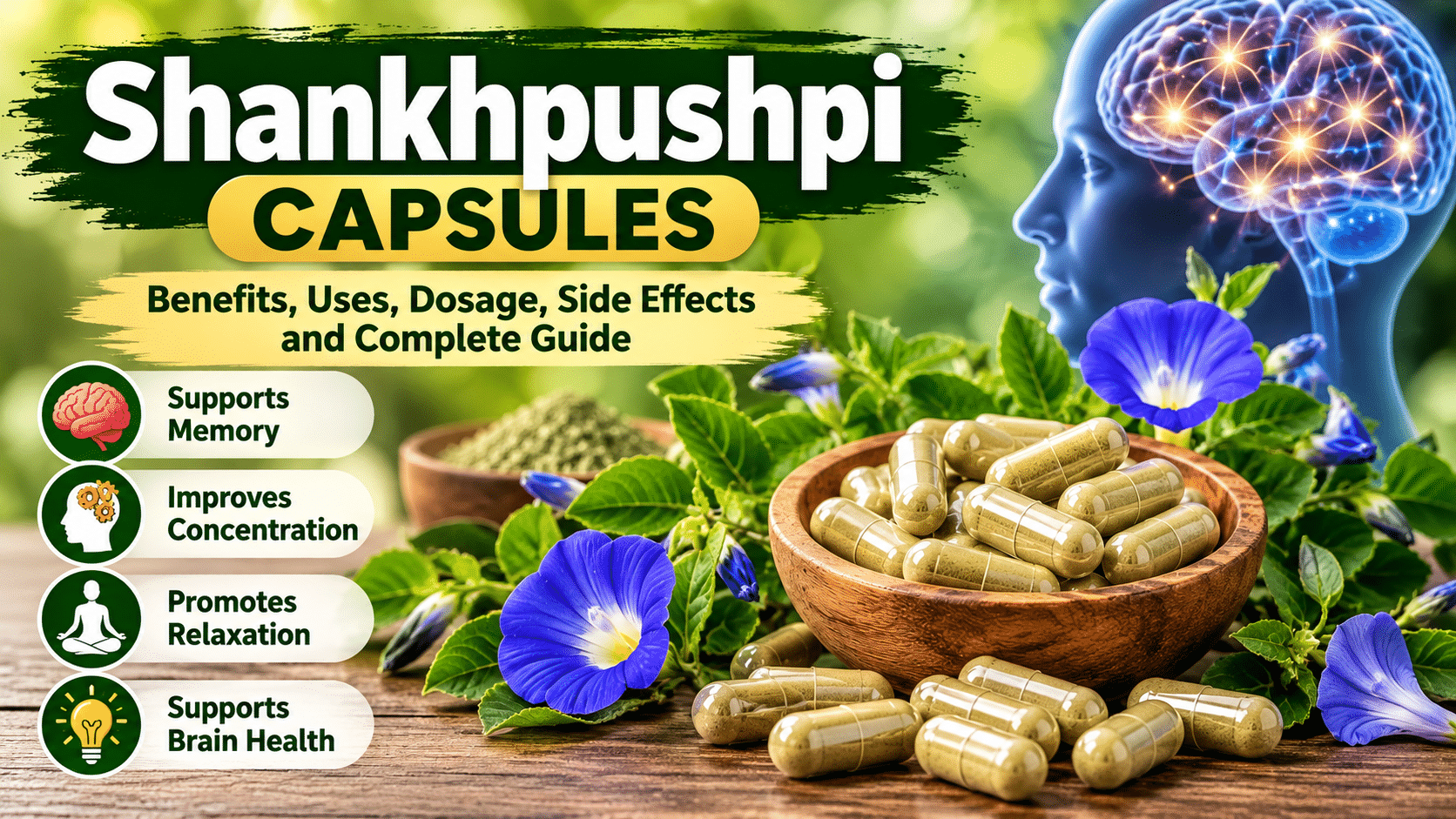
Shankhpushpi capsules are traditional Ayurvedic herbal supplements commonly associated with memory support, concentration, relaxation, and cognitive wellness. Shankhpushpi has a long history of use in Ayurvedic medicine, where it is traditionally regarded as a brain-supporting herb. Today, it is available in capsules, powders, syrups, and herbal formulations.
Many people search for Shankhpushpi capsules to learn about their potential benefits, how to use them, their ingredients, and possible side effects. However, it is important to understand that traditional use does not automatically establish clinical effectiveness. Scientific research on Shankhpushpi is promising in some areas, but high-quality human studies remain limited.
In this comprehensive guide, we explore what Shankhpushpi capsules are, their traditional uses, potential benefits, ingredients, dosage considerations, precautions, and tips for choosing a quality herbal supplement.
What Are Shankhpushpi Capsules?
Shankhpushpi capsules are herbal preparations made from Shankhpushpi plant material or its extracts. They are traditionally used in Ayurveda to support memory, learning, mental relaxation, and general cognitive wellness.
The name Shankhpushpi refers to a medicinal herb traditionally associated with the botanical name Convolvulus pluricaulis. However, the name may also be applied to other botanical species in certain Ayurvedic preparations. Therefore, checking the scientific name on a supplement label is important.
Capsules offer a convenient alternative to traditional herbal powders and liquid preparations. They are easy to carry, require little preparation, and allow manufacturers to provide a stated quantity of herbal powder or extract per serving.
Shankhpushpi capsules may contain a single herb or a combination of ingredients. Some formulations include other Ayurvedic herbs intended to complement the traditional uses of Shankhpushpi.
Important: The exact composition, concentration, and recommended use depend on the individual product. Not every Shankhpushpi supplement has the same ingredients or effects.
Shankhpushpi Botanical Information
Understanding the botanical identity of an herbal supplement helps consumers make informed purchasing decisions.
- Common name: Shankhpushpi
- Alternative spelling: Shankhapushpi
- Traditionally associated scientific name: Convolvulus pluricaulis
- Herbal tradition: Ayurveda
- Common preparations: Capsules, powders, syrups, and liquid extracts
- Traditional focus: Memory, learning, relaxation, and mental wellness
The plant belongs to the Convolvulaceae family when identified as Convolvulus pluricaulis. Its traditional use has attracted scientific interest because researchers have investigated its possible effects on the nervous system.
A 2022 umbrella review examined research on Shankhpushpi and neurological health, including preclinical investigations and available clinical studies. The review highlighted several promising research areas while also identifying the need for better-designed human trials.
Scientific findings about one plant species or extract should not automatically be applied to every product sold under the Shankhpushpi name.
Potential Benefits of Shankhpushpi Capsules
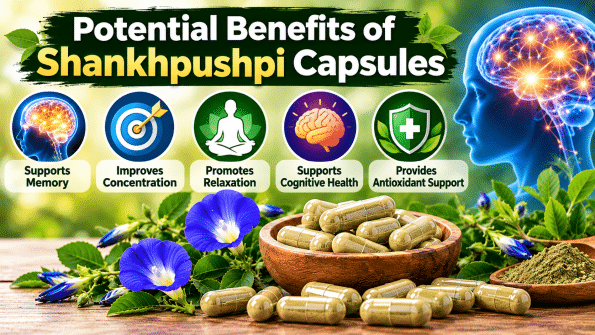
Shankhpushpi has several traditional applications in Ayurvedic medicine. The following sections explain its commonly discussed benefits while distinguishing traditional use from established scientific evidence.
1. Memory and Learning Support
Memory support is one of the best-known traditional uses of Shankhpushpi. Ayurvedic practitioners have historically used the herb in preparations intended to support learning, recall, and intellectual performance.
Researchers have investigated its potential effects on memory and learning, particularly in experimental models. Some preclinical findings suggest that compounds in Shankhpushpi may influence processes associated with cognitive function.
However, evidence from animal experiments does not establish that Shankhpushpi capsules improve memory in healthy adults. Large, well-controlled human studies are still needed to determine whether these supplements provide meaningful benefits.
People interested in memory support should also prioritize adequate sleep, regular physical activity, a balanced diet, and appropriate treatment of medical conditions that affect cognition.
2. Concentration and Focus
Shankhpushpi is traditionally associated with mental clarity and concentration. For this reason, students and adults interested in cognitive wellness may encounter it in herbal brain-support formulations.
Concentration depends on several factors, including sleep quality, stress levels, nutrition, physical health, and the environment in which someone studies or works.
Although experimental research has explored the neurological effects of Shankhpushpi, there is not enough strong clinical evidence to conclude that its capsules consistently improve attention or productivity.
Anyone experiencing persistent concentration difficulties should consider possible underlying causes rather than relying exclusively on herbal supplements.
3. Relaxation and Stress Management
Another traditional use of Shankhpushpi is to promote relaxation and support emotional well-being. Some experimental studies have investigated its possible calming effects.
These findings have generated interest in the herb as a potential ingredient in relaxation-focused herbal formulations. Nevertheless, the quality and quantity of human evidence remain insufficient to establish it as a reliable treatment for stress-related conditions.
Stress management can also involve regular exercise, relaxation techniques, healthy sleep habits, and professional support when symptoms interfere with daily life.
Shankhpushpi capsules should not replace prescribed treatment for anxiety disorders or other mental health conditions.
4. Antioxidant Research
Researchers have investigated antioxidant activity in Shankhpushpi extracts and their chemical constituents.
Antioxidants are substances that can help neutralize reactive molecules under certain conditions. Laboratory findings may help scientists understand how plant compounds interact with biological systems.
However, antioxidant activity observed in a laboratory does not necessarily translate into a measurable health benefit in humans. The effects also depend on the extract, dose, absorption, and other biological factors.
Shankhpushpi capsules should therefore not be marketed or understood as a proven method of preventing disease based solely on antioxidant research.
5. General Cognitive Wellness
Shankhpushpi is sometimes included in herbal formulations intended to support overall cognitive health.
Its traditional reputation and preliminary research make it an interesting subject for further investigation. However, current evidence does not establish that Shankhpushpi prevents dementia, reverses Alzheimer’s disease, or prevents age-related cognitive decline.
People experiencing significant or progressive memory problems should seek medical evaluation. Memory changes may be associated with sleep disorders, medication effects, nutritional deficiencies, or other conditions that require appropriate assessment.
How Do Shankhpushpi Capsules Work?
The exact mechanisms through which Shankhpushpi may affect the human brain are not fully understood.
Researchers have investigated several possible biological activities, including effects on neurotransmission, oxidative processes, and pathways associated with stress responses and cognition.
Neurotransmitters are chemical messengers that help nerve cells communicate. Changes in neurotransmitter signaling can influence many functions, including mood, attention, sleep, and memory.
Some experimental findings suggest that constituents of Convolvulus pluricaulis may interact with biological pathways involved in these processes. However, laboratory observations and animal studies cannot establish the precise effects of commercially available capsules in humans.
More research is needed to identify the active constituents, determine how they are absorbed and metabolized, and establish appropriate doses for specific outcomes.
Ingredients in Shankhpushpi Capsules
The ingredients vary by manufacturer, so consumers should always read the product label.
Shankhpushpi Herb or Extract
The main ingredient may be dried plant powder or a concentrated herbal extract. The label should identify the botanical species whenever possible.
A capsule containing 250 mg of whole-herb powder is not necessarily equivalent to a capsule containing 250 mg of concentrated extract. Extraction methods and standardization can change the concentration of plant constituents.
Capsule Shell
Capsule shells may be made from gelatin or plant-based materials such as hydroxypropyl methylcellulose (HPMC).
People following vegetarian or vegan diets should check the capsule material before purchasing.
Excipients and Other Ingredients
Some products contain inactive ingredients used to improve manufacturing, stability, or capsule filling. These may include starches, cellulose, or anti-caking agents.
Combination formulas may contain additional herbs or other active ingredients. These combinations can change the product’s potential effects and safety considerations.
Buying tip: Look for a clear ingredient list, the amount per capsule, the botanical identity, manufacturer details, batch information, expiry date, and credible quality-testing information.
Recommended Dosage of Shankhpushpi Capsules
There is no universally established, evidence-based dosage of Shankhpushpi capsules that is appropriate for everyone.
The correct amount depends on the botanical species, whether the product contains powder or extract, the extract concentration, other ingredients, and the individual’s health circumstances.
For responsible use:
- Read the manufacturer’s dosage instructions carefully.
- Do not assume that all Shankhpushpi capsules have the same strength.
- Do not exceed the labeled serving without professional advice.
- Ask a qualified healthcare professional or pharmacist about suitability if you take medication or have an existing medical condition.
- Stop using the supplement and seek appropriate advice if you experience an unexpected reaction.
Traditional dosage recommendations for herbal powders cannot automatically be converted into capsule doses. Extracts may be more concentrated, and different manufacturing methods can produce products with different chemical profiles.
For these reasons, a generic recommendation such as taking one or two capsules daily may be inappropriate without knowing the exact product.
When Should You Take Shankhpushpi Capsules?

The best time to take Shankhpushpi capsules depends on the formulation and the manufacturer’s directions.
Some herbal products recommend taking capsules with food, while others may provide different instructions. Follow the label rather than assuming that morning or nighttime use is suitable for every product.
If a supplement causes stomach discomfort, ask a pharmacist whether taking it with food is appropriate. If you experience drowsiness, avoid driving or operating machinery until you understand how the product affects you.
Do not combine Shankhpushpi with sedating medicines or other supplements intended to promote sleep without professional guidance.
Possible Side Effects of Shankhpushpi Capsules
Herbal supplements are not automatically free of side effects. Human safety information for Shankhpushpi remains limited, and reactions may differ depending on the formulation and dose.
Possible concerns include:
- Digestive discomfort: Some herbal preparations may cause gastrointestinal symptoms.
- Drowsiness: Products with calming or sedating effects may affect alertness.
- Blood pressure changes: There are concerns that Shankhpushpi may lower blood pressure, although the clinical evidence is limited.
- Allergic reactions: Individuals may react to the herb, capsule shell, or other ingredients.
- Product quality problems: Incorrect botanical identification, contamination, or undisclosed ingredients can create additional risks.
Stop taking the product and seek medical advice if you experience an unexpected or persistent adverse effect. Severe allergic symptoms, such as difficulty breathing or swelling of the face or throat, require emergency medical attention.
Who Should Avoid or Use Shankhpushpi with Caution?
Certain people should consult a qualified healthcare professional before using Shankhpushpi capsules.
Pregnant or Breastfeeding Individuals
Reliable safety data are insufficient to establish that Shankhpushpi supplements are safe during pregnancy or breastfeeding. Avoid self-medication during these periods.
People Taking Prescription Medicines
Potential interactions have not been fully characterized. Consult a pharmacist or doctor before combining Shankhpushpi with prescription medicines, particularly sedatives, sleep medications, blood pressure medicines, or medicines that affect the nervous system.
People with Low Blood Pressure
Because possible blood pressure-lowering effects have been discussed in herbal references, individuals with low blood pressure or those using antihypertensive medicines should seek professional advice.
Children and Adolescents
Safety and dosing may differ by age. Do not give adult herbal capsules to children without guidance from an appropriately qualified healthcare professional.
People with Existing Medical Conditions
Individuals with chronic illnesses, unexplained memory problems, or ongoing mental health symptoms should seek appropriate medical assessment before relying on herbal supplements.
How to Choose Quality Shankhpushpi Capsules
Choosing a reputable product is important because herbal supplements can differ substantially in identity, concentration, purity, and manufacturing quality.
Consider the following factors before buying:
1. Botanical identification: Check whether the label specifies Convolvulus pluricaulis or another botanical species.
2. Transparent ingredients: Prefer products that clearly disclose active ingredients and their quantities.
3. Extract information: If the product contains an extract, check whether the manufacturer provides relevant extract specifications or standardization details.
4. Manufacturing quality: Look for credible quality-control practices and independent testing where available.
5. Packaging: Ensure the container is sealed, properly labeled, and within its expiry date.
6. Reputable seller: Purchase from a trustworthy pharmacy or established herbal supplier.
7. Realistic claims: Be cautious of products promising guaranteed intelligence enhancement, instant memory improvement, or cures for neurological disorders.
A higher price does not automatically indicate better quality. Transparent labeling and reliable quality controls are more useful indicators.
Shankhpushpi Capsules vs. Powder and Syrup
Shankhpushpi is available in several traditional and commercial preparations. Each format has practical differences.
| Feature | Capsules | Powder | Syrup |
|---|---|---|---|
| Convenience | Easy to carry and swallow | Requires measuring and mixing | Ready to measure and consume |
| Taste | Usually masks the herb’s taste | Herbal taste is noticeable | Often sweetened or flavored |
| Dose measurement | Depends on capsule strength | Requires accurate measuring | Depends on the labeled concentration |
| Ingredients | May contain shell materials and excipients | May contain whole-herb powder | May contain sweeteners and other ingredients |
| Main consideration | Check the amount per capsule | Check the botanical identity and purity | Check sugar content and concentration |
No preparation can automatically be considered more effective than another. The product’s composition, manufacturing quality, and available evidence matter more than its form alone.
Frequently Asked Questions About Shankhpushpi Capsules
1. What are Shankhpushpi capsules used for?
Shankhpushpi capsules are traditionally used in Ayurveda for memory support, concentration, relaxation, and general cognitive wellness. Strong clinical evidence confirming these benefits remains limited.
2. Do Shankhpushpi capsules improve memory?
Some experimental research suggests potential effects on memory and learning. However, there is insufficient high-quality human evidence to confirm that commercially available Shankhpushpi capsules reliably improve memory.
3. Can Shankhpushpi capsules help with concentration?
They are traditionally used to support mental focus, but reliable clinical evidence is limited. Persistent concentration problems may require assessment of sleep, stress, medications, and underlying medical conditions.
4. Can I take Shankhpushpi capsules daily?
Daily use depends on the specific product, its dosage instructions, and your health circumstances. Consult a qualified healthcare professional if you plan to use it regularly, especially if you take medication.
5. What is the best time to take Shankhpushpi capsules?
Follow the directions on your product label. There is insufficient evidence to recommend one universal time of day for every formulation.
6. Do Shankhpushpi capsules have side effects?
Possible concerns include digestive discomfort, drowsiness, allergic reactions, and potential effects on blood pressure. Safety information in humans is limited.
7. Are Shankhpushpi capsules safe for children?
Do not assume that adult supplements are suitable for children. Consult a qualified healthcare professional before giving Shankhpushpi to a child.
8. Can Shankhpushpi capsules treat anxiety or insomnia?
Shankhpushpi has traditional uses related to relaxation and sleep. However, it has not been established as a reliable treatment for anxiety disorders or insomnia. Seek professional advice if these problems persist.
9. Are all Shankhpushpi capsules made from the same plant?
No. Products sold under the same common name may contain different botanical species, extracts, or combinations of herbs. Check the scientific name and complete ingredient list.
10. Are Shankhpushpi capsules better than powder?
Neither form is universally superior. Capsules are convenient, while powders allow flexible measurement. The appropriate choice depends on product quality, formulation, individual preferences, and professional guidance.
Scientific Research on Shankhpushpi
Scientific interest in Shankhpushpi has increased because of its traditional neurological applications and promising preclinical findings.
A 2022 umbrella review published in Neuroscience & Biobehavioral Reviews examined the available research on Convolvulus pluricaulis, including its traditional uses, chemical constituents, neurological effects, and clinical evidence.
The review described potential areas of interest, including memory, learning, stress-related effects, and neuropharmacology. However, the evidence includes substantial preclinical research, and the available clinical studies do not establish the effectiveness of Shankhpushpi capsules for specific health conditions.
Further research should examine standardized preparations, appropriate dosage ranges, long-term safety, possible medication interactions, and clinically meaningful outcomes in well-designed human trials.
Conclusion
Shankhpushpi capsules are traditional Ayurvedic herbal supplements commonly used for memory support, concentration, relaxation, and cognitive wellness. Preliminary research has explored their potential neurological effects, but more rigorous human studies are needed to establish their effectiveness and long-term safety.
When choosing Shankhpushpi capsules, check the botanical identity, ingredient quantities, extract specifications, manufacturer information, and quality-control practices. Follow the product’s directions and seek professional advice if you take medication, have a medical condition, or are considering regular use.
Most importantly, remember that herbal supplements should complement—not replace—appropriate medical care, a balanced diet, adequate sleep, and healthy lifestyle habits.
Disclaimer: This article is for educational and informational purposes only. It does not provide medical advice or establish that Shankhpushpi capsules can prevent, treat, or cure any disease. Consult a qualified healthcare professional for personalized guidance.