Introduction
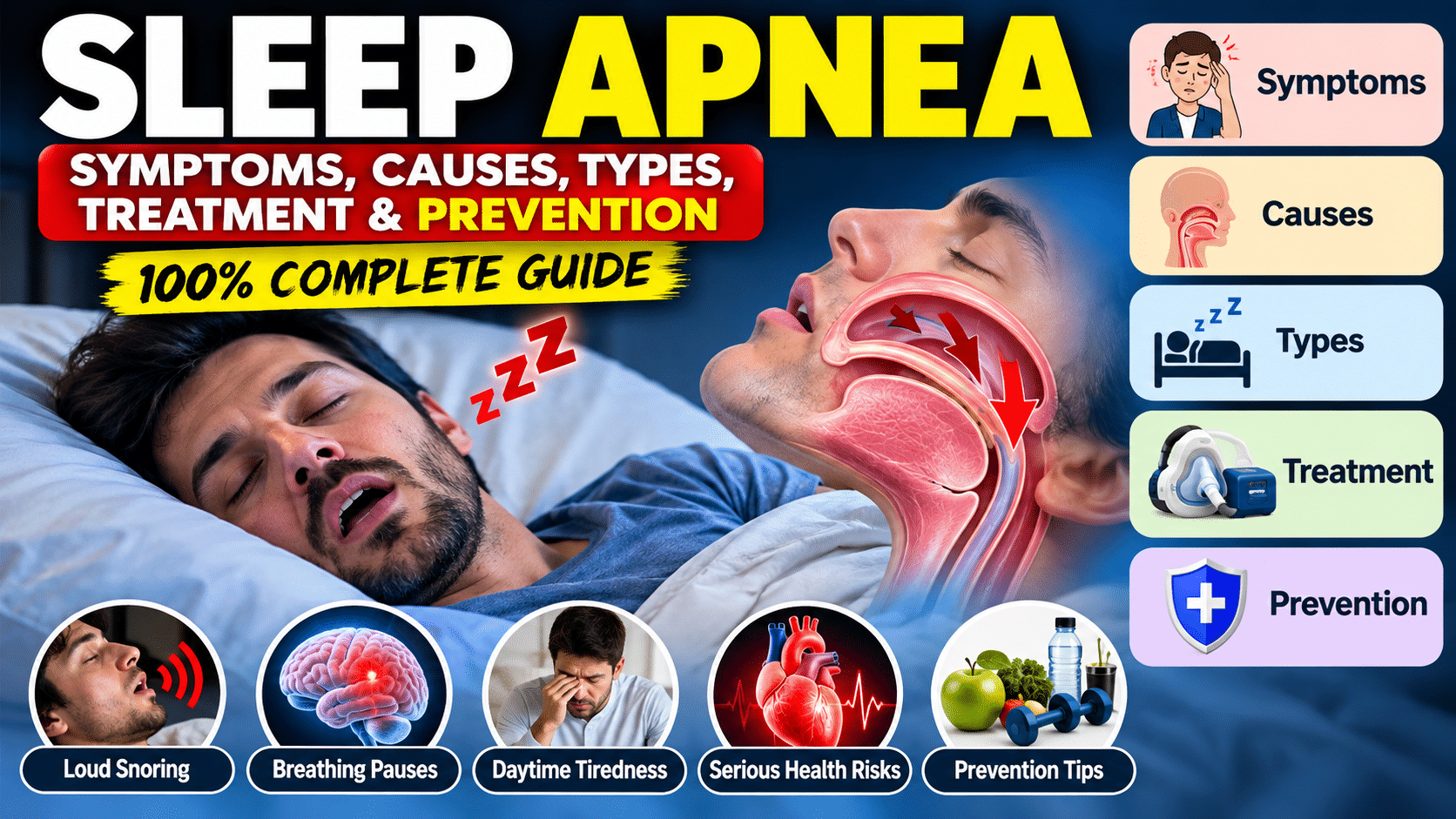
Sleep apnea is a common sleep disorder in which breathing repeatedly stops and starts during sleep. These interruptions can reduce the amount of oxygen reaching the body and may prevent a person from getting restorative sleep. Loud snoring, gasping during sleep, morning headaches, dry mouth, and excessive daytime sleepiness are some common warning signs.
Many people do not realize they have sleep apnea because the breathing interruptions occur while they are asleep. A partner or family member may notice loud snoring, choking sounds, or pauses in breathing before the affected person does.
Sleep apnea can affect adults and children. When left untreated, it may contribute to problems with concentration, daytime alertness, and cardiovascular health. Proper diagnosis is important because treatment depends on the type and severity of sleep apnea.
What Is Sleep-disordered ?
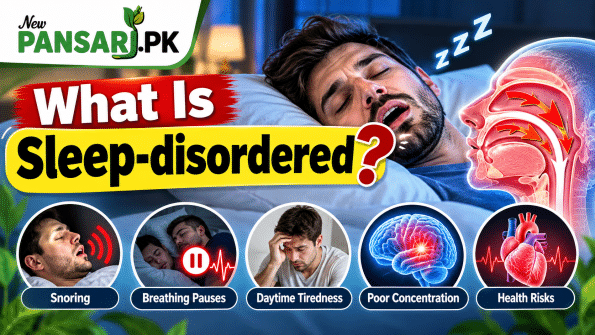
Sleep apnea occurs when normal breathing is repeatedly interrupted during sleep. A breathing pause can happen because the upper airway becomes blocked, or because the brain temporarily fails to send the signals needed to maintain breathing.
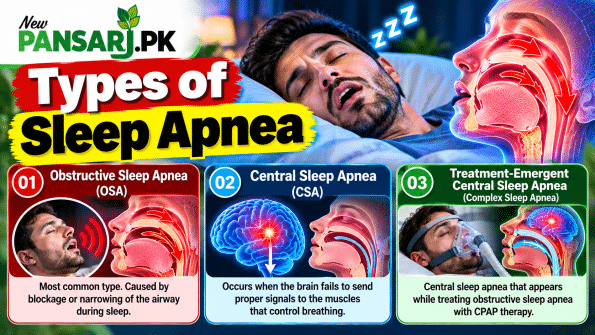
The two major types are obstructive sleep apnea (OSA) and central sleep apnea (CSA). Obstructive sleep apnea is the most common form and occurs when the upper airway becomes blocked during sleep. Central sleep apnea occurs when the brain does not properly send signals that control breathing.
Repeated breathing interruptions can disturb normal sleep and may cause oxygen levels to fall. For this reason, persistent symptoms should not simply be dismissed as ordinary snoring.
Types of Sleep Apnea
1. Obstructive sleep-disordered
Obstructive Sleep-disordered occurs when the muscles and tissues around the upper airway relax during sleep and restrict airflow. Factors such as excess body weight, enlarged tonsils, and anatomical features can increase the likelihood of airway narrowing.
Common signs include:
- Loud snoring
- Pauses in breathing
- Gasping or choking during sleep
- Daytime tiredness
- Morning headaches
- Difficulty concentrating
2. Central sleep-disordered
Central Sleep-disordered is different from obstructive Sleep-disordered. Instead of an airway blockage being the primary problem, the brain temporarily fails to send the appropriate signals to the muscles responsible for breathing.
Central sleep apnea can be associated with certain medical conditions, medications, or other factors, so professional evaluation is particularly important when it is suspected.
3. Mixed or Complex Sleep-disordered
Some people can have features of both obstructive and central sleep apnea. A sleep specialist can determine the type through appropriate testing and monitoring.
Symptoms of Sleep-disordered
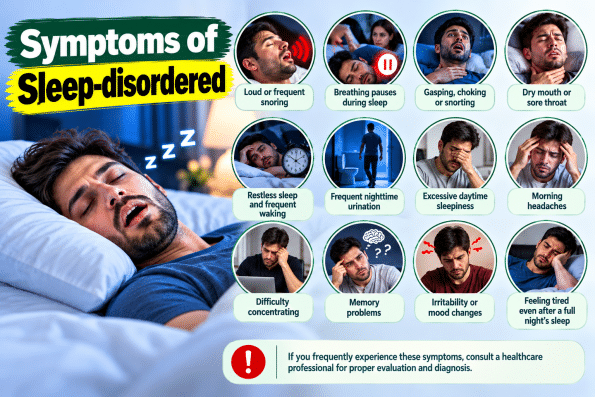
Sleep-disordered symptoms can occur during the night and throughout the day.
Nighttime Symptoms
Common nighttime symptoms include:
- Loud or frequent snoring
- Breathing that repeatedly starts and stops
- Gasping for air
- Choking sounds during sleep
- Restless sleep
- Frequent awakening
- Dry mouth in the morning
- Waking frequently to urinate
The person experiencing Sleep-disordered may not notice these symptoms themselves. A sleeping partner may be the first person to observe breathing pauses or gasping.
Daytime Symptoms
During the day, sleep apnea may contribute to:
- Excessive sleepiness
- Fatigue
- Difficulty concentrating
- Problems with learning or memory
- Morning headaches
- Irritability or changes in mood
- Reduced alertness
Daytime sleepiness can become particularly important when driving or operating machinery. If you feel unusually sleepy while driving, do not drive until you can do so safely.
What Causes Sleep-disordered?
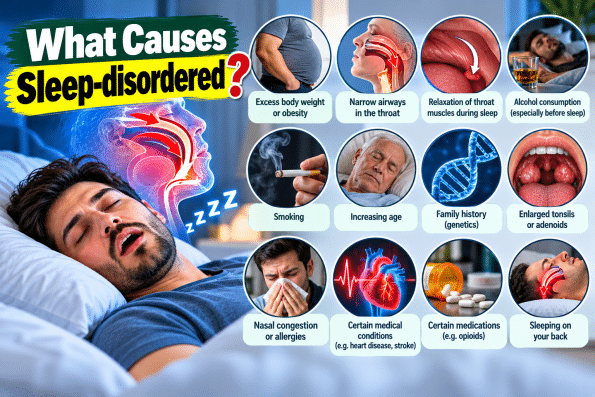
The causes depend on the type of Sleep-disordered.
In obstructive Sleep-disordered, the airway becomes narrowed or blocked during sleep. Factors that can increase risk include excess body weight, enlarged tonsils, and anatomical characteristics of the upper airway.
Central sleep apnea is related to problems with the signals that control breathing. Certain medical conditions and medications can contribute to this type.
Other factors associated with sleep apnea can include:
- Family history
- Increasing age
- Smoking
- Alcohol consumption
- Certain medications
- Nasal congestion
- Sleeping on the back
- Excess body weight
Having a risk factor does not necessarily mean that a person has sleep apnea. Diagnosis requires appropriate medical evaluation.
Who Is at Higher Risk of Sleep-disordered?
Sleep-disordered can affect people of different ages and body types. However, certain factors can increase risk.
People may have a higher risk if they:
- Have overweight or obesity
- Snore heavily
- Have a family history of sleep apnea
- Have anatomical narrowing of the airway
- Smoke
- Consume alcohol, particularly close to bedtime
- Have certain medical conditions
- Take medications that affect breathing or sleep
Children can also develop sleep apnea. In children, symptoms may sometimes appear differently, including attention problems, behavioral changes, or bedwetting.
How Is Sleep-disordered Diagnosed?
A healthcare professional usually begins by reviewing symptoms, sleep history, risk factors, and medical history. Information from a sleeping partner can also be useful because they may have witnessed snoring or breathing pauses.
Sleep Study
A sleep study, also called polysomnography, can monitor different body functions during sleep. Depending on the test, monitoring may include breathing, heart activity, brain activity, movements, and blood oxygen levels.
Home Sleep Testing
Some people may be able to complete a sleep apnea test at home. These tests can monitor factors such as airflow, breathing patterns, heart rate, and oxygen levels.
However, a home test may not detect every case. A healthcare professional may recommend a formal sleep study if symptoms remain concerning despite a normal home test.
Sleep Apnea Treatment
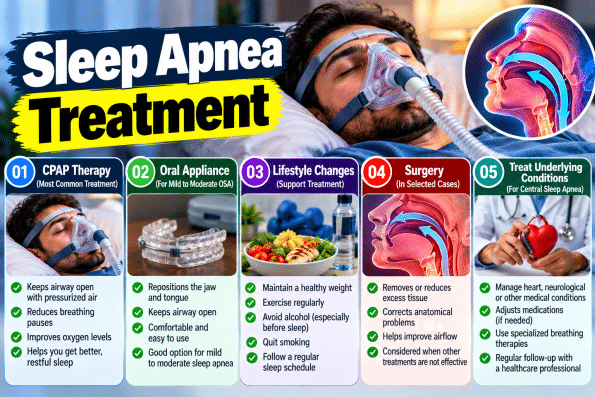
Treatment depends on the type and severity of sleep apnea and the person’s overall health.
CPAP Therapy
Continuous positive airway pressure (CPAP) is one of the most common treatments for obstructive sleep apnea. A CPAP machine delivers pressurized air through a mask to help keep the upper airway open during sleep.
Different mask styles and pressure devices are available. If a CPAP mask feels uncomfortable, patients should discuss adjustments or alternative masks with their healthcare provider rather than simply stopping treatment.
Other Positive Airway Pressure Devices
Other PAP devices include:
- APAP: Automatically adjusts pressure during sleep.
- BPAP: Provides different pressure levels during inhalation and exhalation.
The appropriate device depends on the person’s diagnosis and medical needs.
Oral Appliances
Some people with obstructive sleep apnea may benefit from a professionally fitted oral appliance. These devices are designed to help keep the airway open during sleep.
Surgery and Other Treatments
In selected cases, surgery or other procedures may be considered, particularly when anatomical blockage contributes to obstructive sleep apnea or other treatments are unsuitable or unsuccessful.
Central sleep apnea requires treatment directed at its underlying cause when possible. Depending on the situation, treatment may include PAP therapy, supplemental oxygen, medication adjustments, or treatment of an underlying medical condition.
Lifestyle Tips for Better Slee
Lifestyle changes can complement medical treatment and may help reduce symptoms in some people.
Maintain a Healthy Weight
If excess weight contributes to airway narrowing, achieving and maintaining a healthy weight may improve obstructive sleep apnea. Weight management should be approached safely and realistically.
Sleep on Your Side
For some people with obstructive sleep apnea, sleeping on the side rather than the back may help keep the airway more open.
Exercise Regularly
Regular physical activity supports overall health and can be part of a comprehensive sleep apnea management plan.
Avoid Alcohol Close to Bedtime
Alcohol can worsen obstructive sleep apnea and sleepiness. Limiting alcohol, particularly near bedtime, may be helpful.
Stop Smoking
Smoking can negatively affect respiratory health. Quitting smoking is an important general health measure and may form part of a sleep apnea management plan.
Can Herbal Remedies Cure Sleep-disordered ?

There is no established herbal remedy that can replace diagnosis and evidence-based treatment for sleep apnea. Herbal products should not be used as a substitute for CPAP, oral appliances, surgery, or other treatment prescribed by a healthcare professional.
People using herbal supplements should also tell their healthcare provider about them, particularly when taking prescription medicines.
For people who snore heavily, experience breathing pauses, or have significant daytime sleepiness, identifying and treating the underlying sleep disorder is more important than relying on home remedies.
Complications of Untreated Sleep-disordered
Untreated sleep apnea can affect sleep quality and daytime functioning. It can also be associated with serious health problems. The NHLBI notes that untreated sleep apnea can increase the risk of problems including stroke and heart attack.
Possible consequences include:
- Excessive daytime sleepiness
- Difficulty concentrating
- Memory problems
- Reduced alertness
- Increased accident risk from sleepiness
- Cardiovascular complications
- Poor overall sleep quality
Not everyone with sleep apnea will develop the same complications, but persistent symptoms deserve medical evaluation.
When Should You See a Doctor?
Speak with a healthcare professional if you or someone sleeping near you notices:
- Repeated pauses in breathing
- Loud, persistent snoring
- Gasping or choking during sleep
- Excessive daytime sleepiness
- Morning headaches
- Difficulty staying awake during the day
- Unexplained problems with concentration or memory
If daytime sleepiness is severe, avoid driving or operating machinery until you can remain safely alert.
A healthcare professional can determine whether a sleep study or other evaluation is appropriate.
Frequently Asked Questions About Sleep Apnea
1. What is the most common type of Sleep-disordered?
Obstructive sleep apnea (OSA) is the most common type. It occurs when the upper airway becomes blocked or narrowed during sleep.
2. Is loud snoring always a sign of Sleep-disordered?
No. Snoring can occur without sleep apnea. However, loud snoring combined with breathing pauses, gasping, or excessive daytime sleepiness should be discussed with a healthcare professional.
3. Can Sleep-disordered be treated?
Yes. Treatment options include lifestyle changes, PAP therapy such as CPAP, oral appliances, and selected surgical or other therapies. The appropriate treatment depends on the type and severity of the condition.
4. Can Sleep-disordered go away after losing weight?
Weight loss can improve obstructive sleep apnea in some people, but it does not guarantee that the condition will disappear. Anyone diagnosed with sleep apnea should continue medical follow-up even after significant weight loss.
5. Can children have sleep apnea?
Yes. Children can develop sleep apnea, and their symptoms may include breathing problems during sleep, attention difficulties, behavioral changes, or bedwetting.
6. Is Sleep-disordered dangerous?
Untreated sleep apnea can be associated with serious health problems, including cardiovascular complications. Persistent symptoms should therefore be medically evaluated.
7. How is Sleep-disordered diagnosed?
A healthcare professional may recommend a sleep study or, for some people, a home sleep apnea test. These tests monitor breathing and other relevant measurements during sleep.
Conclusion
Sleep-disordered is more than ordinary snoring. Repeated interruptions in breathing can disturb sleep, reduce daytime alertness, and contribute to important health complications when the condition remains untreated. Recognizing symptoms such as loud snoring, gasping, witnessed breathing pauses, morning headaches, and excessive daytime sleepiness is an important first step.
If sleep apnea is suspected, a healthcare professional can recommend appropriate testing and treatment. CPAP and other PAP therapies, oral appliances, lifestyle changes, and selected procedures can all have a role depending on the individual’s diagnosis.
This article is for general health education and does not replace professional medical diagnosis or treatment.