Understanding the causes, symptoms, treatment options, and prevention strategies can help you manage back pain and protect your overall spinal health.
What Is Back Pain?

Back pain refers to discomfort or pain anywhere in the back, but it is most frequently experienced in the lower back. The back contains muscles, bones, joints, nerves, discs, and ligaments that work together to support the body and allow movement.
Back pain can be short-term, lasting a few days or weeks, or persistent and recurring over a longer period.
Common Types of Back Pain
Back pain can be classified according to where it occurs and how long it lasts.
1. Upper Pain
Upper back pain occurs around the area between the neck and the middle of the back. Poor posture, prolonged computer use, muscle tension, and injuries can contribute to this type of pain.
2. Middle Pain
Middle back pain affects the thoracic region of the spine. Muscle strain, poor posture, repetitive movements, or injuries may cause discomfort in this area.
3. Lower Pain
Lower back pain is particularly common. It can result from muscle strain, lifting heavy objects, prolonged sitting, poor posture, or problems involving the spinal discs and joints.
4. Acute Pain
Acute back pain usually develops suddenly and may last for a short period. It can occur after lifting something heavy, exercising incorrectly, or experiencing an injury.
5. Chronic Pain
Chronic back pain continues for an extended period or repeatedly returns. It may require medical evaluation to identify the underlying cause.
Common Causes of Back Pain
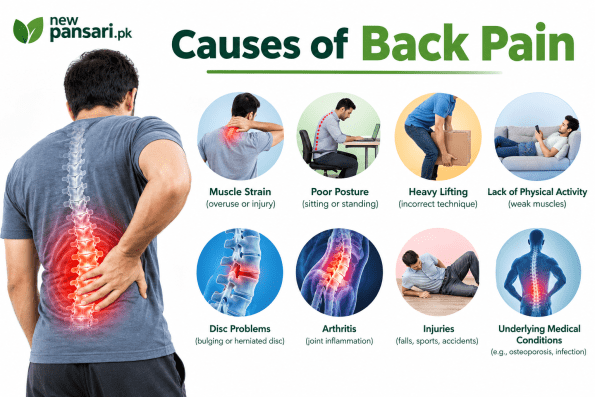
There are many possible causes of back pain. Some common causes include:
Muscle Strain
Overstretching or injuring the back muscles can cause pain, stiffness, and difficulty moving.
Poor Posture
Sitting or standing with poor posture for long periods can put additional stress on the muscles and spine.
Heavy Lifting
Lifting heavy objects incorrectly can strain the muscles and ligaments of the back.
Lack of Physical Activity
A sedentary lifestyle can weaken the muscles that support the spine and may contribute to back discomfort.
Injuries
Falls, sports injuries, accidents, and sudden movements can damage muscles, joints, or other structures in the back.
Disc Problems
Spinal discs act as cushions between the vertebrae. Problems such as a bulging or herniated disc can sometimes irritate nearby nerves and cause pain.
Arthritis
Certain forms of arthritis can affect the joints of the spine and contribute to stiffness and discomfort.
Symptoms of Back Pain
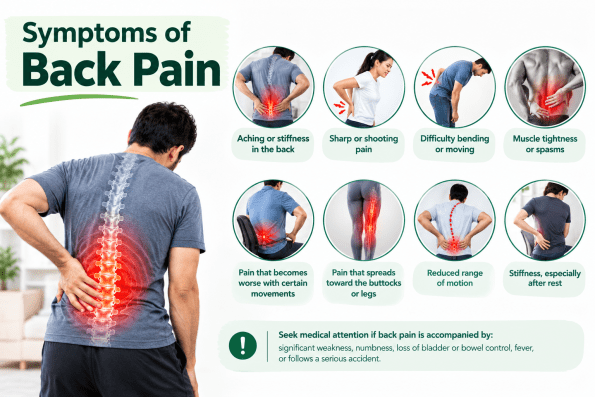
Back pain can produce different symptoms depending on its cause and severity. Common symptoms include:
- Aching or stiffness in the back
- Sharp or shooting pain
- Difficulty bending or moving
- Muscle tightness or spasms
- Pain that becomes worse with certain movements
- Pain that spreads toward the buttocks or legs
- Reduced range of motion
If back pain is accompanied by significant weakness, numbness, loss of bladder or bowel control, fever, or follows a serious accident, seek medical attention promptly.
How Is Back Pain Diagnosed?
A healthcare professional may ask about your symptoms, medical history, activities, and any recent injuries. A physical examination may also be performed to assess movement, strength, reflexes, and sensation.
Imaging tests such as X-rays, MRI, or CT scans are not always necessary for uncomplicated back pain but may be considered when there are concerning symptoms or when a specific underlying problem needs investigation.
Treatment for Pain
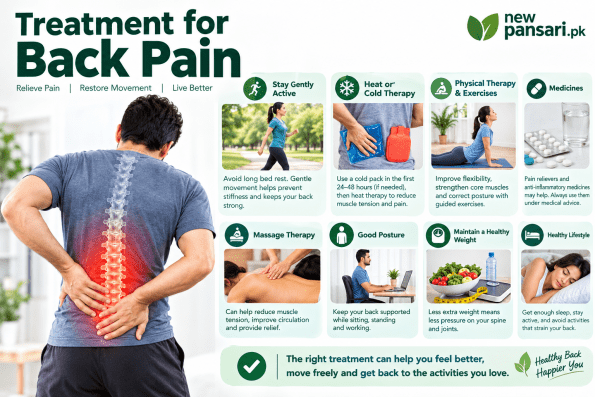
Treatment depends on the cause and severity of the pain.
Stay Gently Active
For many uncomplicated cases, continuing normal daily activities as tolerated may be preferable to prolonged bed rest. Gentle movement can help prevent stiffness.
Heat or Cold Therapy
A cold pack may help during the early stages after certain injuries, while heat may provide relief from muscle stiffness or tension. Always protect the skin when applying hot or cold packs.
Gentle Exercise
Appropriate exercises can improve flexibility and strengthen muscles supporting the spine.
Physical Therapy
A physical therapist can develop an individualized program involving stretching, strengthening, posture correction, and movement techniques.
Medicines
Depending on the situation, healthcare professionals may recommend pain-relieving or anti-inflammatory medicines. Medicines are not suitable for everyone, so follow professional advice and product instructions.
Treatment for Underlying Conditions
When back pain is caused by an underlying spinal or medical condition, treatment may focus on that specific problem.
Gentle Exercises for Back Health
Regular physical activity can help maintain strength and flexibility. Depending on your condition, commonly used exercises may include:
- Walking
- Gentle stretching
- Pelvic tilts
- Knee-to-chest stretches
- Bird-dog exercises
- Core-strengthening exercises
Exercises should be performed gradually and with proper technique. Stop an exercise if it causes significant or worsening pain.
Lifestyle Tips to Help Prevent Back Pain
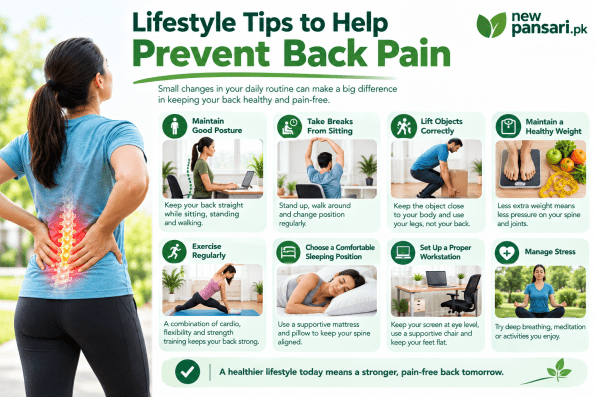
Small daily habits can help reduce unnecessary stress on the back.
Maintain Good Posture
Keep your back supported while sitting and avoid slouching for long periods.
Take Breaks From Sitting
If you work at a desk, stand up, walk around, and change position regularly.
Lift Objects Correctly
When lifting, keep the object close to your body and use your legs rather than relying entirely on your lower back.
Maintain a Healthy Weight
Excess body weight can increase physical stress on the back and joints.
Exercise Regularly
A combination of aerobic activity, flexibility exercises, and strength training can support overall physical health.
Choose a Comfortable Sleeping Position
Use a supportive sleeping arrangement and choose a position that keeps your spine comfortable and well supported.
When Should You See a Doctor?
You should consider medical evaluation if back :
- Is severe or rapidly getting worse
- Continues or repeatedly returns
- Develops after a significant injury
- Is associated with unexplained weight loss or fever
- Causes numbness or weakness
- Travels down the leg with significant symptoms
- Is accompanied by problems controlling the bladder or bowel
Severe neurological symptoms or loss of bladder or bowel control require urgent medical attention.
Can Natural Remedies Help Back Pain?
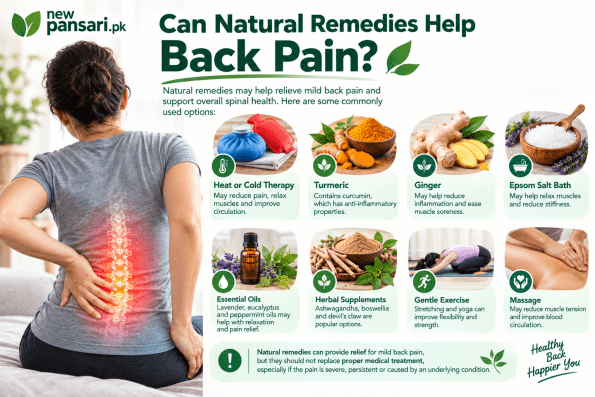
Some people use approaches such as gentle stretching, heat therapy, massage, relaxation techniques, and regular physical activity to manage back discomfort.
However, natural products and herbal remedies should not be considered a substitute for diagnosis or medical treatment when back pain is caused by an underlying condition. If you are considering an herbal product, particularly alongside medicines, discuss it with a qualified healthcare professional.
Conclusion
Pain can have many causes, from temporary muscle strain and poor posture to spinal or medical conditions. Maintaining good posture, staying physically active, using safe lifting techniques, and avoiding prolonged inactivity may help support back health.
Persistent, severe, or unusual back pain should not be ignored. A healthcare professional can help identify the cause and recommend an appropriate treatment plan.
Frequently Asked Questions
What is the most common cause of Pain?
Common causes include muscle strain, poor posture, lifting injuries, physical inactivity, and problems involving the spine.
Is walking good for back pain?
For many people with uncomplicated back pain, gentle walking can help maintain movement and prevent stiffness. However, activity should be adjusted according to symptoms.
How can I prevent back pain?
Regular physical activity, good posture, safe lifting techniques, appropriate ergonomics, and maintaining a healthy weight can help reduce the risk of back problems.
When is back pain serious?
Back pain can require urgent medical attention when it occurs with significant weakness or numbness, loss of bladder or bowel control, fever, or after a serious injury.
Can back pain go away on its own?
Many episodes of uncomplicated back pain improve over time with appropriate activity and self-care. Persistent or worsening symptoms should be assessed by a healthcare professional.