Introduction
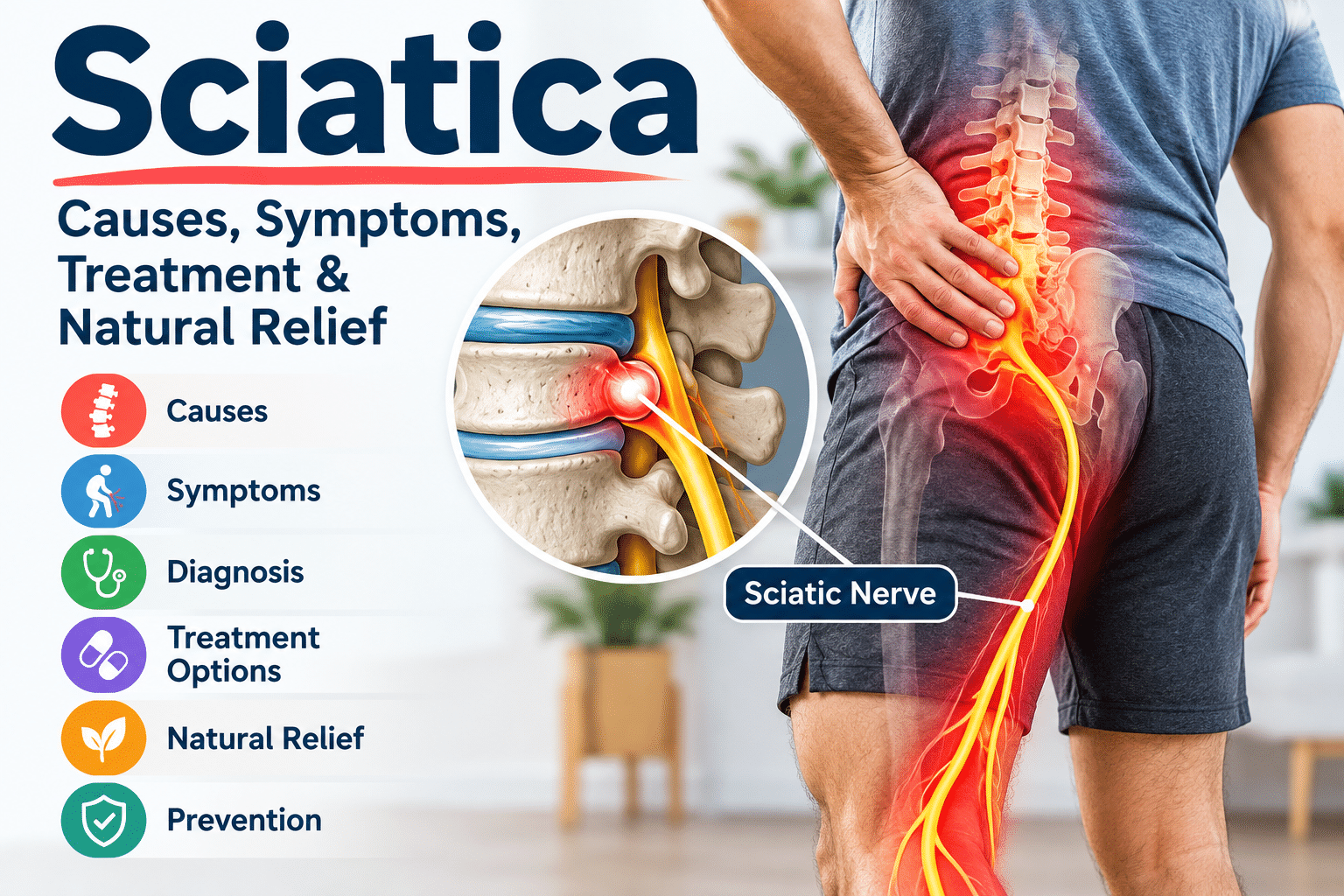
Sciatica is a condition that causes pain along the path of the sciatic nerve, which extends from the lower back through the buttocks and down each leg. It commonly affects one side of the body and may cause sharp pain, burning sensations, tingling, numbness, or weakness in the affected leg.
Sciatic nerve pain can interfere with everyday activities such as walking, sitting, standing, sleeping, and bending. Some people experience mild discomfort, while others develop severe pain that makes normal movement difficult.
The good news is that many cases of sciatica improve within a few weeks to a few months with appropriate care. Treatment depends on the underlying cause, the severity of symptoms, and whether the nerve is experiencing significant compression.
This guide explains what sciatica is, what causes it, how to recognize its symptoms, how doctors diagnose it, and which medical and natural approaches may help relieve discomfort.
What Is Sciatica?
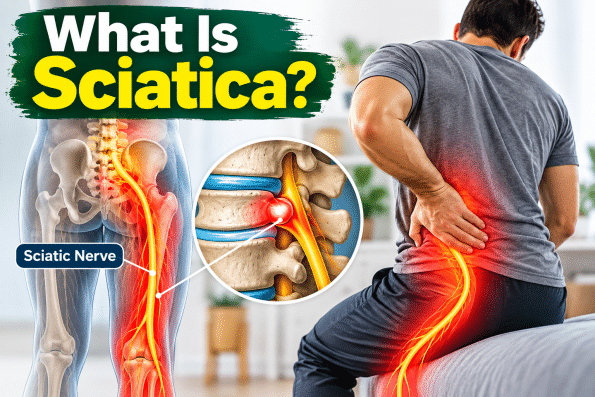
Sciatica is a type of nerve pain that occurs when the sciatic nerve or its nerve roots become irritated or compressed. The sciatic nerve is the largest nerve in the human body and plays an important role in sensation and movement in the lower limbs.
It originates from nerve roots in the lower spine, passes through the buttock region, and travels down the back of the leg toward the foot.
Sciatica is not a disease in itself. It is a term used to describe symptoms caused by an underlying problem affecting the nerve roots or sciatic nerve pathway.
For example, a herniated disc in the lower back may press against a nerve root and produce pain that travels down the leg. Other conditions, such as narrowing of the spinal canal or age-related changes in the spine, may also cause sciatica.
Sciatica usually affects one side of the body. However, symptoms can sometimes occur on both sides, particularly when a more serious spinal problem is present.
What Causes Sciatica?
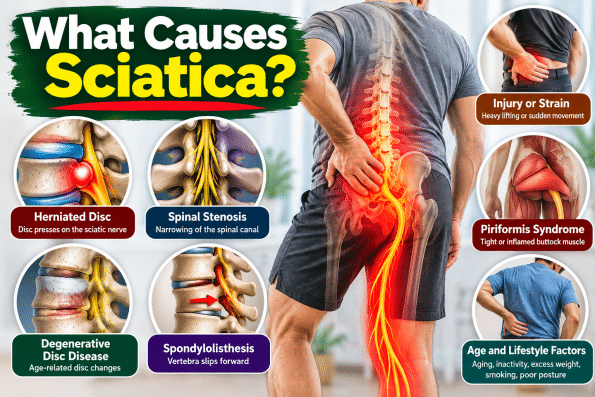
Sciatica develops when the sciatic nerve or the nerve roots that form it become irritated, inflamed, or compressed. Several conditions can contribute to this problem.
1. Herniated or Slipped Disc
A herniated disc is one of the most common causes of sciatica. Spinal discs act as cushions between the bones of the spine. When the inner material of a disc pushes through its outer layer, it may irritate or compress a nearby nerve root.
This can produce lower back pain, shooting leg pain, tingling, or numbness. Some people experience significant leg pain even when their back pain is relatively mild.
2. Spinal Stenosis
Spinal stenosis occurs when the spaces within the spine become narrower. This narrowing may put pressure on nerves that travel into the legs.
The condition is more common in older adults because of age-related changes in the joints, discs, and ligaments of the spine. Symptoms may worsen during prolonged standing or walking and improve when sitting or leaning forward.
3. Degenerative Disc Changes
As people age, spinal discs may gradually lose water content and flexibility. These changes can affect spinal movement and sometimes contribute to nerve irritation.
Degenerative changes do not always cause pain. Their significance depends on whether they correspond to a person’s symptoms and physical examination findings.
4. Spondylolisthesis
Spondylolisthesis occurs when one vertebra slips forward relative to the vertebra below it. In some cases, this can narrow the space available for nerve roots and contribute to sciatic pain.
5. Injury or Physical Strain
A fall, accident, heavy lifting injury, or sudden twisting movement may aggravate the lower back and cause symptoms associated with nerve irritation.
However, not every episode of sciatica follows an injury. Symptoms can also develop gradually.
6. Piriformis Muscle-Related Problems
The piriformis is a small muscle located deep in the buttock. Irritation in this region can sometimes affect the sciatic nerve and cause buttock pain that travels down the leg.
This presentation can resemble sciatica caused by spinal problems, so a proper assessment is important before deciding which treatment is appropriate.
7. Age and Other Risk Factors
The likelihood of developing sciatica may increase with age, particularly when age-related spinal changes develop. Other potential risk factors include:
- Prolonged sitting and limited physical activity.
- Repeated heavy lifting or twisting.
- Poorly managed occupational physical strain.
- Excess body weight, which may increase stress on the lower back.
- Smoking, which is associated with poorer spinal health.
- Previous episodes of back pain or sciatica.
These factors may increase risk, but they do not mean that a person will inevitably develop the condition.
What Are the Symptoms of Sciatica?
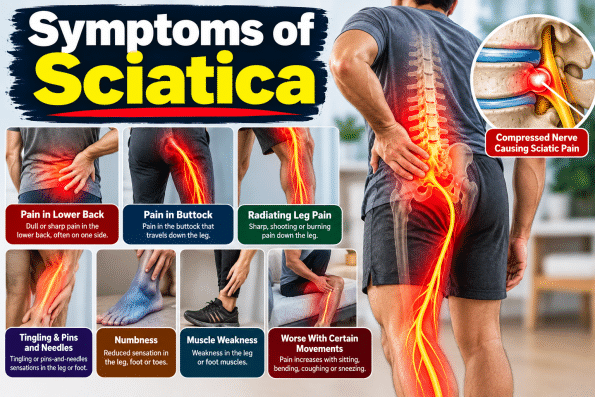
Sciatica symptoms vary depending on the location and severity of nerve irritation. Some people have occasional pain, while others experience persistent symptoms that affect their daily routine.
1. Pain Traveling Down the Leg
The most recognizable symptom is pain that travels from the lower back or buttock down the back or side of the leg. The pain may extend to the calf, foot, or toes.
It can feel sharp, shooting, electric, or burning.
2. Lower Back Pain
Some people experience lower back pain along with leg pain. In many cases, however, the pain in the leg is more noticeable than the pain in the back.
Pain limited to the lower back without symptoms traveling into the leg is less typical of sciatica.
3. Tingling and Pins-and-Needles
Irritation of a nerve can cause tingling or pins-and-needles sensations in the buttock, leg, foot, or toes.
These sensations may come and go or become more noticeable during particular movements.
4. Numbness
Some individuals experience reduced sensation in part of the leg or foot. Persistent or worsening numbness should be assessed by a healthcare professional.
5. Muscle Weakness
Sciatica may affect the muscles supplied by the irritated nerve. A person might find it difficult to lift the front of the foot, stand on the toes, or move the affected leg normally.
New or progressive weakness requires prompt medical assessment.
6. Pain That Worsens With Certain Movements
Sciatic pain may worsen during prolonged sitting, bending, coughing, sneezing, or particular spinal movements.
The pattern varies between individuals, and not everyone experiences the same triggers.
7. Difficulty Sleeping or Performing Daily Activities
Pain may make it uncomfortable to sleep in certain positions, drive, sit at a desk, climb stairs, or walk for long periods.
If symptoms repeatedly interrupt sleep or prevent normal activities, a medical assessment can help identify suitable treatment.
Important warning: Seek emergency medical care if you develop new difficulty starting urination, inability to urinate, loss of bladder or bowel control, numbness around the genitals or anus, or severe or worsening weakness or numbness in both legs. These can indicate a serious spinal emergency, including cauda equina syndrome. Do not attempt to treat these symptoms with home remedies.
How Is Sciatica Diagnosed?
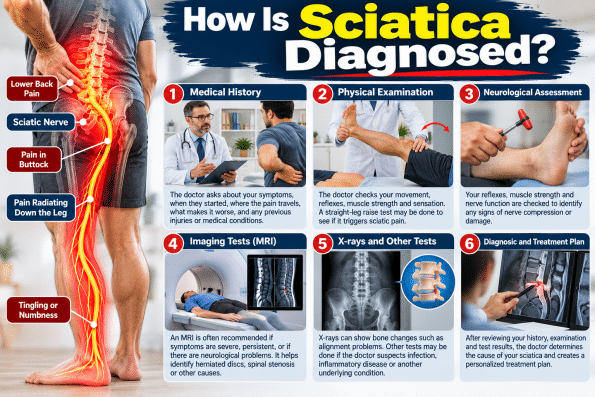
Sciatica is usually diagnosed through a medical history and physical examination. Imaging tests are not necessary for every person.
1. Medical History
A healthcare professional may ask questions about:
- Where the pain begins and where it travels.
- When the symptoms started.
- Whether the pain is constant or intermittent.
- Whether coughing, sneezing, or movement makes it worse.
- Whether numbness, tingling, or weakness is present.
- Whether there has been an injury or a previous episode of back pain.
- Whether bladder, bowel, fever, or unexplained weight-loss symptoms are present.
These details help determine whether the symptoms are consistent with sciatica or may have another cause.
2. Physical Examination
The examination may include checking leg strength, sensation, reflexes, walking ability, and spinal movement.
A clinician may also perform a straight-leg raise test, which involves carefully lifting the leg while the person lies down. Reproduction of familiar radiating pain can help support the diagnosis, although this test is not conclusive on its own.
3. MRI or Other Imaging
An MRI may be considered when symptoms are severe, neurological problems are present, another serious condition is suspected, or symptoms persist despite appropriate treatment and imaging would change management.
X-rays can show certain bone changes but do not directly show most herniated discs or nerve compression.
Routine imaging is generally unnecessary for uncomplicated sciatica that is likely to improve without an intervention.
4. Additional Tests
Blood tests or other investigations may be appropriate if the clinician suspects infection, inflammatory disease, or another condition unrelated to ordinary nerve compression.
Treatment Options for Sciatica

The best treatment depends on the cause of sciatica, the intensity of pain, and whether the affected nerve is losing function.
1. Staying Active
For many people, remaining gently active is more helpful than prolonged bed rest. Short walks and ordinary daily activities can help maintain mobility and reduce stiffness.
Activities should be adjusted to avoid movements that sharply increase symptoms. Gradually returning to normal activities is often preferable to complete inactivity.
2. Physical Therapy
A physiotherapist can develop an individualized programme to improve mobility, strength, and function.
Depending on the person’s condition, treatment may include:
- Gentle mobility exercises.
- Strengthening exercises for the trunk and hips.
- Movement and lifting education.
- Gradual walking or other aerobic activity.
- Carefully selected stretches.
Not every exercise is suitable for every cause of sciatica. Stop an exercise that produces increasing leg pain, new numbness, or weakness, and seek professional advice.
3. Medicines for Pain
A clinician or pharmacist may discuss medicines according to the person’s medical history and the likely benefits and risks.
Nonsteroidal anti-inflammatory drugs (NSAIDs), such as ibuprofen, may be considered in selected cases. However, their benefit for sciatica is uncertain, and they can cause stomach bleeding, kidney problems, or cardiovascular complications.
They may be unsuitable for people with certain medical conditions, those taking particular medicines, or some pregnant individuals. Use them only after checking that they are appropriate for you.
Paracetamol alone is often not effective for sciatica. Medicines such as gabapentin or pregabalin, oral corticosteroids, and benzodiazepines are not routinely recommended for sciatica because evidence of overall benefit is lacking and harms are possible. Opioids are not recommended for chronic sciatica.
Do not start, stop, or combine prescription medicines without appropriate medical guidance.
4. Heat Therapy
A warm pack may temporarily ease muscle tension and discomfort. Apply a comfortably warm pack with a protective layer between it and the skin.
Avoid excessive heat, do not fall asleep on a heating pad, and take extra care if the affected area has reduced sensation.
5. Manual Therapy
Massage or certain manual therapy techniques may help some people manage back-related discomfort. When used, they should generally be part of a broader programme that includes exercise rather than a stand-alone cure.
Avoid forceful spinal manipulation without an appropriate assessment, particularly if there is significant weakness, numbness, recent trauma, or suspected serious spinal disease.
6. Epidural Injections
For selected people with acute and severe sciatica, a specialist may consider an epidural injection containing local anaesthetic and a corticosteroid.
This is not necessary for most cases and does not guarantee lasting relief. The decision depends on symptom severity, the underlying cause, and individual risks.
7. Surgery
Surgery may be considered when non-surgical treatment has not sufficiently improved pain or function and examination and imaging findings identify a problem that surgery can address.
Procedures such as spinal decompression or removal of part of a herniated disc may relieve pressure on a nerve in selected patients.
Emergency surgery may be required for certain serious neurological problems, including cauda equina syndrome. New bladder or bowel dysfunction or rapidly worsening weakness should never be ignored while trying home treatments.
Natural Ways to Help Relieve Sciatica

Natural approaches may help reduce discomfort, support mobility, and improve general health. They should complement—not replace—medical assessment when symptoms are severe, persistent, or associated with neurological changes.
1. Gentle Walking
Short, comfortable walks can help maintain movement and reduce the stiffness associated with prolonged sitting.
Begin with a manageable duration and increase gradually as tolerated. If walking causes progressively worse pain or weakness, seek professional advice about modifying your activity.
2. Gentle Stretching
A physiotherapist may recommend specific stretches depending on the cause and location of symptoms.
Some people benefit from gentle hip or buttock mobility exercises. Others may find certain stretches aggravate nerve pain. Avoid forcing a stretch or trying to push through sharp, shooting pain.
3. Improve Sitting Habits
Change position regularly rather than sitting continuously for long periods. Use a supportive chair and keep your feet comfortably supported.
There is no single perfect sitting posture for everyone. Regular movement and finding positions that do not aggravate symptoms are generally more useful than trying to maintain a rigid posture all day.
4. Use Heat Carefully
A warm compress may offer short-term relief, especially when muscle tension accompanies the pain. Heat does not remove a herniated disc or directly correct nerve compression.
5. Maintain a Balanced Diet
A varied diet containing vegetables, fruits, whole grains, protein sources, nuts, and healthy fats supports general health.
Adequate nutrition is important for normal tissue function, but no particular food has been proven to cure sciatica or reverse nerve compression.
6. Maintain a Healthy Weight When Appropriate
If excess weight is contributing to back discomfort, gradual weight management may help reduce mechanical stress and support movement.
Avoid crash diets or unproven supplements marketed as rapid cures for nerve pain.
7. Support Sleep and Recovery
Choose a sleeping position that feels comfortable. Some people prefer lying on their side with a pillow between the knees; others prefer lying on their back with a pillow beneath the knees.
These positions may improve comfort, but no single sleeping position is necessary for everyone.
8. Avoid Prolonged Bed Rest
Resting briefly during a painful flare may be reasonable, but extended bed rest can contribute to stiffness and loss of strength.
Try to maintain gentle daily movement within your tolerance unless a healthcare professional has advised otherwise.
Can Herbal Remedies Help Sciatica?
Herbal remedies are commonly used in traditional systems of medicine for pain and inflammation. However, evidence that specific herbs can safely and reliably treat sciatica itself is limited.
Sciatica frequently involves irritation or compression of a nerve root. An herbal preparation cannot be assumed to remove a herniated disc, widen a narrowed spinal canal, or restore nerve function.
Commonly Discussed Herbal Ingredients

Turmeric: Turmeric contains curcumin, a compound studied for its potential anti-inflammatory effects in several health conditions. Evidence that turmeric treats sciatic nerve compression or reliably relieves sciatica remains insufficient. Concentrated supplements may interact with medicines and can cause side effects.
Ginger: Ginger is traditionally used for digestive complaints and is also studied for possible anti-inflammatory effects. It has not been established as a specific treatment for sciatica. Concentrated preparations may increase bleeding risk in some circumstances or interact with medication.
Boswellia: Boswellia extracts have been investigated for inflammatory conditions, but reliable evidence for treating sciatica is lacking. Product quality, dosage, and interactions can vary.
Topical herbal oils: Some oils or massage preparations may provide temporary comfort through warmth, massage, or skin sensation. They should not be considered treatments that repair a compressed nerve. Essential oils can irritate or burn the skin if used undiluted.
Safety Considerations for Herbal Treatment
If you are considering an herbal product, discuss it with a qualified healthcare professional, particularly if you take blood thinners, have kidney or liver disease, are pregnant, or have other ongoing medical conditions.
Use products with transparent ingredient lists and reliable quality controls. Avoid preparations with undisclosed ingredients or claims that they permanently cure sciatica.
Best approach: Use evidence-based movement, appropriate medical treatment, and careful self-management as the foundation of care. Herbal products, if considered at all, should be supplementary and should never delay urgent assessment or recommended treatment.
Exercises for Sciatica: What Should You Know?
Exercise can be an important part of recovery, but the right movements depend on the underlying cause and the individual’s symptoms.
A physiotherapist may recommend:
- Short walks at a comfortable pace.
- Gentle movements that maintain lower-back mobility.
- Appropriate trunk and hip strengthening.
- Carefully selected nerve-mobility exercises when indicated.
Avoid copying intense exercise routines from online videos without considering your symptoms. A movement that helps one person may worsen another person’s leg pain.
Stop exercising and seek medical advice if you develop new weakness, worsening numbness, or severe or increasing radiating pain. Seek emergency care for bladder or bowel changes or numbness around the saddle area.
How Long Does Sciatica Last?
Many cases of sciatica improve within a few weeks to a few months. Recovery depends on the underlying cause, the severity of nerve irritation, and the person’s overall health.
Some episodes settle relatively quickly, while others persist or recur. Symptoms caused by a significant disc problem or spinal stenosis may take longer to improve.
If pain is worsening, is not improving after a few weeks of appropriate self-care, or is interfering with normal activities, arrange a medical assessment. Earlier evaluation is important when neurological symptoms develop.
How to Prevent Sciatica
Not all cases of sciatica can be prevented, but certain habits may support spinal health and reduce the risk of recurring episodes.
1. Exercise Regularly
Choose activities suited to your abilities, such as walking, swimming, or a suitable strength-training programme. Build activity gradually rather than suddenly increasing exercise intensity.
2. Use Safe Lifting Techniques
Keep a load close to your body, bend through your hips and knees as appropriate, and avoid twisting while lifting. Seek help with objects that are too heavy or awkward to manage safely.
3. Take Breaks From Sitting
If you work at a desk or drive for long periods, change position and take movement breaks when practical.
4. Strengthen the Core and Hips
Appropriate strengthening can support everyday movement and improve physical capacity. A physiotherapist can help select exercises that fit your needs.
5. Stop Smoking
Smoking is associated with poorer spinal health. Seeking help to stop smoking may benefit your overall health as well as your back.
6. Maintain Healthy Lifestyle Habits
Adequate sleep, balanced nutrition, regular activity, and appropriate weight management can support general musculoskeletal health.
7. Address Symptoms Early
Do not ignore recurring radiating pain, persistent numbness, or changes in leg strength. Early assessment can help identify the cause and guide suitable care.
When Should You See a Doctor?
Arrange a medical appointment if:
- Sciatica has not improved after a few weeks of self-care.
- Pain is severe, persistent, or getting worse.
- Pain prevents normal walking, sleeping, working, or daily activities.
- You have persistent numbness or tingling.
- You develop weakness in the leg or foot.
- Symptoms begin after a significant injury.
- You also have fever, unexplained weight loss, a history of cancer, or other concerning symptoms.
Seek emergency care for new bladder or bowel dysfunction, numbness around the genitals or anus, severe or worsening weakness in both legs, or other signs of possible serious spinal nerve compression.
Prompt assessment matters because prolonged compression can sometimes cause lasting nerve damage.
Conclusion
Sciatica is nerve-related pain that typically travels from the lower back or buttock into one leg. Common causes include herniated discs, spinal stenosis, and other conditions that irritate or compress nerve roots.
Symptoms may include shooting pain, tingling, numbness, and muscle weakness. Diagnosis usually involves a medical history and physical examination, with imaging reserved for situations in which it is likely to change management.
Many people improve with gentle activity, appropriate exercises, heat for temporary comfort, and individualized medical care. Selected patients may benefit from medication, specialist injections, or surgery.
Natural approaches and herbal products may be discussed as complementary options, but there is insufficient evidence that they cure sciatica or correct nerve compression. The safest strategy is to identify the underlying cause, remain appropriately active, follow professional guidance, and seek urgent care for warning signs.
Frequently Asked Questions About Sciatica
1. What is the main cause of sciatica?
A herniated or slipped disc pressing on a nerve root in the lower back is one of the most common causes. Spinal stenosis and other spinal changes can also cause sciatica.
2. What are the first signs of sciatica?
Early symptoms may include pain in the buttock that travels down one leg, tingling, burning, or pins-and-needles sensations. Some people also experience lower back pain.
3. Can sciatica go away on its own?
Yes. Many cases improve over several weeks to a few months. Persistent or worsening symptoms should be assessed by a healthcare professional.
4. What is the fastest way to relieve sciatic nerve pain?
There is no single method that works fastest for everyone. Depending on the cause, gentle movement, avoiding prolonged bed rest, comfortable heat, and an individualized treatment plan may help.
5. Is walking good for sciatica?
Gentle walking is often helpful because it maintains movement and reduces stiffness. Start with a comfortable duration and adjust your activity if symptoms worsen.
6. Should I rest in bed if I have sciatica?
Brief periods of rest may be useful during a painful flare, but prolonged bed rest is generally discouraged. Gentle activity within your tolerance is usually preferable.
7. Can sciatica cause numbness in the foot?
Yes. Irritation or compression of certain nerve roots can cause numbness, tingling, or weakness in parts of the foot or leg. New or progressive weakness needs prompt assessment.
8. Can herbal remedies cure sciatica?
No herbal remedy has been established as a reliable cure for sciatica. Some ingredients are studied for general anti-inflammatory effects, but this does not establish that they treat nerve compression.
9. Is surgery always necessary for sciatica?
No. Most people do not require surgery. It may be considered when appropriate non-surgical treatment has failed and the symptoms and imaging findings identify a problem that surgery can address. Some serious neurological emergencies require urgent specialist treatment.
10. When is sciatica dangerous?
Sciatica may signal a medical emergency if accompanied by new bladder or bowel dysfunction, numbness around the genitals or anus, or severe or worsening weakness in both legs. Seek emergency medical care immediately if these occur.
11. Can sciatica affect both legs?
It can, although sciatica commonly affects one side. Symptoms in both legs—particularly when severe or accompanied by progressive weakness or saddle-area numbness—require urgent assessment.
12. Can sitting make sciatica worse?
Yes. Prolonged sitting aggravates symptoms for some people. Changing position regularly and taking short movement breaks may improve comfort.
13. Which doctor treats sciatica?
A primary-care doctor can assess the symptoms and begin treatment. Depending on the cause and severity, referral may be appropriate to a physiotherapist, neurologist, orthopedic or spinal specialist, or another relevant clinician.
14. Can sciatica return after recovery?
Yes. Sciatica can recur, particularly when the underlying spinal condition persists. Regular activity, appropriate exercise, safe lifting, and early assessment of recurring symptoms may help manage future episodes.
15. Does sciatica permanently damage nerves?
Many people recover without permanent nerve damage. However, significant or prolonged nerve compression can sometimes cause lasting weakness or sensory changes. New or progressive neurological symptoms should be evaluated promptly.
Medical Disclaimer: This article is for educational purposes only and is not a substitute for professional medical advice, diagnosis, or treatment. Seek an appropriate medical assessment for persistent or severe symptoms, and seek emergency care for signs of serious nerve compression.