Gum Rosin is a natural resin obtained from pine trees and widely used in adhesives, coatings, printing inks, paper products and several other industrial applications. It is also known as rosin or colophony. Although it comes from a natural source, gum rosin is not the same as an herbal supplement, and its suitability depends on its grade and intended use.
In this guide, we will explore what gum rosin is, how it is produced, its main uses, potential benefits in manufacturing, possible side effects, and important safety precautions.
What Is Gum Rosin?

Gum rosin is a solid, brittle resin obtained by collecting oleoresin from living pine trees and distilling it to remove volatile components such as turpentine. The remaining material is known as gum rosin.
It usually has a yellow, golden, amber or brown appearance. Its exact colour and composition depend on the pine species, production process and storage conditions.
Gum rosin contains a mixture of natural resin acids, including abietic-acid-related and pimaric-acid-related compounds. These substances give the resin its characteristic adhesive properties and ability to form films.
According to a scientific review published in 2025, gum rosin continues to attract interest for conventional industrial applications and specialised pharmaceutical-material research.
How Is Gum Rosin Made?
Gum rosin is produced through a process involving several stages.
- Collection of pine resin: Oleoresin is collected from suitable pine trees using controlled tapping methods.
- Removal of impurities: The collected material may be filtered to remove bark, debris and other unwanted particles.
- Distillation: The oleoresin is heated under controlled conditions to separate volatile turpentine from the less volatile resin.
- Cooling and solidification: The remaining resin is cooled until it becomes a solid material.
- Grading and packaging: The finished product is assessed for characteristics such as colour, purity and suitability for its intended application.
Different grades may be manufactured for different purposes. Industrial-grade gum rosin should not be assumed suitable for food, cosmetics or medicinal applications.
Types of Rosin

Rosin is commonly classified according to how it is obtained.
1. Gum Rosin
Gum rosin is obtained from the oleoresin collected from living pine trees. It is commonly used in adhesives, coatings, printing inks and related manufacturing applications.
2. Wood Rosin
Wood rosin is recovered from resinous pine wood, such as suitable stumps and other timber residues, through extraction and processing.
3. Tall Oil Rosin
Tall oil rosin is obtained during the processing of pine wood in the kraft pulping industry. It is used in various industrial chemical formulations.
Although these materials share some chemical characteristics, their composition, processing and intended applications can differ.
Uses of Gum Rosin

Gum rosin is valued because it can improve stickiness, adhesion and film formation in suitable formulations.
1. Adhesives and Glue
One of the best-known applications of gum rosin is adhesive manufacturing. It can act as a tackifier, helping certain adhesives develop the initial stickiness needed to bond surfaces.
It is used in selected hot-melt adhesives, pressure-sensitive adhesives and related formulations.
2. Printing Inks
Gum rosin and modified rosin derivatives are used in certain printing inks. They can help provide binding, film formation and other performance characteristics required during printing.
3. Paints and Protective Coatings
Rosin-based materials can contribute to film formation and adhesion in selected coatings, varnishes and related products. Their performance depends on the specific formulation and any chemical modifications.
4. Paper Manufacturing
Rosin derivatives have been used in paper-sizing formulations to influence how paper interacts with liquids. Their application depends on the paper-production process and the type of rosin product.
5. Rubber and Industrial Products
Certain rosin grades are used in rubber compounding, sealants and other industrial formulations. They may help adjust tackiness, processing behaviour or other material properties.
6. Specialised Pharmaceutical Materials
Researchers have investigated rosin and modified rosin derivatives for use in specialised drug-delivery materials, coatings and other pharmaceutical applications.
These research applications do not mean that raw gum rosin is a medicine or that it should be taken orally. Pharmaceutical use requires appropriate processing, testing and quality controls.
Potential Benefits of Gum Rosin in Manufacturing
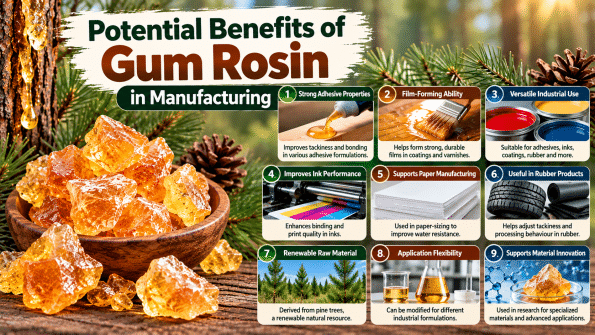
The benefits of gum rosin are primarily related to its physical and chemical properties rather than established health effects.
Strong Adhesive Properties
Gum rosin can improve the initial tack of certain adhesive formulations, making it useful in products that need to stick to surfaces.
Film-Forming Ability
Rosin and its derivatives can form films that help provide specific surface characteristics in coatings and other applications.
Renewable Raw Material
Gum rosin is derived from pine-tree resin, a renewable biological resource when trees are managed and harvested responsibly.
Versatile Industrial Applications
Its chemical structure allows manufacturers to modify rosin to suit different formulations, including selected adhesives, inks, coatings and specialised materials.
Potential for Material Innovation
Scientific research continues to explore modified rosin materials for controlled-release systems and other specialised applications. These remain application-specific developments rather than proof of medicinal benefits from raw rosin.
Does Gum Rosin Have Health Benefits?
Gum rosin should not be promoted as a general health supplement. There is insufficient evidence to recommend raw gum rosin as a treatment for common health conditions or as a source of proven nutritional benefits.
Rosin and certain processed derivatives may have specific technical roles in approved formulations. However, those uses are different from taking raw resin as a supplement.
If you are looking for herbal ingredients for a wellness routine, choose products specifically manufactured and labelled for the intended use, and consult a qualified healthcare professional when appropriate.
Side Effects and Safety of Gum Rosin
Although gum rosin comes from a natural source, it can cause adverse reactions.
1. Skin Allergies
Rosin is a recognised contact allergen. Direct exposure may cause allergic contact dermatitis in sensitive individuals, resulting in redness, itching, swelling or a rash.
2. Respiratory Irritation
Dust and fumes generated during handling or heating may irritate the respiratory system. Repeated workplace exposure can contribute to respiratory sensitisation, including asthma in susceptible individuals.
3. Eye Irritation
Dust or particles may irritate the eyes. Appropriate protective equipment and workplace handling procedures can help reduce exposure.
4. Risks From Improper Heating
Heating rosin can produce irritating fumes, particularly when it is overheated or handled without suitable ventilation. Industrial processing should follow the manufacturer’s safety instructions.
5. Risks From the Wrong Product Grade
Industrial gum rosin may contain impurities or be processed for a purpose unrelated to human consumption. It should not be swallowed, used as a home remedy or applied to the skin unless the specific product is explicitly intended and authorised for that use.
Anyone who develops breathing difficulties, significant swelling or a severe allergic reaction should seek urgent medical attention.
Is Gum Rosin Safe for Human Use?
The answer depends on the particular rosin material, its grade, processing and intended application.
Raw industrial gum rosin is not intended to be eaten or used as a dietary supplement. Certain specially processed rosin derivatives are used in particular regulated food-contact or chewing-gum applications where permitted by applicable regulations.
For example, the US Food and Drug Administration lists glycerol ester of gum rosin as a substance used for specified technical purposes under particular regulatory provisions. This does not mean every form of gum rosin is approved for food use.
Always verify the exact ingredient name, grade, intended application and applicable regulations before using a rosin-containing product.
Gum Rosin vs. Gum Resin: What Is the Difference?
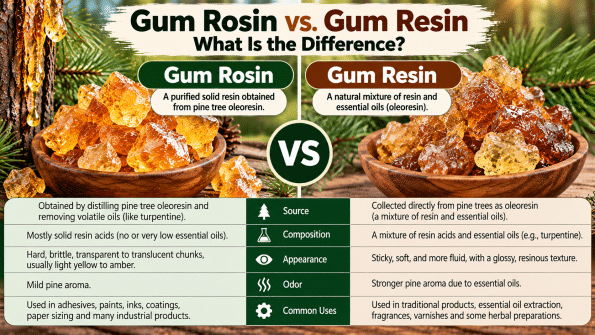
The terms gum rosin and gum resin may sound similar, but they do not necessarily refer to the same material.
Gum rosin is the relatively solid resin remaining after volatile components are removed from pine oleoresin. The original oleoresin contains both resinous compounds and volatile components.
The term gum resin can have different meanings depending on the botanical or commercial context. Therefore, buyers should check the product’s chemical identity, source and technical documentation rather than relying on the name alone.
How to Store Gum Rosin
Correct storage helps preserve the material and reduce handling risks.
- Store it in a cool, dry and well-ventilated place.
- Keep it in its original, properly labelled container.
- Protect it from excessive heat and direct sunlight.
- Keep it away from ignition sources and incompatible materials.
- Avoid creating dust during handling.
- Follow the manufacturer’s safety data sheet and storage instructions.
- Keep industrial materials away from food, beverages and products intended for consumption.
Frequently Asked Questions About Gum Rosin
What is gum rosin made from?
Gum rosin is made from pine-tree oleoresin. The oleoresin is processed to remove volatile components, leaving a solid material rich in natural resin acids.
What is gum rosin commonly used for?
It is commonly used in adhesives, printing inks, coatings, varnishes, paper-sizing formulations and other industrial products.
Is gum rosin a natural product?
Yes. Gum rosin is derived from pine-tree resin. However, being natural does not automatically make a material safe for eating, applying to the skin or using as medicine.
Can gum rosin cause allergies?
Yes. Rosin can cause allergic contact dermatitis in sensitive people. Dust and fumes may also pose respiratory risks during handling or heating.
Is gum rosin edible?
Raw industrial gum rosin should not be eaten. Certain specially processed rosin derivatives may be permitted for specific food-related applications under applicable regulations, but this does not make all rosin products edible.
Is gum rosin the same as chewing gum?
No. Gum rosin is a resinous material. Some specially processed rosin derivatives can be used as components of certain chewing-gum bases, but raw gum rosin is not the same as finished chewing gum.
Is gum rosin used in herbal medicine?
Rosin has a history of traditional uses in some contexts, and researchers have investigated specialised rosin-based materials. However, raw gum rosin should not be treated as a proven herbal supplement or self-administered medicine.
How should gum rosin be stored?
Keep it in a sealed, labelled container in a cool, dry location away from excessive heat, ignition sources and incompatible substances. Follow the manufacturer’s instructions for the particular grade.
Conclusion
Gum rosin is a versatile pine-derived resin with important applications in adhesives, coatings, printing inks and other manufacturing processes. Its natural origin and useful physical properties make it valuable as an industrial raw material, while ongoing research explores specialised applications for modified rosin materials.
However, gum rosin is not a conventional dietary supplement, and its industrial uses should not be confused with proven health benefits. Because it can cause allergic skin reactions and exposure to dust or fumes may pose health risks, the correct grade, handling precautions and intended use are essential.
Safety note: This article is for general educational purposes and is not medical advice. Always consult the product’s technical documentation and safety data sheet before handling gum rosin.