Introduction
Everyone wants healthy, smooth, and naturally glowing skin. However, factors such as sun exposure, dehydration, lack of sleep, stress, pollution, and an unsuitable skincare routine can make the skin appear dull, dry, or tired.
The good news is that you do not always need expensive skincare products to improve your skin’s appearance. Simple habits, including gentle cleansing, regular moisturizing, sun protection, a balanced diet, and adequate sleep, can help support healthy-looking skin.
Natural skincare ingredients such as aloe vera, jojoba oil, rose water, and honey are also popular choices for people who prefer simple skincare routines. However, natural ingredients are not suitable for everyone, and their effects depend on your skin type and how they are used.
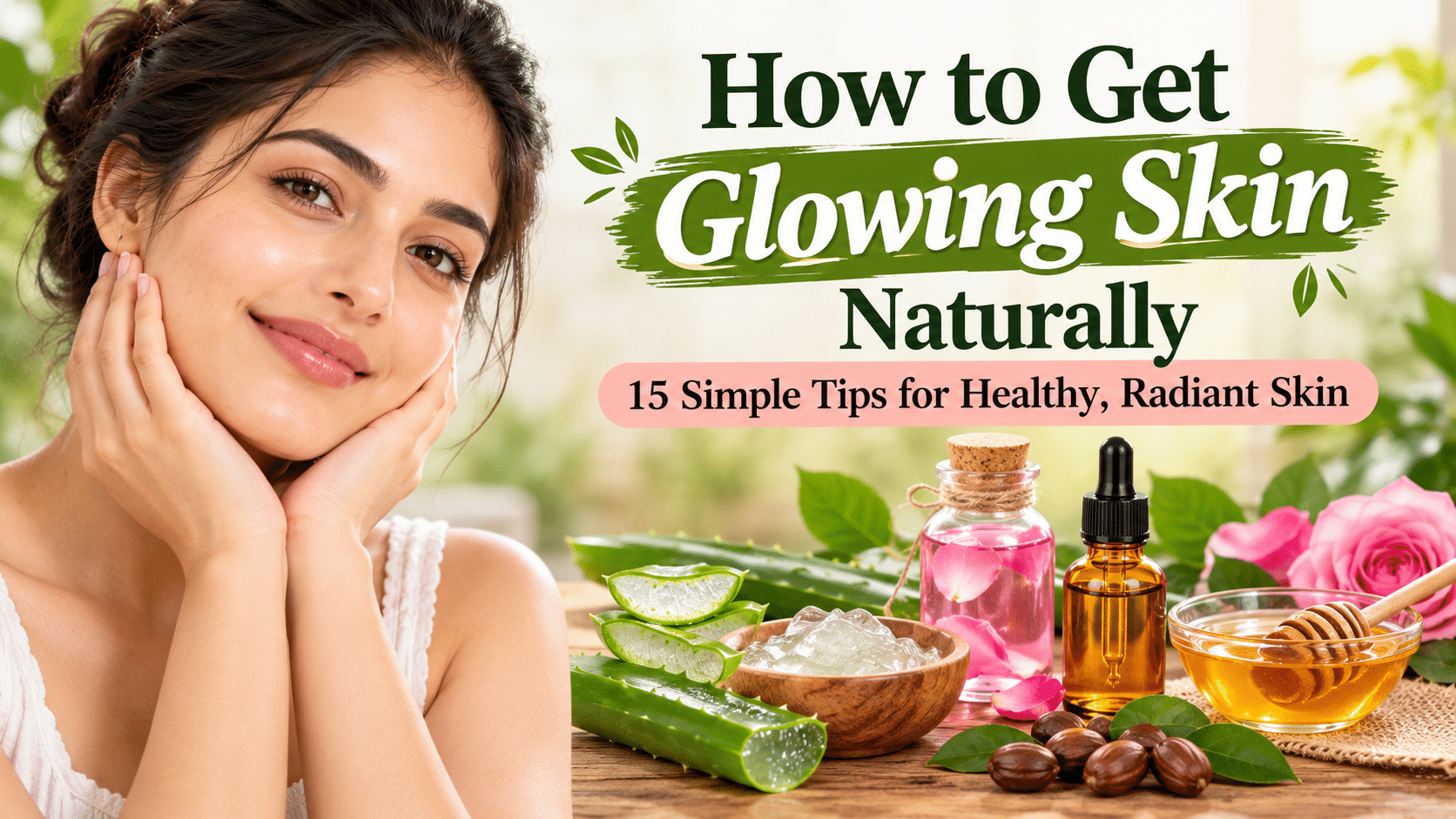
In this guide, you will discover 15 simple tips on how to get glowing skin naturally, the best foods for healthy skin, natural skincare ingredients, and a daily routine you can follow at home.
What Is Glowing Skin?
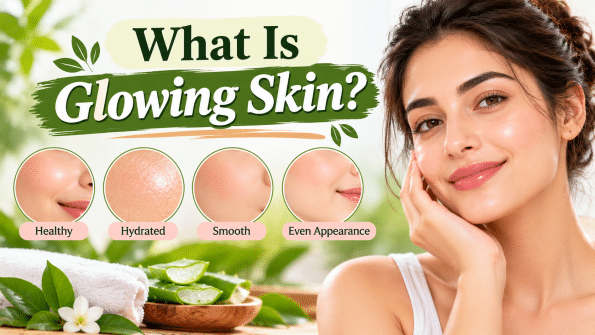
Glowing skin generally refers to skin that looks healthy, hydrated, smooth, and relatively even in appearance. It does not mean that your face must be completely free of pores, fine lines, acne, or natural pigmentation.
Healthy skin comes in different shades and textures. Your natural skin tone is influenced by genetics, and the goal of skincare should be to maintain skin health rather than change your natural complexion.
Several factors contribute to a healthy-looking appearance:
- Adequate skin hydration
- A healthy skin barrier
- Gentle cleansing and moisturizing
- Protection against ultraviolet radiation
- A nutritious and balanced diet
- Sufficient sleep and stress management
Building a consistent skincare routine is usually more beneficial than frequently switching between different products or trying harsh home remedies.
15 Simple Tips on How to Get Glowing Skin Naturally
1. Drink Enough Water
Water is essential for normal body functions, including maintaining hydration. When you are dehydrated, your skin may appear less fresh, and dehydration can contribute to dryness.
Drink water regularly throughout the day, increasing your intake when the weather is hot or you are physically active. Your overall fluid needs depend on factors such as your activity level, climate, diet, and health.
Although drinking water is important, drinking excessive amounts will not automatically make your skin glow. Combine adequate hydration with a suitable skincare routine for better overall skin care.
2. Cleanse Your Face Gently
Cleansing removes sweat, excess oil, dirt, and sunscreen from the skin. It is an important step in maintaining clean, healthy-looking skin.
Choose a gentle facial cleanser suitable for your skin type. Wash your face with lukewarm water and use your fingertips instead of rough washcloths or abrasive scrubs.
For most people, cleansing in the morning and before bedtime is a reasonable starting point. If your skin is very dry or sensitive, you may need to adjust your routine.
Avoid harsh soaps and excessive washing because they can remove natural oils and damage the skin barrier.
Simple tip: After washing your face, pat it dry gently with a clean towel rather than rubbing it.
3. Use Aloe Vera for Skin Hydration
Aloe vera is a popular natural ingredient used in skincare products. Its gel contains water and other compounds that may help soothe and hydrate the skin.
Aloe vera products may be useful for people looking for a lightweight moisturizer, particularly when their skin feels dry or uncomfortable.
Choose a product formulated for facial use, preferably without added fragrance. If you use fresh aloe vera, remember that the plant can cause irritation or allergic reactions in some people.
Apply a small amount to a limited area first. Do not apply aloe vera to deep wounds or assume that it can treat every skin condition.
Aloe vera may support comfortable, hydrated skin, but it is not a guaranteed treatment for acne, dark spots, or wrinkles.
4. Apply Moisturizer Regularly
Moisturizing is one of the simplest ways to improve the appearance of dry or dull skin. A good moisturizer helps reduce water loss and supports the skin’s natural protective barrier.
Apply moisturizer after cleansing, preferably while your skin is still slightly damp.
Different skin types may benefit from different formulations:
- Dry skin: Choose a richer cream containing ingredients such as glycerin, ceramides, or petrolatum.
- Oily skin: Try a lightweight, non-comedogenic gel or lotion.
- Sensitive skin: Look for fragrance-free products with a simple ingredient list.
- Combination skin: Use a lightweight moisturizer and adjust application to different areas of your face.
Regular moisturizing can make skin feel softer and appear smoother. It is an important foundation for any natural skincare routine.
5. Use Sunscreen Every Day
Sun protection is one of the most important steps for maintaining healthy-looking skin over time.
Exposure to ultraviolet radiation can contribute to premature skin aging, uneven pigmentation, sunburn, and skin cancer. Sunscreen helps protect the skin against these effects.
Choose a broad-spectrum sunscreen with SPF 30 or higher. Apply it to exposed skin before going outdoors and reapply approximately every two hours when outdoors, or sooner after swimming or sweating, according to the product instructions.
Sunscreen is particularly important when spending time outside in sunny climates.
You can also protect your skin by wearing a hat, seeking shade, and using protective clothing.
Natural oils such as coconut oil, olive oil, and almond oil should not be used as substitutes for sunscreen.
6. Eat Fruits Rich in Vitamins
Fruits provide vitamins, minerals, fiber, and other beneficial nutrients that support overall health.
Vitamin C is particularly important because the body needs it to produce collagen, a protein that helps maintain normal skin structure.
Consider adding these fruits to your regular diet:
- Oranges: Provide vitamin C.
- Guavas: Offer vitamin C and dietary fiber.
- Strawberries: Contain vitamin C and other plant compounds.
- Papaya: Provides vitamin C and carotenoids.
- Kiwi: Supplies vitamin C and other nutrients.
Eating a variety of fruits is more beneficial than relying on one particular fruit as a skin remedy.
Remember that a balanced diet supports normal skin function, but fruit alone cannot guarantee clear skin or remove existing pigmentation.
7. Include Green Vegetables in Your Diet
Vegetables provide nutrients that help support healthy body functions, including normal skin maintenance.
Spinach, broccoli, carrots, sweet potatoes, and other colorful vegetables can contribute to a balanced diet.
Leafy green vegetables contain folate and other nutrients. Carrots and sweet potatoes provide beta-carotene, which the body can convert into vitamin A.
Try to include a variety of vegetables in your daily meals. You can eat them in salads, soups, curries, or lightly cooked dishes.
A diverse diet is generally more helpful than focusing on a single so-called superfood.
8. Get Enough Sleep
Sleep allows the body to carry out important restorative processes. Insufficient sleep can contribute to a tired appearance, puffiness around the eyes, and reduced overall well-being.
Most adults should aim for approximately seven to nine hours of sleep each night.
To support better sleep:
- Maintain a regular bedtime.
- Keep your sleeping environment comfortable.
- Reduce bright-screen exposure before bedtime.
- Avoid excessive caffeine late in the day.
- Develop a relaxing nighttime routine.
Getting enough sleep will not instantly remove dark circles or wrinkles, but it can support a healthier appearance and improve your overall well-being.
9. Try Jojoba Oil for Dry Skin
Jojoba oil is widely used in natural skincare products because it helps soften the skin and reduce moisture loss.
Despite its name, jojoba oil is technically a liquid wax. Its texture is similar in some ways to the skin’s natural surface lipids, making it a popular ingredient in facial moisturizers.
If you have dry skin, you may try a small amount of jojoba oil over your regular moisturizer.
People with oily or acne-prone skin should introduce it cautiously because individual reactions vary.
Choose a product intended for cosmetic use and patch-test it before applying it to your face. Stop using it if irritation or breakouts develop.
Jojoba oil can help soften skin, but it should not be considered a proven treatment for acne scars or pigmentation.
10. Use Rose Water Carefully
Rose water is a common ingredient in traditional beauty routines. It is used in facial mists, cleansers, and other skincare products.
A suitable rose water product may provide a refreshing sensation and light hydration. However, its effects depend on the formulation, and evidence for many traditional claims remains limited.
When choosing rose water, look for a product intended for facial use. Avoid products containing ingredients that irritate your skin, particularly if you have sensitive skin.
You can apply it using clean hands or a reusable cotton pad, but avoid excessive rubbing.
Rose water is optional rather than essential. A gentle cleanser, moisturizer, and sunscreen are more important for a basic skincare routine.
11. Choose Honey for Occasional Skin Care
Honey is a natural substance that contains sugars and other compounds. It also has humectant properties, meaning it can help attract and retain moisture.
Honey is used in some cosmetic products, but evidence that ordinary household honey reliably improves facial skin is limited.
If you want to try a honey-based face mask, select a product suitable for cosmetic use and test a small area first. Avoid honey if you have an allergy to it or related ingredients.
Do not apply honey to irritated or broken skin without appropriate medical advice, and avoid homemade mixtures that contain irritating ingredients.
Honey should not replace established treatments for acne, eczema, or other skin conditions.
12. Avoid Harsh Exfoliation
Exfoliation removes some dead cells from the skin’s surface. When performed appropriately, it may help improve skin texture. However, aggressive exfoliation can cause irritation, dryness, and increased sensitivity.
Avoid scrubbing your face with rough particles, hard brushes, or homemade mixtures that scratch the skin.
Be especially careful with lemon juice and baking soda. Lemon juice may irritate the skin and increase sensitivity to sunlight, while baking soda can disrupt the skin’s natural protective barrier.
If you want to use a chemical exfoliant, choose a product suitable for your skin type and follow its directions. Introduce it gradually and stop if your skin becomes irritated.
You do not need daily exfoliation to have healthy-looking skin.
13. Eat Healthy Fats and Protein
Your body requires protein and essential fats for normal growth, repair, and maintenance.
A balanced diet may include:
- Almonds and walnuts
- Sunflower and pumpkin seeds
- Eggs
- Beans and lentils
- Fish rich in omega-3 fatty acids
- Yogurt or suitable alternatives
- Other sources of lean protein
Nuts and seeds provide different nutrients, including vitamin E and beneficial fats. Protein-rich foods supply amino acids that the body uses to build and maintain tissues.
You do not need expensive supplements if you can obtain the nutrients you need from a balanced diet.
If you suspect a nutritional deficiency or experience persistent skin problems, seek advice from a qualified healthcare professional rather than starting high-dose supplements on your own.
14. Manage Stress
Stress can affect sleep, daily habits, and certain skin conditions. Some people notice that their acne, eczema, or other skin problems become worse during stressful periods.
Although stress management cannot guarantee glowing skin, it can support general well-being and help you maintain a consistent skincare routine.
Simple activities include:
- Walking outdoors
- Practicing slow breathing
- Stretching regularly
- Spending time on enjoyable hobbies
- Maintaining social connections
- Taking short breaks during busy days
Choose activities that fit your lifestyle and make them part of your regular routine.
If stress is persistent or overwhelming, professional support may be helpful.
15. Follow a Consistent Skincare Routine
Consistency matters more than using many different skincare products.
A simple routine can help protect the skin barrier and reduce unnecessary irritation.
Morning routine:
- Cleanse your face gently.
- Apply a suitable moisturizer.
- Finish with broad-spectrum SPF 30 or higher sunscreen.
Nighttime routine:
- Remove makeup and sunscreen.
- Cleanse your face gently.
- Apply moisturizer.
- Use an optional, suitable skincare product if needed.
Introduce new products one at a time. This makes it easier to identify the cause if irritation develops.
Give your routine time to work. Hydration-related improvements may appear relatively quickly, while changes in acne, uneven tone, or other skin concerns can take several weeks or longer.
Best Natural Ingredients for Glowing Skin
Natural skincare ingredients can be useful additions to a routine, but their suitability depends on your skin type and the product formulation.
| Natural ingredient | Potential skincare use | Important consideration |
|---|---|---|
| Aloe vera | Soothing and hydration | May cause irritation in some people |
| Jojoba oil | Softens skin and reduces moisture loss | Patch-test, especially on acne-prone skin |
| Rose water | Refreshing, light hydration | Fragrance may irritate sensitive skin |
| Honey | Moisture retention | Allergy is possible |
| Sweet almond oil | Softens dry skin | Avoid if allergic to almonds |
| Oat-based products | May soothe dry, itchy skin | Choose suitable cosmetic formulations |
Remember that natural ingredients are not automatically safer or more effective than well-formulated skincare products.
Foods to Include for Healthy, Glowing Skin
Your skin benefits from a varied diet that provides sufficient energy, protein, healthy fats, vitamins, minerals, and water.
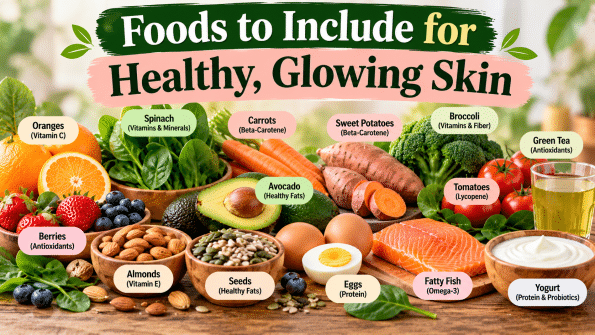
Vitamin C-rich foods
Oranges, guavas, kiwi, and berries provide vitamin C, which supports normal collagen production.
Vitamin E sources
Almonds, sunflower seeds, and other nuts and seeds provide vitamin E, an antioxidant nutrient.
Protein-rich foods
Eggs, lentils, beans, dairy products, fish, and other protein sources provide amino acids required for normal tissue maintenance.
Colorful vegetables
Carrots, spinach, sweet potatoes, and other colorful vegetables contribute vitamins, minerals, and plant compounds.
There is no single food that guarantees glowing skin. A balanced diet is the best general approach.
Common Mistakes That Can Affect Your Skin
Avoiding common skincare mistakes can be just as important as choosing the right products.
Using too many products: Multiple active ingredients can increase the risk of irritation. Keep your routine simple.
Skipping sunscreen: Sun exposure can worsen uneven pigmentation and contribute to premature skin aging.
Overwashing your face: Excessive cleansing can dry out the skin and disrupt its protective barrier.
Using unverified whitening creams: Products with undisclosed ingredients may cause serious side effects.
Expecting overnight results: Healthy-looking skin generally requires consistent care rather than a single home remedy.
Ignoring persistent skin problems: Ongoing acne, itching, redness, or unusual changes may require professional assessment.
How Long Does It Take to Get Glowing Skin Naturally?
The time required depends on your skin type, current condition, and the changes you make.
- Within a few days: Moisturizing may improve dryness and make skin feel softer.
- Within several weeks: A consistent, suitable routine may improve comfort and the appearance of dry or irritated skin.
- After several weeks or longer: Some skin concerns, including acne and uneven pigmentation, may require longer treatment periods.
These are general expectations, not guaranteed timelines. Results vary from person to person.
If your skin concern persists despite gentle skincare, a dermatologist can help identify its cause and recommend suitable treatment.
Frequently Asked Questions About Natural Glowing Skin
1. How can I get glowing skin naturally at home?
Cleanse gently, moisturize regularly, use sunscreen, eat a balanced diet, drink enough water, and get adequate sleep. You can also try a suitable natural skincare product, such as aloe vera gel or jojoba oil, after patch-testing.
2. How can I make my face glow in seven days?
For one week, follow a simple routine of gentle cleansing, moisturizing, and daily sun protection. Eat balanced meals and maintain a regular sleep schedule. Your skin may appear more hydrated, but major changes in pigmentation or acne usually take longer.
3. Which natural ingredient is best for glowing skin?
There is no single best ingredient for everyone. Aloe vera may help soothe and hydrate, while jojoba oil can soften dry skin. The most suitable choice depends on your skin type and individual tolerance.
4. Which oil is best for glowing skin?
Jojoba oil and sweet almond oil are popular choices for softening dry skin. However, oils can cause irritation or breakouts in some people. Choose a product suitable for your skin type and never use facial oils as a replacement for sunscreen.
5. Can drinking water make my skin glow?
Adequate hydration supports normal body and skin functions. If you are dehydrated, drinking enough water may help improve the effects of dehydration. Drinking more water than your body needs does not automatically produce glowing skin.
6. What should I eat for healthy skin?
Include fruits, vegetables, whole grains, protein-rich foods, nuts, seeds, and healthy fats. A varied diet provides nutrients needed for normal skin maintenance.
7. Is aloe vera safe for the face?
Many people tolerate cosmetic aloe vera products, but some experience irritation or allergic reactions. Choose a suitable product, patch-test it, and discontinue use if redness, burning, or itching develops.
8. Can natural remedies remove dark spots?
Natural remedies are not guaranteed to remove dark spots. Daily sun protection is important because UV exposure can worsen pigmentation. Persistent dark spots may benefit from evidence-based treatments recommended by a dermatologist.
9. Is sunscreen necessary if I use natural oils?
Yes. Natural oils do not provide reliable, broad-spectrum sun protection. Use a broad-spectrum sunscreen with SPF 30 or higher and follow its application instructions.
10. What is the easiest daily routine for glowing skin?
The simplest routine is gentle cleansing, moisturizing, and sunscreen in the morning, followed by cleansing and moisturizing at night. You can add other products when there is a specific need.
Conclusion
Learning how to get glowing skin naturally does not require a complicated skincare routine. Small, consistent habits can help support healthier-looking skin over time.
Start with gentle cleansing, regular moisturizing, daily sunscreen, a balanced diet, enough water, and good sleep. Natural ingredients such as aloe vera, jojoba oil, and rose water may complement your routine when they suit your skin.
Avoid harsh home remedies, excessive exfoliation, and unverified skin-whitening products. Remember that healthy skin naturally has pores, texture, and variation in color.
The best natural skincare routine is one that protects your skin, suits your individual needs, and is simple enough to follow consistently.
Disclaimer: This article is for general educational purposes and is not a substitute for professional medical advice. Consult a qualified healthcare professional for persistent skin problems or concerns about allergies and skincare ingredients.