Arthritis is a common condition that affects the joints and can cause pain, stiffness, swelling, and difficulty moving. It is not a single disease but a broad term used for more than 100 different conditions that affect joints and surrounding tissues. Arthritis can affect people of different ages, although some types become more common with increasing age.
The knees, hips, hands, fingers, shoulders, feet, and spine are among the joints commonly affected. Symptoms may develop gradually or appear suddenly, depending on the underlying type of arthritis.
Understanding the symptoms, causes, types, treatment options, diet, and lifestyle approaches can help people manage arthritis and maintain mobility.
What Is Arthritis?
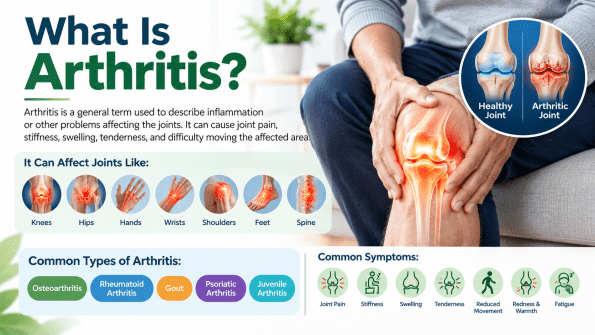
Arthritis refers to inflammation or other disorders affecting one or more joints. A joint is where two or more bones meet, allowing the body to move. Healthy joints contain cartilage and other structures that help bones move smoothly.
With certain forms of arthritis, cartilage can gradually break down, while other types involve inflammation caused by an abnormal immune response. Some forms can also affect other parts of the body.
Arthritis symptoms vary considerably from person to person. Some people experience occasional discomfort, while others develop persistent pain and reduced mobility.
Common Types of Arthritis
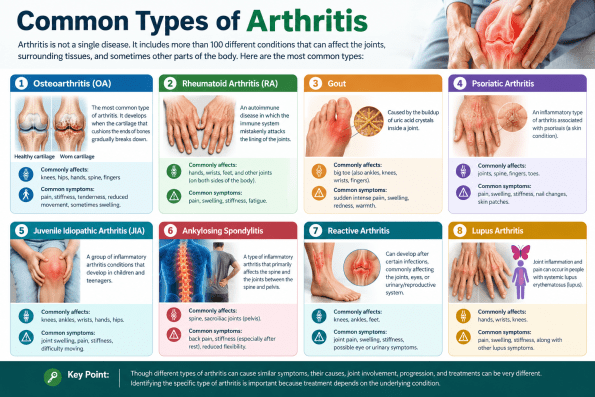
There are many different forms of arthritis. Some of the most common include:
1. Osteoarthritis
Osteoarthritis is a common form of arthritis associated with changes in the cartilage and other tissues within a joint. It frequently affects the knees, hips, hands, and spine.
Pain may become more noticeable with activity, while stiffness can occur after periods of inactivity.
2. Rheumatoid Arthritis
Rheumatoid arthritis is an autoimmune disease. The immune system mistakenly attacks tissues in the joints, causing inflammation.
It commonly affects the hands, wrists, and feet and may affect joints on both sides of the body. Rheumatoid arthritis can also cause symptoms beyond the joints.
3. Gout
Gout occurs when uric acid crystals accumulate inside a joint. It can cause sudden and severe pain, swelling, redness, and tenderness.
The big toe is a commonly affected area, although other joints can also be involved.
4. Psoriatic Arthritis
Psoriatic arthritis is an inflammatory form of arthritis associated with psoriasis. It may cause joint pain, swelling, stiffness, and changes involving the fingers or toes.
5. Juvenile Arthritis
Juvenile arthritis refers to several types of arthritis that develop during childhood. Symptoms and severity vary according to the specific condition.
Symptoms of Arthritis
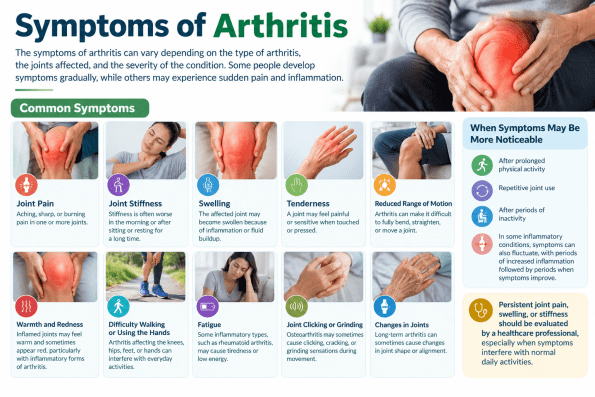
Arthritis symptoms depend on the type and joints involved. Common symptoms include:
- Joint pain
- Joint stiffness
- Swelling
- Tenderness
- Reduced range of motion
- Difficulty walking or using the affected joint
- Warmth around an inflamed joint
- Redness in some inflammatory conditions
- Fatigue in some types of arthritis
Morning stiffness can be particularly noticeable in inflammatory arthritis. Osteoarthritis-related stiffness may also occur after sitting or resting for an extended period.
If joint symptoms persist or interfere with normal activities, medical evaluation can help determine the underlying cause.
Causes and Risk Factors of Arthritis
Different forms of arthritis have different causes.
Osteoarthritis can be associated with changes in joint tissues over time. Previous injuries, repetitive stress, and excess body weight may also increase stress on certain joints.
Rheumatoid arthritis develops through an autoimmune process, although the exact cause is not completely understood.
Gout is associated with elevated uric acid levels that can lead to crystal formation in joints.
Other factors that may increase the likelihood of developing certain types of arthritis include:
- Increasing age
- Family history
- Previous joint injuries
- Excess body weight
- Repetitive joint stress
- Certain infections
- Autoimmune conditions
- Metabolic factors
Having a risk factor does not necessarily mean that a person will develop arthritis.
How Is Arthritis Diagnosed?
A healthcare professional may diagnose arthritis using a combination of medical history, physical examination, and appropriate tests.
During an examination, the doctor may assess joint swelling, tenderness, movement, and overall function.
Depending on the suspected type of arthritis, tests may include:
- Blood tests
- X-rays
- Ultrasound
- MRI scans
- Joint fluid analysis
For example, joint fluid analysis may help identify crystals associated with gout, while blood tests can sometimes help identify signs associated with inflammatory or autoimmune arthritis.
An accurate diagnosis is important because treatment varies between different types of arthritis.
Treatment for Arthritis

There is no single treatment that works for every type of arthritis. Treatment depends on the specific diagnosis, severity, affected joints, age, and overall health.
Physical Activity and Exercise
Regular appropriate exercise can help maintain joint movement, muscle strength, and physical function.
Low-impact activities such as walking, swimming, cycling, and water-based exercise may be easier on painful joints than high-impact activities.
A physical therapist can also recommend exercises designed for an individual’s condition.
Medicines
Doctors may recommend different medications depending on the type of arthritis. These can include pain-relieving medicines, anti-inflammatory medicines, corticosteroids, or medications specifically used for inflammatory arthritis.
People should use medicines according to professional advice, particularly when taking them regularly or combining multiple medications.
Physical Therapy
Physical therapy can help improve strength, flexibility, balance, and joint function. A therapist may develop an exercise program based on the affected joint and the person’s mobility.
Injections
In selected cases, healthcare professionals may recommend injections into or around a joint. The appropriate type depends on the diagnosis and individual circumstances.
Surgery
When severe joint damage causes significant pain or disability and other treatments have not provided sufficient relief, surgery may sometimes be considered.
Joint replacement is one surgical option for certain severely damaged joints.
Diet for Arthritis

There is no single food that cures arthritis. However, a balanced diet can support overall health and help maintain a healthy body weight.
A nutritious eating pattern can include:
- Fresh vegetables
- Fruits
- Whole grains
- Beans and lentils
- Nuts and seeds
- Fish and other protein sources
- Healthy fats
- Adequate water
For people who are overweight, gradual weight reduction may reduce mechanical stress on weight-bearing joints such as the knees and hips.
Foods high in added sugar, excessive saturated fat, and highly processed ingredients should generally be limited as part of a balanced eating pattern.
People with gout may need specific dietary guidance because certain foods and drinks can influence uric acid levels.
Natural Lifestyle Tips for Arthritis

Lifestyle changes can complement medical treatment and may help support mobility and general wellbeing.
Stay Physically Active
Avoiding all movement can lead to weaker muscles and greater stiffness. Choose activities appropriate for your condition and increase activity gradually.
Maintain a Healthy Weight
Extra body weight can increase pressure on weight-bearing joints. Maintaining a healthy weight may help reduce joint stress and support mobility.
Use Heat or Cold
Some people find warm showers, heating pads, or warm compresses helpful for stiffness. Cold packs may help with temporary swelling or discomfort.
Do not apply ice directly to the skin, and avoid excessive heat.
Get Adequate Sleep
Pain can interfere with sleep, while poor sleep may make pain and fatigue more difficult to manage. Maintaining a regular sleep routine can support overall wellbeing.
Protect Your Joints
Use appropriate body mechanics when lifting, carrying, or performing repetitive tasks. Assistive devices may be useful for some people.
Can Herbal Remedies Help Arthritis?
Some herbs and plant-based ingredients are traditionally used for joint comfort, including turmeric and ginger. However, evidence varies between individual products, preparations, and conditions.
Natural does not automatically mean safe. Herbal products can interact with medicines or cause side effects in some people.
Anyone taking prescription medicines, preparing for surgery, pregnant or breastfeeding, or managing a chronic condition should discuss herbal supplements with a qualified healthcare professional before using them.
Herbal products should be viewed as complementary approaches rather than replacements for diagnosis and appropriate medical treatment.
When Should You See a Doctor?
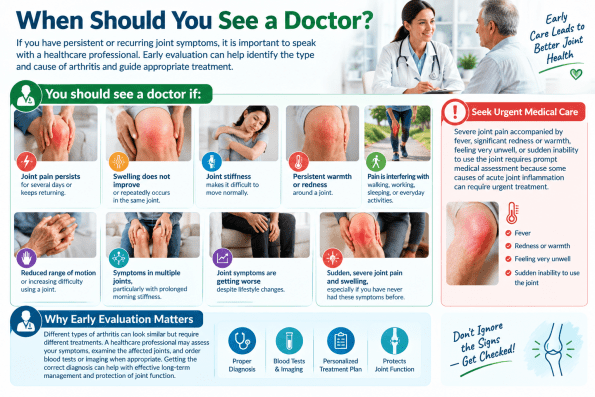
Seek medical advice if joint pain or stiffness:
- Continues for several weeks
- Keeps getting worse
- Interferes with sleep or daily activities
- Causes significant swelling
- Limits normal movement
- Occurs repeatedly without an obvious cause
Sudden severe joint pain with marked swelling, redness, warmth, or fever should receive prompt medical attention because several conditions, including joint infection and gout, can cause these symptoms.
Arthritis Prevention and Long-Term Joint Health
Not every form of arthritis can be prevented, but several habits can support joint health.
Regular physical activity helps maintain muscle strength and mobility. Maintaining a healthy weight can reduce stress on weight-bearing joints. Protecting joints from injuries and using appropriate techniques during physical work may also be beneficial.
A balanced diet, sufficient sleep, avoiding smoking, and managing other health conditions can contribute to overall wellbeing.
For people already diagnosed with arthritis, following an individualized treatment plan and remaining physically active within comfortable limits can help preserve function.
Frequently Asked Questions About Arthritis
Is arthritis curable?
Some forms of arthritis can be effectively managed, but many chronic forms do not currently have a permanent cure. Treatment focuses on controlling symptoms, protecting joint function, and managing the underlying disease.
What is the most common type of arthritis?
Osteoarthritis is one of the most common types of arthritis.
Can exercise make arthritis worse?
Appropriate exercise generally supports joint function, but excessive or unsuitable activity can aggravate symptoms. A healthcare professional or physical therapist can help determine appropriate activities.
What foods are good for arthritis?
A balanced diet rich in vegetables, fruits, whole grains, legumes, nuts, seeds, and appropriate protein sources can support overall health. Individual dietary needs vary depending on the type of arthritis.
Can arthritis affect young people?
Yes. Arthritis can occur at younger ages, including childhood. Juvenile arthritis refers to several inflammatory conditions affecting children.
Is joint pain always caused by arthritis?
No. Joint pain can have many causes, including injuries, infections, bursitis, tendon problems, and other medical conditions. Persistent joint pain should be evaluated to determine the cause.
Conclusion
Arthritis is a broad group of joint conditions that can cause pain, stiffness, swelling, and reduced mobility. Osteoarthritis, rheumatoid arthritis, gout, and psoriatic arthritis are among the better-known forms.
Early evaluation can help identify the specific type of arthritis and guide appropriate treatment. Regular movement, healthy weight management, nutritious food choices, adequate sleep, joint protection, and professionally recommended treatments can all contribute to better long-term joint health.
Natural and herbal approaches may complement a healthy lifestyle for some people, but they should not replace appropriate medical diagnosis or treatment. If arthritis symptoms are persistent, severe, or worsening, consult a qualified healthcare professional.
Medical Disclaimer
This article is for general educational purposes only and is not a substitute for professional medical advice, diagnosis, or treatment. Always consult a qualified healthcare professional about persistent or severe joint symptoms.