What Is Cannabis (Ganja)?
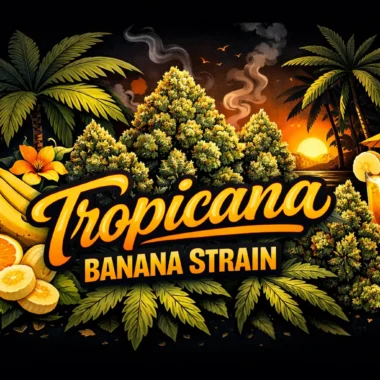
Cannabis, commonly known as marijuana or ganja, is a plant belonging to the Cannabaceae family. Its scientific name is commonly given as Cannabis sativa. It has a long history of cultivation and has been used in different cultures for industrial, traditional, medicinal and recreational purposes.
The cannabis plant contains naturally occurring chemical compounds called cannabinoids. Two of the most widely studied cannabinoids are tetrahydrocannabinol (THC) and cannabidiol (CBD).
THC is the primary intoxicating compound responsible for the characteristic psychoactive effects of marijuana. CBD, on the other hand, does not produce the same intoxicating effects.
Cannabis has attracted scientific interest because certain cannabis-derived compounds may have therapeutic applications. However, its use also carries health risks, particularly when products contain high concentrations of THC.
Understanding the plant, its chemical composition, possible medical applications and safety concerns is important before considering any cannabis-related product.
Botanical Information About Cannabis
Cannabis is an annual flowering plant that grows in different climates and environmental conditions.
Its botanical characteristics include:
- Scientific name: Cannabis sativa
- Plant family: Cannabaceae
- Plant type: Annual flowering plant
- Common names: Ganja, marijuana, cannabis and weed
- Plant parts: Leaves, flowers, stems and seeds
The plant has distinctive green leaves that are usually divided into several narrow, pointed leaflets.
Cannabis plants are cultivated in different regions of the world, although cultivation, possession and use are regulated differently depending on local laws.
What Are the Main Chemical Compounds in Cannabis?
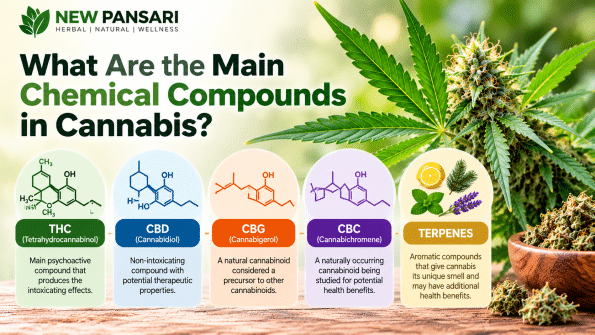
Cannabis contains more than 100 naturally occurring cannabinoids, along with terpenes and other plant chemicals. These compounds are responsible for many of the plant’s biological and aromatic characteristics. CDC+1
1. THC (Tetrahydrocannabinol)
THC is the primary psychoactive compound found in cannabis.
It affects the central nervous system and can influence:
- Mood and emotions
- Memory and concentration
- Perception and sensory experiences
- Coordination and reaction time
- Appetite
THC is responsible for the intoxicating effects commonly associated with marijuana.
2. CBD (Cannabidiol)
CBD is another important cannabinoid found in cannabis.
Unlike THC, CBD does not normally produce an intoxicating high. It has attracted scientific interest because of its potential therapeutic properties.
Researchers are studying CBD in relation to:
- Certain neurological conditions
- Seizure disorders
- Inflammation-related processes
- Pain management
- Anxiety and sleep
However, research is ongoing, and most CBD products sold commercially are not approved medicines. CDC+1
3. CBG (Cannabigerol)
Cannabigerol, commonly called CBG, is a naturally occurring cannabinoid.
It is sometimes described as a precursor to other cannabinoids because several cannabinoids develop through related biochemical pathways.
Researchers are investigating its possible effects on inflammation, neurological processes and other biological functions. More human research is needed before making reliable medical claims.
4. CBC (Cannabichromene)
CBC is another naturally occurring cannabinoid.
Early laboratory research has explored its interaction with biological systems. However, there is currently insufficient clinical evidence to establish specific medical benefits for humans.
5. Terpenes
Terpenes are aromatic compounds found in many plants, including cannabis.
They contribute to the plant’s distinctive smell and are also present in herbs, fruits and essential oils.
Examples include:
- Myrcene
- Limonene
- Pinene
- Linalool
- Caryophyllene
Terpenes are being studied for their biological properties, but claims about specific therapeutic effects of cannabis terpene combinations should be treated cautiously.
What Are the Different Types of Cannabis?
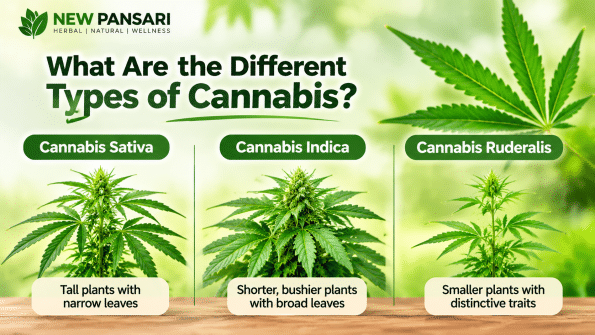
Cannabis is commonly discussed using three traditional classifications.
1. Cannabis Sativa
Cannabis sativa is traditionally associated with taller plants and relatively narrow leaves.
It is cultivated in different parts of the world and has industrial, botanical and medicinal research applications.
2. Cannabis Indica
Cannabis indica is traditionally described as having shorter, bushier growth and broader leaves.
It is commonly discussed in the cannabis industry, although modern scientific understanding shows that plant appearance and chemical composition do not always fit neatly into traditional categories.
3. Cannabis Ruderalis
Cannabis ruderalis is generally associated with smaller plants and distinctive flowering characteristics.
It is less commonly discussed than sativa and indica in traditional cannabis classifications.
Important: These classifications do not reliably predict the exact THC or CBD content or the medical effects of a cannabis product.
What Are the Potential Medical Uses of Cannabis?
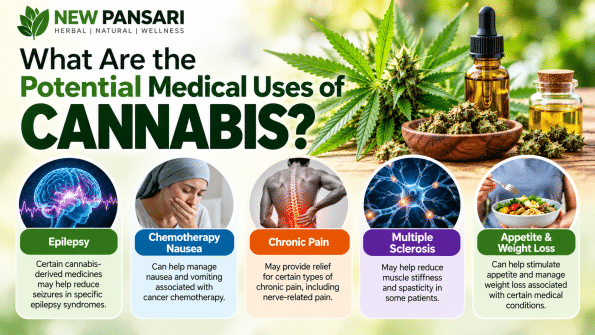
Cannabis and its chemical compounds have become subjects of medical research. Scientists are investigating how cannabinoids interact with the body’s endocannabinoid system, which helps regulate several physiological processes.
However, it is important to distinguish between research findings, approved prescription medicines and unverified health claims.
Some cannabinoid-based medicines have established medical applications.
1. Certain Types of Epilepsy
One of the best-established medical applications of a cannabis-derived compound is the treatment of specific seizure disorders.
A prescription medicine called Epidiolex contains purified CBD. It is approved in the United States for certain rare forms of epilepsy, including Dravet syndrome, Lennox-Gastaut syndrome and seizures associated with tuberous sclerosis complex.
This does not mean that ordinary cannabis or commercially available CBD oils can replace epilepsy medication. CDC+1
2. Chemotherapy-Related Nausea
Certain prescription cannabinoid-related medicines may help manage nausea and vomiting associated with cancer chemotherapy.
Dronabinol and nabilone are examples of prescription medicines used for this purpose in the United States.
They should only be used under appropriate medical supervision. NCCIH+1
3. Chronic Pain Research
Researchers have investigated cannabinoids for certain types of chronic pain.
Some studies suggest modest benefits in particular situations, but the evidence varies depending on the condition and the product being studied.
Cannabis should not be considered a universal treatment for pain or a substitute for proper medical diagnosis.
4. Multiple Sclerosis Symptoms
Certain cannabinoid-based medicines have been investigated for muscle stiffness and spasticity associated with multiple sclerosis.
The potential benefits vary between patients, and treatment requires medical assessment.
5. Appetite and Weight Loss Associated With Illness
Some prescription THC-related medicines are used to manage appetite loss and weight loss associated with specific medical conditions, including HIV/AIDS.
These applications involve regulated medicines rather than ordinary recreational cannabis. Health+1
What Is the Difference Between Cannabis, Marijuana, Ganja and Hemp?
These terms are related but are not always interchangeable.
| Term | Meaning |
|---|---|
| Cannabis | General name for the plant and its derivatives |
| Marijuana | Common term for THC-containing cannabis material |
| Ganja | Common South Asian name for cannabis, particularly its flowering tops |
| Hemp | Cannabis cultivated or classified for industrial uses under applicable THC limits and regulations |
| CBD | A non-intoxicating cannabinoid |
| THC | The main intoxicating cannabinoid |
Cannabis vs. Hemp
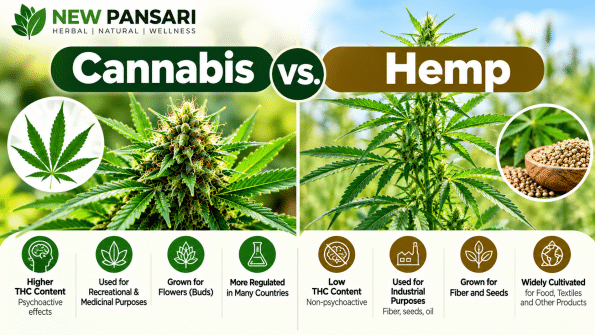
Hemp and marijuana belong to the same plant group, but they differ in their typical chemical composition, cultivation purposes and legal classifications.
Hemp is generally associated with industrial applications, such as:
- Textile production
- Fibre manufacturing
- Paper production
- Industrial materials
- Hemp seed products
Hemp seeds are valued as a food ingredient because they contain protein, fats and other nutrients.
Importantly, hemp seeds are not equivalent to THC-rich cannabis flowers. FDA+1
What Are the Health Risks and Side Effects of Cannabis?
Although cannabis is a subject of medical research, it is not risk-free. Products containing THC can affect the brain, nervous system and other parts of the body.
1. Memory Problems
THC can interfere with short-term memory and the ability to retain information.
Regular use may affect learning, attention and memory, particularly in younger people.
2. Anxiety and Panic
Some people experience anxiety, fear, confusion or panic after consuming THC-containing cannabis products.
The likelihood and severity can depend on the individual’s sensitivity and the amount of THC.
3. Impaired Coordination
Cannabis can affect balance, reaction time and decision-making.
Driving or operating machinery after using cannabis can be dangerous.
4. Respiratory Problems
Smoking cannabis exposes the lungs to smoke and harmful combustion products.
Regular smoking may cause coughing, mucus production and bronchitis-like symptoms.
5. Dependence and Addiction
Some people develop cannabis use disorder, which can involve:
- Difficulty controlling cannabis use
- Strong cravings
- Continued use despite negative consequences
- Neglecting responsibilities
- Withdrawal symptoms after stopping
High-THC products may increase the risk of problematic use. CDC+1
6. Mental Health Concerns
Cannabis use, especially frequent use of high-THC products, is associated with an increased risk of certain mental health problems.
Some individuals may experience paranoia or hallucinations. The risk of psychosis is particularly concerning among vulnerable individuals.
7. Effects on Heart Health
Cannabis can temporarily increase heart rate and affect blood pressure. Its cardiovascular effects are still being studied.
People with existing cardiovascular conditions should discuss potential risks with a healthcare professional.
Who Should Avoid Cannabis?
Cannabis and cannabis-derived products may be particularly unsuitable for certain groups.
These include:
- Children and adolescents
- Pregnant women
- Breastfeeding mothers
- People with a history of psychosis
- Individuals with certain heart conditions
- People taking medicines that may interact with cannabinoids
The FDA advises avoiding THC and CBD during pregnancy and breastfeeding because of potential risks to the mother and baby. FDA+1
How Does Cannabis Affect the Endocannabinoid System?
The endocannabinoid system (ECS) is a biological signalling system found throughout the human body.
It includes:
- Endocannabinoids produced naturally by the body
- Cannabinoid receptors
- Enzymes that help produce and break down endocannabinoids
Two important cannabinoid receptors are CB1 and CB2.
CB1 receptors: Found mainly in the brain and central nervous system, where they influence memory, mood, appetite and coordination.
CB2 receptors: Found in various immune cells and other tissues, where they participate in biological and immune signalling.
THC interacts with cannabinoid receptors, particularly CB1 receptors. CBD has a different and more complex interaction with the endocannabinoid system.
Scientists continue to investigate how these pathways might contribute to the development of new treatments.
Cannabis in Traditional Herbal Medicine
Cannabis has a history of traditional use in several cultures, including parts of Asia.
Historically, different preparations were described in traditional medical systems for various purposes. However, historical use does not establish modern medical safety or effectiveness.
In traditional South Asian terminology, cannabis-related materials may be described using names such as:
- Ganja
- Bhang
- Charas
These terms can refer to different cannabis preparations and should not be treated as identical.
For herbal practitioners and traditional medicine researchers, it is particularly important to understand the difference between historical documentation and scientifically validated medical applications.
New Pansari health information: Cannabis is not an ordinary culinary herb. It should not be recommended as a general home remedy, and unregulated preparations should not be promoted as treatments for diseases.
Is Cannabis Legal in Pakistan?
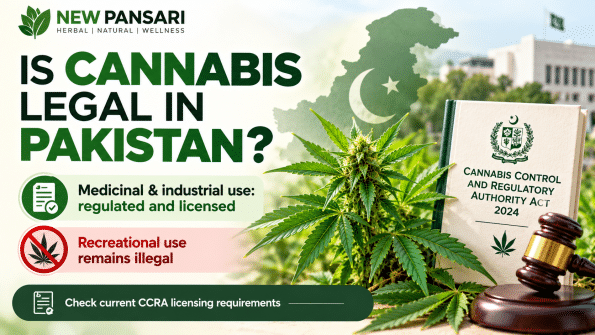
Cannabis laws vary considerably between countries.
In Pakistan, the Cannabis Control and Regulatory Authority Act, 2024 established a regulatory framework covering the cultivation of cannabis and the extraction, processing, manufacturing and sale of cannabis derivatives for medicinal and industrial purposes.
The legislation provides for regulatory oversight through the Cannabis Control and Regulatory Authority (CCRA).
This framework does not mean that recreational marijuana, ganja or charas is freely legal. Activities involving cannabis remain subject to applicable laws, licensing requirements and regulatory controls. Pakistan Code+1
Anyone considering a cannabis-related business or product in Pakistan should verify the current requirements with the relevant regulatory authorities and obtain appropriate legal advice.
Is CBD the Same as Cannabis?
No. CBD and cannabis are related but different terms.
Cannabis is the plant, which contains numerous naturally occurring compounds. CBD is just one of those compounds.
The main differences are:
| Feature | CBD | THC |
|---|---|---|
| Full name | Cannabidiol | Tetrahydrocannabinol |
| Intoxicating effect | Does not normally produce a high | Produces a high |
| Research | Medical and biological research | Medical and biological research |
| Prescription medicines | Certain approved uses | Certain approved prescription medicines |
| Side effects | Possible | Possible |
CBD is not automatically safe simply because it does not produce intoxication. It can interact with medicines and may cause liver-related problems and other side effects. Health+1
Can Cannabis Be Used as a Natural Remedy?
Cannabis should not be treated like commonly used household herbs such as fennel, ginger, turmeric or chamomile.
There are important differences between:
- A traditional herbal preparation
- An unregulated cannabis product
- A purified cannabinoid
- A medically approved prescription medicine
The fact that a compound comes from a plant does not automatically make it safe.
People with medical conditions should not replace prescribed treatment with cannabis, CBD oil or homemade preparations.
For medical applications, only appropriately regulated products and professional medical guidance should be considered.
How Is Cannabis Researched and Tested?
Medical and scientific research on cannabis involves several stages.
1. Botanical identification: Researchers identify the plant species and document its characteristics.
2. Chemical analysis: Laboratories examine the cannabinoid and terpene composition.
3. Quality testing: Testing may assess purity, contamination and consistency.
4. Laboratory research: Scientists investigate how individual compounds interact with cells and biological pathways.
5. Clinical trials: Human studies evaluate safety, effectiveness and possible adverse effects.
6. Regulatory review: Relevant authorities assess the evidence before approving a medicine for a specific use.
These steps are important because cannabis products can differ significantly in their chemical composition and quality.
Frequently Asked Questions About Cannabis (Ganja)
1. What is Cannabis called in Urdu?
Cannabis is commonly called گانجا (Ganja), while related preparations may be known as بھنگ (Bhang) and چرس (Charas).
2. What is the scientific name of Cannabis?
The commonly used scientific name is Cannabis sativa. Cannabis is a member of the Cannabaceae plant family.
3. Does Cannabis contain CBD?
Yes. Cannabis naturally contains cannabidiol (CBD), along with THC and many other cannabinoids.
4. Does CBD produce a high?
CBD does not normally produce the intoxicating high associated with THC. However, it can still have side effects and interact with medications.
5. What is the difference between THC and CBD?
THC is the primary intoxicating cannabinoid in marijuana, while CBD does not produce the same intoxicating effect.
6. Does Cannabis have medical benefits?
Certain regulated cannabinoid medicines have established medical uses, including specific epilepsy treatments and medicines for chemotherapy-related nausea. Other proposed benefits require further research.
7. Is Cannabis addictive?
Yes. Some individuals develop cannabis use disorder, particularly with frequent use and exposure to high-THC products.
8. Is Hemp the same as Marijuana?
Both come from the Cannabis plant group, but they are commonly distinguished by their chemical composition, cultivation purposes and applicable legal definitions.
9. Can Cannabis affect memory?
Yes. THC can interfere with short-term memory, attention, learning and decision-making.
10. Is Cannabis legal in Pakistan?
Pakistan has a regulatory framework for licensed medicinal and industrial cannabis activities under the Cannabis Control and Regulatory Authority Act, 2024. Recreational use is not thereby made freely legal.
11. Is Cannabis safe during pregnancy?
No form of THC or CBD use should be assumed safe during pregnancy or breastfeeding. The FDA advises avoiding these products during these periods.
12. Can Cannabis replace prescribed medicines?
No. Cannabis products should not replace prescribed treatment. Any consideration of cannabinoid-based medicine should be discussed with a qualified healthcare professional.
Conclusion
Cannabis (Ganja) is a complex plant containing numerous naturally occurring chemical compounds, including THC, CBD, CBG and other cannabinoids. It has a long history of traditional use and is now receiving scientific attention for its potential medical applications.
Research has established certain uses for specific regulated cannabinoid medicines, particularly in selected seizure disorders and chemotherapy-related symptoms. However, many popular claims about cannabis and CBD remain unproven.
Cannabis also carries important health risks, including impaired memory, anxiety, respiratory problems, dependence and possible mental health complications.
At New Pansari, our goal is to provide reliable herbal and botanical education based on scientific research, responsible traditional knowledge and consumer safety.
Important health disclaimer: This article is for educational purposes only. It is not medical advice and does not recommend recreational cannabis use, self-medication or unlicensed cannabis products.
References and Further Reading
For readers who want to explore the scientific evidence: