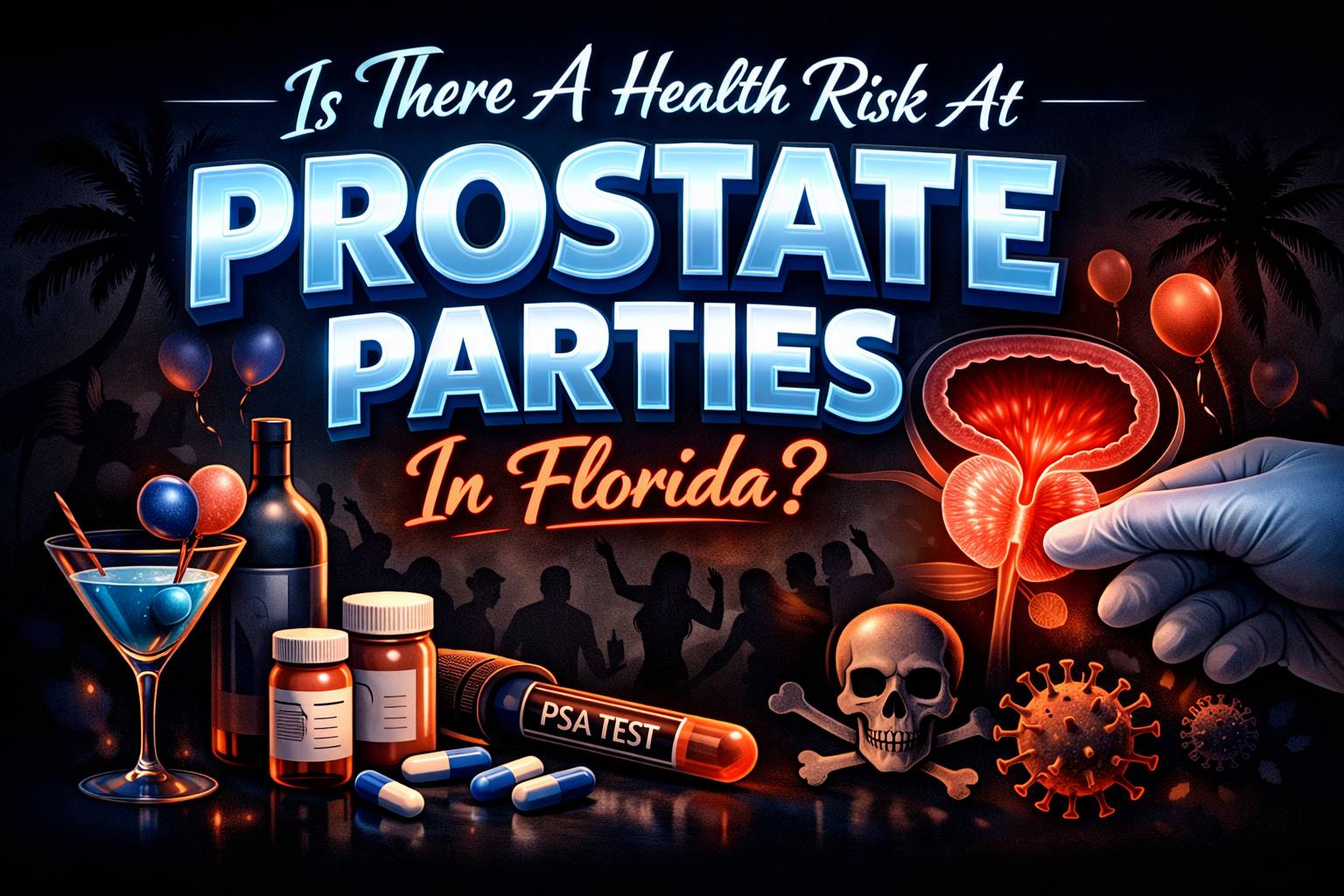
In recent years, news and social media have introduced many people to the concept of “prostate parties.” Stories about these events—particularly in places like Florida—have drawn attention, curiosity, confusion, and concern. But what exactly are prostate parties? Do they carry health risks? And what should people know if they hear about or encounter them?
This article will explain the topic in depth, including the medical background, the reported risks, the legal and ethical considerations, and the role of health professionals in providing accurate guidance. The purpose is not to sensationalize but to inform responsibly and clearly.
What Is a Prostate Party?
A “prostate party” refers to a gathering where participants engage in stimulation of the prostate gland—typically in a social, group setting, and sometimes in informal or private locations. These events have been described in media accounts and, in some cases, by participants themselves.
It’s important to note that the term is not a recognized medical term and is not used in clinical settings. Instead, it has developed in popular culture and online discussions to describe a particular kind of social/sexual event.
Since this topic involves adult behavior, it is important to remain respectful and educational when discussing it.
Understanding the Prostate: A Brief Medical Overview
The prostate is a small gland in people assigned male at birth that plays a role in the male reproductive system. It sits below the bladder and surrounds the urethra (the tube that carries urine out of the body). Among its functions is contributing fluid to semen.
Medical professionals are familiar with the prostate in the context of health conditions like benign prostatic hyperplasia (BPH), prostatitis (inflammation of the prostate), and prostate cancer. These are common topics in urology.
It’s important to distinguish between clinical understanding of the prostate and the popular cultural term “prostate party.”
Where Did Prostate Parties Get Attention?
Prostate parties gained some attention in media reports about unusual or trending events happening in Florida. Social media often amplifies attention to such stories, which may or may not be entirely accurate or representative of widespread practice.
Often, these stories become more about sensation than about health facts, which makes it especially important to look at what medical experts say.
Evaluating Health Risks: What Experts Say
When looking at whether health risks exist at prostate parties, it’s helpful to focus on documented medical concerns related to prostate stimulation, particularly in group settings.
1. Risk of Physical Injury
Prostate stimulation—like any form of internal stimulation—carries a risk of physical injury if done improperly. The rectal tissue and the prostate itself are delicate. Without proper knowledge, lubrication, and hygiene, it is possible to experience:
- Tissue irritation
- Small tears (micro-tears) in the rectal lining
- Bleeding
These injuries might be minor, but they can become more serious if left untreated.
2. Risk of Infection
One of the main health risks associated with this type of activity is infection. The rectum contains a high concentration of bacteria. Introducing bacteria into the prostate, urethra, or bloodstream can result in infections such as:
- Prostatitis
- Urinary tract infections
- Systemic infections (in rare cases)
Infection risk increases in environments where proper sanitation and protective measures (like condoms and gloves) are not used or are used incorrectly.
Furthermore, multiple participants and shared equipment without sterilization can raise the chances of transmitting infections.
3. Sexually Transmitted Infections (STIs)
In addition to bacterial infections from the rectal area, gatherings involving sexual activity can increase the likelihood of spreading sexually transmitted infections (STIs).
STIs such as chlamydia, gonorrhea, syphilis, and HIV are transmitted through sexual contact and bodily fluids. The more partners involved and the more intimate the contact, the greater the risk.
4. Prostate Health Conditions
People with existing prostate conditions—such as prostatitis, an enlarged prostate, or prostate cancer—may be at greater risk of complications from vigorous stimulation. In some cases, the activity could worsen symptoms or trigger inflammation.
Medical professionals generally recommend that people with known prostate health concerns consult a doctor before engaging in any form of internal prostate stimulation, regardless of setting.
Is There Evidence of Widespread Outbreaks or Reports?
As of now, there are no broad public health studies or official medical reports that examine “prostate parties” specifically as epidemiological events with documented outbreaks. Most of the information circulating online comes from news stories, opinion pieces, or personal accounts—not scientific research.
This makes it essential to separate anecdotal reports from evidence-based medical information.
Medical professionals focus on known risks associated with certain behaviors—not on rare or sensationalized events.
Florida Laws and Public Health Codes
Florida, like all U.S. states, has public health regulations related to communicable diseases, sexually transmitted infections, and general safety standards for public gatherings.
There are no laws specific to “prostate parties.” However, general health and safety codes do apply.
Legal Considerations Include:
- Public indecency laws
- Health code regulations for public events
- Laws regarding transmission of communicable diseases
- Consent and age restrictions (all participants must be adults and consenting)
If an event involves nonconsensual behavior or minors, it becomes a legal matter beyond health concerns.
It’s also possible for organizers to face legal challenges related to public health if an event is shown to actively spread communicable disease.
Why Florida Gets Mentioned in Media Coverage
Florida often appears in media stories about unusual or controversial events. This is not because Florida is uniquely unsafe—but because certain types of stories attract attention when tied to Florida.
This means that when a story about a prostate party emerges from Florida, it gets shared widely, which can create the impression of a trend even if it is isolated.
It’s crucial to evaluate whether there is real data showing a pattern of health issues or just repeated media coverage.
How to Think About Behavioral Health and Sexual Health
People engage in a wide range of behaviors that carry varying degrees of risk. Medical professionals assess risk based on science—not sensational headlines.
When considering any intimate or sexual behavior, the key determinants of health risk include:
- Consent of all participants
- Use of protective barriers (like condoms and gloves)
- Hygiene and sanitation
- Communication about health status
- Knowledge of STI status and testing
These are the same risk factors doctors discuss when talking about sexual health more generally.
What Health Professionals Recommend
Medical professionals prioritize safety, consent, and informed decision-making.
Here are broad recommendations professionals might give individuals considering any form of intimate activity:
1. Get Regular Health Screenings
For sexual health and prostate health, regular checkups with a primary care doctor or urologist are important.
2. Practice Safe and Informed Choices
Reducing risk includes using protection, avoiding sharing equipment, and being aware of personal and partner health status.
3. Communicate Clearly
All participants should understand what will happen and consent to it. Communication is essential for health and safety.
4. Know and Respect Legal Boundaries
Participants and event organizers should understand applicable laws and regulations in their area.
Education and Public Health Messaging
Public health organizations focus on reducing risk, preventing disease spread, and encouraging healthy behaviors. When unusual events attract media attention, public health officials often remind the community of basic safety practices.
Examples include:
- Encouraging regular STI testing
- Promoting condom and glove use
- Providing information on what increases risk versus what doesn’t
Separating Myth from Reality
Because stories about prostate parties can be sensationalized, it’s important to separate myths from reality:
Myth: Prostate Parties Cause a New Public Health Crisis
There is currently no medical evidence of widespread outbreaks linked to these events.
Fact: Any Gatherings with Intimate Contact Can Carry Risk
The risk comes from the behaviors involved, not the party itself.
Myth: Florida Is Dangerous Because of These Events
Florida is often mentioned because of how media highlights certain stories, not because of data showing disproportionate health issues.
Fact: Health Risks Are Linked to Actions, Not Geography
Where behavior occurs matters less than how it is practiced.
Who Should Be Cautious?
Certain individuals may face higher health risks if engaging in any form of prostate stimulation or intimate activity:
- People with existing prostate conditions
- People with compromised immune systems
- Individuals who have had recent rectal surgery or injury
- People who are unsure of their STI status
- Anyone who feels pressured or unsure
These individuals should consult a medical professional before participating in activities that could affect their health.
Safe Practices for Reducing Health Risk
If adults choose to engage in intimate activities—including prostate stimulation—there are ways to reduce health risks:
Use Barriers and Protection
- Gloves
- Condoms
- Lubricants
Maintain Hygiene
- Washing hands thoroughly
- Cleaning any tools or devices before and after use
Know Partner Health Status
- Recent STI testing
- Open communication
Limit Shared Equipment
Shared items that touch mucous membranes or bodily fluids increase risk if not properly cleaned.
Medical professionals are the best source of information on safe practices.
When to Seek Medical Help
If someone experiences symptoms such as:
- Severe pain
- Unusual bleeding
- Fever
- Difficulty urinating
- Signs of infection
They should seek medical care.
These symptoms are not normal after any activity and may indicate a complication that needs treatment.
Conclusion: Understanding Health Risks in Context
The question “Is there a health risk at prostate parties in Florida?” can be answered clearly:
- Yes, any intimate activity carries potential health risks.
- No, there is no verified public health crisis linked specifically to such events.
- Risk comes from how an activity is done—not from where it occurs.
- Medical professionals emphasize safety, consent, and hygiene.
Rather than focusing on sensational terms, it is more helpful to understand health risks in general and to approach sexual and intimate behavior knowledgeably.
Being informed, communicating clearly, practicing safe behaviors, and seeking professional guidance when needed are all parts of protecting personal health—regardless of the setting or popular terminology.