What Is Ashwagandha?
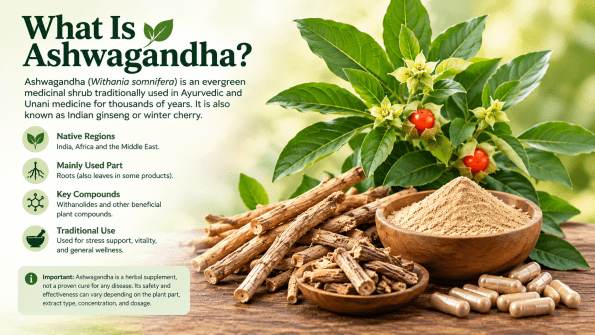
Ashwagandha is a small evergreen shrub traditionally used in Ayurvedic and Unani medicine. Its scientific name is Withania somnifera, and it belongs to the nightshade family, Solanaceae.
The plant grows in parts of India, Africa, and the Middle East. Its roots are commonly used in herbal preparations, although some products also contain leaves or a combination of roots and leaves.
Ashwagandha contains naturally occurring compounds called withanolides, which are being studied for their biological effects.
In modern herbal wellness, Ashwagandha is often marketed as an adaptogenic herb. Adaptogens are traditionally described as substances that may help the body adapt to stress. However, the scientific evidence for these effects varies, and not all marketed claims have been established.
Traditional Uses of Ashwagandha
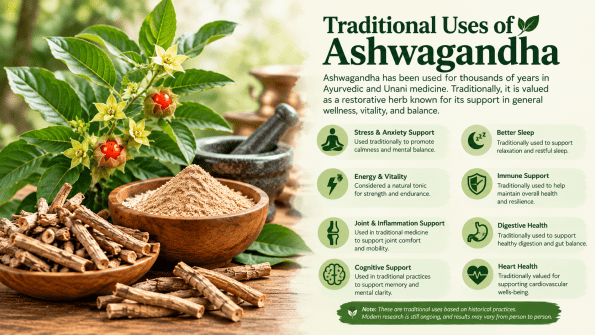
Ashwagandha has a long history in traditional Ayurvedic practices. It has traditionally been used as a restorative herb and is associated with strength, vitality, and general well-being.
Traditional preparations have included:
- Ashwagandha root powder
- Herbal pastes and decoctions
- Root-based tonics
- Herbal formulations for general vitality
- Preparations used for relaxation and sleep
Traditional use provides historical context, but it does not automatically prove that a product is effective for a particular medical condition.
Today, Ashwagandha is commonly available as a powder, capsule, tablet, tea, or standardized extract.
Potential Ashwagandha Benefits
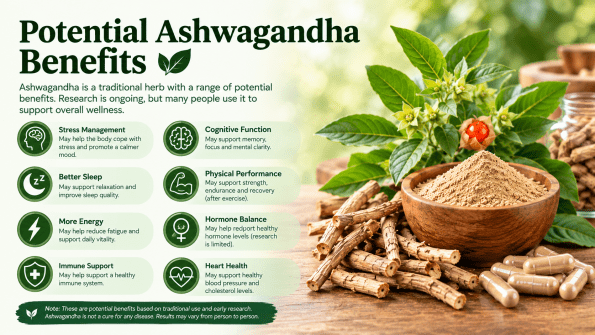
May Support Stress Management
One of the most widely researched Ashwagandha benefits is its possible role in managing stress.
Some clinical studies suggest that certain Ashwagandha extracts may help people report lower stress levels. Some studies have also observed reductions in stress-related hormone levels.
The research is promising but not conclusive. Studies have often involved relatively small groups of participants, and the preparations and doses have differed.
Ashwagandha should not be considered a replacement for professional care when stress becomes severe or persistent.
May Help Support Sleep
Ashwagandha is frequently used in herbal products designed for nighttime relaxation and sleep support.
Some small studies suggest that particular Ashwagandha extracts may help people with sleep difficulties. Reported improvements have included:
- Falling asleep more easily
- Sleeping for longer
- Waking less frequently
- Improved perceived sleep quality
However, the overall benefits observed in research have generally been modest. More high-quality studies are needed to establish which preparations and doses are most effective.
People with ongoing insomnia should discuss persistent sleep problems with a qualified healthcare professional.
May Support Relaxation and General Wellness
Ashwagandha is commonly included in wellness supplements intended to support relaxation and daily well-being.
Some people use it as part of a routine that includes adequate sleep, regular physical activity, and balanced nutrition.
However, there is not enough reliable evidence to conclude that Ashwagandha improves general health in every individual. Its effects may depend on the product formulation, dose, and personal circumstances.
Possible Support for Male Reproductive Health
Some limited research has examined Ashwagandha in relation to male reproductive health.
Certain studies suggest that taking specific Ashwagandha preparations for approximately two to four months may increase testosterone levels or improve sperm quality in some men.
These findings do not mean that Ashwagandha can treat infertility or guarantee improved fertility. Anyone experiencing fertility problems should seek an appropriate medical evaluation rather than relying on herbal supplements alone.
Ashwagandha and Exercise Performance
Ashwagandha is frequently promoted in sports and fitness supplements.
Some research has investigated its possible effects on strength, muscle-related outcomes, and exercise recovery. However, the National Center for Complementary and Integrative Health reports that there is not enough evidence to determine whether Ashwagandha is helpful for athletic performance.
More research is needed before it can be recommended as a reliable performance-enhancing supplement.
Other Proposed Benefits
Ashwagandha is also marketed for:
- Memory and cognitive function
- Blood sugar support
- Menopausal wellness
- Immune health
- General energy
- Female reproductive health
At present, there is insufficient high-quality evidence to establish that Ashwagandha is effective for many of these purposes. It should not be promoted as a cure for diabetes, thyroid disorders, infertility, or other diseases.
Ashwagandha Powder vs. Capsules
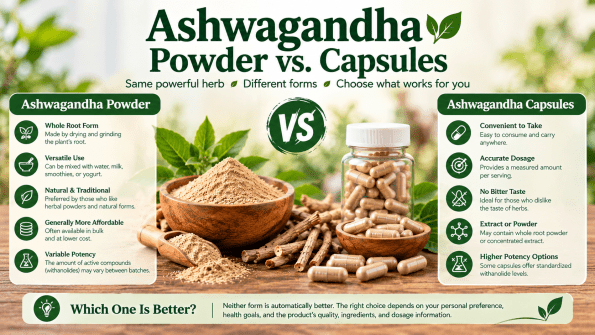
Ashwagandha is available in several forms. Choosing a suitable form depends on personal preference, the product’s quality, and the intended use.
Ashwagandha Powder
Ashwagandha powder is usually made by drying and grinding the plant’s root.
Advantages:
- Traditional form of the herb
- Can be mixed into suitable foods or beverages
- Often available in bulk
- Useful for people who prefer whole-root preparations
The amount of active compounds may vary between batches, and the actual concentration of withanolides may not be standardized.
Ashwagandha Capsules
Capsules may contain whole-root powder or a concentrated extract.
Advantages:
- Convenient to take
- Easy to measure according to the label
- Suitable for people who dislike the taste of herbal powders
- Extracts may provide a specified concentration of active compounds
A capsule containing 500 mg of root powder is not necessarily equivalent to a capsule containing 500 mg of concentrated extract. Consumers should check the ingredient list and serving information carefully.
5. Ashwagandha Dosage: How Much Should You Take?
There is no single universally established dosage of Ashwagandha that is appropriate for everyone.
The amount used in studies depends on several factors:
- Whether the product contains root powder or extract
- The concentration of withanolides
- The manufacturing process
- The person’s age and health
- The purpose of use
- Other medicines or supplements being taken
Some clinical studies involving stress and sleep have used approximately 500–600 mg per day of certain extracts. Other studies have used different amounts and formulations. These research doses should not automatically be treated as a personal recommendation.
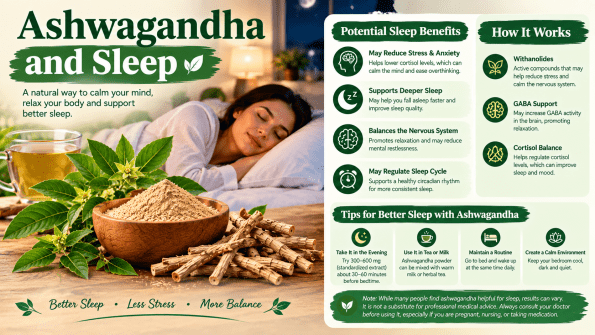
Dosage Guidelines for Consumers
Before using Ashwagandha:
- Read the product label carefully.
- Identify whether it contains powder or extract.
- Follow the manufacturer’s recommended serving.
- Do not exceed the recommended amount.
- Consult a healthcare professional if you have a medical condition or take medication.
Do not assume that a higher dose produces better results. The long-term safety of Ashwagandha has not been established, and research findings cannot be applied equally to every product.
6. How to Use Ashwagandha Powder
Ashwagandha powder is traditionally incorporated into various herbal preparations.
Depending on the product’s instructions, it may be mixed with:
- Warm water
- Milk or a suitable milk alternative
- Smoothies
- Yogurt
- Other herbal preparations
The flavor can be earthy and bitter, so some people prefer to combine it with other ingredients.
Important Precautions
Use only products intended for human consumption and follow their specific instructions. Avoid preparing homemade medicinal mixtures with uncertain quantities.
There is no universally established preparation method that guarantees a particular health benefit.
Ashwagandha Side Effects
Although Ashwagandha is often described as a natural herb, natural products can still cause adverse effects.
Common Side Effects
Some people may experience:
- Stomach discomfort
- Nausea
- Loose stools
- Diarrhea
- Vomiting
- Drowsiness
These effects may vary depending on the preparation and the individual. If symptoms are persistent or severe, stop using the product and seek medical advice.
Possible Liver Injury
There have been reports of liver injury associated with Ashwagandha-containing supplements.
Possible warning signs include:
- Yellowing of the skin or eyes
- Dark urine
- Unusual tiredness
- Abdominal discomfort
- Itching
- Nausea
If these symptoms develop while using Ashwagandha, discontinue the supplement and seek prompt medical attention.
Although such cases appear to be uncommon, the potential risk should not be ignored.
Possible Effects on the Thyroid
Some studies and case reports suggest that Ashwagandha may affect thyroid hormone levels.
This is particularly important for people with thyroid disorders or those taking thyroid medication. Ashwagandha should not be used to self-treat thyroid problems.
Consult a healthcare professional before using it if you have a thyroid condition.
Who Should Avoid Ashwagandha?
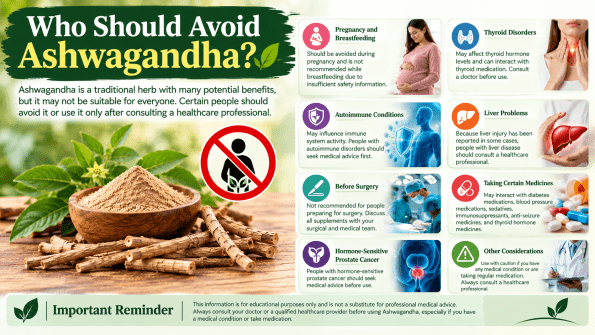
Certain people should avoid Ashwagandha or use it only after receiving professional medical advice.
Pregnancy and Breastfeeding
Ashwagandha should be avoided during pregnancy and is not recommended while breastfeeding because safety information is insufficient and potential risks exist.
People With Thyroid Disorders
Ashwagandha may affect thyroid function and may interact with thyroid hormone medication.
People With Autoimmune Conditions
Ashwagandha may influence immune-system activity. People with autoimmune disorders should consult a healthcare professional before using it.
People With Liver Problems
Because liver injury has been reported in association with Ashwagandha supplements, people with liver disease should seek medical advice before considering its use.
Before Surgery
Ashwagandha is not recommended for people preparing for surgery. Discuss all supplements with the surgical and medical team.
People Taking Certain Medicines
Ashwagandha may interact with:
- Diabetes medications
- Blood pressure medications
- Sedatives
- Immunosuppressants
- Anti-seizure medicines
- Thyroid hormone medicines
People with hormone-sensitive prostate cancer should also seek medical advice before using Ashwagandha.
How to Choose Good-Quality Ashwagandha
If you are buying Ashwagandha powder or capsules, product quality is important.
Look for:
Correct Botanical Identification
The label should clearly identify the ingredient as Withania somnifera.
Clearly Listed Plant Part
The product should state whether it contains root, leaf, or a combination.
Transparent Ingredients
Choose products that clearly list all ingredients and serving sizes.
Appropriate Testing
Where available, look for evidence of testing for contaminants, including heavy metals and microbial contamination.
Reliable Packaging
The product should be sealed and stored according to the manufacturer’s instructions.
For a herbal business such as New Pansari, accurate labeling and responsible health claims are important for customer safety and long-term trust.
Ashwagandha Storage and Shelf Life
Proper storage can help preserve the quality of Ashwagandha products.
- Keep powder in a tightly sealed container.
- Store it in a cool, dry place.
- Protect it from direct sunlight.
- Keep moisture away from the product.
- Follow the expiry date on the packaging.
- Keep supplements out of children’s reach.
Do not use products that show signs of contamination, unusual moisture, or damaged packaging.
Frequently Asked Questions
1. What is Ashwagandha used for?
Ashwagandha is traditionally used for general vitality and wellness. Modern research has particularly examined its possible effects on stress and sleep. Evidence for many other uses remains limited.
2. Is Ashwagandha good for stress?
Some studies suggest that certain Ashwagandha extracts may help reduce perceived stress. However, results vary, and the evidence is not strong enough to guarantee benefits for everyone.
3. Can Ashwagandha help with sleep?
Some small studies suggest that particular preparations may modestly improve sleep quality. It should not replace medical treatment for persistent insomnia.
4. What is the recommended Ashwagandha dosage?
There is no universal dosage. Research has used different amounts depending on the product. Follow the product label and consult a healthcare professional when necessary.
5. Is Ashwagandha powder better than capsules?
Neither form is automatically better. Powder contains the whole ground ingredient, while capsules may contain powder or concentrated extract. Compare the ingredients, quality, and serving information.
6. Can Ashwagandha cause side effects?
Yes. Possible side effects include stomach upset, diarrhea, nausea, vomiting, and drowsiness. Rare cases of liver injury have also been reported.
7. Can pregnant women take Ashwagandha?
Ashwagandha should be avoided during pregnancy. It is also not recommended during breastfeeding because safety information is insufficient.
8. Can Ashwagandha be taken with medication?
Ashwagandha may interact with several medicines, including those for diabetes, blood pressure, thyroid conditions, and sedation. Ask a healthcare professional before combining it with medication.
9. How long does Ashwagandha take to work?
Research studies have commonly evaluated Ashwagandha over several weeks. There is no guaranteed timeline for individual results, and effects depend on the preparation and person.
10. Is Ashwagandha a medicine?
Ashwagandha is a traditional medicinal herb and is sold in various supplement forms. It should not be considered a proven cure for diseases or a substitute for prescribed treatment.
Conclusion
Ashwagandha is a traditional herb with growing interest in modern wellness and herbal supplement markets. Research suggests that certain preparations may support stress management and sleep, while evidence for other popular claims remains limited.
Choosing a suitable product, following label instructions, and understanding possible side effects are essential. People with medical conditions, those taking medication, and pregnant or breastfeeding individuals should seek professional advice before using Ashwagandha.
For more information about herbal products, responsible supplement use, and traditional herbs, explore the educational resources available through New Pansari.