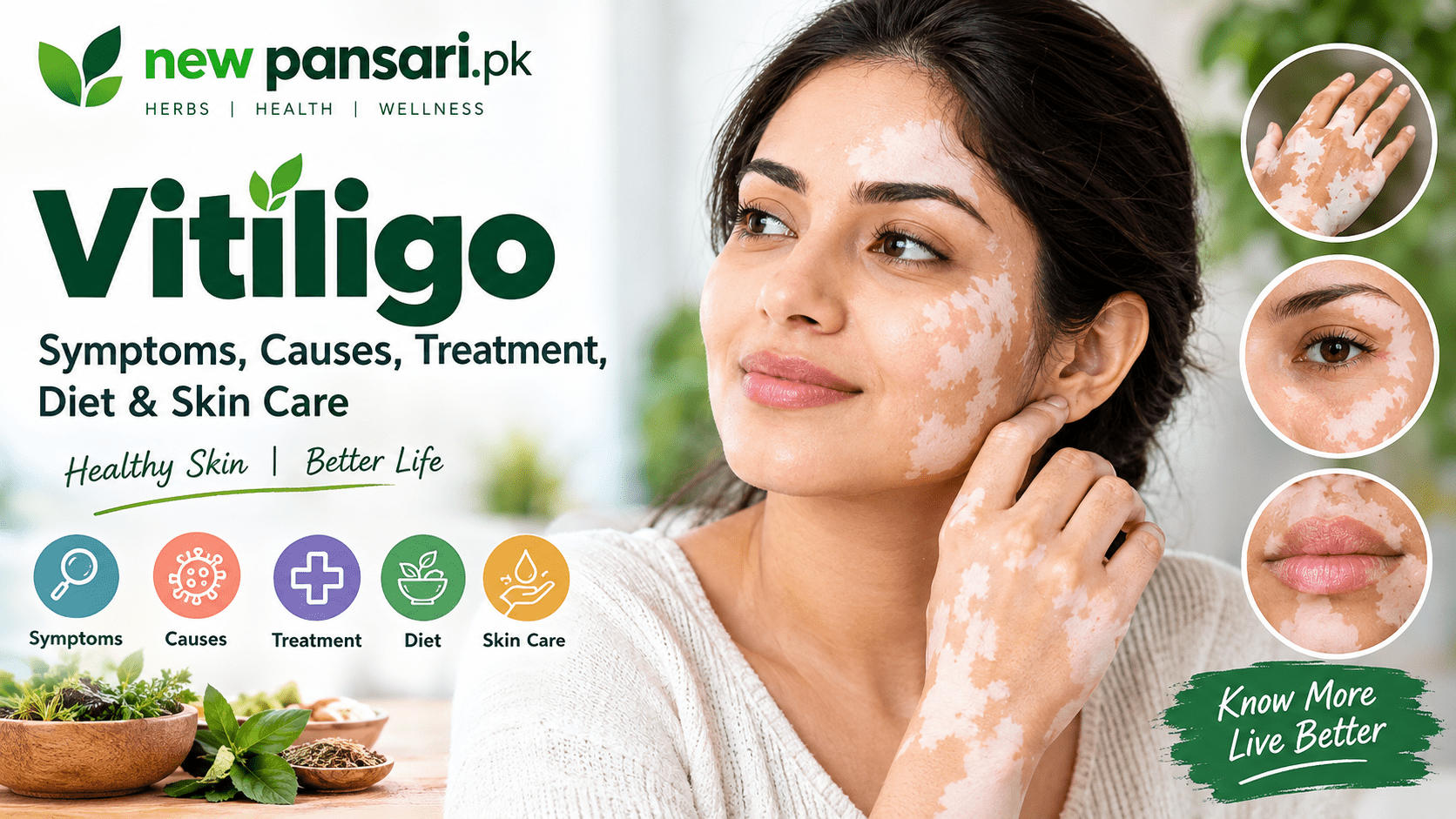
Vitiligo is a long-term skin condition that causes patches of skin to lose their natural color. It develops when melanocytes, the cells responsible for producing melanin, are damaged or destroyed. Melanin is the pigment that gives skin, hair, and certain other body tissues their color.
Vitiligo can affect people of any age, gender, or skin tone. The condition may appear as small white spots or larger areas of depigmented skin. In some people, the patches remain stable, while in others, they gradually spread to different parts of the body.
Although vitiligo is not contagious or life-threatening, it can affect a person’s confidence, emotional well-being, and quality of life. Understanding its symptoms, causes, treatment options, and skin-care requirements can help people manage the condition more effectively.
This guide explains what vitiligo is, how it develops, available medical treatments, dietary considerations, and important precautions.
What Is Vitiligo?
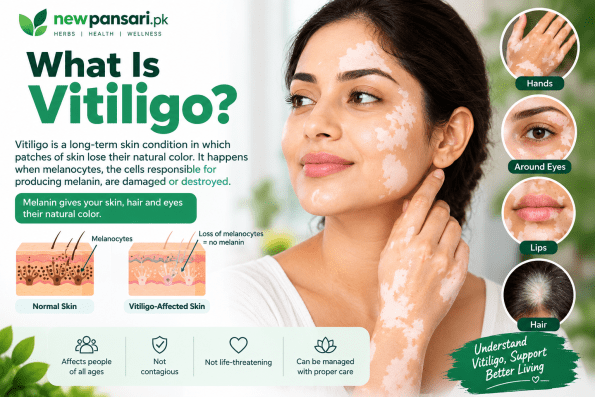
Vitiligo is a pigmentation disorder in which the skin loses melanin because melanocytes are no longer functioning properly or have been destroyed. The affected areas become lighter than the surrounding skin and may eventually appear completely white.
The condition can affect almost any part of the body, including:
- Face and lips
- Hands and fingers
- Feet and legs
- Elbows and knees
- Neck and chest
- Around the eyes
- Genital area
- Areas exposed to friction or injury
Vitiligo may also affect the hair, eyebrows, eyelashes, and the inside of the mouth.
The appearance and progression of vitiligo vary from person to person. Some individuals have only a few small patches, while others develop extensive depigmentation.
Important: Vitiligo is not caused by poor hygiene, and it cannot be transmitted through physical contact.
Symptoms of Vitiligo
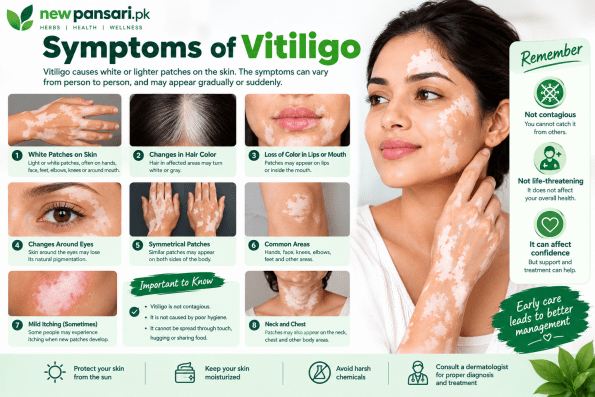
The most recognizable symptom of vitiligo is the appearance of white or pale patches on the skin. These patches may develop slowly over months or appear more noticeably over a shorter period.
1. White or Depigmented Skin Patches
The affected areas are usually lighter than the surrounding skin. In people with darker skin tones, the contrast may be especially noticeable.
Patches often begin on the hands, face, feet, or areas around body openings.
2. Loss of Pigment in Hair
Hair growing within a vitiligo patch may become white or gray. This can affect the scalp, eyebrows, eyelashes, beard, or other body hair.
3. Changes Around the Eyes and Mouth
Vitiligo may cause loss of pigmentation around the eyes, lips, nostrils, or other body openings.
4. Symmetrical Skin Changes
In non-segmental vitiligo, similar patches may develop on both sides of the body. For example, a person may notice depigmentation on both hands or both knees.
5. Progressive Depigmentation
Some patches may gradually become larger or new patches may appear. However, not everyone experiences progressive disease.
6. Possible Mild Itching
Vitiligo usually does not cause pain. Some people experience itching, particularly when new patches are developing.
If a white patch is painful, scaly, inflamed, or producing discharge, another skin condition may be present and should be evaluated by a healthcare professional.
What Causes Vitiligo?
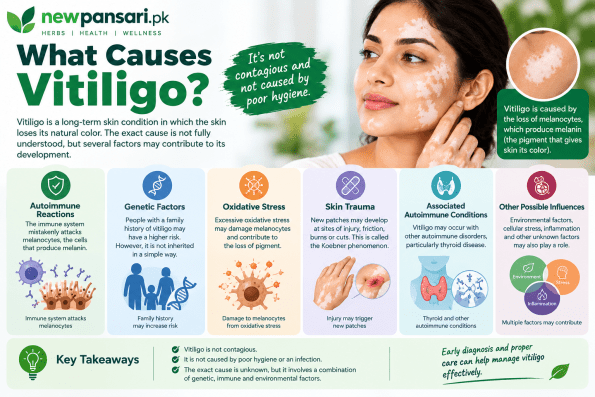
The exact cause of vitiligo is not completely understood. However, scientists believe that a combination of genetic, immune-system, and environmental factors may contribute to its development.
Autoimmune Reactions
The strongest evidence suggests that many cases of vitiligo involve an autoimmune process. In this situation, the immune system mistakenly attacks melanocytes, resulting in the loss of skin pigmentation.
Genetic Susceptibility
People with a family history of vitiligo may have an increased risk of developing the condition. However, vitiligo is not inherited in a simple, predictable pattern.
Having a relative with vitiligo does not mean that a person will necessarily develop it.
Oxidative Stress
Melanocytes may be vulnerable to oxidative stress, which occurs when harmful reactive molecules overwhelm the body’s protective antioxidant systems. Oxidative stress may contribute to melanocyte damage.
Skin Trauma
In some individuals, new vitiligo patches develop at sites of repeated friction, cuts, burns, or other injuries. This response is known as the Koebner phenomenon.
Associated Autoimmune Conditions
Vitiligo may occur alongside certain autoimmune disorders, particularly autoimmune thyroid disease. A doctor may recommend additional evaluation when symptoms or medical history suggest another condition.
Other Possible Influences
Researchers continue to study the roles of cellular stress, inflammation, and environmental factors. No single cause explains every case of vitiligo.
Types of Vitiligo
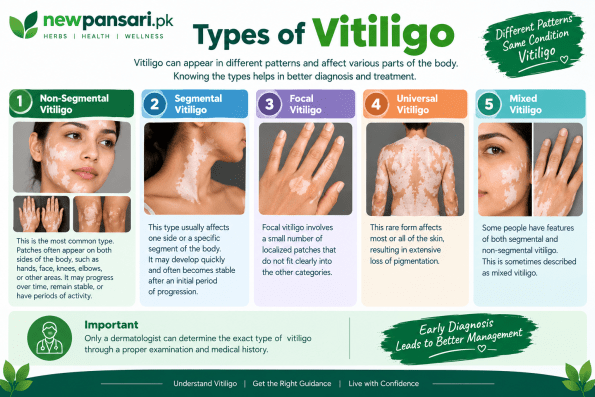
Vitiligo is commonly classified according to the location and pattern of depigmented patches.
1. Non-Segmental Vitiligo
This is the most common form. Patches may appear on both sides of the body and can affect the hands, face, knees, elbows, or other areas.
It may progress over time, remain stable, or experience periods of activity and stability.
2. Segmental Vitiligo
Segmental vitiligo usually affects one side or a particular region of the body. It may develop relatively quickly and often becomes stable after an initial period of progression.
3. Focal Vitiligo
Focal vitiligo refers to a limited number of localized patches that do not clearly fit into the other major patterns.
4. Universal Vitiligo
Universal vitiligo is a rare form in which pigmentation is lost from nearly all or almost all of the skin.
5. Mixed Vitiligo
Some people have features of both segmental and non-segmental vitiligo. This is sometimes described as mixed vitiligo.
A dermatologist can determine the likely type through a clinical examination.
How Is Vitiligo Diagnosed?
A dermatologist usually diagnoses vitiligo by examining the skin and asking questions about when the patches appeared, whether they are spreading, and whether anyone in the family has the condition.
Wood’s Lamp Examination
A Wood’s lamp is a special ultraviolet light used to examine skin pigmentation. It can help a dermatologist identify areas of depigmentation that may be difficult to see under ordinary lighting.
Medical History
The doctor may ask about:
- The duration of the skin patches
- Any recent skin injuries or burns
- Family history of vitiligo
- Symptoms of thyroid disease
- Previous skin conditions
- Current medications and treatments
Blood Tests
Blood tests are not required for every person with vitiligo. However, a doctor may recommend tests for thyroid function or other autoimmune conditions when medically appropriate.
Differentiating Vitiligo from Other Conditions
Several skin conditions can cause lighter patches. These include:
- Tinea versicolor, a fungal skin infection
- Post-inflammatory hypopigmentation
- Pityriasis alba
- Chemical leukoderma
- Other pigmentation disorders
An accurate diagnosis is important because treatment depends on the underlying cause.
Vitiligo Treatment Options
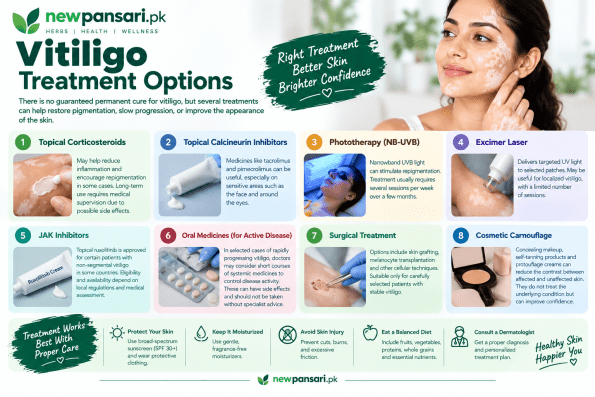
There is currently no guaranteed permanent cure for vitiligo. However, several treatments may help restore skin pigmentation, reduce the appearance of patches, or slow the progression of the condition.
Treatment depends on the person’s age, affected body areas, extent of depigmentation, disease activity, and personal preferences.
1. Topical Corticosteroids
Corticosteroid creams and ointments may be prescribed to help encourage repigmentation in selected areas.
They may be more useful when vitiligo is localized or relatively recent. However, prolonged or inappropriate use can cause side effects, including skin thinning, visible blood vessels, and changes in skin texture.
Use topical steroids only under medical supervision.
2. Topical Calcineurin Inhibitors
Tacrolimus and pimecrolimus are medicines that may be prescribed for vitiligo, particularly on sensitive areas such as the face and around the eyes.
They can be useful alternatives to corticosteroids in certain situations. Treatment should follow a dermatologist’s instructions.
3. Narrowband UVB Phototherapy
Narrowband ultraviolet B, commonly called NB-UVB, is one of the most widely used light-based treatments for widespread vitiligo.
During treatment, the skin is exposed to carefully controlled ultraviolet light. This may stimulate repigmentation in some patients.
Treatment often requires several sessions per week over a period of months. Results vary, and areas such as the hands and feet may respond less effectively than the face and trunk.
4. Excimer Laser
An excimer laser delivers targeted ultraviolet light to selected depigmented areas.
It may be considered for localized vitiligo, especially when only a few patches require treatment. The number of sessions depends on the response and the dermatologist’s treatment plan.
5. Topical JAK Inhibitors
Topical ruxolitinib is an example of a JAK inhibitor used for certain patients with non-segmental vitiligo in countries where it is approved.
It works by affecting immune-system signaling involved in the disease process. Eligibility, age requirements, treatment duration, and availability vary by country.
A dermatologist should determine whether this treatment is appropriate.
6. Oral Medicines for Active Disease
In selected cases of rapidly progressing vitiligo, a dermatologist may consider short courses of systemic medicines to help control disease activity.
These medicines can have significant side effects and should not be taken without specialist supervision.
7. Surgical Treatment
Surgical procedures may be considered for carefully selected people whose vitiligo has remained stable for a suitable period.
Possible procedures include:
- Skin grafting
- Melanocyte-keratinocyte transplantation
- Other cellular grafting techniques
Surgery is not suitable for every patient. It may be less appropriate when new patches are continuing to appear.
8. Cosmetic Camouflage
Cosmetic camouflage can help reduce the contrast between affected and unaffected skin.
Options include:
- Concealing makeup
- Skin camouflage creams
- Self-tanning products
- Professionally selected color-matching products
These products do not treat the underlying condition, but they may improve confidence and comfort.
Can Diet Help Manage Vitiligo?

Diet cannot reliably cure vitiligo, and there is no specific food plan proven to restore pigmentation in everyone.
However, a balanced diet can support general health and help prevent nutritional deficiencies.
Foods to Include
A varied diet may contain:
1. Fruits and Vegetables
Oranges, guava, berries, carrots, spinach, and other vegetables provide vitamins, minerals, and beneficial plant compounds.
2. Protein-Rich Foods
Eggs, fish, beans, lentils, chicken, and other protein sources support normal tissue maintenance.
3. Nuts and Seeds
Almonds, walnuts, pumpkin seeds, and sunflower seeds can contribute healthy fats and minerals to the diet.
4. Whole Grains
Oats, whole-wheat bread, brown rice, and other whole grains provide fiber and nutrients.
5. Dairy Products or Suitable Alternatives
Milk, yogurt, and fortified alternatives can help provide nutrients such as calcium and, depending on the product, vitamin D.
6. Legumes
Chickpeas, beans, and lentils provide protein, fiber, and several essential minerals.
Vitamins and Minerals
Some people with vitiligo may have nutritional deficiencies, but supplements should not be taken automatically.
A healthcare professional may recommend testing or supplementation when appropriate. Vitamin B12, vitamin D, folate, iron, and other nutrients may be assessed based on symptoms and medical history.
There is not enough evidence to recommend high-dose vitamins, antioxidants, or minerals as a universal treatment for vitiligo.
Natural Skin Care Tips for Vitiligo
Natural skin care can help protect depigmented skin, but it cannot reliably restore lost melanocytes.

1. Use Sunscreen Regularly
Depigmented skin has less melanin and is more vulnerable to sunburn.
Use a broad-spectrum sunscreen with SPF 30 or higher, reapply as directed, and protect exposed skin with clothing and shade.
Sun protection is particularly important when using phototherapy or other treatments that affect the skin’s sensitivity.
2. Avoid Excessive Skin Irritation
Repeated rubbing, scratching, burns, and injuries may contribute to new patches in susceptible individuals.
Choose comfortable clothing and avoid unnecessary friction.
3. Keep the Skin Moisturized
A gentle, fragrance-free moisturizer can help maintain the skin barrier and reduce dryness.
Moisturizers do not cure vitiligo, but they may improve skin comfort.
4. Avoid Harsh Chemicals
Strong bleaching products, irritating cosmetics, and untested skin-lightening preparations may damage the skin.
Avoid applying concentrated herbal extracts or essential oils to affected areas without professional guidance.
5. Be Careful with Herbal Remedies
Traditional herbs and natural products are sometimes promoted as cures for vitiligo. However, reliable clinical evidence for many of these remedies is limited.
Some plant-based preparations may cause allergic reactions, irritation, or increased sensitivity to sunlight.
Do not replace dermatologist-recommended treatment with unproven herbal remedies.
Vitiligo and Mental Health
Vitiligo can affect more than the skin. Visible patches may influence self-esteem, social confidence, and emotional well-being.
Some people experience:
- Anxiety about appearance
- Social discomfort
- Stress related to changing pigmentation
- Low self-confidence
- Concerns about relationships or employment
Emotional support is an important part of managing vitiligo.
Helpful approaches include:
- Talking openly with trusted family members
- Joining a support group
- Seeking counseling when needed
- Learning about the condition
- Using cosmetic camouflage if desired
- Discussing emotional concerns with a healthcare professional
Vitiligo does not reduce a person’s worth, intelligence, or ability to participate in everyday life.
Is Vitiligo Contagious?
No. Vitiligo is not contagious.
It cannot be transmitted through:
- Touching
- Hugging
- Sharing food
- Sharing clothing
- Living in the same household
- Physical contact
Vitiligo is a pigmentation disorder, not an infectious disease.
Can Vitiligo Spread?
Vitiligo may spread to additional areas of the body, but progression differs between individuals.
Some people experience active disease, during which existing patches enlarge or new patches develop. Others have stable vitiligo for many years.
Factors associated with disease activity may include skin trauma and the underlying immune process. However, it is difficult to predict exactly how vitiligo will progress in a particular person.
Early assessment can help establish a treatment plan and identify whether the condition appears active or stable.
When Should You See a Dermatologist?
You should consult a dermatologist if you notice:
- New white patches on your skin
- Rapidly increasing depigmentation
- White patches around the eyes or mouth
- Loss of color in eyebrows, eyelashes, or hair
- Pigmentation changes after a skin injury
- Skin changes that are painful, scaly, or inflamed
- Emotional distress related to skin appearance
A dermatologist can confirm the diagnosis and discuss appropriate treatment options.
Seek medical advice promptly if skin changes develop rapidly or if you are unsure whether they represent vitiligo or another condition.
Frequently Asked Questions About Vitiligo
1. What is the main cause of vitiligo?
Vitiligo is commonly associated with an autoimmune process in which the immune system attacks melanocytes. Genetic and environmental factors may also contribute.
2. Can vitiligo be cured permanently?
There is currently no guaranteed permanent cure. Medical treatments may restore some pigmentation, but results vary and depigmentation can recur.
3. Is vitiligo dangerous?
Vitiligo is generally not life-threatening. However, affected skin is more susceptible to sunburn, and the condition may affect emotional well-being.
4. Can children develop vitiligo?
Yes. Vitiligo can develop during childhood, adolescence, or adulthood.
5. Can eating certain foods cause vitiligo?
There is no strong scientific evidence that particular foods directly cause vitiligo.
6. Is vitiligo hereditary?
Genetic susceptibility may increase the risk, but vitiligo is not inherited in a simple pattern. A family history does not guarantee that someone will develop it.
7. Can herbal remedies cure vitiligo?
No herbal remedy has been established as a reliable cure for vitiligo. Some treatments may cause irritation or other adverse effects.
8. Can people with vitiligo live a normal life?
Yes. People with vitiligo can work, study, exercise, marry, and participate in everyday activities. Appropriate skin protection and emotional support can help improve quality of life.
Conclusion
Vitiligo is a chronic pigmentation disorder that causes white or lighter patches on the skin because of the loss or dysfunction of melanocytes. It can affect people of all ages and skin tones and may involve the skin, hair, lips, and other areas.
Although vitiligo is not contagious, it can influence appearance and emotional health. Treatment options include topical medicines, phototherapy, selected systemic treatments, surgical procedures, and cosmetic camouflage.
A balanced diet, regular sun protection, gentle skin care, and professional medical advice can help people manage the condition. Anyone experiencing unexplained white patches should consult a qualified dermatologist for an accurate diagnosis.
Disclaimer: This article is intended for educational purposes and does not replace professional medical advice. Always consult a qualified dermatologist before starting treatment for vitiligo.