Introduction
Healthy, shiny and manageable hair is a common goal for people of all ages. However, hair dryness, breakage, dandruff and thinning can make it difficult to maintain healthy-looking hair. Many people turn to natural oils as part of their regular hair-care routine.
Natural oils have been used in traditional hair-care practices for generations. Depending on the oil, they may help condition hair, reduce friction, soften dry strands and improve shine. Some oils are also being studied for their possible effects on scalp health and hair growth.
But not all oils work in the same way. Coconut oil is known for protecting the hair shaft, while rosemary oil has limited but promising research related to hair growth. Other popular choices, including castor oil and amla oil, have less clinical evidence supporting their ability to stimulate new hair growth. [1][2]
In this guide, we explore the best natural oils for hair growth and hair care, their potential benefits, how to use them safely and what to consider before choosing a hair oil.
What Are Natural Hair Oils?
Natural hair oils are oils obtained from plants, seeds, nuts, fruits or other botanical sources. They are commonly used to condition hair, massage the scalp and help manage dryness.
Some oils are carrier oils, such as coconut, almond, jojoba and olive oil. These can be applied directly to hair in suitable amounts, provided there is no allergy or sensitivity.
Essential oils, such as rosemary and peppermint oil, are concentrated extracts. They should generally be diluted in a suitable carrier oil before application to the scalp.
Natural oils may help improve hair appearance and reduce breakage, but hair care is not the same as treating medical hair loss. Persistent thinning or excessive shedding may require medical assessment.
10 Best Natural Oils for Hair Growth and Hair Care
1. Rosemary Oil
Rosemary oil has attracted attention as a potential natural option for people concerned about hair thinning. Some clinical research suggests that topical rosemary preparations may help with certain types of pattern hair loss, although the available evidence remains limited. Larger, high-quality studies are needed. [2][3]
Potential benefits:
- May offer support for certain types of hair thinning, although results are not guaranteed.
- Can be incorporated into a scalp-care routine when properly diluted.
- Provides a plant-derived aromatic ingredient for hair-care products.
How to use it: Mix a small amount of rosemary essential oil into a suitable carrier oil according to the product’s dilution instructions. Apply a small quantity to the scalp and discontinue use if irritation occurs.
Do not apply undiluted rosemary essential oil directly to the scalp. People who are pregnant or breastfeeding should consult a qualified healthcare professional before using concentrated essential oils.
2. Coconut Oil
Coconut oil is one of the better-studied oils for protecting the hair shaft. Research suggests that it can reduce protein loss from hair when used as a pre-wash treatment. This may help reduce damage and breakage, particularly in dry or fragile hair. [1]
Potential benefits:
- Helps condition dry hair.
- May reduce protein loss from the hair shaft.
- Helps improve softness and manageability.
- Can reduce friction during washing and styling.
How to use it: Apply a small amount to the lengths and ends of dry hair before washing. Leave it on for approximately 20–30 minutes if comfortable, then shampoo thoroughly.
Coconut oil is especially useful for hair conditioning, but it has not been established as a treatment for hereditary hair loss.
3. Castor Oil
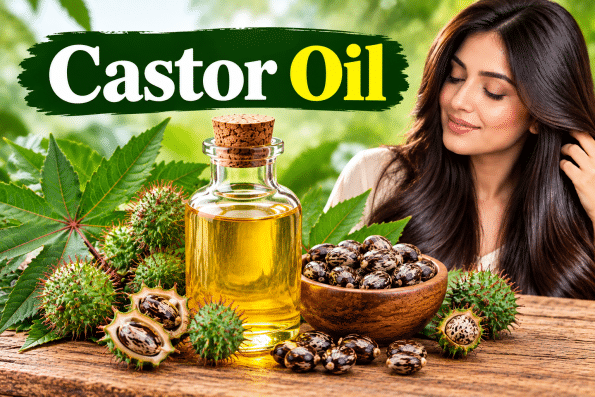
Castor oil is widely used in traditional hair-care routines because of its thick texture and conditioning properties. It may help give hair a smoother, shinier appearance.
However, strong clinical evidence that castor oil stimulates new hair growth is lacking. Its popularity should not be confused with proof that it increases hair density. [1]
Potential benefits:
- Helps coat and condition dry hair.
- May improve shine and the appearance of hair thickness.
- Can help manage rough or dry hair ends.
How to use it: Apply a small amount to the hair lengths and ends. Because castor oil is thick, consider mixing it with a lighter carrier oil to make it easier to spread and wash out.
Avoid applying excessive amounts, particularly if your scalp is oily or prone to irritation.
4. Amla Oil
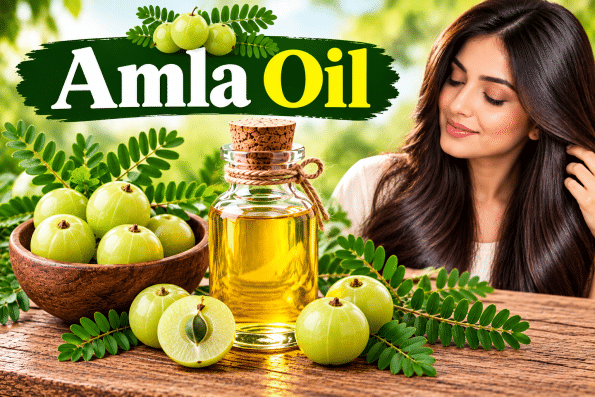
Amla, also known as Indian gooseberry, is traditionally used in South Asian hair-care practices. Amla-based oils are popular for scalp massage and conditioning.
The evidence that topical amla oil directly promotes new hair growth in humans is limited. Products may also differ substantially depending on whether they contain amla extract, infused oil or a mixture of other ingredients.
Potential benefits:
- Helps condition hair and improve softness.
- Can be used as part of a traditional hair-care routine.
- May help improve the appearance and manageability of dry hair.
How to use it: Apply a small amount to the scalp or hair lengths according to the product instructions. Massage gently rather than scratching or rubbing vigorously.
Choose a product with a clearly listed ingredient label, and check whether it contains added fragrances or other ingredients that could cause sensitivity.
5. Sweet Almond Oil
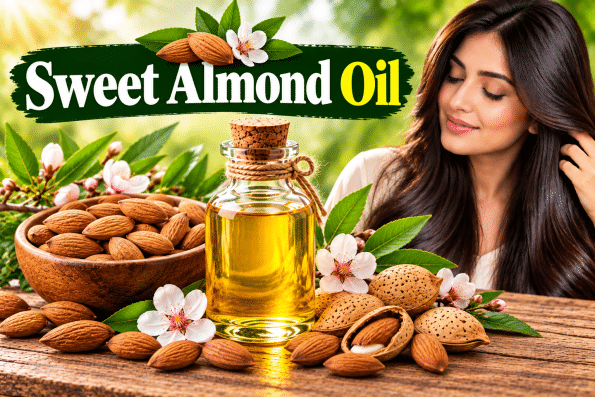
Sweet almond oil is a lightweight-to-medium-weight oil used in cosmetic hair-care products. It can help soften hair and reduce the rough feeling associated with dryness.
Evidence that almond oil stimulates hair follicles or prevents hair loss is insufficient.
Potential benefits:
- Helps soften dry hair.
- Adds shine and improves manageability.
- Can help reduce friction when combing.
- Works as a carrier oil for suitable essential oils.
How to use it: Rub a few drops between your palms and distribute them through the mid-lengths and ends of your hair. Use less if your hair is fine or becomes greasy easily.
People with almond or tree-nut allergies should avoid almond oil unless a healthcare professional confirms that the specific product is appropriate for them.
6. Argan Oil
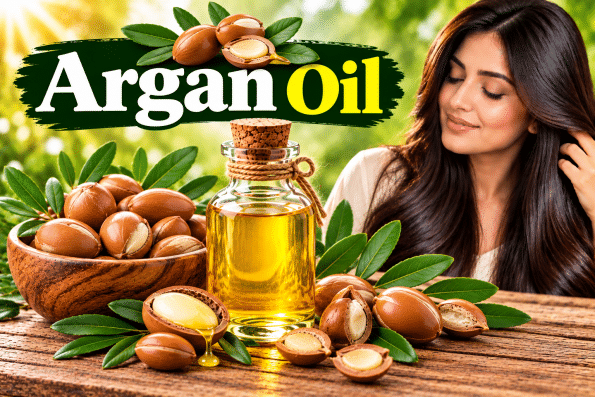
Argan oil is commonly used in conditioners, serums and hair-smoothing products. It contains fatty acids and other compounds used in cosmetic formulations.
Its main role in hair care is conditioning rather than proven stimulation of new hair growth. Evidence for treating hair loss with argan oil is limited. [1]
Potential benefits:
- Helps smooth rough hair.
- Adds shine and improves manageability.
- May reduce the appearance of frizz.
- Can help protect dry hair ends from everyday friction.
How to use it: Apply one or two drops to damp or dry hair, concentrating on the ends. Adjust the quantity according to hair length and texture.
Argan oil is a practical choice for people whose main concern is dryness, frizz or dull-looking hair rather than hair loss.
7. Jojoba Oil
Jojoba oil is widely used in cosmetic products because of its wax-ester composition and its ability to help soften skin and hair.
It may be useful for conditioning the scalp and hair, but there is not enough clinical evidence to conclude that it promotes hair regrowth.
Potential benefits:
- Helps soften hair and reduce dryness.
- Can make hair easier to comb.
- Is suitable for use in many cosmetic hair-care formulations.
- Can be used as a carrier oil when appropriate.
How to use it: Apply a small quantity to dry hair ends or use it as directed in a scalp-care product. If you have an oily scalp or a history of scalp irritation, start cautiously.
8. Olive Oil
Olive oil is used in some traditional hair-care routines as a conditioning treatment. Its heavier texture may be more suitable for coarse, dry or curly hair than for fine hair.
There is insufficient evidence that applying olive oil to the scalp promotes new hair growth.
Potential benefits:
- Helps soften coarse hair.
- Can improve the appearance of dry strands.
- May make hair easier to manage.
- Can be used as an occasional pre-wash conditioning treatment.
How to use it: Apply a small amount to the lengths and ends before shampooing. Wash thoroughly to avoid unwanted residue.
If you have an itchy, inflamed or dandruff-prone scalp, avoid assuming that more oil will improve the condition. Some scalp problems require specific treatment.
9. Sesame Oil
Sesame oil is used in traditional South Asian and Ayurvedic hair-care practices. It can help condition the hair and may be used for gentle scalp massage.
However, there is limited clinical evidence that topical sesame oil increases hair growth.
Potential benefits:
- Helps soften dry hair.
- Adds shine and improves manageability.
- Can be incorporated into traditional hair-oiling routines.
- Can serve as a carrier oil for suitable cosmetic formulations.
How to use it: Apply a modest quantity to the hair lengths or scalp if your skin tolerates it. Leave it on briefly before washing, or follow the instructions on the formulated product.
Avoid sesame oil if you have a sesame allergy.
10. Pumpkin Seed Oil
Pumpkin seed oil is gaining attention in discussions about hair health. Some preliminary research has investigated oral pumpkin seed oil supplements in people with pattern hair loss. However, this does not establish that applying pumpkin seed oil directly to the scalp produces the same effects.
Potential benefits:
- Provides fatty acids for cosmetic conditioning.
- Can be included in formulated hair-care products.
- Is a subject of ongoing interest in research on hair health.
How to use it: If using a topical product, follow its label directions and perform a patch test. Do not assume that topical oil will reproduce findings from studies involving oral supplements.
People considering oral supplements should discuss suitability and potential interactions with a healthcare professional.
Which Natural Oil Is Best for Your Hair Type?
The most suitable oil depends on your hair texture, scalp condition and main concern.
| Hair concern | Oil to consider | Main purpose |
|---|---|---|
| Dry or brittle hair | Coconut oil | Conditioning and reducing protein loss |
| Frizzy hair | Argan oil | Smoothing and shine |
| Coarse, dry hair | Olive oil | Conditioning |
| Hair that feels rough | Sweet almond oil | Softness and manageability |
| Traditional scalp-care routine | Amla oil | Conditioning |
| Interest in hair-growth research | Rosemary oil | Limited preliminary evidence for certain types of hair thinning |
| Thick hair that needs extra conditioning | Castor oil | Coating and shine |
No single oil is best for everyone. If your main problem is hair loss rather than dryness or breakage, choosing an oil alone may not address the underlying cause.
How to Use Hair Oils Correctly
Using too much oil or applying the wrong product to an irritated scalp can make hair care more difficult. Follow these practical steps.
Step 1: Choose an Appropriate Oil
Select an oil based on your hair texture and concern. Lightweight products may suit fine hair, while richer oils may be more comfortable for coarse or dry hair.
Step 2: Perform a Patch Test
Apply a small amount of the product to a limited area of skin according to its instructions. Watch for redness, itching, swelling or burning. A patch test reduces risk but does not guarantee that a reaction will never occur.
Step 3: Apply a Small Amount
Start with a modest quantity. Spread the oil gently through the hair or use it on the scalp only when appropriate for the product.
Step 4: Massage Gently
Use your fingertips to massage without scratching or pulling the hair. Vigorous rubbing can contribute to breakage.
Step 5: Wash When Needed
If the oil makes your hair greasy, uncomfortable or difficult to manage, wash it out with a suitable shampoo. There is no universal need to leave every oil on overnight.
Step 6: Be Consistent With Your Overall Routine
Use a gentle shampoo, conditioner suited to your hair type and careful detangling practices. Avoid excessive heat and tight hairstyles that pull on the roots.
Natural Hair Oil Recipes: What to Know Before Mixing
People sometimes combine coconut, almond, castor or rosemary oil to create homemade hair treatments. Combining products is not automatically more effective than using one well-tolerated oil.
For a simple conditioning treatment, choose a single carrier oil such as coconut or almond oil, provided you do not have a relevant allergy. Apply a small amount to the hair lengths before washing.
If you choose rosemary essential oil, use a properly formulated product or follow reliable professional dilution guidance. Essential oils are concentrated and can irritate or sensitise the skin when used incorrectly. Avoid experimenting with highly concentrated mixtures.
Do not add essential oils to a product without checking its formulation, intended use and safety instructions.
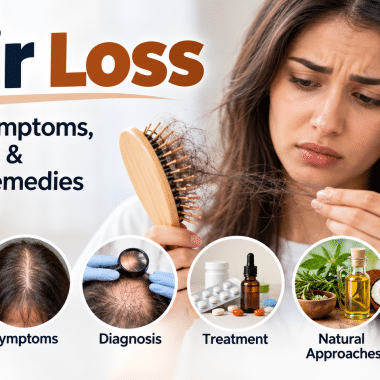
What Causes Hair Loss?
Hair loss has many possible causes, and identifying the cause is more important than selecting an oil.
Common causes include:
- Hereditary hair loss: Pattern hair loss can cause gradual thinning at the temples, crown or central scalp.
- Stress or illness: Significant physical or emotional stress may trigger temporary increased shedding.
- Nutritional deficiencies: Low iron or inadequate nutrition can contribute to hair loss in some people.
- Hormonal changes: Pregnancy, childbirth, thyroid problems and other hormonal changes may affect the hair cycle.
- Scalp conditions: Inflammation, infection and certain skin disorders can affect hair growth.
- Medications: Some medicines can cause hair shedding as a side effect.
- Hair-care damage: Tight hairstyles, chemical treatments and excessive heat can cause breakage or traction-related hair loss.
A dermatologist or other qualified healthcare professional can help identify the cause and determine whether testing or treatment is needed.
Natural Ways to Support Healthy Hair
Hair oils are only one part of a healthy hair-care routine. The following habits may help protect existing hair and support normal growth.
Eat a Balanced Diet
Include adequate protein, vegetables, fruits, whole grains and sources of healthy fats. Iron, zinc and other nutrients are important for normal hair health, but taking extra supplements without a demonstrated need is not always helpful.
Avoid Excessive Heat
Frequent high-temperature styling can damage the hair shaft. Use lower heat settings and limit repeated straightening or curling.
Choose Gentle Hair-Care Products
Use shampoo and conditioner suited to your scalp and hair type. Avoid products that consistently cause burning, itching or irritation.
Avoid Tight Hairstyles
Repeated tension from tight ponytails, braids or other hairstyles can damage follicles over time. Choose styles that do not pull painfully on the scalp.
Manage Stress and Sleep Well
Stress management and adequate sleep support general well-being. If shedding starts after a stressful event, seek advice if it persists or is severe.
Treat Scalp Problems Appropriately
Persistent dandruff, redness, itching, scaling or painful areas may need targeted treatment. Applying more oil is not a substitute for diagnosing a scalp condition.
Do Natural Oils Really Promote Hair Growth?
The evidence differs from oil to oil.
Coconut oil has useful evidence for reducing hair protein loss and supporting hair-shaft care. Rosemary oil has some preliminary clinical evidence related to pattern hair loss, but further research is required before its effectiveness can be established confidently.
For castor oil, argan oil, almond oil, jojoba oil and most other commonly marketed hair oils, evidence for directly stimulating new hair growth remains limited. Some may improve shine, softness and manageability without affecting the number of hairs growing from the scalp. [1][2][3]
This distinction matters: reducing breakage can help someone retain hair length, but it does not necessarily mean that the oil has caused new hair to grow.
If hair loss is progressive, patchy, sudden or accompanied by scalp symptoms, seek medical advice instead of relying exclusively on natural oils. Evidence-based treatments are available for certain causes of hair loss. [4]
Possible Side Effects and Precautions
Natural does not always mean risk-free. Consider the following precautions before using a hair oil:
- Perform a patch test before regular use.
- Dilute essential oils appropriately; never apply concentrated essential oils directly to the scalp.
- Stop using a product if burning, itching, redness or swelling occurs.
- Avoid products that trigger your known allergies.
- Keep oils away from the eyes and other sensitive areas.
- Avoid applying heavy oils to inflamed or irritated skin without professional guidance.
- Seek advice before using concentrated essential oils during pregnancy or breastfeeding.
- Do not swallow hair oils or essential oils unless a healthcare professional has specifically advised a suitable product for that purpose.
Seek prompt medical attention for sudden or patchy hair loss, scalp pain, scarring or significant inflammation.
Frequently Asked Questions (FAQs)
1. Which oil is best for hair growth?
Rosemary oil has some preliminary clinical evidence for certain types of pattern hair loss, but the evidence is limited. Coconut oil is better supported for reducing hair protein loss and improving hair-shaft care. The best choice depends on whether your concern is thinning, breakage or dryness.
2. Does coconut oil help hair grow faster?
Coconut oil may help protect the hair shaft and reduce protein loss, which can help minimise damage. There is not enough evidence to conclude that it makes hair grow faster from the follicles.
3. Can castor oil regrow lost hair?
There is no strong clinical evidence that castor oil regrows lost hair. It may improve shine and the appearance of conditioned hair, but it should not be considered a proven treatment for hair loss.
4. How often should I oil my hair?
Frequency depends on your hair type, scalp condition and the product. Some people prefer an occasional pre-wash treatment, while others use a few drops on dry ends as needed. Stop or reduce use if your scalp becomes itchy or irritated.
5. Is it safe to leave hair oil overnight?
Some people tolerate certain carrier oils overnight, but it is not necessary for every oil or hair type. Overnight application may cause irritation or worsen discomfort for some people. Follow the product instructions and wash it out if your scalp reacts.
6. Can I mix rosemary oil with coconut oil?
Rosemary essential oil can be diluted in coconut oil when the formulation and dilution are appropriate. Follow the product’s instructions, avoid undiluted application and patch-test before use.
7. Does amla oil prevent hair fall?
Amla oil is traditionally used in hair care, but strong clinical evidence that it prevents hair loss is lacking. Persistent shedding should be assessed to determine its cause.
8. Which oil is best for dry and frizzy hair?
Coconut oil and argan oil are reasonable options to consider for conditioning, softness and manageability. Start with a small amount and adjust according to your hair texture.
9. Can hair oils treat dandruff?
Hair oils are not a reliable universal treatment for dandruff. Some scalp conditions may become more uncomfortable with heavy oiling. Persistent dandruff may require an appropriate anti-dandruff shampoo or medical assessment.
10. When should I see a dermatologist for hair loss?
Seek advice if hair loss is sudden, patchy, progressive or persistent, or if you have scalp pain, redness, scaling or scarring. A professional can identify the cause and discuss appropriate treatments.
Conclusion
Natural oils can be useful additions to a hair-care routine, particularly for dryness, frizz, shine and reducing hair-shaft damage. Coconut oil is a practical conditioning option, argan and almond oils can help soften hair, and rosemary oil is being investigated for its possible role in certain types of hair thinning.
However, no natural oil guarantees hair regrowth, and cosmetic conditioning should not be confused with treating medical hair loss. Choose a suitable product, use it safely and seek professional advice when thinning or shedding persists.
At New Pansari.pk, educational content about natural oils can help readers understand traditional hair-care practices while making informed decisions about product selection and safety.
References
- Saed S, et al. Coconut, Castor, and Argan Oil for Hair in Skin of Color Patients: A Systematic Review. Journal of Drugs in Dermatology, 2022. https://pubmed.ncbi.nlm.nih.gov/35816075/
- Almutairi AG, et al. Review on natural remedies for hair growth promotion with a focus on rosemary. Dermatology Reports, 2026. https://pubmed.ncbi.nlm.nih.gov/41630600/
- Cleveland Clinic. How to Use Rosemary Oil for Hair Growth. https://health.clevelandclinic.org/rosemary-oil-for-hair
- American Academy of Dermatology. Hair Loss: Diagnosis and Treatment. https://www.aad.org/public/diseases/hair-loss/treatment/diagnosis-treat