Introduction
Hair fall is one of the most common hair-related concerns affecting both men and women. Finding hair on your pillow, in the shower, or on your hairbrush can be frustrating, especially when hair starts becoming thinner and weaker over time. Although losing some hair every day is completely normal, excessive hair shedding may indicate an underlying health condition, nutritional deficiency, hormonal imbalance, or unhealthy hair care habits.
Hair loss, medically known as alopecia, can occur gradually or suddenly. Some people experience thinning around the forehead and crown, while others develop circular bald patches or notice excessive shedding throughout the scalp.
The good news is that many types of hair loss can be managed with proper diagnosis, balanced nutrition, suitable hair care, and appropriate treatment. Natural ingredients and herbal hair care products may also help maintain scalp and hair health, although they cannot guarantee hair regrowth.
In this guide, we will explore the causes, symptoms, types, diagnosis, treatment options, and natural ways to help reduce hair fall.
What Is Hair Fall?
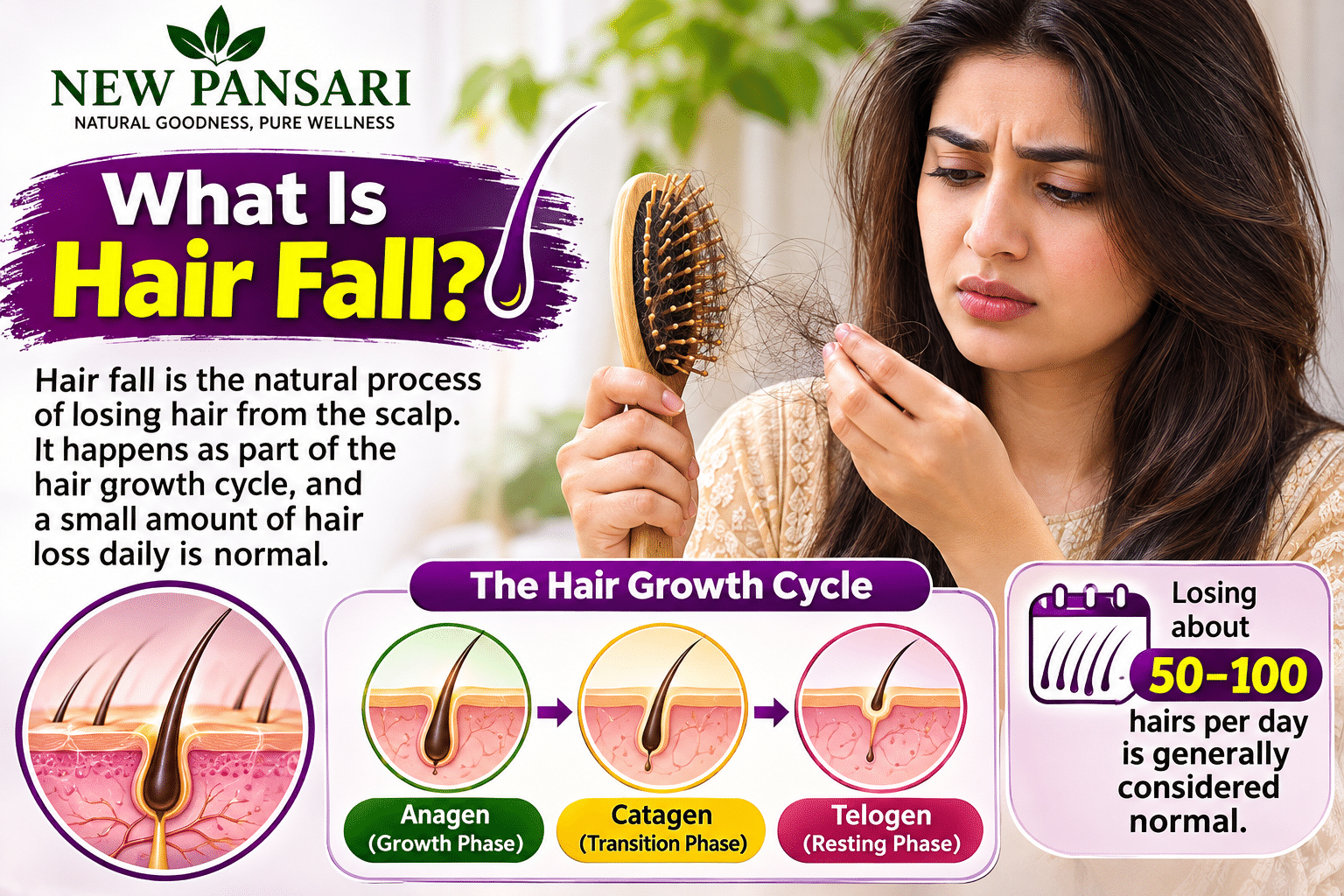
Hair fall is the process of losing hair from the scalp. It is a natural part of the hair growth cycle, which includes three main stages:
- Anagen (Growth Phase): Hair actively grows from the follicles. This phase can last several years.
- Catagen (Transition Phase): Hair growth slows down, and the follicle begins to shrink.
- Telogen (Resting Phase): Hair rests before eventually falling out and being replaced by new hair.
Losing approximately 50 to 100 hairs daily is generally considered normal. However, when hair shedding becomes excessive or new hair does not replace lost hair, visible thinning may develop.
Hair loss can be temporary or permanent, depending on its underlying cause.
What Are the Main Causes of Hair Fall?
Understanding the cause of hair fall is the first step toward finding the right treatment. Several factors can contribute to excessive hair shedding.
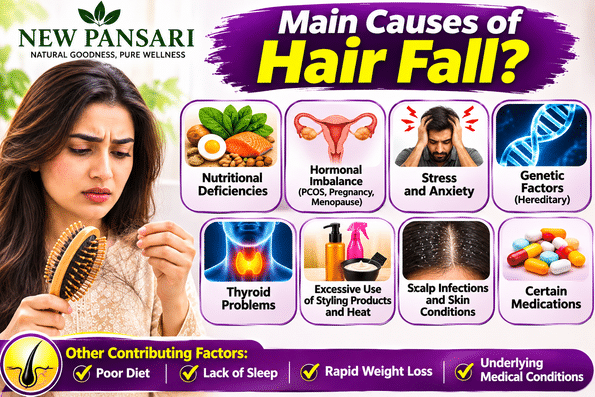
1. Nutritional Deficiencies
Hair follicles require essential nutrients to maintain healthy growth. A diet lacking important vitamins and minerals may contribute to hair thinning.
Some important nutrients include:
- Iron
- Zinc
- Vitamin D
- Vitamin B12
- Protein
- Essential fatty acids
Iron deficiency, inadequate protein intake, and certain nutritional deficiencies may contribute to hair loss. However, taking supplements without identifying a deficiency is not recommended.
2. Hormonal Imbalance
Hormonal changes can significantly affect the hair growth cycle.
Conditions such as thyroid disorders and polycystic ovary syndrome (PCOS) may contribute to hair thinning. Pregnancy, childbirth, menopause, and other hormonal changes can also influence hair shedding.
In some individuals, sensitivity to dihydrotestosterone (DHT), a hormone derived from testosterone, contributes to hereditary pattern hair loss.
3. Stress and Anxiety
Physical and emotional stress can disturb the normal hair growth cycle.
Severe stress, surgery, major illness, rapid weight loss, or emotional trauma may trigger a condition called telogen effluvium.
In this condition, more hair follicles enter the resting phase, resulting in increased hair shedding several months after the triggering event.
This type of hair loss is often temporary, and hair growth may recover once the underlying trigger is addressed.
4. Genetic Factors
Hereditary hair loss is one of the most common causes of progressive hair thinning.
It is also known as androgenetic alopecia or male and female pattern hair loss.
In men, it commonly appears as a receding hairline or thinning around the crown. In women, it often causes gradual thinning over the top of the scalp and widening of the hair part.
5. Thyroid Problems
The thyroid gland produces hormones that regulate several body functions, including metabolism and hair growth.
Both an underactive thyroid (hypothyroidism) and an overactive thyroid (hyperthyroidism) can contribute to hair thinning.
Treating the thyroid condition may help improve hair health.
6. Excessive Use of Hair Styling Products
Frequent use of chemical treatments, hair dyes, straighteners, curling irons, and excessive heat can weaken hair shafts.
Repeated damage may cause hair breakage and make hair appear thinner.
Tight hairstyles, such as ponytails, braids, and buns, can also put continuous pressure on hair follicles and cause traction alopecia.
7. Scalp Infections and Skin Conditions
Certain scalp conditions can interfere with normal hair growth.
These include:
- Fungal scalp infections
- Seborrheic dermatitis
- Psoriasis
- Scalp inflammation
Some conditions cause itching, redness, scaling, and temporary or permanent hair loss if left untreated.
What Are the Common Symptoms of Hair Fall?
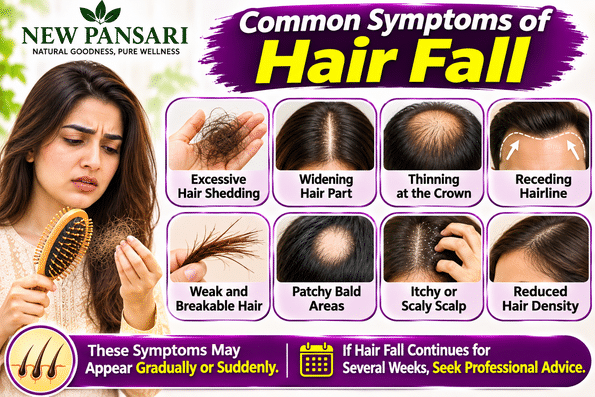
Hair loss can develop in different ways depending on its cause.
Common symptoms include:
- Excessive hair shedding during washing or brushing.
- Gradual thinning around the forehead.
- Widening of the hair part.
- Visible scalp through thinning hair.
- Circular or patchy bald areas.
- Weak and easily breakable hair.
- Receding hairline.
- Itching, redness, or scaling of the scalp in some conditions.
- Reduced hair density around the crown.
Sudden hair loss, painful scalp inflammation, or rapidly developing bald patches should be evaluated by a healthcare professional.
Different Types of Hair Loss
Understanding the type of hair loss helps determine the most appropriate treatment.
1. Androgenetic Alopecia
This is hereditary hair loss that affects both men and women. It generally develops gradually and may progress over time.
2. Telogen Effluvium
This condition causes excessive hair shedding following stress, illness, surgery, childbirth, or significant weight loss.
It is frequently temporary, although persistent shedding requires evaluation.
3. Alopecia Areata
Alopecia areata is an autoimmune condition in which the immune system attacks hair follicles.
It commonly causes round or oval bald patches on the scalp, beard, or other body areas.
4. Traction Alopecia
This type of hair loss occurs when hair follicles experience repeated pulling due to tight hairstyles.
Early changes in hairstyling may prevent further damage, but prolonged traction can cause permanent hair loss.
5. Anagen Effluvium
This type of hair loss occurs when hair growth is disrupted during the active growth phase. It can happen during certain medical treatments, including chemotherapy.
How Is Hair Fall Diagnosed?
Proper diagnosis is important because different types of hair loss require different treatments.
A dermatologist or qualified healthcare professional may perform the following assessments:
Medical History
The doctor may ask about family history, diet, medications, stress, recent illness, hormonal changes, and hair care practices.
Scalp Examination
The scalp is examined to identify thinning patterns, inflammation, infections, or bald patches.
Blood Tests
Depending on the symptoms, blood tests may help identify:
- Iron deficiency or low iron stores.
- Thyroid abnormalities.
- Vitamin deficiencies.
- Other underlying medical conditions.
Hair Pull Test
A healthcare professional may gently pull a small group of hairs to assess excessive shedding.
Scalp Biopsy
In selected cases, a small scalp sample may be examined to identify inflammatory, infectious, or scarring conditions.
What Are the Best Treatments for Hair Fall?
Hair loss treatment depends on the underlying cause, age, health status, and type of hair loss.
1. Minoxidil
Minoxidil is a commonly used topical treatment for certain types of hereditary hair loss.
It may help stimulate hair growth and slow further thinning in suitable individuals.
Results usually take several months, and continued use is generally necessary to maintain the benefits.
It may cause scalp irritation or temporary increased shedding when treatment begins. Consult a healthcare professional before starting it.
2. Finasteride
Finasteride is a prescription medication used mainly for male pattern hair loss.
It works by reducing the conversion of testosterone into DHT.
It is not suitable for everyone and can cause side effects, including sexual side effects. It requires medical supervision and is not recommended during pregnancy.
3. Treating Nutritional Deficiencies
If hair loss is related to iron deficiency, inadequate protein intake, or another nutritional problem, correcting the underlying deficiency may help.
Supplements should only be used when appropriate, preferably after medical assessment.
4. Platelet-Rich Plasma (PRP)
PRP is a medical procedure that uses a concentrated portion of a person’s own blood platelets.
It is injected into selected scalp areas to support hair growth.
Some studies suggest potential benefits, but results vary, and repeated sessions may be required.
5. Hair Transplant
Hair transplantation is a surgical option for selected people with permanent pattern hair loss.
Healthy hair follicles are moved from one area of the scalp to areas affected by thinning.
A qualified hair restoration specialist can determine whether someone is a suitable candidate.
Natural Ways to Help Reduce Hair Fall
Natural hair care practices can support scalp health, reduce avoidable hair damage, and improve overall hair care habits.
However, natural remedies are not proven cures for hereditary baldness or every type of hair loss.
1. Maintain a Balanced Diet
Healthy hair requires adequate nutrition.
Include foods containing protein, iron, zinc, and essential vitamins in your daily diet.
Some beneficial food choices include:
- Eggs
- Fish
- Lentils
- Spinach
- Almonds
- Pumpkin seeds
- Walnuts
- Milk and yogurt
- Fresh fruits and vegetables
A balanced diet helps provide nutrients needed for normal hair growth.
2. Use Coconut Oil for Hair Care
Coconut oil is commonly used in traditional hair care.
It can penetrate the hair shaft and may help reduce protein loss from hair, potentially limiting damage and breakage.
Apply a small amount to the hair lengths before washing if it suits your hair type.
It should not be considered a proven treatment for genetic hair loss.
3. Aloe Vera for Scalp Care
Aloe vera is traditionally used in hair care because of its moisturizing properties.
It may help condition dry hair and soothe some forms of scalp dryness.
However, scientific evidence that aloe vera directly regrows hair is limited.
Use a small amount first to check for skin sensitivity.
4. Rosemary Oil
Rosemary oil is a popular ingredient in natural hair care products.
Some limited research suggests that rosemary oil may have potential benefits for certain forms of hair thinning, but more high-quality research is needed.
Always dilute rosemary essential oil in a suitable carrier oil before applying it to the scalp.
Do not apply concentrated essential oil directly to the skin.
5. Onion Juice
Onion juice has traditionally been used as a home remedy for hair loss.
A small study suggested possible benefits in some people with patchy alopecia areata, but this evidence is limited and does not establish onion juice as an effective treatment for general hair fall.
It may also cause irritation or allergic reactions.
6. Avoid Excessive Heat and Chemical Treatments
Limit the use of:
- Hair straighteners
- Curling irons
- Excessive blow-drying
- Harsh chemical treatments
- Frequent bleaching
Use gentle hair care products and avoid hairstyles that pull tightly on the roots.
7. Massage Your Scalp Gently
Gentle scalp massage can be a relaxing part of a hair care routine.
Avoid aggressive rubbing, scratching, or pulling because these practices can damage fragile hair.
There is currently insufficient evidence that scalp massage alone can reverse significant hair loss.
Best Foods for Healthy Hair Growth
Nutrition plays an important role in maintaining healthy hair.
Here are some foods that can help provide essential nutrients.
| Food | Important Nutrients |
|---|---|
| Eggs | Protein, biotin |
| Spinach | Folate, iron |
| Pumpkin Seeds | Zinc, magnesium |
| Almonds | Vitamin E |
| Fish | Protein, omega-3 fatty acids |
| Lentils | Protein, iron |
| Walnuts | Healthy fats |
| Yogurt | Protein, vitamin B12 |
No single food can stop hair fall. A varied and balanced diet is the best approach.
How to Prevent Hair Fall Naturally
Although not every type of hair loss can be prevented, healthy habits may reduce avoidable hair damage.
Follow these practical tips:
- Eat a balanced diet with adequate protein.
- Avoid crash dieting and rapid weight loss.
- Get sufficient sleep.
- Manage stress through regular physical activity and relaxation.
- Avoid tight hairstyles that pull on hair.
- Use a mild shampoo suitable for your scalp.
- Condition hair lengths regularly.
- Avoid excessive heat styling.
- Do not take high-dose supplements without medical advice.
- Seek professional advice if hair shedding becomes persistent.
When Should You See a Doctor for Hair Fall?
You should consult a dermatologist or healthcare professional if:
- Hair loss starts suddenly.
- You develop circular bald patches.
- Hair fall becomes unusually heavy.
- Your scalp becomes painful, red, or inflamed.
- You experience itching and scaling with hair loss.
- You notice eyebrow or beard hair loss.
- Hair thinning continues for several months.
- You also experience fatigue, unexplained weight changes, or other health symptoms.
Early diagnosis can help identify treatable causes and prevent further damage in certain conditions.
Conclusion
Hair fall can occur due to genetics, nutritional deficiencies, hormonal changes, stress, medical conditions, and unhealthy hair care practices. While some daily shedding is normal, excessive or persistent hair loss should not be ignored.
The most effective approach is to identify the underlying cause and choose an appropriate treatment. A balanced diet, gentle hair care, adequate sleep, and healthy lifestyle habits can support normal hair health.
Natural ingredients such as coconut oil, aloe vera, and rosemary oil may be included in a hair care routine, but their ability to treat hair loss is limited or still being studied. They should not replace medical treatment when an underlying condition is responsible.
With proper care, early diagnosis, and a suitable treatment plan, many people can manage hair loss and improve their hair health.
Frequently Asked Questions (FAQs)
1. What is the main cause of hair fall?
The main causes include hereditary factors, hormonal changes, nutritional deficiencies, stress, thyroid disorders, scalp conditions, and certain medications.
2. How much hair fall is normal per day?
Losing approximately 50 to 100 hairs daily is generally considered normal as part of the natural hair growth cycle.
3. Can nutritional deficiencies cause hair loss?
Yes. Iron deficiency, inadequate protein intake, and certain vitamin or mineral deficiencies can contribute to hair thinning.
4. Does coconut oil stop hair fall?
Coconut oil may help reduce hair protein loss and breakage, but it is not a proven treatment for hereditary hair loss or baldness.
5. Is rosemary oil good for hair growth?
Some limited research suggests potential benefits, but more clinical studies are needed. Essential rosemary oil should always be diluted before use.
6. Can stress cause excessive hair fall?
Yes. Significant physical or emotional stress can trigger telogen effluvium, a condition that causes increased hair shedding.
7. Can hair grow back after hair fall?
Yes, hair can regrow in many cases, particularly when hair loss is temporary and the underlying cause is treated. However, some hereditary and scarring conditions may cause permanent hair loss.
8. Which vitamin is best for hair growth?
There is no single best vitamin for everyone. Iron, vitamin D, vitamin B12, zinc, and other nutrients are important when a deficiency exists.
9. Does washing hair daily cause hair fall?
Washing does not usually cause hair loss from the follicles. It may make naturally shed hairs more noticeable. Harsh washing and excessive friction can contribute to breakage.
10. When should I worry about hair fall?
You should seek medical advice if hair loss is sudden, persistent, patchy, associated with scalp inflammation, or accompanied by other health symptoms.
Medical Disclaimer
This article is for educational and informational purposes only. It is not intended to replace professional medical advice, diagnosis, or treatment. Always consult a qualified healthcare professional before starting medications, supplements, or treatments for hair loss.