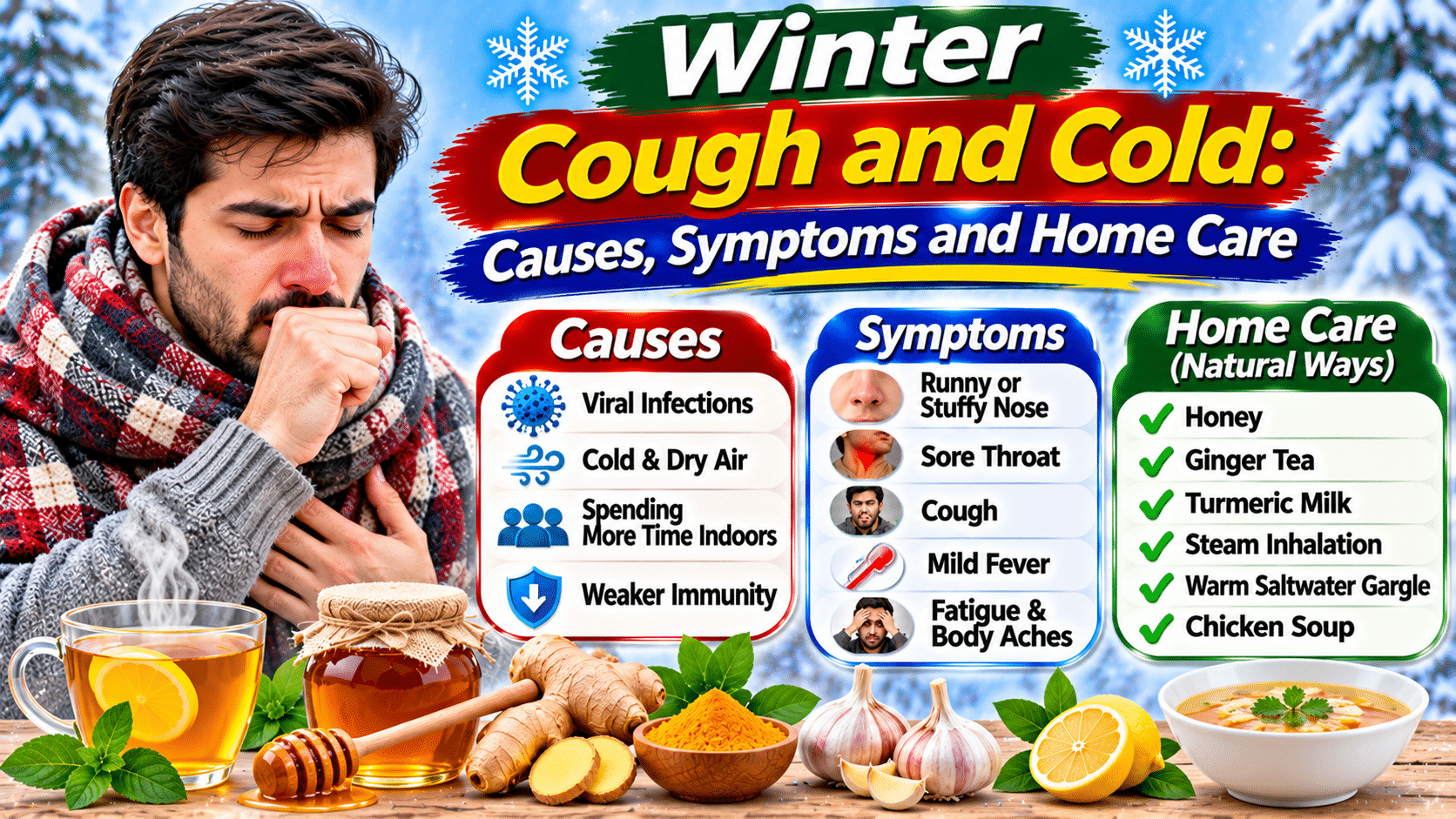
Winter is a season when many people experience coughs, colds, sore throats, and nasal congestion. These problems are particularly common during colder months when people spend more time indoors and respiratory viruses can spread easily.
In Pakistan, seasonal changes, dry air, dust, and indoor crowding can contribute to respiratory discomfort. Children, older adults, and people with certain health conditions may be more vulnerable to complications from respiratory infections.
A common cold is usually caused by a virus and often improves within 7–10 days. However, a cough may sometimes continue for several weeks.
Fortunately, simple home-care measures, adequate rest, proper hydration, and good hygiene can help manage mild symptoms.
In this article, we will explore the causes, symptoms, natural home remedies, prevention tips, and treatment options for winter cough and cold.
What Is Winter Cough and Cold?
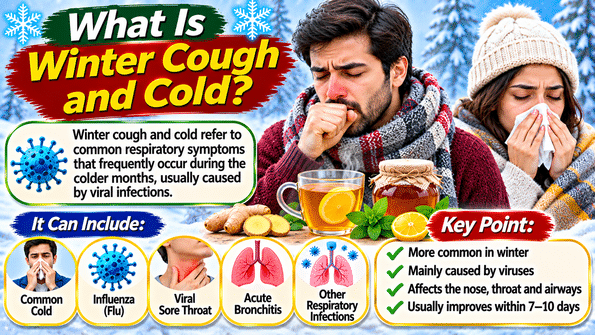
Winter cough and cold refer to common respiratory symptoms that frequently occur during the colder months.
The common cold is a contagious viral infection that affects the upper respiratory tract, including the nose and throat.
A cough is a natural reflex that helps clear mucus, irritants, and foreign particles from the airways.
Winter respiratory illnesses may include:
- Common cold
- Influenza (flu)
- Viral sore throat
- Acute bronchitis
- Other respiratory infections
Although these conditions may have similar symptoms, their causes and treatments can differ.
What Causes Cough and Cold During Winter?
Several factors contribute to the increased occurrence of respiratory infections and cough-related symptoms during winter.
1. Viral Infections
Viruses are the most common cause of the common cold. Rhinoviruses are among the leading causes, while influenza viruses and other respiratory viruses can also cause similar symptoms.
These infections spread through respiratory particles and contaminated hands or surfaces.
2. Cold and Dry Air
Cold, dry air may irritate the nose and throat, making some people more likely to experience coughing or throat discomfort.
However, cold weather itself does not directly cause a viral cold.
3. Spending More Time Indoors
During winter, people often spend more time in enclosed spaces with limited ventilation.
This can increase exposure to respiratory viruses when an infected person coughs, sneezes, or talks.
4. Dry Indoor Environment
Indoor heating can reduce humidity and contribute to dryness in the nose and throat.
This may cause irritation and make an existing cough feel worse.
5. Weakened Immune Defenses
Certain health conditions, inadequate nutrition, poor sleep, and other factors can affect normal immune function.
People with weakened immune systems may have a higher risk of developing severe respiratory infections.
6. Exposure to Dust and Air Pollution
Dust, smoke, and air pollution can irritate the respiratory tract and trigger coughing.
In cities such as Lahore, seasonal smog can make respiratory symptoms more uncomfortable.
Common Symptoms of Winter Cough and Cold
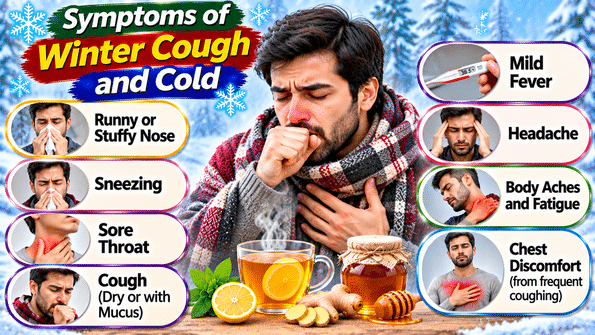
Symptoms vary depending on the underlying infection and individual health.
Common symptoms include:
1. Runny or Stuffy Nose
A cold can cause nasal congestion, sneezing, and a runny nose.
2. Cough
A cough may be dry or produce mucus. It helps the body clear irritants and secretions from the respiratory tract.
3. Sore Throat
Throat irritation and pain may develop because of viral infection, postnasal drip, or dryness.
4. Mild Fever
Some respiratory infections cause a mild fever. Fever is more common with influenza than with an ordinary cold.
5. Sneezing
Frequent sneezing is a common symptom of upper respiratory infections.
6. Headache
Headaches may occur due to fever, nasal congestion, or general illness.
7. Body Aches and Fatigue
Some people experience tiredness, muscle aches, and general weakness, particularly with influenza.
8. Chest Discomfort
Frequent coughing can cause temporary soreness in the chest muscles. However, chest pain or breathing difficulties should not be ignored.
10 Natural Home Remedies for Winter Cough and Cold
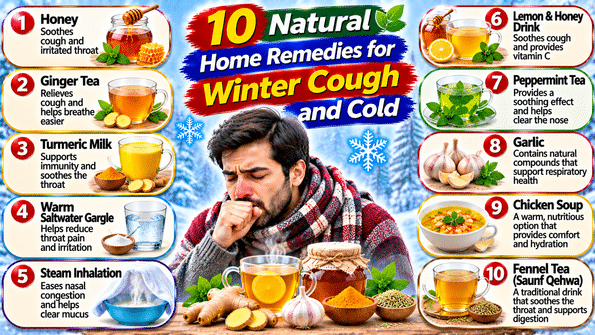
Home-care remedies may help relieve mild symptoms and improve comfort. They do not necessarily eliminate the virus or cure an infection.
1. Honey
Honey is a traditional home remedy for soothing cough symptoms.
It may help reduce nighttime coughing, particularly in children older than one year and adults.
Potential Benefits of Honey:
- Helps soothe an irritated throat.
- May reduce nighttime coughing.
- Provides a soothing coating sensation.
- Can be added to warm beverages.
How to Use Honey:
- Take one teaspoon of honey.
- Consume it directly or mix it into warm water.
- Drink slowly, especially before bedtime.
Important: Never give honey to infants younger than 12 months because of the risk of infant botulism.
2. Ginger Tea
Ginger is widely used in traditional Pakistani and South Asian home remedies.
It contains natural plant compounds, including gingerols, that have been studied for their biological properties.
Potential Benefits of Ginger Tea:
- Provides a soothing warm beverage.
- May help relieve throat discomfort.
- Contains antioxidant compounds.
- Helps maintain fluid intake.
How to Prepare Ginger Tea:
- Take a small piece of fresh ginger.
- Wash and slice it.
- Add it to one cup of water.
- Simmer for approximately 5–10 minutes.
- Strain and allow it to cool slightly.
- Add honey if desired.
Enjoy it warm rather than extremely hot.
3. Turmeric Milk
Turmeric is a traditional culinary spice containing curcumin, a plant compound with antioxidant and anti-inflammatory properties.
Turmeric milk is commonly consumed as a comforting winter beverage.
Potential Benefits:
- Provides a warm and soothing drink.
- Contains antioxidant compounds.
- Supplies nutrients from milk.
- Can be included in a balanced diet.
How to Prepare Turmeric Milk:
- Take one cup of milk.
- Add approximately ¼ teaspoon of turmeric.
- Warm the mixture gently.
- Stir well.
- Allow it to cool before drinking.
Turmeric milk is a comfort drink, not a proven treatment for viral infections.
4. Warm Saltwater Gargle
Gargling with warm saltwater may help soothe a sore throat and provide temporary relief.
Potential Benefits:
- Helps soothe throat irritation.
- May reduce discomfort.
- Helps loosen mucus in the throat.
How to Prepare:
- Take one glass of warm water.
- Add approximately half a teaspoon of salt.
- Stir until dissolved.
- Gargle for several seconds.
- Spit out the water.
Repeat as needed. Do not swallow the saltwater.
5. Steam from a Warm Shower
Warm, moist air may provide temporary comfort when the nose feels congested.
Potential Benefits:
- May temporarily ease nasal discomfort.
- Helps loosen thick nasal secretions.
- Provides a soothing sensation.
A warm shower is generally safer than leaning over a bowl of boiling water.
Avoid direct exposure to boiling-water steam because it can cause serious burns, especially in children.
6. Lemon and Honey Drink
Lemon contains vitamin C, while honey may help soothe cough symptoms.
A warm lemon and honey drink can be a comforting option during winter.
How to Prepare:
- Take one cup of warm water.
- Add a little fresh lemon juice.
- Mix in one teaspoon of honey.
- Stir well and drink slowly.
This drink provides comfort and hydration but does not cure the common cold.
7. Peppermint Tea
Peppermint contains menthol, which produces a cooling sensation and is commonly used in traditional herbal beverages.
Potential Benefits:
- Provides a refreshing warm drink.
- Helps maintain fluid intake.
- May provide temporary comfort.
- Contains naturally occurring plant compounds.
How to Prepare:
- Add a few fresh peppermint leaves to hot water.
- Cover and steep for 5–7 minutes.
- Strain the tea.
- Allow it to cool slightly before drinking.
Peppermint tea should be avoided if it worsens acid reflux.
8. Garlic
Garlic is widely used in traditional cooking and home remedies.
It contains sulfur-containing compounds, including allicin, which forms when garlic is crushed.
Potential Benefits:
- Provides antioxidant compounds.
- Adds flavor to nutritious meals.
- Contributes to a balanced diet.
Garlic has not been proven to cure or reliably prevent the common cold.
How to Use:
Add fresh garlic to soups, vegetables, lentils, and other meals according to your taste.
9. Chicken Soup
Warm chicken soup is a popular comfort food during winter illnesses.
It provides fluids, protein, and other nutrients that can support general nutrition.
Potential Benefits:
- Helps maintain hydration.
- Provides protein and nutrients.
- May temporarily ease nasal congestion.
- Is easy to consume when appetite is reduced.
Prepare homemade chicken soup using vegetables, chicken, ginger, and moderate amounts of salt.
10. Fennel Tea (Saunf Qehwa)
Fennel seeds are commonly used in traditional South Asian herbal preparations.
They contain aromatic plant compounds and are often consumed as a warm herbal infusion.
Potential Benefits:
- Provides a soothing warm beverage.
- Helps maintain fluid intake.
- Offers a pleasant aromatic flavor.
How to Prepare:
- Take half a teaspoon of fennel seeds.
- Lightly crush the seeds.
- Add them to one cup of hot water.
- Cover and steep for 5–10 minutes.
- Strain and drink warm.
Fennel tea is a traditional beverage, not an established treatment for cough or cold.
Best Foods to Eat During Winter Cough and Cold
Good nutrition is important for maintaining normal immune function and supporting recovery.
Here are some nutritious foods to include in your diet.
| Food | Nutritional Benefits |
|---|---|
| Oranges | Vitamin C |
| Guava | Vitamin C and fiber |
| Ginger | Gingerol and other plant compounds |
| Garlic | Sulfur-containing compounds |
| Chicken Soup | Protein and fluids |
| Eggs | Protein and vitamin B12 |
| Spinach | Folate and vitamins |
| Almonds | Vitamin E and healthy fats |
| Yogurt | Protein and calcium |
| Honey | Natural carbohydrates |
Eat a variety of foods and drink enough fluids throughout the day.
How to Prevent Winter Cough and Cold
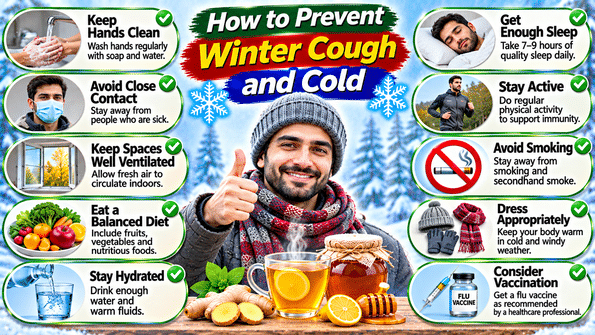
Prevention is important, particularly during periods when respiratory infections are spreading.
Follow these simple habits:
- Wash your hands regularly with soap and water.
- Avoid touching your eyes, nose, and mouth with unwashed hands.
- Cover your mouth and nose when coughing or sneezing.
- Avoid close contact with people who are sick.
- Keep indoor spaces properly ventilated.
- Avoid smoking and exposure to secondhand smoke.
- Eat a balanced and nutritious diet.
- Get sufficient sleep.
- Stay physically active.
- Follow recommended influenza and other respiratory vaccination guidance.
If you are sick, stay home when possible and consider wearing a well-fitting mask around others, especially vulnerable people.
Difference Between Common Cold, Flu and Allergy
Cough, sneezing, and nasal congestion can occur with several conditions.
Understanding their differences can help you decide when to seek medical advice.
| Feature | Common Cold | Influenza (Flu) | Allergy |
|---|---|---|---|
| Onset | Usually gradual | Often sudden | Depends on exposure |
| Fever | Uncommon or mild | Common | Not typical |
| Sneezing | Common | Sometimes | Very common |
| Runny Nose | Common | Sometimes | Common |
| Body Aches | Mild | Often significant | Not typical |
| Itchy Eyes | Uncommon | Uncommon | Common |
| Fatigue | Usually mild | Can be severe | Variable |
These symptoms can overlap. Testing or medical evaluation may be needed for an accurate diagnosis.
When Should You See a Doctor?
Most uncomplicated common colds improve without specific medical treatment. However, certain symptoms require medical attention.
Consult a healthcare professional if you experience:
- Fever lasting more than three days.
- Symptoms that worsen instead of improving.
- A cough lasting more than three weeks.
- Persistent or severe sore throat.
- Ear pain or significant sinus pain.
- Repeated episodes of respiratory infection.
- Symptoms that improve and then become worse again.
Seek urgent medical attention if you experience:
- Difficulty breathing or shortness of breath.
- Persistent chest pain or pressure.
- Blue or grey lips.
- Confusion or unusual drowsiness.
- Severe dehydration.
Babies, older adults, pregnant people, and individuals with chronic medical conditions should seek medical advice earlier when respiratory symptoms develop.
People at increased risk of complications from influenza or COVID-19 may benefit from early medical evaluation because antiviral treatment, when appropriate, works best when started promptly.
Frequently Asked Questions (FAQs)
1. Why does cough increase during winter?
Coughing may increase during winter because respiratory viruses circulate more easily, indoor air may be dry, and cold air or pollution can irritate the respiratory tract.
2. What is the best home remedy for winter cough?
Honey may help soothe cough symptoms, particularly at night. Warm drinks, adequate hydration, and rest can also provide comfort.
3. Is ginger tea good for cough and cold?
Ginger tea is a popular traditional beverage that provides warmth and hydration. It may help soothe throat discomfort, although it is not a proven cure for respiratory infections.
4. Can honey reduce coughing?
Yes. Research suggests that honey may provide modest relief from acute cough symptoms, especially nighttime coughing. Never give honey to children under one year.
5. Is turmeric milk good during winter?
Turmeric milk is a comforting warm beverage containing turmeric’s plant compounds and nutrients from milk. However, it has not been proven to cure coughs or viral infections.
6. How many days does a common cold last?
Most common colds improve within 7–10 days. A cough may continue for up to three weeks or sometimes longer.
7. Should I drink cold water during a cough?
There is no general medical requirement to avoid cold water. Drink fluids at a temperature that feels comfortable. Warm beverages may be more soothing for some people.
8. Is steam inhalation good for a blocked nose?
Warm, moist air from a shower may provide temporary comfort. Avoid bowls of boiling water because of the risk of burns.
9. Do antibiotics treat common colds?
No. Common colds are caused by viruses, and antibiotics do not treat viral infections. Antibiotics should only be used when prescribed for an appropriate bacterial infection.
10. What foods should I eat during a cold?
Soups, eggs, fruits, vegetables, yogurt, and other nutritious foods can help provide energy, protein, vitamins, and fluids during recovery.
Conclusion
Winter cough and cold are common problems, particularly during colder months when respiratory viruses spread more easily.
Although most common colds improve naturally, proper rest, adequate hydration, nutritious foods, and simple home-care remedies can help relieve discomfort.
Honey, ginger tea, turmeric milk, warm saltwater gargles, and chicken soup are popular options for providing comfort during winter illnesses.
However, natural remedies should not replace appropriate medical treatment. If symptoms become severe, persist for a long time, or include breathing difficulties or chest pain, seek professional medical attention.
At New Pansari.pk – Herbal & Natural Wellness Store, we believe that balanced nutrition, informed herbal choices, and healthy daily habits are important parts of natural wellness.
Disclaimer: This article is for educational purposes only and is not intended to replace professional medical advice, diagnosis, or treatment. Consult a qualified healthcare professional if you have persistent or severe symptoms. Herbal ingredients may interact with medicines or may not be suitable for everyone.