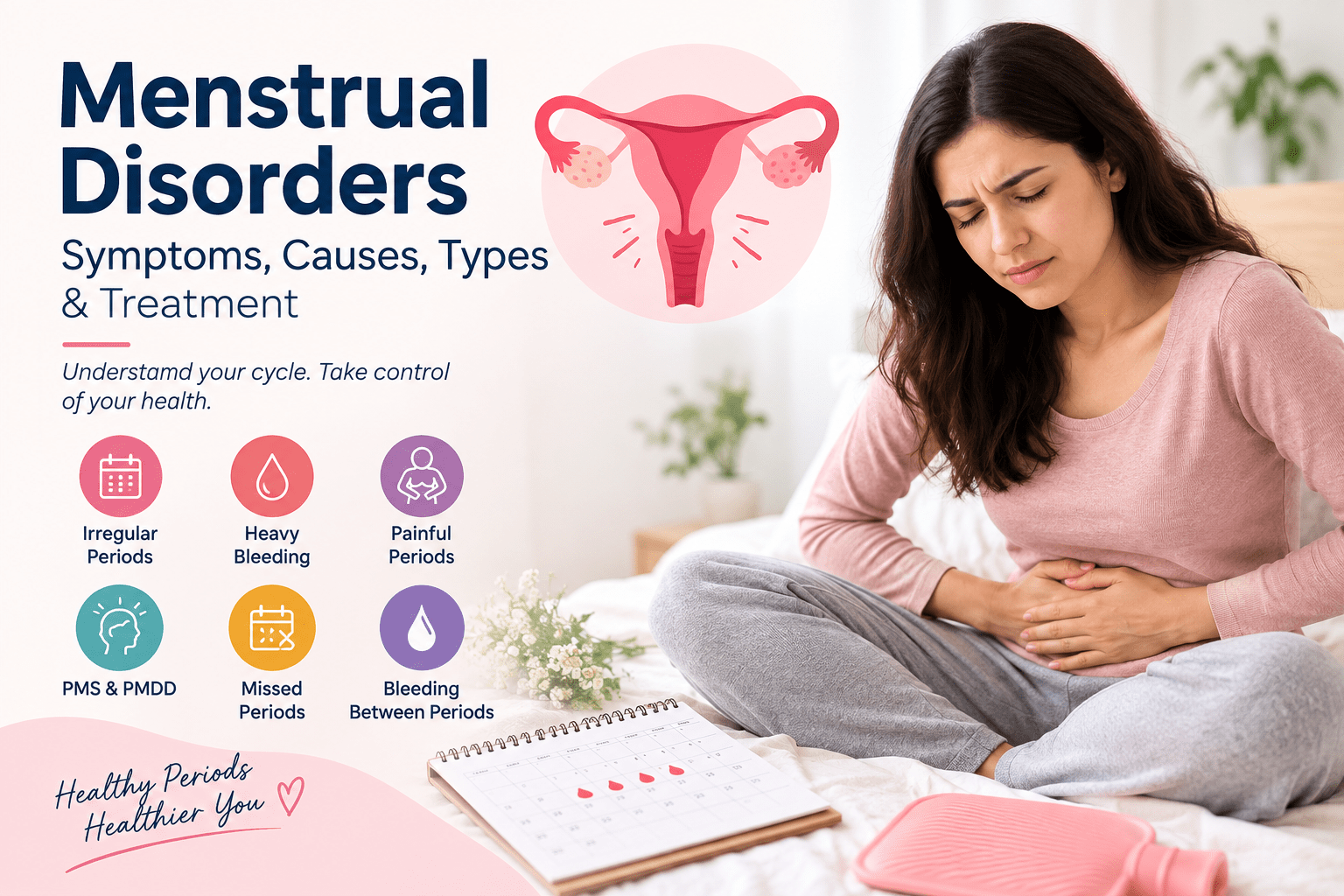
Menstruation is a natural part of the reproductive cycle, but many women experience problems with their periods at some point in life. Menstrual disorders can affect the timing, duration, flow, or symptoms associated with menstruation. Common problems include irregular periods, heavy menstrual bleeding, painful periods, missed periods, bleeding between periods, and severe premenstrual symptoms.
Some menstrual changes are temporary and may occur because of stress, changes in weight, exercise, pregnancy, or hormonal fluctuations. However, persistent or severe menstrual problems can sometimes be associated with conditions such as polycystic ovary syndrome (PCOS), thyroid disorders, endometriosis, uterine fibroids, or other medical conditions.
Understanding the symptoms and possible causes can help women recognize when professional medical advice may be appropriate.
What Are Menstrual Disorders?
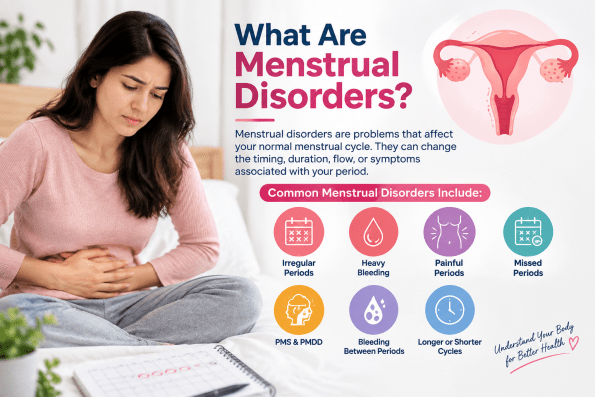
Menstrual disorders are problems that affect a person’s normal menstrual cycle. A menstrual cycle is counted from the first day of one period to the first day of the next period. Cycle length and bleeding patterns naturally vary between individuals.
Menstrual problems may involve:
- Irregular or unpredictable periods
- Very heavy menstrual bleeding
- Painful periods
- Periods that last unusually long
- Missed periods
- Bleeding between periods
- Bleeding after sexual intercourse
- Severe premenstrual symptoms
- Changes in the usual menstrual pattern
A change from your normal menstrual pattern does not always mean there is a serious problem, but persistent changes should be discussed with a healthcare professional.
Common Types of Menstrual Disorders
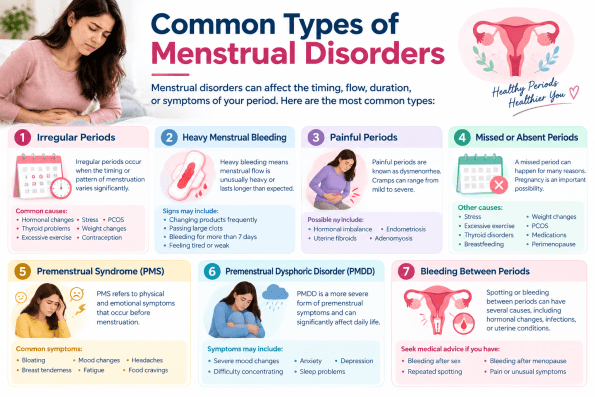
1. Irregular Periods
Irregular periods occur when the timing between periods varies significantly or periods become unpredictable. Some people may have cycles that are unusually short or long.
Possible causes include:
- Hormonal changes
- Stress
- Pregnancy
- PCOS
- Thyroid problems
- Significant weight changes
- Excessive exercise
- Hormonal contraception
- Perimenopause
Occasional changes may occur naturally, but repeated irregular periods may require evaluation.
2. Heavy Menstrual Bleeding
Heavy menstrual bleeding means menstrual bleeding is unusually heavy or lasts longer than expected. It may interfere with work, school, exercise, sleep, or daily activities.
Possible signs include:
- Frequently changing sanitary products
- Passing large blood clots
- Bleeding for more than seven days
- Needing to use multiple menstrual products at once
- Feeling tired or weak during or after periods
Heavy menstrual bleeding can sometimes contribute to iron-deficiency anemia, particularly when it occurs repeatedly.
3. Painful Periods
Painful periods are known as dysmenorrhea. Menstrual cramps commonly occur because the uterus contracts during menstruation.
Mild cramps are common, but severe or worsening pain may require investigation. Conditions such as endometriosis, adenomyosis, or uterine fibroids can sometimes cause significant menstrual pain.
Pain may occur in the lower abdomen and may sometimes extend to the back or thighs.
4. Missed Periods
A missed period can happen for many reasons. Pregnancy is an important possibility for people who are sexually active.
Other possible causes include:
- Stress
- Weight loss
- Significant weight gain
- Excessive physical activity
- Breastfeeding
- PCOS
- Thyroid disorders
- Perimenopause
- Certain medications
- Hormonal contraception
Repeatedly missing periods should be discussed with a healthcare professional.
5. Premenstrual Syndrome (PMS)
PMS refers to physical and emotional symptoms that occur before menstruation.
Common symptoms include:
- Bloating
- Breast tenderness
- Headaches
- Fatigue
- Mood changes
- Irritability
- Food cravings
- Sleep changes
- Abdominal discomfort
PMS symptoms can range from mild to significant and may vary from month to month.
6. Premenstrual Dysphoric Disorder (PMDD)
PMDD is a more severe premenstrual condition that can cause substantial emotional and physical symptoms.
Symptoms may include severe mood changes, irritability, anxiety, depression, difficulty concentrating, sleep problems, and physical discomfort.
Because PMDD can significantly affect daily life, medical assessment and appropriate treatment are important.
7. Bleeding Between Periods
Spotting or bleeding between periods can have several causes. Hormonal contraception, infections, pregnancy-related problems, cervical conditions, polyps, and other issues can sometimes contribute.
Unusual or repeated bleeding should be medically evaluated, especially when it is accompanied by pain or occurs after menopause.
Causes of Menstrual Disorders
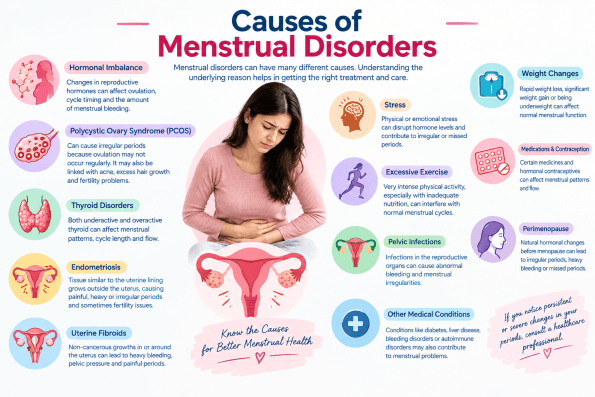
Menstrual disorders have many possible causes, and identifying the underlying cause is important for appropriate treatment.
Hormonal Imbalance
Menstruation depends on coordinated changes in reproductive hormones. Changes in hormone levels can affect ovulation, cycle timing, bleeding, and menstrual symptoms.
PCOS
Polycystic ovary syndrome is a common hormonal condition that can cause irregular periods because ovulation may not occur regularly. PCOS may also be associated with acne, increased facial or body hair, and difficulty becoming pregnant.
Thyroid Disorders
The thyroid gland affects many body functions, including metabolism and reproductive health. Both an underactive thyroid and an overactive thyroid can affect menstrual patterns.
Endometriosis
Endometriosis occurs when tissue similar to the lining of the uterus grows outside the uterus. It can cause painful periods, pelvic pain, pain during sex, and sometimes fertility problems.
Uterine Fibroids
Fibroids are non-cancerous growths in or around the uterus. Depending on their size and location, they may cause heavy menstrual bleeding, pelvic pressure, or painful periods.
Stress
Significant physical or emotional stress can affect hormonal function and may contribute to irregular or missed periods.
Weight Changes
Rapid weight loss, very low body weight, significant weight gain, or inadequate calorie intake can affect normal reproductive hormone function.
Excessive Exercise
Very intense exercise, particularly when combined with inadequate nutrition, may disrupt normal menstrual cycles.
Symptoms of Menstrual Disorders
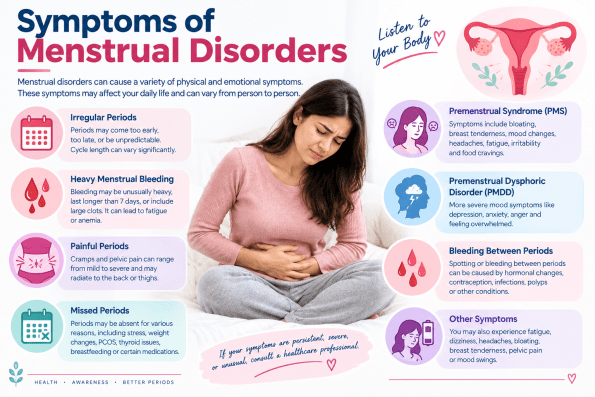
The symptoms depend on the specific condition. Common warning signs include:
- Irregular periods
- Very heavy bleeding
- Severe menstrual cramps
- Periods lasting longer than seven days
- Missed periods
- Bleeding between periods
- Pelvic pain
- Fatigue
- Dizziness
- Headaches
- Bloating
- Breast tenderness
- Significant mood changes
Keeping a record of these symptoms can help a healthcare professional understand the menstrual pattern.
How Are Menstrual Disorders Diagnosed?
Diagnosis begins with a detailed medical history. A healthcare professional may ask about:
- Age and menstrual history
- Cycle length
- Number of bleeding days
- Amount of bleeding
- Pain severity
- Pregnancy possibility
- Medications
- Contraception
- Weight changes
- Exercise habits
- Other health conditions
- Family history
Depending on the symptoms, a healthcare professional may recommend pregnancy testing, blood tests, pelvic examination, ultrasound, or other investigations.
The appropriate tests depend on the person’s symptoms and suspected cause.
Treatment for Menstrual Disorders
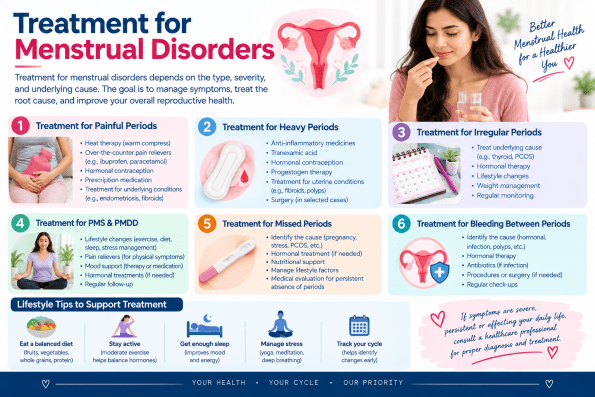
Treatment depends on the type of menstrual problem and its underlying cause.
Treatment for Painful Periods
Depending on individual circumstances, treatment may include:
- Heat therapy
- Appropriate pain-relieving medicines
- Hormonal contraception
- Prescription medicines
- Treatment of an underlying condition such as endometriosis
Severe or persistent pain should not simply be considered a normal part of menstruation.
Treatment for Heavy Periods
Depending on the cause, healthcare professionals may recommend medicines such as anti-inflammatory medicines or tranexamic acid, hormonal treatments, or other therapies.
Some people with structural problems such as fibroids or polyps may require procedures or surgery.
Treatment for Irregular Periods
Treatment depends on the underlying cause. For example, menstrual irregularity associated with PCOS may be managed differently from irregular periods caused by thyroid disease, excessive exercise, or significant weight changes.
Treatment for PMS and PMDD
Lifestyle changes, symptom tracking, medication, and hormonal treatments may be considered depending on symptom severity.
People experiencing significant mood symptoms should speak with a healthcare professional.
Lifestyle Tips for Better Menstrual Health
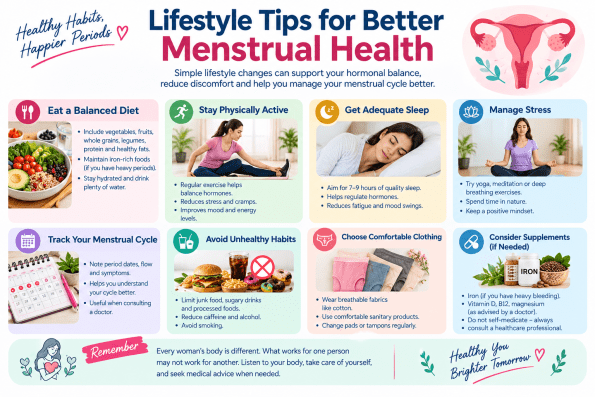
Healthy lifestyle habits can support general wellbeing and may help manage some menstrual symptoms.
Eat a Balanced Diet
Include a variety of:
- Vegetables
- Fruits
- Whole grains
- Beans and lentils
- Eggs
- Fish
- Lean protein
- Nuts and seeds
If you experience heavy menstrual bleeding, discuss iron levels with a healthcare professional before starting iron supplements.
Stay Physically Active
Regular moderate physical activity can support overall health and may help some people manage menstrual discomfort.
Get Adequate Sleep
Poor sleep can contribute to fatigue and may make some premenstrual symptoms feel more difficult to manage. Maintaining a consistent sleep routine can support overall wellbeing.
Manage Stress
Stress-management techniques such as walking, breathing exercises, meditation, yoga, and relaxation activities may be helpful.
Track Your Period
A menstrual diary or smartphone app can help you record:
- Period start date
- Period end date
- Flow intensity
- Pain level
- PMS symptoms
- Bleeding between periods
This information can be useful when discussing menstrual problems with a healthcare professional.
When Should You See a Doctor?
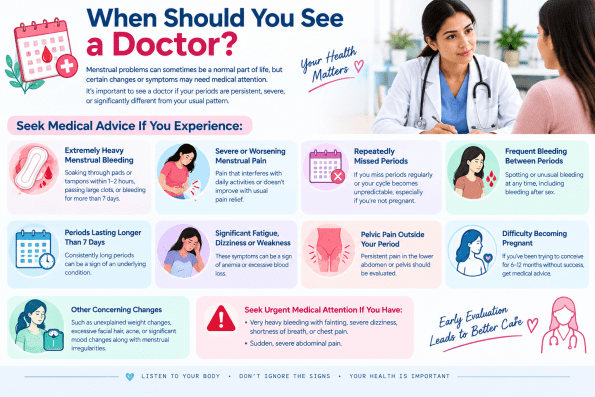
Medical advice is recommended if menstrual problems are persistent, severe, or significantly different from your usual pattern.
Seek medical evaluation if you experience:
- Extremely heavy menstrual bleeding
- Severe or worsening menstrual pain
- Repeatedly missed periods
- Frequent bleeding between periods
- Bleeding after sexual intercourse
- Periods consistently lasting more than seven days
- Significant fatigue or dizziness
- Pelvic pain outside your period
- Menstrual changes associated with difficulty becoming pregnant
Very heavy bleeding accompanied by fainting, severe weakness, shortness of breath, or other concerning symptoms may require urgent medical attention.
Frequently Asked Questions
What are menstrual disorders?
Menstrual disorders are problems affecting the timing, duration, amount of menstrual bleeding, or symptoms associated with periods.
What causes irregular periods?
Irregular periods can be associated with hormonal changes, pregnancy, stress, PCOS, thyroid disorders, significant weight changes, excessive exercise, contraception, and perimenopause.
Are painful periods normal?
Some menstrual cramping is common. However, severe, worsening, or disabling pain should be medically evaluated because it can sometimes be associated with conditions such as endometriosis or fibroids.
Can stress affect the menstrual cycle?
Yes. Significant stress can interfere with the hormonal processes involved in menstruation and may contribute to irregular or missed periods.
Can menstrual disorders affect fertility?
Some menstrual disorders can affect ovulation and may therefore make conception more difficult. The effect depends on the underlying condition.
What foods are good during menstruation?
A balanced diet containing vegetables, fruits, whole grains, legumes, protein-rich foods, and healthy fats can support overall health. People with heavy periods should discuss possible iron deficiency with a healthcare professional.
Can herbal remedies treat menstrual disorders?
Some herbs are traditionally used for menstrual symptoms, but evidence varies considerably between products and conditions. Herbal products can also interact with medicines or may not be appropriate during pregnancy. Consult a qualified healthcare professional before using herbs to treat a menstrual disorder.
Conclusion
Menstrual disorders can range from irregular periods and heavy bleeding to painful menstruation, missed periods, PMS, and PMDD. Although some menstrual variation is normal, persistent or severe changes may sometimes indicate an underlying health condition.
Maintaining a balanced diet, staying physically active, managing stress, getting adequate sleep, and tracking menstrual symptoms can support overall menstrual health. However, lifestyle measures should not replace medical evaluation when symptoms are severe, persistent, or unusual.
Understanding your normal menstrual pattern is one of the most useful ways to recognize changes early and seek appropriate care when necessary.
Medical Disclaimer: This article is intended for general educational purposes only and does not replace diagnosis, treatment, or advice from a qualified healthcare professional.