Introduction
Dry skin is a common problem during winter. Many people experience roughness, itching, flaking, tightness, and dull-looking skin when temperatures drop. Cold weather, low humidity, indoor heating, and frequent hot showers can remove moisture from the skin, making it dry and uncomfortable.
In Pakistan, winter weather can be particularly harsh in different regions. People may experience dry skin on their face, hands, feet, lips, and other parts of the body.
Although dry skin is usually manageable with proper skincare, ignoring it can sometimes lead to irritation, cracks, and inflammation.
The good news is that several natural ingredients and simple skincare habits can help improve skin moisture and maintain healthy-looking skin during winter.
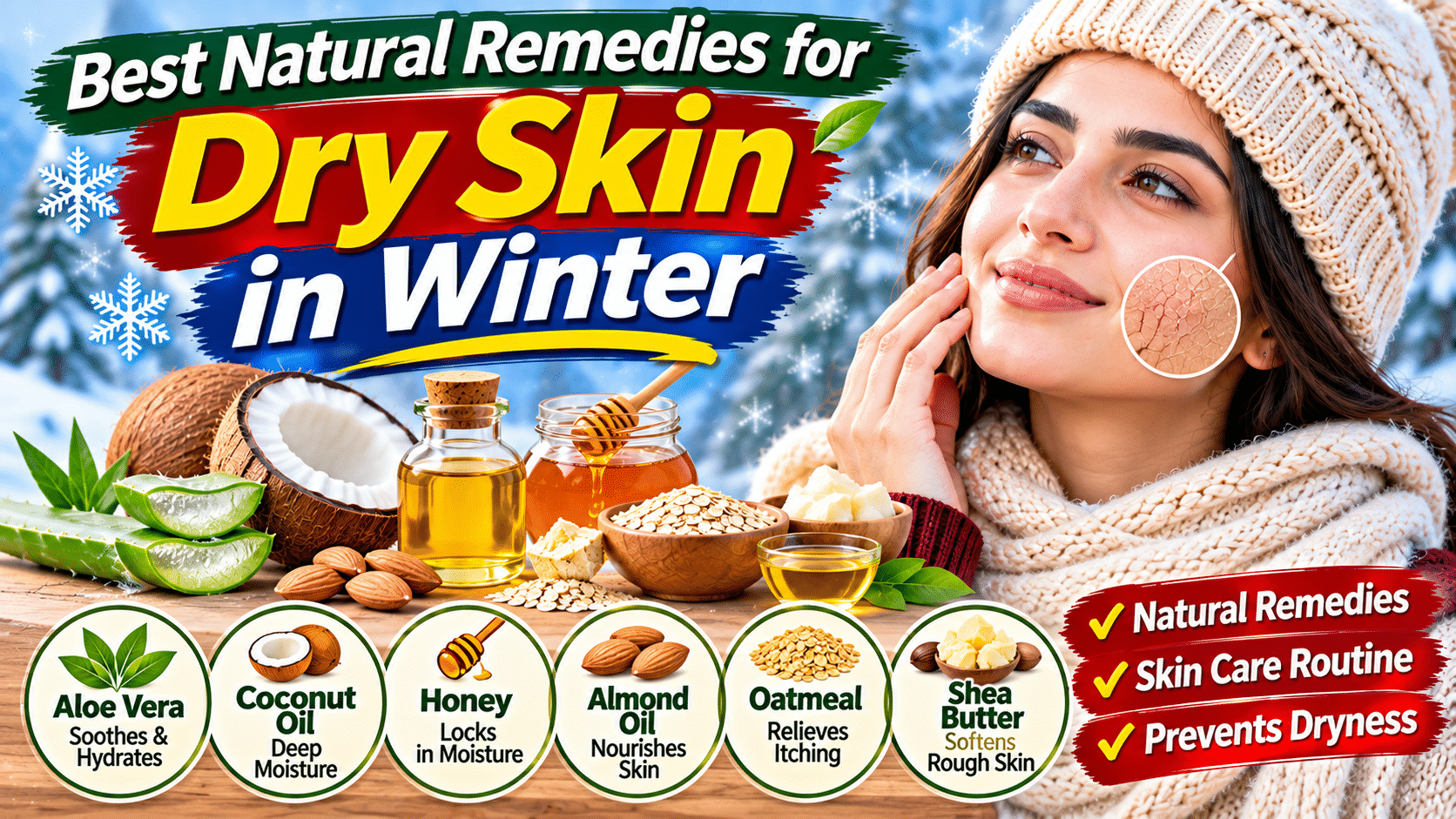
In this article, we will explore the 10 best natural remedies for dry skin in winter, their potential benefits, how to use them, and practical tips to keep your skin soft and hydrated.
What Is Dry Skin?
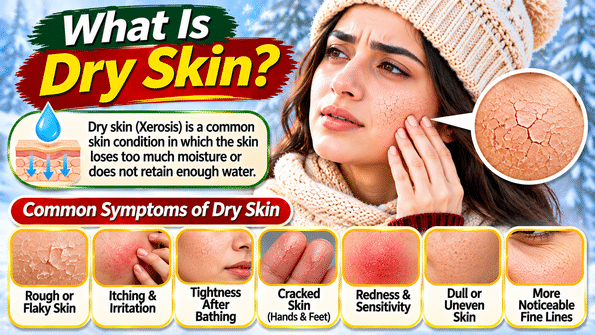
Dry skin, medically known as xerosis, is a condition in which the skin loses too much moisture or does not retain enough water.
Healthy skin has a protective outer barrier that helps maintain hydration and protect against environmental irritants.
During winter, cold temperatures and low humidity can weaken this protective barrier, resulting in dryness and discomfort.
Common Symptoms of Dry Skin:
- Rough or flaky skin.
- Itching and irritation.
- Tightness after bathing.
- Cracked skin on hands and feet.
- Redness and sensitivity.
- Dull or uneven skin appearance.
- Fine lines that become more noticeable.
Dry skin can affect people of all ages, although older adults and people with certain skin conditions may be more susceptible.
Why Does Skin Become Dry During Winter?
Several environmental and lifestyle factors can contribute to winter dryness.
1. Cold Weather
Cold outdoor temperatures and low humidity can increase moisture loss from the skin.
2. Low Humidity
Dry air contains less moisture, which can contribute to water loss from the skin.
3. Hot Water Showers
Long, hot showers can remove natural oils from the skin, making it dry and irritated.
4. Harsh Soaps and Cleansers
Some soaps and skincare products contain ingredients that remove natural skin oils and damage the skin barrier.
5. Indoor Heating
Heaters and other indoor heating systems can reduce indoor humidity, contributing to dry skin.
6. Insufficient Moisturizing
Not applying moisturizer regularly, especially after bathing, can allow moisture to escape from the skin.
Understanding these causes can help you choose the right skincare routine for winter.
10 Best Natural Remedies for Dry Skin in Winter
Natural ingredients can help soften and condition dry skin. Here are ten commonly used options.
1. Aloe Vera Gel
Aloe vera is widely used in skincare because of its soothing and moisturizing properties. It contains water and naturally occurring plant compounds that can help improve skin comfort.
Potential Benefits of Aloe Vera:
- Helps soothe dry and irritated skin.
- Provides temporary hydration.
- Supports skin comfort.
- May help reduce the feeling of tightness.
- Leaves skin feeling refreshed.
How to Use Aloe Vera:
- Take a small amount of pure aloe vera gel.
- Apply a thin layer to clean skin.
- Leave it on for approximately 10–15 minutes.
- Rinse if desired, or leave on if using a suitable leave-on product.
- Apply a moisturizer afterward.
Choose fragrance-free aloe vera products and perform a patch test before using them.
2. Coconut Oil
Coconut oil is a popular natural moisturizer used in traditional skincare routines.
It contains fatty acids, particularly lauric acid, which help condition the skin and reduce moisture loss.
Potential Benefits of Coconut Oil:
- Helps soften rough skin.
- Supports the skin’s moisture barrier.
- Reduces dryness.
- Helps improve skin smoothness.
- Provides a protective layer over the skin.
How to Use Coconut Oil:
- Take a small quantity of virgin coconut oil.
- Apply it to slightly damp skin.
- Gently massage until evenly distributed.
- Use it on dry areas such as elbows, knees, and feet.
Coconut oil may clog pores in some individuals, particularly those prone to acne. Avoid using it on acne-prone facial areas if it causes breakouts.
3. Honey
Honey is a natural humectant, meaning it can attract and hold moisture.
It is traditionally used in skincare preparations to help soften and condition dry skin.
Potential Benefits of Honey:
- Helps attract moisture.
- May improve skin softness.
- Provides a temporary moisturizing effect.
- Contains naturally occurring antioxidant compounds.
- Can help condition rough skin.
How to Use Honey:
- Take one teaspoon of plain honey.
- Apply a thin layer to clean skin.
- Leave it on for approximately 10 minutes.
- Rinse with lukewarm water.
- Apply a moisturizer.
Avoid honey if you have a known allergy to it or its ingredients.
4. Olive Oil
Olive oil contains fatty acids and antioxidant compounds that make it a popular ingredient in traditional skincare.
It can help soften dry areas and reduce the feeling of roughness.
Potential Benefits of Olive Oil:
- Helps condition dry skin.
- Provides emollient properties.
- Improves skin softness.
- Helps reduce moisture loss.
- Supports a smoother skin appearance.
How to Use Olive Oil:
- Take a few drops of extra virgin olive oil.
- Apply to slightly damp skin.
- Massage gently over dry areas.
- Use it on hands, elbows, knees, or feet.
Olive oil may not suit everyone, particularly people with sensitive or eczema-prone skin. Stop using it if irritation develops.
5. Almond Oil
Sweet almond oil is commonly used in moisturizers and traditional skincare products.
It contains fatty acids and vitamin E, which help condition the skin.
Potential Benefits of Almond Oil:
- Helps soften dry skin.
- Improves skin smoothness.
- Helps condition rough areas.
- Provides emollient properties.
- Supports a comfortable skin feel.
How to Use Almond Oil:
- Take a small quantity of sweet almond oil.
- Apply it to clean, slightly damp skin.
- Massage gently.
- Allow it to absorb.
People with nut allergies should avoid almond oil unless a healthcare professional confirms it is safe for them.
6. Shea Butter
Shea butter is a natural plant-based fat extracted from the nuts of the shea tree.
It is widely used in skincare products because of its rich moisturizing properties.
Potential Benefits of Shea Butter:
- Helps soften rough skin.
- Supports the skin moisture barrier.
- Helps reduce moisture loss.
- Provides long-lasting conditioning.
- Improves the appearance of dry skin.
How to Use Shea Butter:
- Take a small amount of shea butter.
- Warm it between your fingertips.
- Apply it to dry areas.
- Massage gently until distributed.
Shea butter is especially useful for dry hands, feet, elbows, and knees.
7. Oatmeal
Oatmeal is a traditional skincare ingredient known for its soothing properties.
Colloidal oatmeal, which is finely ground oatmeal prepared for skincare, is commonly used in products designed for dry and sensitive skin.
Potential Benefits of Oatmeal:
- Helps soothe irritated skin.
- Supports the skin’s protective barrier.
- May reduce itching associated with dryness.
- Helps improve skin comfort.
- Provides gentle cleansing properties.
How to Use Oatmeal:
- Use a fragrance-free colloidal oatmeal product.
- Add it to lukewarm bathwater according to product instructions.
- Soak for approximately 10–15 minutes.
- Pat your skin dry gently.
- Apply a moisturizer immediately afterward.
Avoid scrubbing dry skin with rough oatmeal particles because friction can worsen irritation.
8. Cucumber
Cucumber contains a high percentage of water and is traditionally used in skincare to provide a cooling and refreshing sensation.
Potential Benefits of Cucumber:
- Provides temporary cooling.
- Helps refresh the skin.
- May improve the feeling of skin comfort.
- Provides water-based hydration.
- Can be used in simple homemade skincare preparations.
How to Use Cucumber:
- Wash a fresh cucumber.
- Cut it into thin slices or blend it into a smooth paste.
- Apply gently to clean skin.
- Leave it for approximately 10 minutes.
- Rinse with cool or lukewarm water.
Cucumber can provide temporary comfort, but it should not replace a proper moisturizer.
9. Glycerin
Glycerin is one of the most effective moisturizing ingredients used in skincare products.
It is a humectant that attracts water and helps maintain skin hydration.
Potential Benefits of Glycerin:
- Helps attract moisture.
- Improves skin hydration.
- Supports the skin barrier.
- Helps soften rough skin.
- Reduces the feeling of dryness.
How to Use Glycerin:
- Choose a fragrance-free moisturizer containing glycerin.
- Apply it after washing your face or bathing.
- Use it regularly on dry areas.
- Apply a thicker moisturizer if your skin is extremely dry.
Avoid applying highly concentrated glycerin directly to the skin. Use a properly formulated skincare product.
10. Petroleum Jelly
Petroleum jelly is a highly effective occlusive moisturizer. It creates a protective layer that helps prevent water from escaping from the skin.
Although it is not a plant-based ingredient, it is one of the most useful and affordable options for managing winter dryness.
Potential Benefits of Petroleum Jelly:
- Helps prevent moisture loss.
- Protects dry and cracked skin.
- Helps soften rough areas.
- Supports the skin’s protective barrier.
- Works particularly well on dry hands, heels, and lips.
How to Use Petroleum Jelly:
- Wash the affected area gently.
- Pat the skin until slightly damp.
- Apply a thin layer of petroleum jelly.
- Repeat when needed, especially before bedtime.
Best Natural Oils for Dry Skin in Winter
Natural oils can help condition dry skin by reducing moisture loss and improving softness.
Here are some popular options:
| Natural Oil | Main Skincare Use |
|---|---|
| Coconut Oil | Conditioning dry skin |
| Almond Oil | Softening rough skin |
| Olive Oil | Moisturizing dry areas |
| Jojoba Oil | Skin conditioning |
| Argan Oil | Softening and smoothing |
| Rosehip Oil | Skincare conditioning |
Important: Natural oils are not suitable for everyone. People with acne-prone or sensitive skin should select products carefully and perform a patch test before use.
Daily Skincare Routine for Dry Skin During Winter
Following a consistent skincare routine can help protect your skin throughout the colder months.
Morning Skincare Routine
- Wash your face with a gentle, fragrance-free cleanser.
- Avoid hot water.
- Apply a moisturizer containing glycerin or ceramides.
- Use sunscreen with SPF 30 or higher on exposed skin.
- Apply a suitable lip balm.
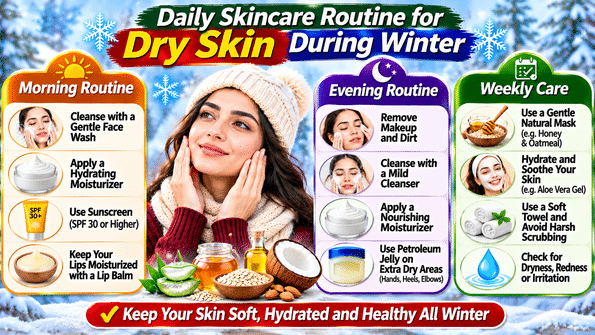
Evening Skincare Routine
- Gently remove makeup and dirt.
- Cleanse your face with a mild cleanser.
- Apply a moisturizing cream.
- Use a thin layer of petroleum jelly on particularly dry areas if needed.
- Avoid harsh exfoliating products.
Weekly Skincare Routine
- Use a gentle moisturizing treatment.
- Avoid excessive exfoliation.
- Check for dryness, redness, or irritation.
- Keep your towels and pillowcases clean.
Consistency is more important than using many different skincare products.
Foods That Support Healthy Skin During Winter
Healthy skin requires proper nutrition as well as external skincare.
Certain foods provide essential nutrients that help maintain normal skin function.
| Food | Important Nutrients |
|---|---|
| Almonds | Vitamin E |
| Walnuts | Omega-3 fatty acids |
| Carrots | Beta-carotene |
| Oranges | Vitamin C |
| Avocados | Healthy fats |
| Eggs | Protein and vitamins |
| Spinach | Vitamins and antioxidants |
| Sweet Potatoes | Beta-carotene |
| Fish | Protein and omega-3 fats |
| Guava | Vitamin C |
Including a variety of these foods in your diet can help provide nutrients needed for normal skin health.
Tips to Prevent Dry Skin During Winter
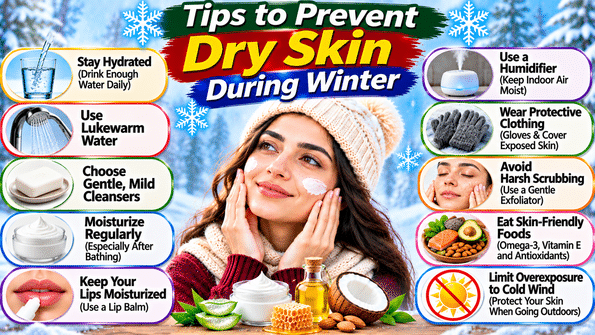
Along with natural remedies, follow these simple habits:
- Drink enough water throughout the day.
- Avoid long and hot showers.
- Use lukewarm water for bathing.
- Apply moisturizer immediately after bathing.
- Choose gentle and fragrance-free cleansers.
- Avoid excessive exfoliation.
- Wear gloves when going outdoors in cold weather.
- Use a humidifier if indoor air is very dry.
- Apply lip balm regularly.
- Protect exposed skin from cold winds.
These simple habits can help reduce moisture loss and maintain comfortable skin during winter.
When Should You See a Dermatologist?
Dry skin is usually manageable with appropriate skincare. However, sometimes it may indicate an underlying skin condition such as eczema, psoriasis, or contact dermatitis.
Consult a dermatologist if you experience:
- Severe or persistent itching.
- Deep cracks or bleeding.
- Painful or inflamed skin.
- Widespread redness or swelling.
- Signs of infection, such as pus or increasing warmth.
- Dryness that does not improve with regular moisturizing.
Professional evaluation can help identify the cause and determine the appropriate treatment.
Frequently Asked Questions (FAQs)
1. What is the best natural remedy for dry skin in winter?
Coconut oil, aloe vera, honey, shea butter, and almond oil are commonly used to condition dry skin. Glycerin-containing moisturizers and petroleum jelly are also effective options for maintaining skin hydration.
2. Which oil is best for dry skin during winter?
Sweet almond oil, coconut oil, jojoba oil, and argan oil are popular choices. The best option depends on your skin type and individual tolerance.
3. Can coconut oil help with dry skin?
Yes. Coconut oil can help condition dry skin and reduce moisture loss. However, it may clog pores in some people and may not be suitable for acne-prone skin.
4. Is aloe vera good for dry skin?
Aloe vera gel can provide temporary hydration and soothing effects. For persistent dryness, combine it with a suitable moisturizer.
5. How can I keep my face moisturized during winter?
Use a gentle cleanser, avoid hot water, apply a fragrance-free moisturizer containing glycerin or ceramides, and use sunscreen during the day.
6. Does drinking water prevent dry skin?
Drinking enough water helps maintain normal hydration. However, drinking extra water alone does not necessarily resolve dry skin. External moisturizing is also important.
7. Is honey good for dry skin?
Honey is a natural humectant and can help attract moisture. It is sometimes used in homemade skincare masks, although a properly formulated moisturizer is generally more reliable.
8. Why does my skin become itchy during winter?
Cold temperatures, low humidity, hot showers, and reduced skin moisture can cause dryness and itching. Persistent itching may also be associated with eczema or other skin conditions.
9. How often should I moisturize my skin in winter?
Apply moisturizer at least twice daily or whenever your skin feels dry. Applying it immediately after bathing helps retain moisture.
10. What foods are good for dry skin?
Almonds, walnuts, eggs, fish, carrots, oranges, spinach, and avocados provide nutrients that support normal skin health.
Conclusion
Dry skin is a common winter concern, but the right skincare routine can help maintain soft, smooth, and healthy-looking skin.
Natural ingredients such as aloe vera, coconut oil, honey, almond oil, shea butter, and oatmeal can help condition dry skin. Glycerin-based moisturizers and petroleum jelly are also useful options for protecting the skin’s moisture barrier.
Along with external skincare, eating a balanced diet, avoiding hot showers, staying hydrated, and moisturizing regularly can help reduce winter dryness.
At New Pansari.pk – Herbal & Natural Wellness Store, we believe that informed skincare choices and natural wellness habits are important parts of maintaining healthy skin throughout the year.
Disclaimer: This article is for educational purposes only and is not intended to replace professional medical advice, diagnosis, or treatment. Always perform a patch test before using a new skincare ingredient, especially if you have sensitive skin or allergies.