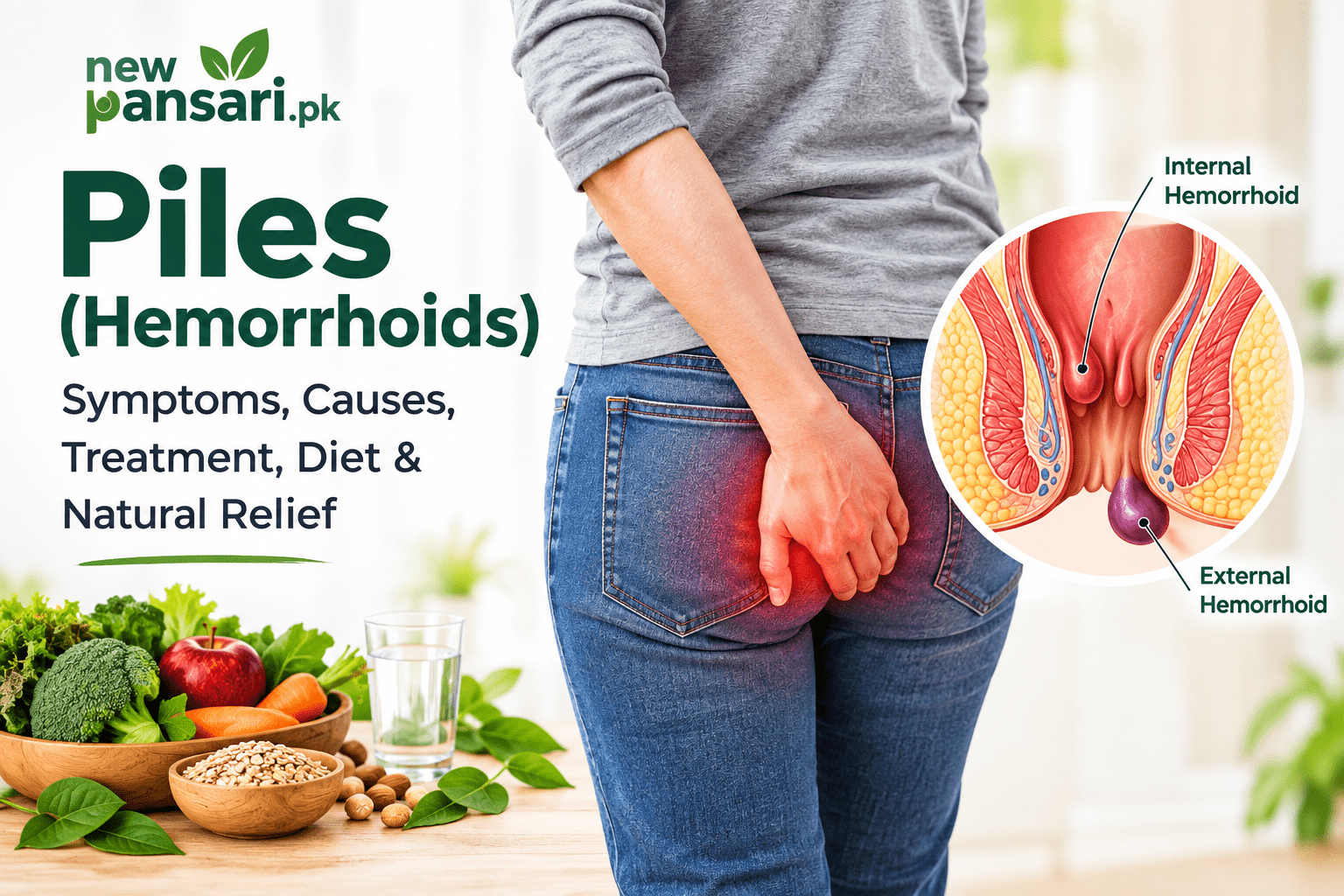
Piles, medically known as hemorrhoids, are swollen and enlarged blood vessels around the anus or inside the lower rectum. They are a common condition that can affect adults of different ages. Piles may cause itching, discomfort, pain, swelling, or bleeding during bowel movements.
Although piles are usually not dangerous, persistent or heavy rectal bleeding should not automatically be attributed to hemorrhoids. Other conditions can cause similar symptoms, so medical evaluation is important when symptoms are severe, recurrent, or unusual.
This complete guide explains piles symptoms, causes, types, treatment options, diet, lifestyle changes, prevention, and natural supportive measures.
What Are Piles (Hemorrhoids)?
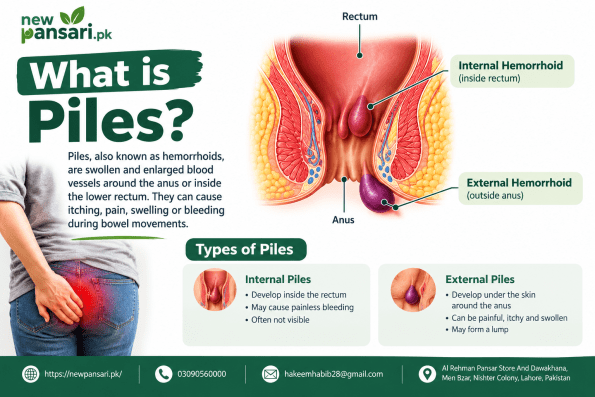
Hemorrhoids are normal blood vessels and supporting tissues located in the anal canal. They become a problem when these tissues become swollen, irritated, or enlarged.
Piles are generally divided into two main types:
- Internal hemorrhoids: Develop inside the rectum and may cause painless bleeding.
- External hemorrhoids: Develop beneath the skin around the anus and can cause pain, swelling, itching, or a noticeable lump.
A blood clot can sometimes develop inside an external hemorrhoid, causing a painful condition known as a thrombosed hemorrhoid.
Common Symptoms of Piles
The symptoms of piles can vary depending on whether they are internal or external.
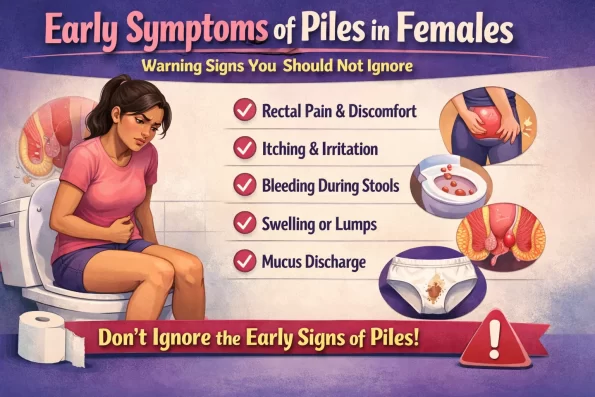
Common piles symptoms include:
- Bright-red blood during or after bowel movements
- Anal itching
- Irritation around the anus
- Pain or discomfort
- Swelling near the anus
- A lump or bulge around the anal opening
- Mucus or irritation
- Feeling that the bowel has not completely emptied
Internal hemorrhoids may bleed without causing significant pain. External hemorrhoids are more likely to cause tenderness and discomfort, particularly when sitting or during bowel movements.
What Causes Piles?
Piles can develop when increased pressure is placed on the veins and tissues around the rectum and anus.
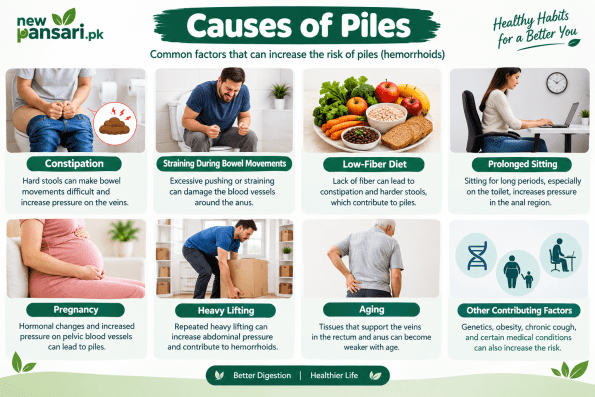
Common causes and contributing factors include:
1. Constipation
Hard stools can make bowel movements difficult and encourage repeated straining. Chronic constipation is one of the most common factors associated with hemorrhoids.
2. Straining During Bowel Movements
Spending excessive time pushing or straining on the toilet can increase pressure on the blood vessels around the anus.
3. Low-Fiber Diet
A diet lacking fruits, vegetables, whole grains, and other fiber-rich foods may contribute to constipation and hard stools.
4. Prolonged Sitting
Sitting for long periods, particularly on the toilet, can increase pressure in the anal region.
5. Pregnancy
Pregnancy can increase pressure on the pelvic blood vessels. Hormonal changes and constipation may also contribute to hemorrhoids.
6. Heavy Lifting
Repeated heavy lifting and activities that significantly increase abdominal pressure may contribute to hemorrhoid symptoms in some people.
7. Aging
The tissues that support the veins in the rectum and anus can become weaker with age, increasing susceptibility to hemorrhoids.
Types and Grades of Internal Piles
Internal hemorrhoids are sometimes classified into four grades according to how far they protrude.
Grade 1
The hemorrhoid remains inside the rectum and does not protrude outside.
Grade 2
The hemorrhoid may come out during bowel movements but usually returns inside on its own.
Grade 3
The hemorrhoid protrudes during bowel movements and may need to be gently pushed back inside.
Grade 4
The hemorrhoid remains prolapsed and cannot be pushed back inside easily.
More advanced or persistent hemorrhoids may require evaluation and treatment by a healthcare professional.
Piles and Constipation: What Is the Connection?
Constipation and piles are closely connected. When stool becomes hard and difficult to pass, a person may strain during bowel movements. This increases pressure around the anal veins.
A useful approach is therefore to improve stool consistency rather than repeatedly straining.
Helpful measures include:
- Eating more dietary fiber
- Drinking adequate fluids
- Staying physically active
- Responding to the urge to have a bowel movement
- Avoiding prolonged sitting on the toilet
If constipation continues despite lifestyle changes, a healthcare professional can recommend appropriate treatment.
Best Foods for Piles
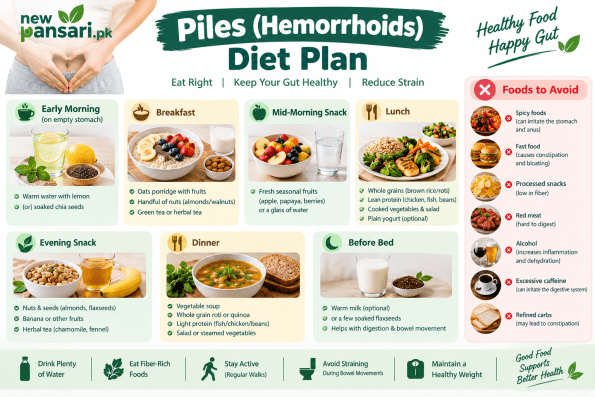
Diet plays an important supportive role in managing hemorrhoid symptoms, particularly when constipation is present.
Fiber-Rich Fruits
Apples, pears, oranges, berries, and other fruits can contribute dietary fiber.
Vegetables
Leafy greens, carrots, peas, broccoli, and other vegetables can help increase fiber intake.
Whole Grains
Oats, whole-grain bread, brown rice, and other whole grains can provide useful amounts of dietary fiber.
Legumes
Beans, lentils, and chickpeas are excellent sources of fiber.
Water and Fluids
Adequate fluid intake helps support softer stools, although individual fluid needs vary.
Increase fiber gradually because suddenly consuming very large amounts of fiber can cause bloating or gas.
Foods to Limit When You Have Piles
There is no universal “piles food” that every person must completely avoid. However, some dietary habits can worsen constipation or digestive discomfort.
Consider limiting:
- Highly processed foods
- Very low-fiber meals
- Excessive refined carbohydrates
- Large amounts of fried foods
- Foods that personally trigger digestive discomfort
- Excessive alcohol intake
The goal should be a balanced diet containing adequate fiber and fluids rather than unnecessary food restrictions.
Home Care and Natural Relief for Piles
Mild hemorrhoid symptoms often improve with conservative care.
Warm Sitz Bath
Sitting in comfortably warm water for a short period may help soothe irritation and discomfort.
Increase Fiber
Gradually increasing fiber can help produce softer stools and reduce straining.
Drink Enough Fluids
Adequate hydration supports normal bowel function.
Exercise Regularly
Walking and other moderate physical activities can support healthy bowel habits and help reduce constipation.
Avoid Straining
Try not to force bowel movements. Go when you naturally feel the need and avoid spending unnecessary time on the toilet.
Keep the Area Clean
Gentle hygiene can reduce irritation. Avoid aggressive rubbing or harsh fragranced products around the anal area.
Medical Treatment for Piles
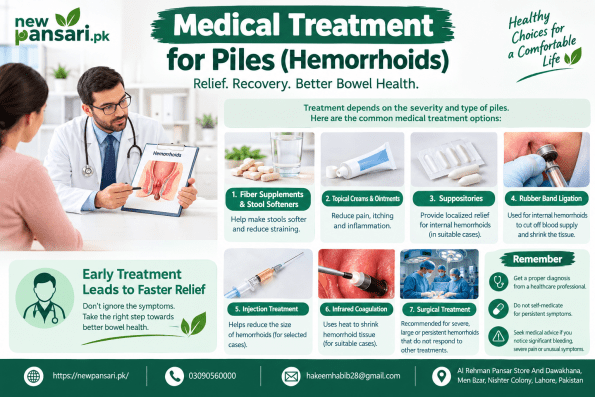
Treatment depends on the severity and type of hemorrhoids.
For mild symptoms, healthcare professionals may recommend dietary changes, increased fiber, fluids, and short-term topical treatments.
Depending on the condition, medical treatment can include:
- Fiber supplements or stool-softening measures
- Topical creams or ointments
- Suppositories for appropriate cases
- Office-based procedures
- Rubber band ligation
- Injection treatment
- Infrared or other coagulation procedures
- Surgical treatment for selected severe hemorrhoids
Persistent symptoms should be assessed rather than treated indefinitely at home.
When Should You See a Doctor?
You should seek medical advice if:
- Rectal bleeding is persistent or recurrent
- Bleeding is heavy
- You have severe anal pain
- A painful lump suddenly develops
- Symptoms do not improve with home care
- You experience unexplained weight loss
- Your bowel habits change significantly
- You have black or tarry stools
- You feel weak, dizzy, or faint with bleeding
Rectal bleeding can have several causes, including conditions unrelated to hemorrhoids. For this reason, new or unexplained bleeding should be evaluated appropriately.
Can Piles Be Prevented?
Some risk factors cannot be completely avoided, but healthy bowel habits may reduce the likelihood of developing or worsening hemorrhoids.
Important prevention strategies include:
- Eat enough fiber.
- Drink adequate fluids.
- Exercise regularly.
- Avoid unnecessary straining.
- Do not sit on the toilet for long periods.
- Treat persistent constipation appropriately.
- Maintain a healthy body weight.
- Avoid repeatedly delaying bowel movements.
These habits are particularly useful for people who frequently experience constipation.
Piles and Lifestyle
Lifestyle changes are often an important part of long-term hemorrhoid management.
A simple daily routine can include a fiber-rich breakfast, adequate fluids throughout the day, regular walking, and responding promptly to the natural urge to use the bathroom.
If your work involves prolonged sitting, taking regular movement breaks may also be beneficial.
Natural Herbs and Piles
Herbal products are sometimes traditionally used to support digestive health and regular bowel movements. However, herbs should not be presented as a guaranteed cure for hemorrhoids.
Some herbal preparations may also interact with medicines or cause digestive side effects. People who are pregnant, taking medications, or dealing with persistent bleeding should consult a healthcare professional before using herbal remedies.
The safest natural approach is usually to focus on fiber, hydration, physical activity, gentle hygiene, and avoiding straining.
Frequently Asked Questions About Piles
Are piles dangerous?
Most hemorrhoids are not dangerous and can often be managed with conservative measures. However, significant or unexplained rectal bleeding should be medically evaluated.
Can piles go away on their own?
Mild hemorrhoids may improve with changes such as increasing fiber, improving bowel habits, drinking adequate fluids, and avoiding straining.
What is the fastest way to relieve piles?
Relief depends on the cause and severity. Warm baths, avoiding straining, keeping stools soft, and appropriate over-the-counter treatments may help mild symptoms.
Can constipation cause piles?
Yes. Constipation can lead to hard stools and straining, which can increase pressure on the veins around the anus.
Is fiber good for piles?
Yes. Increasing dietary fiber can help produce softer, easier-to-pass stools and may reduce straining.
Can piles cause bleeding?
Yes. Internal hemorrhoids can cause bright-red rectal bleeding, particularly during bowel movements. However, not all rectal bleeding is caused by piles.
Can exercise help with piles?
Regular physical activity can help support healthy bowel function and reduce constipation, which may help reduce hemorrhoid symptoms.
Do piles require surgery?
Not always. Many cases improve with lifestyle changes and conservative treatment. Some persistent, prolapsed, or severe hemorrhoids may require a procedure or surgery.
Conclusion
Piles, or hemorrhoids, are a common condition involving swollen tissues and blood vessels around the anus and lower rectum. Constipation, straining, prolonged sitting, pregnancy, low dietary fiber, and aging can contribute to their development.
The foundation of piles management is maintaining healthy bowel habits. Eating fiber-rich foods, drinking adequate fluids, staying physically active, avoiding straining, and not spending excessive time on the toilet can all support better bowel health.
Mild symptoms may improve with home care, but persistent pain, recurrent bleeding, severe swelling, or unusual symptoms should be assessed by a healthcare professional. Proper diagnosis is especially important because rectal bleeding can have causes other than hemorrhoids.
Medical Disclaimer
This article is intended for general educational purposes and does not replace professional medical diagnosis or treatment. If you have persistent or unexplained rectal bleeding, severe pain, significant swelling, or other concerning symptoms, consult a qualified healthcare professional.