Parkinson’s disease is a progressive neurological disorder that primarily affects movement, but it can also influence sleep, mood, digestion, speech, thinking and other aspects of daily life. Symptoms often develop gradually and vary considerably from one person to another. Although there is currently no cure, appropriate medical treatment, physical activity, rehabilitation and healthy lifestyle habits can help many people manage symptoms and maintain quality of life.
What Is Parkinson’s Disease?

Parkinson’s disease (PD) is a progressive brain disorder associated with the loss or impairment of dopamine-producing nerve cells. Dopamine is an important chemical messenger involved in coordinating movement.
As dopamine-producing neurons become impaired, people may develop characteristic movement problems such as tremors, slow movement and muscle stiffness. Parkinson’s can also cause non-movement symptoms, including constipation, sleep problems, depression, anxiety and cognitive changes.
Parkinson’s is not simply a condition that causes shaking. Its effects can involve several systems of the body, and symptoms may change as the disease progresses.
Early Symptoms of Parkinson’s Disease
Early Parkinson’s symptoms can be subtle and may initially be mistaken for normal aging or another condition.
Common early signs can include:
- Tremor or shaking, particularly when a limb is resting
- Slowness of movement
- Muscle stiffness
- Smaller handwriting
- Reduced facial expression
- Softer speech
- Changes in walking or posture
- Reduced sense of smell
- Constipation
- Sleep disturbances
- Fatigue
- Depression or anxiety
Not everyone with Parkinson’s experiences tremor. In fact, symptoms can differ substantially between individuals.
Main Symptoms of Parkinson’s Disease
1. Tremor
A Parkinson’s tremor commonly occurs when a hand, arm or another body part is at rest. It may begin on one side of the body.

2. Bradykinesia
Bradykinesia means slowness of movement. Everyday activities such as getting dressed, walking, writing or getting out of a chair may gradually become slower.
3. Rigidity
Rigidity refers to stiffness or resistance when the muscles are moved. It can affect the arms, legs, neck or trunk.
4. Balance and Walking Problems
Some people develop difficulty with balance, turning, walking or maintaining posture. Later in the disease, these problems can increase the risk of falls.
5. Speech and Writing Changes
A person may develop softer speech or smaller handwriting. Changes in facial expression can also occur.
Non-Motor Symptoms
Parkinson’s can affect much more than movement. Non-motor symptoms may include:
- Constipation
- Sleep problems
- Depression
- Anxiety
- Fatigue
- Loss of smell
- Urinary symptoms
- Dizziness or low blood pressure
- Swallowing difficulties
- Cognitive changes
These symptoms can significantly affect quality of life and should be discussed with a healthcare professional.
What Causes Parkinson’s Disease?
The exact cause of Parkinson’s disease is not fully understood. Research suggests that a combination of genetic, environmental and other factors may contribute.
Scientists know that Parkinson’s involves the loss or dysfunction of dopamine-producing neurons, but why this process occurs in a particular person is often difficult to determine.
Genetic factors appear to play a role in a minority of cases, while environmental influences are also being investigated.
Having a risk factor does not mean that a person will definitely develop Parkinson’s.
Stages of Parkinson’s Disease
Parkinson’s progression is different for every individual. A commonly used clinical framework describes five broad stages:

Stage 1
Symptoms are usually mild and may affect one side of the body. A person can generally continue normal daily activities.
Stage 2
Symptoms become more noticeable and may affect both sides of the body. Stiffness, tremor and changes in posture may interfere more with daily activities.
Stage 3
Balance and movement problems become more significant. Falls may become more likely, although the person may still be relatively independent.
Stage 4
Symptoms can substantially interfere with daily activities. A person may need assistance with walking and everyday tasks.
Stage 5
Severe movement difficulties may require substantial assistance with daily activities and mobility.
These stages are a general framework rather than a precise prediction of what will happen to every person. Parkinson’s does not follow exactly the same progression in everyone.
How Is Parkinson’s Disease Diagnosed?
There is currently no single blood test, scan or laboratory test that independently confirms Parkinson’s disease.
Diagnosis is primarily clinical. A doctor—often a neurologist or movement-disorder specialist—reviews the person’s medical history and symptoms and performs a neurological examination.
Doctors may use tests such as MRI, blood tests or a dopamine transporter scan (DaTscan) when appropriate to help rule out other conditions or support the diagnosis.
Early diagnosis can be challenging because several other neurological conditions can produce similar symptoms.
Parkinson’s Disease Treatment
There is currently no cure for Parkinson’s disease, but several treatments can help control symptoms and improve daily functioning.

Medications
Medication is commonly used to manage movement symptoms. Levodopa is one of the main medications used for Parkinson’s disease, while other medicines may be prescribed depending on symptoms and individual needs.
Medication type, dose and timing should always be determined by a qualified healthcare professional.
Physical Therapy
Physical therapy can help address walking, balance, flexibility, strength and fall prevention.
Occupational Therapy
Occupational therapists can help people adapt everyday activities and their home environment to maintain independence and safety.
Speech Therapy
Speech-language therapy can assist with speech, voice and swallowing difficulties.
Advanced Treatments
For some people with Parkinson’s, advanced treatments such as surgical therapies may be considered when symptoms are not adequately controlled with medication. Treatment decisions depend on the individual patient and specialist assessment.
Exercise for Parkinson’s Disease
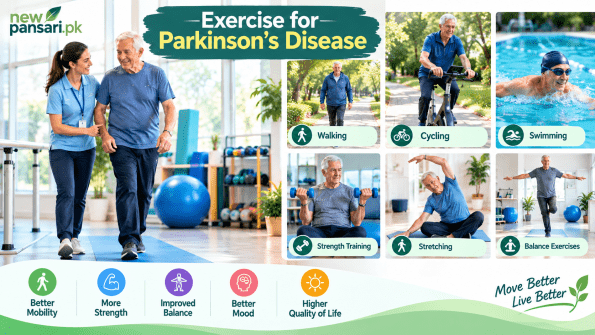
Regular physical activity is an important component of Parkinson’s management.
Depending on an individual’s ability and medical advice, exercise may include:
- Walking
- Cycling
- Swimming
- Strength training
- Stretching
- Balance exercises
- Dancing
- Tai chi
- Yoga
- Aerobic exercise
Exercise can help support mobility, flexibility, balance, strength, mood and overall physical function. Research also suggests that regular exercise may help slow functional decline and improve quality of life.
People with Parkinson’s should choose activities appropriate to their symptoms and abilities. Anyone with significant balance problems or other medical concerns should discuss an exercise plan with a healthcare professional or physical therapist.
Parkinson’s Disease Diet

There is no specific diet proven to cure Parkinson’s disease. However, a balanced diet can support general health and may help with some symptoms.
A healthy eating pattern can include:
- Fresh fruits
- Vegetables
- Whole grains
- Beans and legumes
- Nuts and seeds
- Adequate protein
- Healthy fats
- Plenty of fluids
- Fiber-rich foods
Adequate fiber and hydration can be particularly useful for people experiencing constipation.
Protein and Parkinson’s Medication
Some people taking levodopa may find that high-protein meals affect medication absorption. This does not mean that protein should be eliminated. Instead, medication timing and meal planning should be discussed with a doctor or dietitian.
Natural and Herbal Support for Parkinson’s
Many people search for herbs, supplements and natural remedies for Parkinson’s disease. It is important to distinguish between supporting general health and treating Parkinson’s itself.
At present, there is no vitamin, mineral, herb or dietary supplement proven to cure Parkinson’s disease or replace prescribed treatment. Some complementary approaches may be used alongside conventional care, but they should be discussed with a healthcare professional because supplements can interact with medications.
A healthy diet, appropriate exercise, adequate sleep and stress management are generally more established components of supportive care.
Sleep and Parkinson’s Disease
Sleep problems are common among people with Parkinson’s. Difficulties may include insomnia, frequent nighttime waking, restless sleep or daytime sleepiness.
Maintaining a regular sleep schedule, getting appropriate physical activity during the day and discussing persistent sleep problems with a healthcare professional can be helpful.
Some sleep problems may require specific medical evaluation and treatment.
Parkinson’s Disease and Mental Health

Depression, anxiety and apathy can occur alongside Parkinson’s disease. These symptoms are important medical concerns and should not be ignored.
Counseling, psychotherapy, medication when appropriate, physical activity, social support and specialist care may all have a role in improving emotional well-being.
When Should You See a Doctor?
Consult a healthcare professional if you or someone you know develops persistent symptoms such as:
- Unexplained tremor
- Increasing muscle stiffness
- Noticeably slower movements
- Changes in handwriting
- New walking or balance problems
- Persistent loss of smell
- Significant sleep or mood changes
- Repeated falls
Early medical evaluation can help determine whether symptoms are related to Parkinson’s disease or another condition.
Sudden weakness, sudden difficulty speaking, severe confusion or other abrupt neurological symptoms require urgent medical attention, because they may indicate a medical emergency such as stroke rather than typical Parkinson’s progression.
Can Parkinson’s Disease Be Prevented?
There is currently no guaranteed way to prevent Parkinson’s disease.
Maintaining overall health through regular physical activity, nutritious food, adequate sleep, avoidance of harmful exposures and appropriate medical care is beneficial for general well-being, but these measures should not be presented as a guaranteed way to prevent Parkinson’s.
Final Thoughts
Parkinson’s disease is a progressive neurological condition that can affect movement as well as sleep, mood, digestion, speech and thinking. Common movement symptoms include tremor, bradykinesia and rigidity, while non-motor symptoms can also have a major impact on daily life.
Although there is currently no cure, treatment can help manage symptoms. Medication, exercise, physical therapy, occupational therapy, speech therapy, nutrition and emotional support may all form part of an individualized care plan.
Anyone experiencing possible Parkinson’s symptoms should seek an appropriate medical evaluation rather than attempting to diagnose or treat the condition solely with herbs or supplements.
Medical Disclaimer: This article is for educational and informational purposes only. It is not a substitute for diagnosis, treatment or personalized medical advice from a qualified healthcare professional. Do not stop, change or replace Parkinson’s medication without speaking with your doctor.
FAQs About Parkinson’s Disease
1. What is Parkinson’s disease?
Parkinson’s disease is a progressive neurological disorder associated with impaired dopamine-producing neurons. It commonly causes movement symptoms such as tremor, stiffness and slowed movement.
2. What are the first signs of Parkinson’s?
Early signs may include tremor, slowed movement, stiffness, smaller handwriting, reduced sense of smell, softer speech, constipation and changes in sleep or mood.
3. Is Parkinson’s disease curable?
There is currently no cure for Parkinson’s disease. However, treatment can manage many symptoms and improve quality of life.
4. Can exercise help Parkinson’s disease?
Yes. Regular, appropriately designed exercise can improve mobility, flexibility, balance, strength, mood and other aspects of daily functioning.
5. What foods are good for Parkinson’s disease?
A balanced diet containing vegetables, fruits, whole grains, fiber-rich foods, adequate protein, healthy fats and sufficient fluids can support overall health. Individual dietary needs should be discussed with a healthcare professional.
6. Can herbs cure Parkinson’s disease?
No herb has been established as a cure for Parkinson’s disease. Herbal products should not replace prescribed treatment, and supplements should be discussed with a healthcare professional because of possible medication interactions.
7. How is Parkinson’s diagnosed?
Parkinson’s is primarily diagnosed through medical history, symptom assessment and a neurological examination. Additional tests may be used to rule out other conditions or support the diagnosis.
8. What is the difference between Parkinson’s and normal aging?
Some changes in movement can occur with aging, but persistent tremor, significant slowness, rigidity, balance problems or other progressive neurological symptoms should be medically evaluated.
9. Can Parkinson’s affect sleep?
Yes. Sleep disturbances are common in Parkinson’s and may include insomnia, disrupted sleep and excessive daytime sleepiness.
10. Which doctor treats Parkinson’s disease?
A neurologist, particularly a movement-disorder specialist, is commonly involved in Parkinson’s diagnosis and treatment. Other professionals such as physical, occupational and speech therapists may also contribute to care.