


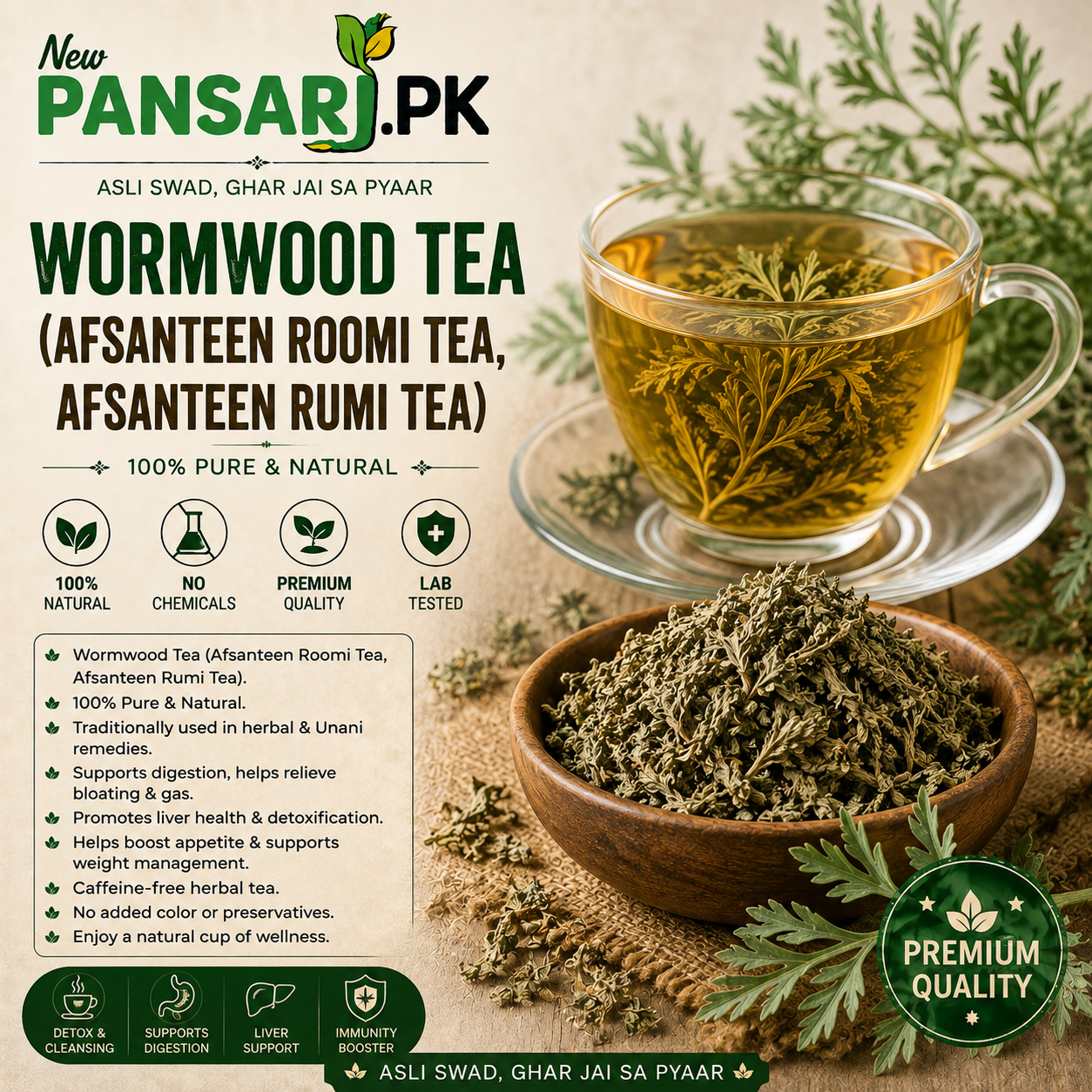
Wormwood Tea Afsateen Roomi , Afsanteen Rumi Tea 100% Pure


Price range: ₨750.00 through ₨1,050.00
24 sold in last 5 hours
Hurry! Over 13 people have this in their carts
Brand: New Pansari
- Supports digestive health and relieves bloating
- Helps in liver detoxification
- May aid in maintaining healthy appetite
- Contains natural anti-inflammatory properties
- Rich in antioxidants
- Supports overall wellness
- Traditionally used for metabolic balance
- Helps boost energy and vitality
... people are viewing this right now
Related Products

Licorice Tea || ملٹھی کی چائے || Glycyrrhiza glabra 100% Pure
₨500.00
- 100gm
- Prevents from bacterial and viral infections
- Treatment for many respiratory diseases
- Have anticancer properties
- Effective for acne
- Helps in weight loss
- Fights off baldness and improve hair health

Lemon Grass Tea (Lemun Grass Tea) Cymbopogon citratus 100% Pure
Price range: ₨400.00 through ₨750.00
-
Barbed Wire Grass Tea
- Cymbopogon Tea
-
لیمن گراس چائے
- Improves Brain Function
- Regulates the blood pressure
- Relieves Menstrual Pain
- Profitable for digestion
- Builds good health
- Detoxify the body
- Aids in relieving stomach disorders

Milk Thistle Tea (Ount Katara Ki Chai) 100% Pure Silybum marianum
Price range: ₨550.00 through ₨950.00
اونٹ کٹارا کی چاۓ
- Improving Blood Sugar Regulation
- Stimulating kidney cell re-growth
- Reduces risk of hard arteries
- Decreases the division of cancer cells
- Preventing Alzheimer’s disease
- Have anti-inflammatory abilities
- Increasing immunity

Saffron Tea Zafran Ki Chai 100% Pure Crocus sativus
Price range: ₨900.00 through ₨7,500.00
- Prevents from Eye disorders
- Diagnosis the ulcers
- Retards stomach issues
- Treatment for tumors
- Relieves for depression and stress
- May Have Cancer-Fighting Properties.
- May Reduce PMS Symptoms.
- Act as an Aphrodisiac
- Reduce Appetite and Aid Weight Loss

Dried Fenugreek Leaves Tea Methi Tea Trigonella foenum-graecum 100% Pure
Price range: ₨400.00 through ₨690.00
- Supports healthy digestion
- Helps regulate blood sugar levels
- Rich in antioxidants
- Aids in reducing inflammation
- Promotes healthy metabolism
- Supports heart health
- May help reduce bloating
- Boosts overall wellness

Moringa Leaves Tea (Suhanjna Tea) Moringa oleifera 100% Pure
Price range: ₨500.00 through ₨900.00
Moringa Leaf Tea
Moringa Oleifera Tea
سہانجنا کے پتوں کی چائے
- Decreases the water retention from the body
- Lowers and controls the blood pressure
- Improves the health of hair
- Cures the gastrointestinal issues
- Loss of fats
- Used for treatment of edema
- Treats the stomach complaints
- Fighting against bacterial diseases

Senna Leaves Tea Sanna Makki Tea 100% Pure Cassia angustifolia
Price range: ₨400.00 through ₨700.00
ثنامکی کی چائے
It treats infection of skin
It is good for constipation
It cure?hemorrhoids
It helps to get rid of weight
It is used to treat indigestion
It cure diabetes
It remove hair loss problem
It is a natural?highlighter

Chamomile Tea (Gul Baboona Ki Chai) Matricaria chamomilla 100% Pure
Price range: ₨800.00 through ₨1,200.00
گل بابونہ کی چاۓ
- Wound healing, including ulcers and sores
- Anxiety relief
- Good Skin Rashes And Scarring
- Making Skin Young
-
Reducing menstrual pain.
- Slowing or preventing osteoporosis.
- Reducing inflammation.

Fagonia Tea (Dhamasa Booti Chai) Fagonia indica 100% Pure
Price range: ₨450.00 through ₨850.00
- Supports overall detoxification
- Helps strengthen the immune system
- May aid in balancing blood sugar
- Known for anti-inflammatory properties
- Supports liver and kidney health
- Promotes healthy skin
- Helps reduce fatigue and boosts energy
- Traditionally used for general wellness and healing

Hibiscus Tea (Gul Gurhal Ki Chai) 100% Pure Hibiscus rosa-sinensis
Price range: ₨800.00 through ₨1,300.00
گل گڑھل کی چاۓ
Hibiscus rosa-sinensis
China Rose
- Promotes hair growth
- Conditions hair naturally
- Rich in antioxidants
- Supports heart health
- Aids digestion
- Lowers blood pressure
- Boosts immune system
- Supports weight management
- Enhances skin complexion
- Reduces inflammation
- Acts as a diuretic
- Used in traditional herbal remedies.

Blackberry Leaves Tea Rubus fruticosus 100% Pure
₨650.00
50gm
- Protects Against The Effect Of Free Radicals
- Aids In Reducing Hemorrhoids
- Treats mild inflammation of the mucous membrane
- Cures cold and flu
- Prevents against effect of free radicals
- Used for sore throat , sore gums
- Leaves are high in vitamin C
- Used for gastrointestinal inflammation

Natural Pomegranate Peels Tea Punica granatum 100% Pure
Price range: ₨400.00 through ₨750.00
انار کے چھلکوں کی چائے
- Treats cough ,mouth ulcer, jaundice
- Overcome insomnia
- Lowers the hypertension
- Prevents blood clot
- Fights for free radicals
- Acts as anti-oxidants
Reviews
There are no reviews yet.