




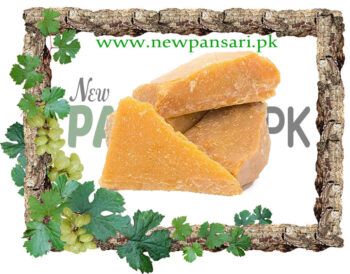
- Softens and moisturizes skin
- Heals cuts, burns, and rashes
- Strengthens hair and soothes scalp
- Used in natural candles, balms, and creams
Seed Brown | Kulthi Beej | Kulthi Dal | Horse Gram 100% Pure
Price range: ₨200.00 through ₨800.00
16 sold in last 7 hours
Hurry! Over 18 people have this in their carts
Brand: New Pansari
- Rich in protein
- supports digestive health
- aids weight management
- boosts immunity
- promotes bone health
- helps control blood sugar
- antioxidant-rich
... people are viewing this right now
Brown Kulthi Beej | Kulthi Dal | Horse Gram | Kulith | ہارس گرام
Brown Kulthi Beej, also known as Kulthi Dal, Kulith, Horse Gram, and Gahat, is a traditional pulse and highly nutritious legume widely consumed in South Asia. Botanically known as Macrotyloma uniflorum, horse gram is recognized for its small brown seeds, earthy flavor, and versatility in traditional cooking.
Kulthi Dal has been used for generations in Indian, Pakistani, and other South Asian cuisines. It can be prepared as dal, soup, curry, sprouts, or flour and is valued as a plant-based source of protein, dietary fiber, and other nutrients.
What Is Brown Kulthi Beej?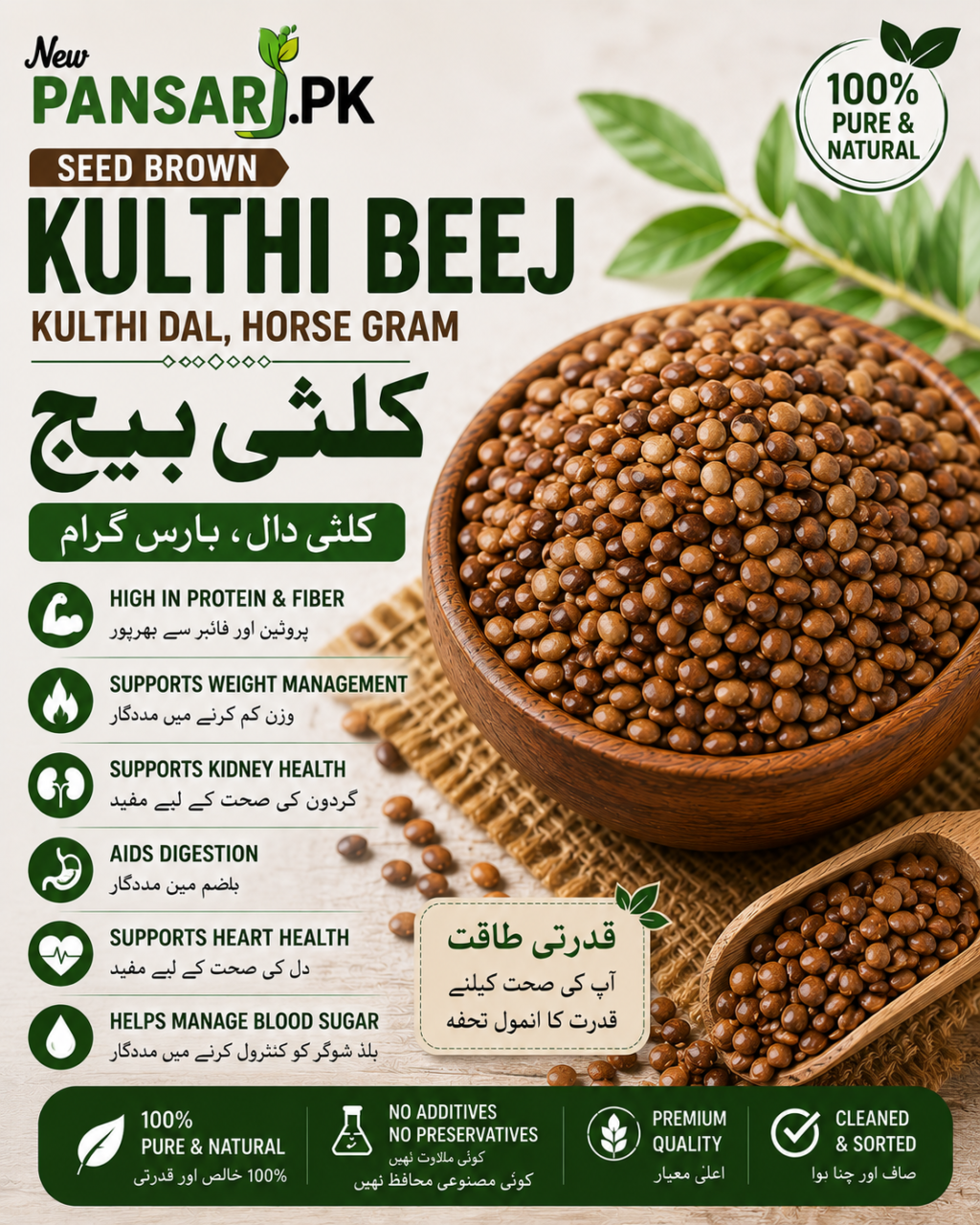
Brown Kulthi Beej is the dried seed of the horse gram plant (Macrotyloma uniflorum), a hardy legume that grows well in relatively dry conditions.
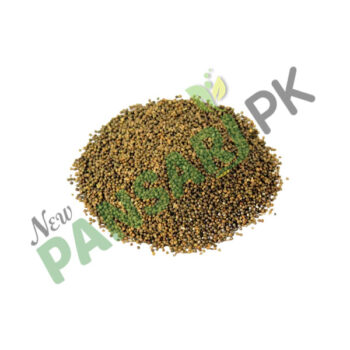
The seeds are generally small, oval to kidney-shaped, and brown, reddish-brown, or dark in color depending on the variety. Because the plant is naturally resilient and requires comparatively limited water, horse gram has traditionally been cultivated in regions with challenging agricultural conditions.
In South Asian markets, it may be sold under several names, including Kulthi, Kulith, Kulthi Dal, Gahat, Hurali, and Horse Gram.
Nutritional Value of Horse Gram
Horse gram is considered a nutrient-dense traditional pulse. Like other legumes, it can contribute plant-based protein and dietary fiber to the diet.
It also naturally contains carbohydrates and a variety of micronutrients. Its fiber and protein content can make it a satisfying addition to balanced meals.
The nutritional composition can vary according to variety, growing conditions, processing, and preparation method.
Traditional Uses of Kulthi Dal
1. Protein-Rich Food
Horse gram is a useful plant-based food for people looking to increase the variety of legumes in their diet. It can be combined with grains, vegetables, and other pulses to create balanced meals.
2. Source of Dietary Fiber
Kulthi Dal naturally contains dietary fiber. Including fiber-rich legumes as part of a varied diet can contribute to normal digestive function and overall dietary quality.
3. Traditional South Asian Cuisine
Horse gram is used in many traditional recipes. It can be cooked as a dal, added to soups and stews, ground into flour, or sprouted for use in different dishes.
4. Traditional Herbal Use
In traditional South Asian practices, horse gram has also been discussed as a food with various traditional wellness applications. However, traditional uses should not be confused with clinically proven treatments for medical conditions.
How to Cook Brown Kulthi Dal
Horse gram is a relatively firm legume, so it is commonly soaked before cooking.
A simple preparation method is:
- Rinse the Kulthi Beej thoroughly.
- Soak the seeds in clean water for several hours or overnight.
- Drain and rinse again.
- Cook until the beans become tender.
- Add spices, vegetables, or other ingredients according to your preferred recipe.
Pressure cooking can reduce cooking time and help soften the beans.
Sprouting is another traditional preparation method. If sprouting, maintain proper food hygiene and consume sprouts safely.
Kulthi Dal in Traditional Diets
Horse gram has historically been especially valued in rural and traditional diets because it is hardy, economical, and easy to store as a dried pulse.
Its earthy flavor pairs well with traditional spices such as cumin, coriander, turmeric, ginger, garlic, and chili. It can also be incorporated into modern vegetarian and high-protein meal plans.
Brown Kulthi Beej Botanical Information
Common Name: Horse Gram
Other Names: Kulthi, Kulith, Gahat, Hurali
Botanical Name: Macrotyloma uniflorum
Urdu Name: کلوتھی / کلتھی دال
Hindi Name: कुल्थी दाल
Product Type: Dried Pulse / Legume
Color: Brown
Category: Pulses & Natural Foods
Why Choose Brown Kulthi Beej?
Brown Kulthi Beej is a traditional, versatile pulse that can be used in everyday cooking. It is particularly useful for people who enjoy traditional South Asian foods and want to add more legumes and plant-based foods to their diet.
Its long shelf life when properly stored also makes dried horse gram a practical pantry staple.
Storage Instructions
Store Brown Kulthi Beej in a cool, dry place away from moisture, heat, and direct sunlight. Keep it in an airtight container after opening.
Protect the seeds from insects and humidity. Proper storage helps maintain freshness and quality for longer.
Important Dietary Information
Horse gram is a food rather than a medicine. Although it is nutritious, it should be consumed as part of a balanced and varied diet.
People with specific dietary restrictions, digestive sensitivities, or medical conditions should consider their individual nutritional needs and consult a qualified healthcare professional or registered dietitian when necessary.
Buy Brown Kulthi Beej Online in Pakistan
Brown Kulthi Beej, Kulthi Dal, and Horse Gram are excellent traditional legumes for adding variety to everyday meals. With their earthy taste, firm texture, and plant-based nutritional profile, they can be used in dal, soups, curries, sprouts, and other recipes.
If you are looking to buy Kulthi Dal or Horse Gram online in Pakistan, New Pansari offers traditional pulses, herbs, spices, and natural food products for convenient online shopping.
Frequently Asked Questions
What is Kulthi Dal?
Kulthi Dal is the dried seed of the horse gram plant, botanically known as Macrotyloma uniflorum.
What is Horse Gram called in Urdu?
It is commonly known as Kulthi (کلتھی) or Kulthi Dal (کلتھی دال) in South Asian markets.
Is Brown Kulthi Beej a pulse?
Yes. Horse gram is a legume and pulse commonly consumed as food.
How do you cook Horse Gram?
Rinse and soak the seeds, then cook them until tender. Pressure cooking is a convenient method for preparing horse gram.
Can Kulthi Dal be used in vegetarian meals?
Yes. Horse gram is a plant-based legume and can be used in a variety of vegetarian dishes.
What is the botanical name of Horse Gram?
The botanical name is Macrotyloma uniflorum.
| Quantity | 50GM, 100GM, 250GM |
|---|---|
| Form | Whole ( ثابت ), Grounded ( کٹی ہوی ), Powder ( پسا ہوا ) |
Related Products
Madras Leaf Flower Seeds (Tukhm-e-Kanucha) Phyllanthus Maderaspatensis Seeds (Kanocha) 100% Pure
Price range: ₨180.00 through ₨1,750.00
- Easy to grow and maintain
- Enhances garden aesthetics with vibrant flowers
- Attracts pollinators like bees and butterflies
- Improves air quality around home or garden
- Can be grown in pots, gardens, or balconies
Many Spiked Flacorita (Zarnab) Flacourtia jangomas 100% Pure
Price range: ₨120.00 through ₨900.00
- Improves digestion
- Boosts immunity
- Reduces inflammation
- Supports respiratory health
- Enhances metabolism
- Acts as a natural antioxidant
- Helps in detoxification
- Supports heart health
Almond Straw (Badam Ki Khali) 100% Natural Prunus dulcis
Price range: ₨100.00 through ₨800.00
- May help heart and brain health
- Supports skin, teeth, and bones
- Could help control blood sugar and weight
- May aid digestion
- Can improve soil when used as compost
- Sometimes used as animal feed
Babool Leaves (Barg-e-Babool) babul 100% Natural Acacia nilotica
Price range: ₨150.00 through ₨1,000.00
- Good for teeth and gums
- Heals wounds
- Clears skin
- Helps stomach problems
- Fights germs
- May lower sugar
Water Lily Flower (Gul-e-Neelofer, Kanwal Ka Phool) 100% Pure
Price range: ₨120.00 through ₨800.00
- Promotes relaxation
- reduces stress and anxiety
- supports skin health
- aids digestion
- boosts immunity
- improves sleep quality
- natural detoxifier
- enhances overall wellness
Asafoetida (Hing) 100% Natural
Price range: ₨400.00 through ₨7,200.00
- Good for digestion: Reduces gas, bloating, and constipation.
- Helps in cough & cold: Clears chest congestion and soothes throat.
- Reduces menstrual cramps: Eases pain during periods.
- Anti-inflammatory: Helps with joint pain.
- Fights bad breath: Acts as a natural mouth freshener.
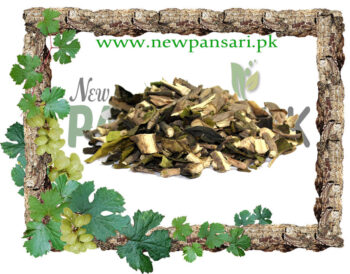
Vasaka Barg-e-Aroosa 100% Pure Adhatoda vasica
Price range: ₨60.00 through ₨400.00
- Supports respiratory health
- cough and cold
- eases asthma symptoms
- reduces inflammation
- boosts immunity
- promotes overall wellness
- natural detoxifier
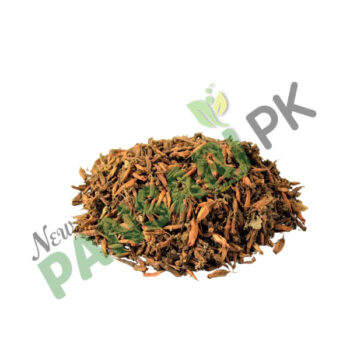
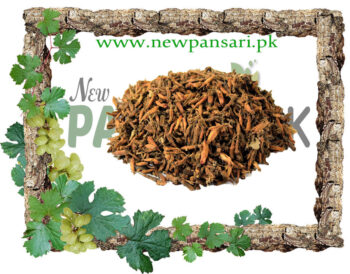
Axle Wood Flower (Gul-e-Dhawa) Anogeissus latifolia 100% Pure
Price range: ₨150.00 through ₨600.00
- Helps breathing – may ease cough and mild asthma.
- Aids digestion – can reduce bloating and stomach discomfort.
- Good for skin – soothes minor skin irritations.
- Relaxing aroma – used in incense or oils for stress relief.
- Anti-inflammatory – may reduce minor inflammation.


Acanthus Seeds (Tukhm-e-Utangan)
- Skin: Helps heal wounds, burns, and skin inflammation.
- Respiratory: Relieves cough and bronchitis.
- Digestion: Aids digestion and relieves constipation.
- Pain & Inflammation: Reduces joint pain and swelling.
- Reproductive Health: Can improve sexual health.
- Hair: Strengthens hair and improves scalp health.


Acacia Tree Bark (Chaal Kikar) babul bark 100% Pure Vachellia nilotica Acacia nilotica
Price range: ₨100.00 through ₨500.00
- Stops bleeding & heals wounds – due to its astringent properties.
- Helps digestion – useful for diarrhea and stomach issues.
- Good for gums and teeth – strengthens gums.
- Anti-inflammatory & antimicrobial – helps with skin infections.
- Industrial uses – used in tanning leather, making dyes, and as firewood.
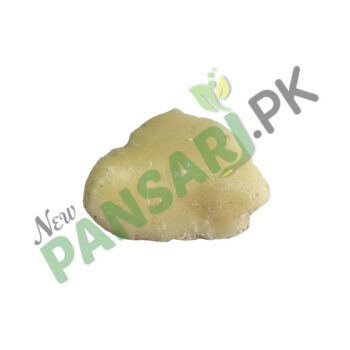
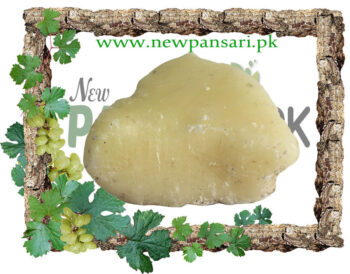
Reviews
There are no reviews yet.