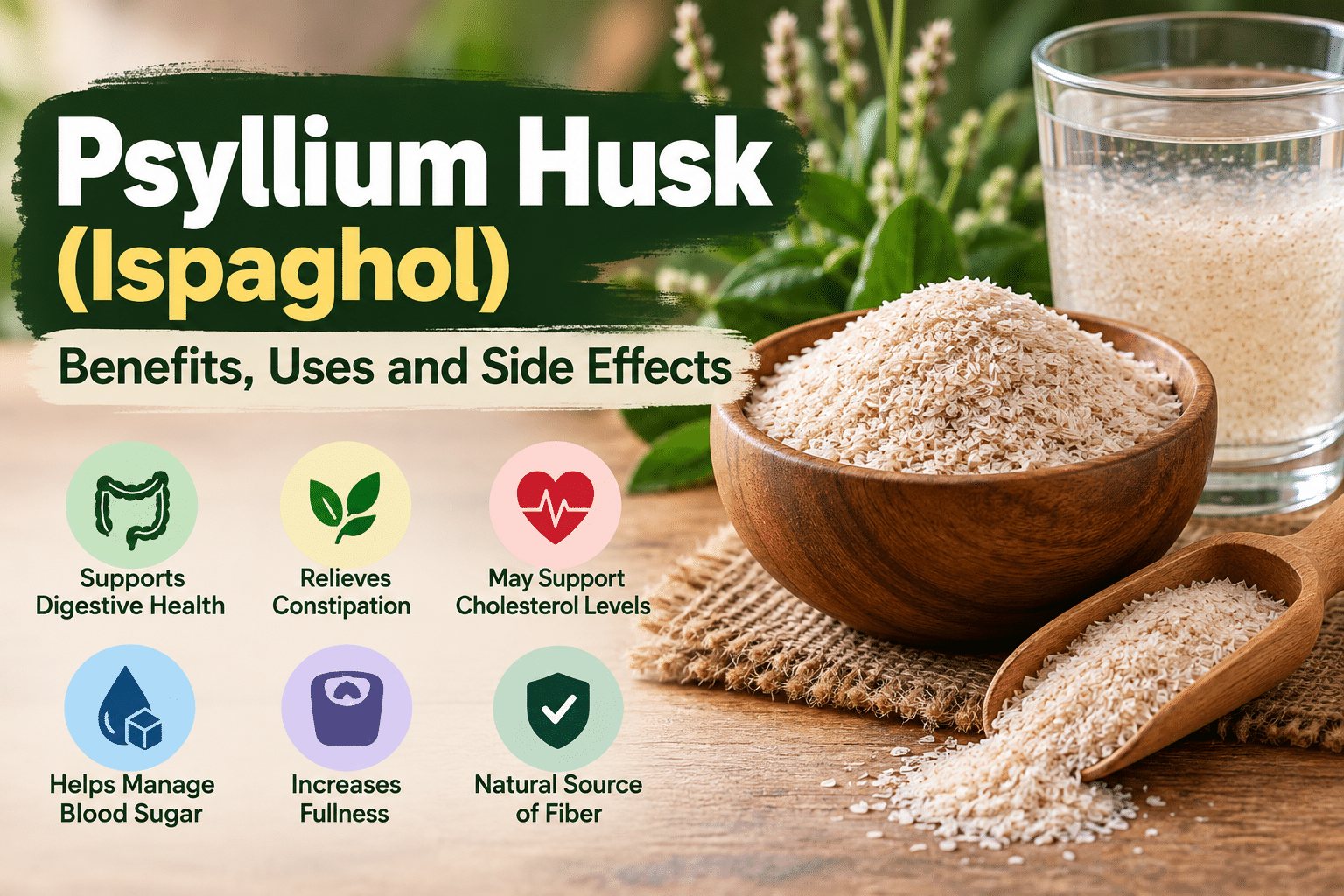
Psyllium husk, commonly known as Ispaghol in Pakistan and South Asia, is a natural source of soluble dietary fiber. It is widely used to support regular bowel movements, relieve occasional constipation, and increase daily fiber intake. Psyllium husk absorbs water and forms a gel-like substance that helps soften stool and makes it easier to pass.
Many people use Ispaghol as part of their daily digestive health routine. However, it is important to understand how it works, how to take it safely, and which precautions to follow.
In this guide, we explain the benefits of psyllium husk, its common uses, possible side effects, and answers to frequently asked questions.
What Is Psyllium Husk (Ispaghol)?
Psyllium husk is the outer covering of the seeds of Plantago ovata, a plant grown commercially in countries including India and Pakistan. Its husk is rich in soluble fiber, which absorbs water and forms a soft gel in the digestive tract.
Unlike stimulant laxatives, psyllium mainly works by increasing stool bulk and retaining moisture. This helps support normal bowel movements when used with adequate fluids.
Psyllium is available in several forms, including:
- Whole psyllium husk
- Psyllium husk powder
- Fiber supplement capsules
- Flavored fiber preparations
Pure psyllium husk can be mixed with water or another suitable liquid according to the product instructions. It may also be added to certain recipes to increase their fiber content.
8 Benefits of Psyllium Husk
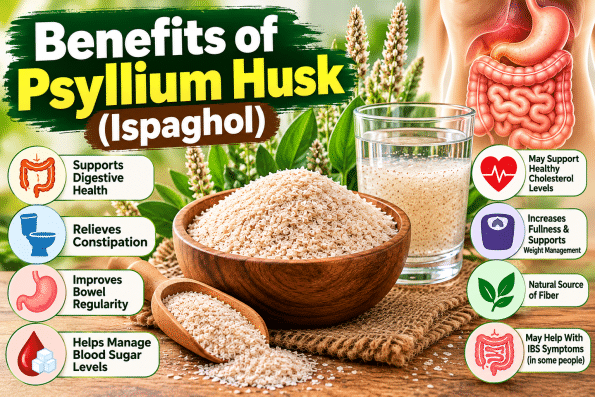
1. Supports Relief From Constipation
One of the best-established uses of psyllium husk is relieving occasional constipation. It absorbs water and increases stool bulk, helping make hard stool softer and easier to pass.
Regular bowel movements also depend on adequate fluid intake, a fiber-rich diet, physical activity, and individual health factors.
2. Helps Support Digestive Regularity
Psyllium can help people maintain more regular bowel movements by increasing the amount of water retained in stool. It may be useful for people whose usual diet does not provide enough fiber.
Increase fiber intake gradually to reduce the likelihood of gas and bloating.
3. May Help Manage Loose Stools
Psyllium absorbs water and can help make loose stool more formed in some circumstances. However, persistent diarrhea can have several causes, including infection and medication effects, and should not be treated with fiber alone without considering the underlying cause.
Seek medical advice if diarrhea is severe, persistent, or accompanied by blood or dehydration.
4. Supports Healthy Cholesterol Levels
Soluble fiber can help reduce the absorption of cholesterol in the digestive system. Clinical evidence suggests that psyllium may modestly lower LDL, often called bad cholesterol, when consumed regularly as part of an appropriate diet.
It is not a replacement for prescribed cholesterol medication or medical care.
5. May Support Blood Sugar Management
Psyllium forms a gel that can slow the digestion and absorption of carbohydrates. Research suggests that it may help improve blood glucose control in some people, particularly when combined with a balanced diet and appropriate diabetes treatment.
People taking insulin or other glucose-lowering medicines should discuss regular use with their healthcare professional.
6. May Help With Fullness and Weight Management
Fiber can increase feelings of fullness, which may help some people manage appetite and food intake. Psyllium may therefore support a balanced weight-management plan.
However, psyllium does not directly burn body fat, and taking it alone does not guarantee weight loss.
7. Helps Increase Daily Fiber Intake
Many people do not consume enough fiber from fruits, vegetables, whole grains, beans, and seeds. Psyllium provides a convenient way to increase soluble fiber intake.
Whole foods should remain an important part of a balanced diet because they provide vitamins, minerals, and other beneficial nutrients.
8. May Help Support Bowel Health in Some People With IBS
Some people with irritable bowel syndrome (IBS), especially those experiencing constipation or irregular stools, may benefit from soluble fiber such as psyllium.
Tolerance varies from person to person. Start cautiously and seek professional guidance if fiber worsens pain, bloating, or other symptoms.
Common Uses of Psyllium Husk
Psyllium husk is commonly used for the following purposes:
- Supporting relief from occasional constipation
- Increasing dietary fiber intake
- Supporting regular bowel movements
- Helping manage certain types of loose stool
- Supporting modest improvements in LDL cholesterol
- Complementing a balanced diet for blood sugar management
- Adding fiber to selected foods and recipes
The appropriate use depends on the individual’s health, the product formulation, and any medicines being taken.
How to Take Psyllium Husk Safely
Always follow the directions on the product label or the instructions provided by your healthcare professional. The correct amount varies by product and intended use.
General safety guidance includes:
- Mix the recommended amount into at least one full glass of liquid, approximately 240 ml, unless the product label specifies otherwise.
- Stir well and drink promptly before the mixture becomes too thick.
- Drink adequate fluids throughout the day, unless a healthcare professional has advised you to restrict fluids.
- If you are new to fiber supplements, increase your fiber intake gradually as directed.
- Do not swallow dry psyllium husk powder.
- Do not inhale the powder while preparing it.
Psyllium usually takes around two to three days to improve constipation, although the response can vary. If constipation persists or you need a laxative for longer than the product instructions recommend, consult a healthcare professional.
Possible Side Effects of Psyllium Husk
Psyllium is generally well tolerated when used correctly, but it can cause side effects, particularly when the amount is increased too quickly or insufficient liquid is consumed.
Possible side effects include:
- Gas
- Bloating
- Mild abdominal discomfort
- Stomach cramps
- Changes in stool consistency
- Nausea in some people
Taking psyllium without enough liquid can cause it to swell and obstruct the throat or digestive tract. This can be dangerous.
Stop taking it and seek urgent medical attention if you experience difficulty breathing or swallowing, severe abdominal pain, or signs of an allergic reaction.
Who Should Avoid Psyllium Husk or Seek Medical Advice?
Psyllium may not be suitable for everyone. Speak to a healthcare professional before using it if you:
- Have difficulty swallowing.
- Have a suspected or known intestinal blockage.
- Have unexplained abdominal pain, nausea, or vomiting.
- Have rectal bleeding or a persistent change in bowel habits.
- Have a history of significant intestinal disease.
- Have diabetes, kidney disease, or a condition requiring fluid restriction.
- Are pregnant or breastfeeding and are unsure which product is suitable.
- Take prescription medicines or multiple supplements.
Psyllium can affect the absorption of certain medicines. Ask a pharmacist about appropriate spacing between doses; the required interval depends on the medication.
Is Psyllium Husk Good for Weight Loss?
Psyllium may help with appetite management because soluble fiber can increase fullness. It may make it easier for some people to follow a balanced eating plan, but evidence does not support treating it as a stand-alone weight-loss solution.
For sustainable weight management, focus on balanced meals, appropriate portions, regular physical activity, sufficient sleep, and professional advice when needed.
Is Psyllium Husk Safe for Daily Use?
Some people can use psyllium daily to increase their fiber intake or manage constipation, provided it is suitable for their health and used according to the product instructions.
Long-term use should be discussed with a healthcare professional if symptoms continue, you take regular medicines, or you have an underlying medical condition. Dietary sources of fiber should also be included in your routine.
Frequently Asked Questions
What is Ispaghol called in English?
Ispaghol is commonly called psyllium husk or ispaghula husk in English.
What is the main benefit of psyllium husk?
Its best-established use is supporting relief from occasional constipation by absorbing water and making stool softer and bulkier.
Can Ispaghol help with constipation?
Yes. Psyllium can help relieve occasional constipation when taken with adequate liquid and according to the product instructions.
Can psyllium husk help lower cholesterol?
Evidence suggests that regular psyllium intake can modestly lower LDL cholesterol as part of an appropriate dietary and medical plan.
Does psyllium husk help with weight loss?
It may increase fullness and support appetite management, but it does not directly burn fat or replace a balanced diet and regular activity.
What are the side effects of Ispaghol?
Common side effects include gas, bloating, cramps, and abdominal discomfort. Taking it without enough liquid can cause a serious blockage.
Can I take psyllium husk every day?
Daily use may be appropriate for some people. Follow the product instructions and consult a healthcare professional if you need it regularly or take medicines.
How much water should I drink with psyllium husk?
A common instruction for psyllium powder is to mix each dose with at least 240 ml of liquid. Follow the directions for your specific product and maintain adequate hydration.
Conclusion
Psyllium husk (Ispaghol) is a useful source of soluble fiber that can support bowel regularity, help relieve occasional constipation, and modestly improve LDL cholesterol in some people. It may also support fullness and blood sugar management as part of a broader health plan.
For safe use, follow the recommended product directions, take each dose with sufficient liquid, and be aware of possible side effects and medicine interactions. Psyllium is not a cure for every digestive problem, and persistent symptoms deserve medical attention.
Choose a clearly labeled product from a reliable supplier and make fiber-rich foods an important part of your everyday diet.
Health disclaimer: This article is for general educational purposes and is not a substitute for individualized medical advice. Consult a qualified healthcare professional if you have an underlying medical condition, take regular medication, or experience persistent digestive symptoms.