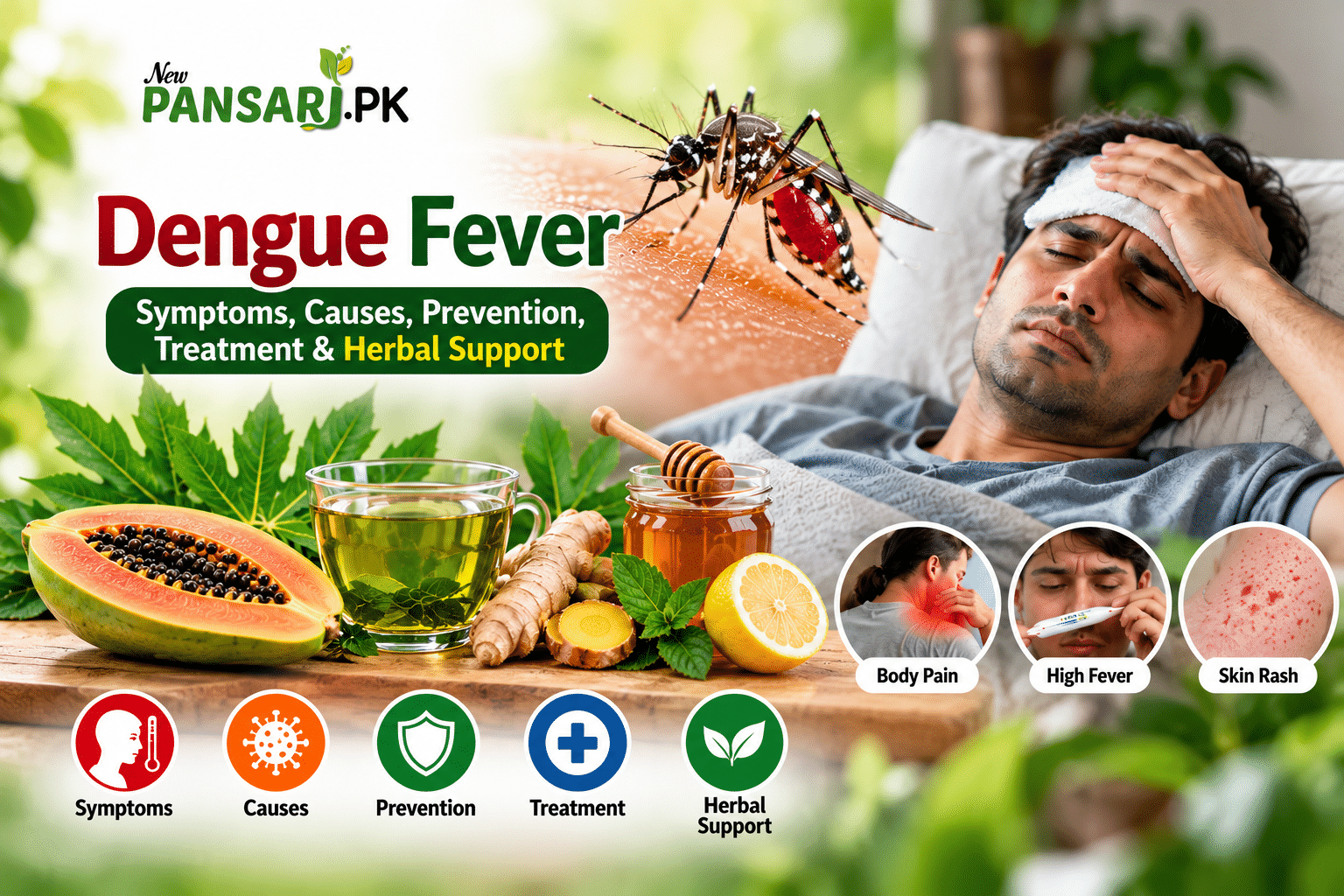
Dengue fever is a mosquito-borne viral infection that can range from a mild illness to a potentially life-threatening condition known as severe dengue. It is particularly important in tropical and subtropical regions, including Pakistan, where dengue outbreaks can occur seasonally. The infection is transmitted mainly through the bite of infected Aedes mosquitoes, which are commonly active during the daytime.
Understanding the symptoms of dengue, warning signs, prevention methods, treatment options, diet, and the role of herbal support can help people respond appropriately if infection is suspected.
Important: Herbal remedies should not be considered a cure for dengue or a substitute for medical care. Anyone with suspected dengue should seek medical advice, particularly if warning signs develop.

What Is Dengue Fever?
Dengue is an infection caused by the dengue virus (DENV). There are four major dengue virus serotypes. A person can become infected more than once, and a subsequent infection can carry a higher risk of severe dengue.
Many people infected with dengue have no symptoms or develop only mild illness. When symptoms occur, they commonly begin around 4–10 days after infection and usually last approximately 2–7 days. Most people recover within one to two weeks, although tiredness can continue for several weeks after recovery.
How Does Dengue Spread?
Dengue is primarily spread when an infected Aedes mosquito bites a person. The mosquito becomes infected after feeding on someone carrying the virus and can subsequently transmit the virus to other people.
Aedes mosquitoes often live close to human homes and can breed in relatively small amounts of standing water. Water collected in containers, discarded items, plant pots, tyres and other objects can provide breeding sites.
Because these mosquitoes can be active during the day, protection should not be limited to nighttime.
Common Symptoms of Dengue Fever
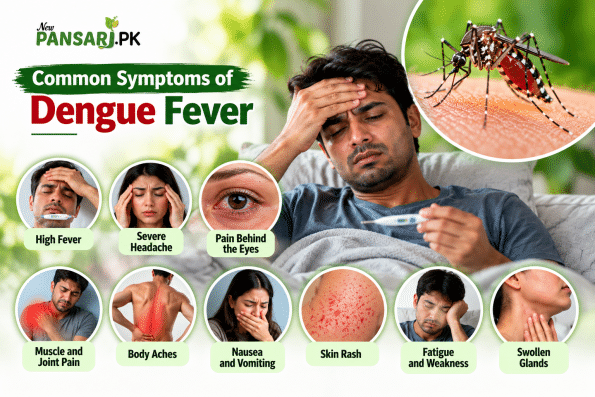
Dengue symptoms can vary from person to person. Common symptoms include:
- High fever
- Severe headache
- Pain behind the eyes
- Muscle and joint pain
- Bone or body aches
- Nausea
- Vomiting
- Skin rash
- Swollen glands
- Weakness and fatigue
A high fever accompanied by several of these symptoms can be a reason to contact a healthcare professional and discuss whether dengue testing is appropriate.
Early Symptoms of Dengue
The early stage of dengue can sometimes look similar to influenza or other viral infections. Fever, headache, body aches and nausea are common.
Because symptoms can overlap with other illnesses, it is not possible to reliably diagnose dengue based on symptoms alone. A healthcare professional may recommend blood testing depending on the stage of illness and local circumstances.
If you live in or have recently travelled to an area where dengue is circulating and develop a high fever or other compatible symptoms, seek medical advice.
Dengue Warning Signs
One of the most important things to understand about dengue is that a reduction in fever does not always mean the person is recovering.
Warning signs of severe dengue can appear around the time the fever goes away, often during the critical phase of illness. These include:
- Severe abdominal pain or tenderness
- Persistent or repeated vomiting
- Bleeding from the nose or gums
- Blood in vomit or stool
- Rapid breathing
- Extreme tiredness or restlessness
- Pale or cold skin
- Severe weakness
- Excessive thirst
These symptoms require immediate medical attention. Severe dengue can progress quickly and may cause shock, severe bleeding or organ impairment.
Dengue Diagnosis
Dengue cannot be confirmed simply by looking at symptoms. Healthcare professionals may use blood tests to detect evidence of dengue infection.
The appropriate test can depend on how many days have passed since symptoms started. WHO notes that laboratory and point-of-care diagnostic methods include molecular tests, antigen testing and antibody-based tests.
If you suspect dengue, tell your healthcare provider when your fever started and mention any recent travel or exposure to areas where dengue is common.
Dengue Fever Treatment
There is currently no specific antiviral medicine that cures dengue infection. Treatment focuses on supportive care, maintaining hydration, controlling fever and pain safely, monitoring for warning signs, and obtaining hospital care when necessary.
For people with mild dengue, healthcare professionals commonly recommend:
- Adequate rest
- Plenty of fluids
- Electrolyte-containing drinks when appropriate
- Medical monitoring
- Paracetamol/acetaminophen for fever or pain when appropriate
Aspirin and ibuprofen should be avoided unless a healthcare professional specifically advises otherwise, because these medicines can increase bleeding risk in dengue.
Never delay medical care in favor of an herbal remedy.
What to Eat During Dengue?
Maintaining hydration is particularly important during dengue. Suitable fluids may include water and drinks containing electrolytes, depending on individual needs and medical advice.
When appetite is reduced, people may find smaller, easy-to-digest meals more comfortable. A balanced recovery diet can include foods such as:
- Soups and broths
- Rice and other easily tolerated carbohydrates
- Fresh fruits
- Cooked vegetables
- Yogurt or other suitable protein sources
- Eggs, chicken or other nutritious foods according to individual tolerance
The goal is not a special “dengue cure diet,” but adequate fluids and nutrition while the body recovers.
Herbal Support for Dengue
Herbal medicine has a long history in South Asian traditional wellness practices. However, dengue is a viral infection that can become serious, so herbal products should be approached carefully.
There is currently no herbal remedy proven to eliminate the dengue virus or replace standard medical management.
Some plants have been investigated scientifically, but research findings should not be confused with proof of a cure.
Papaya Leaf and Dengue
Papaya leaf (Carica papaya) is one of the most widely discussed traditional remedies associated with dengue.
Research has investigated whether papaya leaf preparations may affect platelet counts in people with dengue. A systematic review and meta-analysis found that some studies reported increased platelet counts among people receiving Carica papaya preparations. However, the researchers concluded that the available evidence was insufficient to establish its clinical role in dengue.
This distinction is important.
An increase in platelet count does not automatically mean that a treatment cures dengue or prevents severe dengue. More robust clinical evidence is needed.
Therefore, papaya leaf products should never be used to delay medical assessment or replace appropriate monitoring.
Other Herbal Remedies
Other herbs, teas and traditional preparations are sometimes promoted online for dengue. Claims that a particular herb can “kill dengue virus,” “increase platelets immediately,” or “cure dengue naturally” should be treated with caution unless supported by high-quality clinical evidence.
Some herbal products can also interact with medicines or may not be appropriate for people with certain health conditions.
If someone with dengue wants to use an herbal product, it is sensible to discuss it with a qualified healthcare professional, especially if the person is taking medication, is pregnant, is elderly, or has another medical condition.
How to Prevent Dengue
Prevention is one of the most effective ways to reduce dengue risk.
1. Prevent Mosquito Bites
Use appropriate mosquito repellent, wear clothing that covers the arms and legs, use window screens, and consider mosquito nets when sleeping during the daytime. WHO recommends measures such as repellents containing ingredients including DEET, picaridin/icaridin or IR3535.
2. Remove Standing Water
Regularly inspect your home and surrounding areas for containers that can collect water.
Empty and clean:
- Plant pots and trays
- Buckets
- Old tyres
- Bottles and cans
- Water containers
- Other objects capable of holding rainwater
Water storage containers should be covered appropriately.
3. Protect a Person Who Has Dengue
A person infected with dengue can contribute to transmission if mosquitoes bite them and subsequently bite other people. During illness, reducing mosquito exposure helps protect the patient and household members.
Dengue Recovery
Most people with uncomplicated dengue recover within approximately one to two weeks. However, weakness and tiredness can remain for several weeks.
During recovery:
- Continue drinking adequate fluids.
- Eat nutritious meals as tolerated.
- Get sufficient rest.
- Follow your healthcare provider’s recommendations.
- Return for medical evaluation if symptoms worsen or new warning signs appear.
Do not assume that feeling better after the fever disappears means the illness is completely over.
When Should You See a Doctor?
Seek medical advice if you develop symptoms that could indicate dengue, especially if you live in an area where dengue is circulating.
Seek urgent medical care if you develop severe abdominal pain, persistent vomiting, bleeding, blood in vomit or stool, rapid breathing, extreme weakness, restlessness, pale/cold skin or other severe symptoms.
Children, older adults, pregnant people and individuals with certain underlying conditions may require particularly careful medical assessment.
Frequently Asked Questions
Can dengue be cured with herbal remedies?
There is no herbal remedy currently established as a cure for dengue. Herbal products should not replace medical evaluation, hydration, monitoring or hospital treatment when required.
Is papaya leaf good for dengue?
Papaya leaf has been studied for its possible effect on platelet counts, but current evidence is not strong enough to establish it as a treatment for dengue.
Can I take ibuprofen during dengue?
WHO and CDC guidance recommends avoiding ibuprofen and aspirin because they can increase the risk of bleeding. Paracetamol/acetaminophen is generally used for fever and pain when appropriate.
Can dengue become dangerous after the fever goes down?
Yes. Warning signs can develop around the time the fever decreases. This is why monitoring remains important even when the temperature begins to return to normal.
How can I protect my family from dengue?
Reduce mosquito breeding sites, remove standing water, use appropriate mosquito repellents, install screens where possible and protect people who are sick from mosquito bites.
Conclusion
Dengue fever is a viral mosquito-borne infection that can range from mild illness to severe, potentially life-threatening disease. Recognizing symptoms early, getting appropriate medical assessment, staying hydrated, resting and watching carefully for warning signs are essential parts of dengue care.
Herbal remedies such as papaya leaf have attracted scientific interest, particularly regarding platelet counts, but current evidence does not establish herbal remedies as a cure for dengue.
For a herbal website such as Newpansari.pk, the safest and most useful approach is to present herbal ingredients as traditional or supportive wellness options, while clearly directing readers toward qualified medical care for suspected or confirmed dengue.
Medical Disclaimer: This article is for educational purposes only and does not replace diagnosis, treatment or advice from a qualified healthcare professional. If dengue is suspected or warning signs develop, seek medical care promptly.