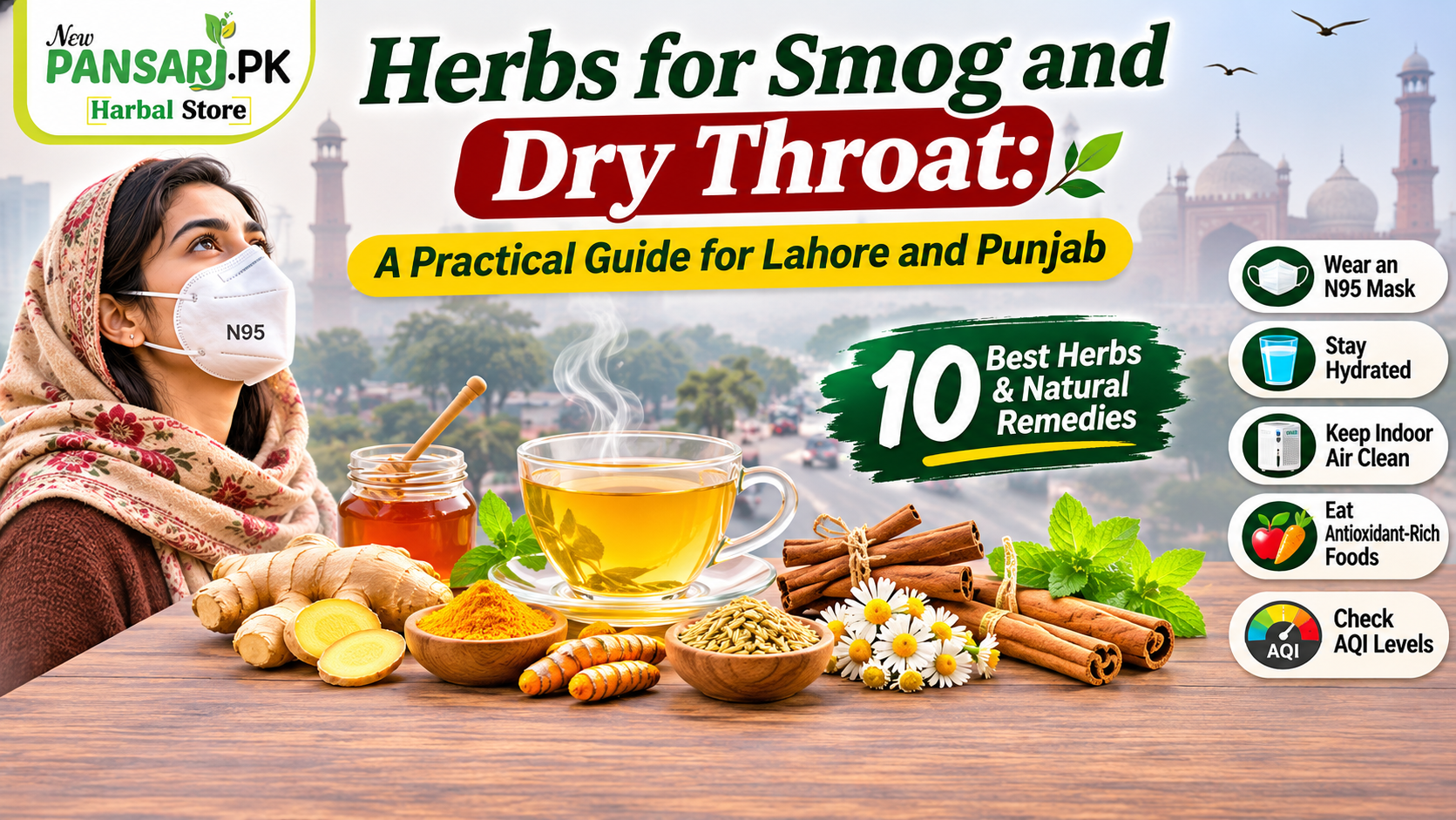
Every year, as winter settles in, a grey haze hangs over Lahore and much of Punjab. Mornings feel heavy, eyes sting, and many people wake up with a dry, scratchy throat or a cough that will not go away. Pharmacies get busier, and so do pansari shops, because many families turn to familiar desi herbs for comfort.
This guide explains what smog does to your throat, which traditional herbs people use to soothe dryness and irritation, how to prepare them at home, and, just as importantly, what herbs cannot do. We want you to enjoy the comfort of desi remedies while also staying safe.
What Smog Does to Your Throat

Smog is a mix of fine dust, smoke and other pollutants that build up when cold, still winter air traps them close to the ground. When you breathe it in, tiny particles can irritate the lining of your nose, throat and airways. Dry winter air makes this worse by drying out the moist surface that normally protects your throat.
Common complaints during smog season include:
- A dry, scratchy or sore throat
- Frequent dry cough
- Burning or watery eyes
- A blocked or irritated nose
- Headaches and tiredness
People with asthma, allergies, heart conditions, older adults, pregnant women and children are generally more sensitive to polluted air.
An Honest Note First: Herbs Soothe, They Do Not Shield
This is the most important point in the whole article. Herbs and honey are traditionally used to soothe an irritated throat and to keep you warm and hydrated. They do not clean your lungs, remove pollution from your body or protect you from smog. No kada or herb can replace the basics of avoiding polluted air.
If you remember one thing, remember this: use herbs for comfort, and use proper protection for safety. We cover both below.
Traditional Herbs for a Dry, Irritated Throat
The following ingredients are easy to find at any pansari and have a long history of use in South Asian home care. They are traditional remedies, and individual results vary.
1. Mulethi (Licorice Root)
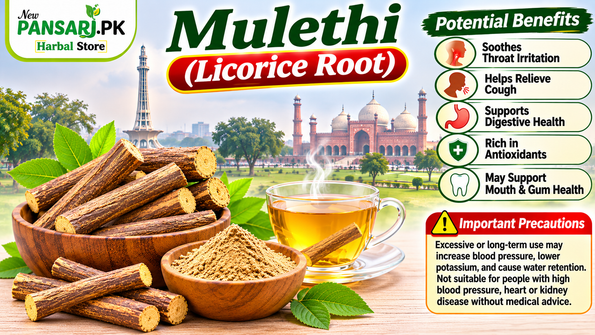
Mulethi is one of the best-known throat-soothing herbs in desi households. Its naturally sweet, slightly earthy taste is why people often chew a small piece or add it to tea. It is traditionally used for dry cough and scratchy throats.
How to use: Simmer a small piece of mulethi in water for 5 to 7 minutes and sip the warm liquid.
Be careful: Regular or heavy use of licorice can raise blood pressure and lower potassium in some people. If you have high blood pressure, heart or kidney problems, or you are pregnant, ask your doctor before using it, and avoid taking it for long periods.
2. Adrak (Ginger)
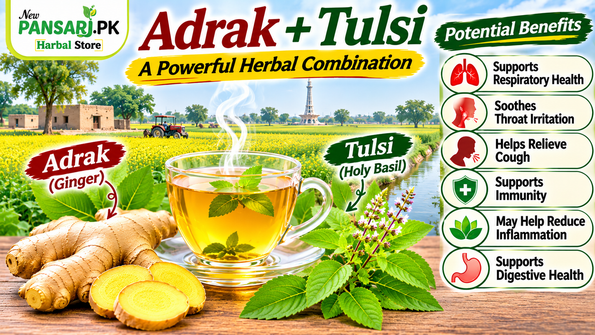
Ginger gives a warming feeling and is a staple of winter chai and kada. Many people find warm ginger drinks comforting when the throat feels dry and the weather is cold.
How to use: Slice fresh ginger and simmer it in water for a few minutes, then add a little honey once the drink has cooled slightly.
3. Tulsi (Holy Basil)
Tulsi leaves are widely used in traditional herbal teas. Their aroma is refreshing, and a warm tulsi infusion is a gentle, caffeine-free option for evenings.
How to use: Steep a few fresh or dried leaves in hot water for 5 minutes.
4. Saunf (Fennel Seeds)
Saunf has a mild sweet taste, and warm saunf tea is a common household drink. It is also pleasant for those who find stronger herbs too sharp.
How to use: Lightly crush a teaspoon of saunf and steep it in hot water for 8 to 10 minutes.

5. Ajwain (Carom Seeds)
Ajwain is commonly used in Pakistani kitchens, and its strong aroma makes it a popular choice for steam inhalation when the nose feels blocked.
How to use (warm drink): Boil half a teaspoon in a cup of water for a few minutes, strain and sip.
6. Dalchini (Cinnamon) and Ilaichi (Cardamom)
These two aromatic spices add flavour and warmth to kada. Cinnamon and cardamom make herbal drinks more enjoyable, which makes it easier to drink enough warm fluids through the day.
7. Haldi (Turmeric)

Haldi doodh is a classic winter drink in Punjab. A cup of warm turmeric milk before bed is a comforting routine for many families.
8. Pudina (Mint)
Fresh mint tea feels cooling and refreshing, and its aroma can make breathing feel easier when the nose is blocked.
9. Shahad (Honey)
Honey is a traditional throat soother, and research suggests it can help ease cough in some cases. Use pure honey from a source you trust. Never give honey to babies under 12 months.
4 Simple Recipes for Smog Season
Recipe 1: Desi Smog-Season Kada
Ingredients: 1 small piece fresh ginger, 4 to 5 tulsi leaves, 2 crushed black peppercorns, a small stick of cinnamon, 2 cups water, honey to taste.
Method: Boil everything except honey for 8 to 10 minutes. Strain, let it cool a little, then stir in honey. Drink warm, one cup in the evening.
Recipe 2: Mulethi and Saunf Tea
Ingredients: A small piece of mulethi, 1 teaspoon saunf, 1.5 cups water.
Method: Simmer for 5 to 7 minutes, strain and sip slowly while warm. Do not use this every day for long periods.
Recipe 3: Haldi Doodh
Ingredients: 1 cup warm milk, ½ teaspoon turmeric powder, a pinch of black pepper, honey or gur to taste.
Method: Heat the milk with turmeric until hot, not boiling hard. Add the pepper, let it cool slightly and sweeten. Enjoy before bed.
Recipe 4: Ajwain Steam (With Care)
Method: Add half a teaspoon of ajwain to a bowl of hot water and breathe the gentle steam from a safe distance for a few minutes. Keep your face well away from the hot water to avoid burns.
Safety: Do not use steam for small children, and never leave a bowl of very hot water where a child can reach it.
A Simple Warm Salt-Water Gargle
A gargle is one of the easiest ways to ease an irritated throat. Mix a quarter teaspoon of salt in a glass of warm water, gargle for about 30 seconds, and spit it out. Repeat a few times a day. It costs almost nothing and many doctors suggest it for a sore throat.
What Actually Protects You During Smog
Herbs help you feel better, but these steps help you stay safer:
- Check the air quality. Look at a reliable AQI source before going out, and limit outdoor time on the worst days.
- Wear a well-fitting mask. Simple cloth or surgical masks do little against fine particles. A properly fitted N95 or similar respirator offers better protection.
- Go outside later in the morning when possible. Pollution is often heavier early in the morning and at night in winter.
- Keep windows closed on bad days, and consider an air purifier for the room where you sleep if it is affordable.
- Avoid outdoor exercise when pollution is high.
- Drink plenty of warm water. Staying hydrated keeps the throat moist.
- Avoid smoking and burning waste, which add to indoor and outdoor pollution.
- Use a humidifier or a bowl of water in a dry room to ease dry air.
A Sample Daily Routine
- Morning: A glass of warm water. Check the AQI before heading out, and wear a mask if the air is bad.
- Midday: A cup of saunf or tulsi tea to keep your throat moist.
- Evening: Smog-season kada with ginger, tulsi and honey. Gargle with warm salt water after coming home.
- Night: Haldi doodh, and a bowl of water in the room to reduce dry air.
Who Should Be Careful With Herbs?
- People on regular medicines: Some herbs can interact with medicines, especially for blood pressure, diabetes or blood thinning.
- People with diabetes: Honey and gur are still sugars. Talk to your doctor about quantities.
- Pregnant or breastfeeding women: Always check before using herbs like mulethi or strong spice mixtures.
- Anyone with allergies: Stop using any ingredient that causes itching, rash or discomfort.
Frequently Asked Questions
Can herbs remove smog from my lungs? No. There is no herb that detoxifies the lungs of pollution. Herbs may soothe the throat, but protection means reducing your exposure to polluted air.
How many cups of kada can I drink in a day? One cup a day is a sensible amount for most healthy adults. Too much of any strong herb or spice can upset the stomach.
Is mulethi safe for everyone? No. People with high blood pressure, heart or kidney conditions, and pregnant women should avoid it or ask a doctor first.
Can children drink kada? Mild options such as lightly brewed saunf water with a little honey (only for children over one year) may be used, but please ask your paediatrician first.
Do masks really help? A well-fitted N95 type respirator is far better than a loose cloth mask at filtering fine particles. Fit matters as much as the type.
Final Thoughts
Smog season is hard on all of us in Lahore and across Punjab, and it is natural to look for comfort in familiar desi remedies. Mulethi, ginger, tulsi, saunf, ajwain and warm drinks like haldi doodh can make a dry throat feel better, and they are part of a warm tradition worth keeping alive. Just remember they are for comfort, not protection. Pair them with a good mask, clean indoor air and, when needed, proper medical advice.
At New Pansari, you can find quality pansari herbs, spices and pure honey to prepare these traditional remedies at home. If you are unsure which herb suits your family, feel free to ask us before ordering.
*Disclaimer: This article is for general information only and is not medical advice. Herbal remedies are traditional and individual results vary. Please consult a qualified healthcare professional about any health condition.