Alzheimer’s disease
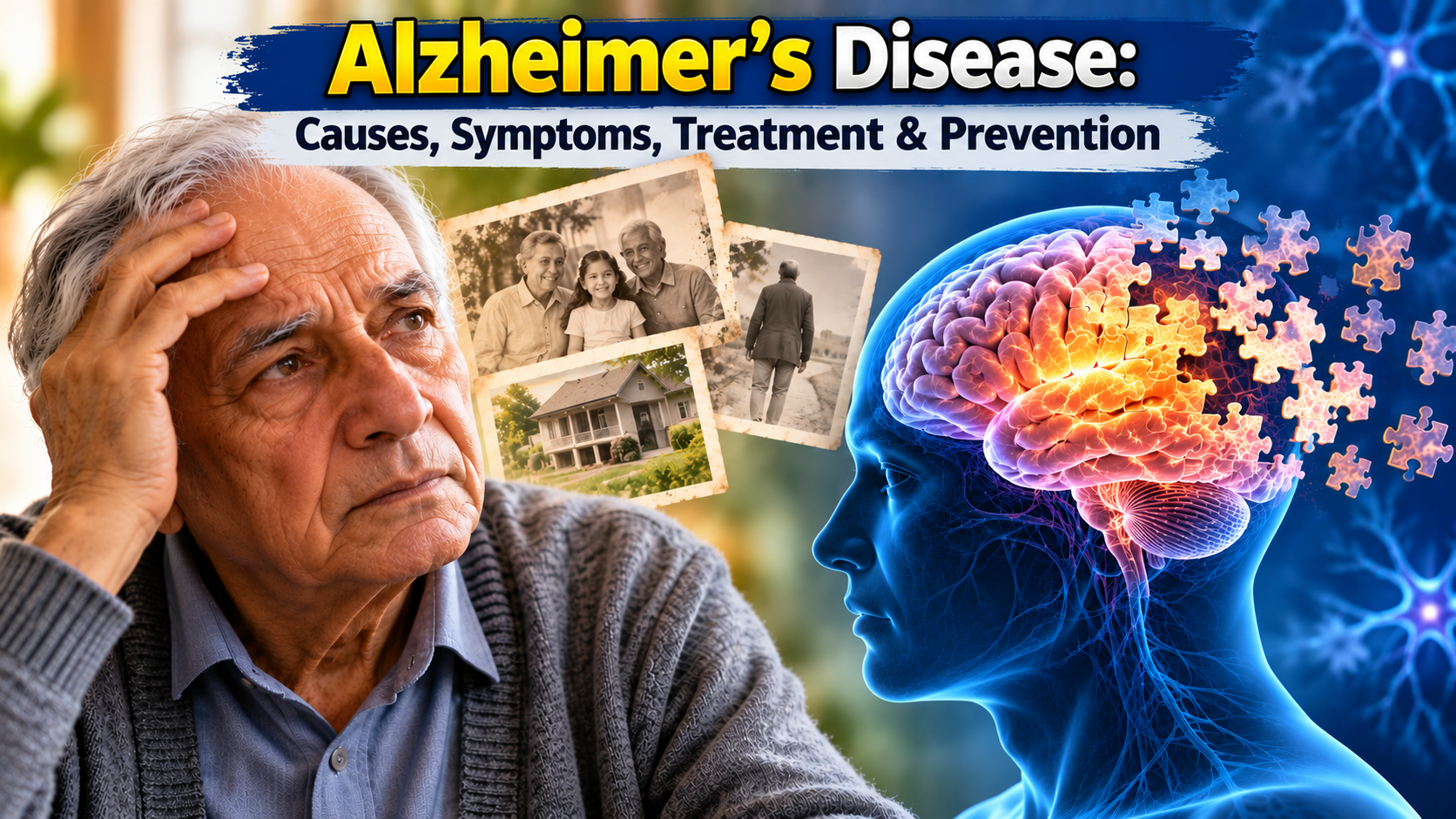
Alzheimer’s disease is a progressive brain disorder that affects memory, thinking, learning, language, and the ability to perform everyday activities. It is the most common cause of dementia, a general term for a decline in memory and other thinking abilities that interferes with daily life.
Although Alzheimer’s disease is more common in older adults, it is not a normal or inevitable part of aging. The condition develops over time as brain cells become damaged and lose their ability to communicate effectively with one another. In the early stages, a person may have difficulty remembering recent conversations or finding familiar words. As the disease progresses, these difficulties can become more severe and affect independence.
Understanding the early signs of Alzheimer’s disease can help families seek medical advice sooner, explore available treatments, and prepare for future care needs. While there is currently no universal cure, medical treatments and supportive lifestyle measures can help manage symptoms and improve quality of life.
This article explains what Alzheimer’s disease is, its causes and risk factors, common symptoms, stages, diagnosis, treatment options, and evidence-based ways to support long-term brain health.
What Is Alzheimer’s disease?
Alzheimer’s disease is a neurological condition that gradually damages brain cells and the connections between them. It affects the parts of the brain responsible for memory, reasoning, language, decision-making, and behavior.
The disease is associated with abnormal changes in brain proteins, particularly beta-amyloid and tau. Beta-amyloid can accumulate into plaques between nerve cells, while abnormal tau proteins can form tangles inside brain cells. These changes are associated with damage to neurons and the gradual loss of brain function.
Alzheimer’s disease usually develops slowly, and symptoms may begin years before they become obvious. In the beginning, memory problems may be mild. Over time, a person may struggle with familiar tasks, recognizing people, managing finances, or communicating clearly.
Alzheimer’s disease is different from occasional forgetfulness. Forgetting where you placed your keys sometimes is common, but repeatedly losing items and being unable to retrace your steps, forgetting important recent events, or becoming confused in familiar places may require medical evaluation.
According to the World Health Organization, Alzheimer’s disease accounts for an estimated 60–70% of dementia cases worldwide.
What Causes Alzheimer’s Disease?
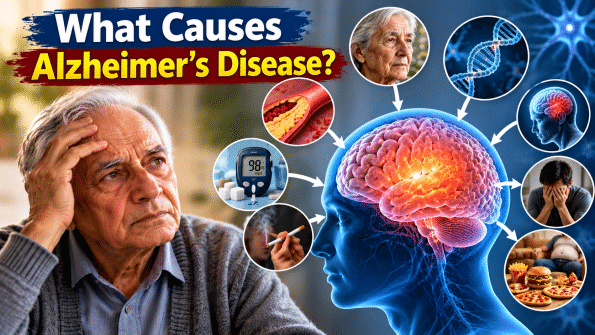
The exact cause of Alzheimer’s disease is not fully understood. Researchers believe that a combination of age-related changes, genetic factors, environmental influences, and overall health may contribute to its development.
1. Abnormal Protein Buildup in the Brain
Two proteins, beta-amyloid and tau, are closely associated with Alzheimer’s disease.
Beta-amyloid may accumulate outside nerve cells and form plaques. Abnormal tau can form tangles inside nerve cells, disrupting their internal transport systems. These changes are associated with inflammation, impaired communication between neurons, and eventual cell death.
However, the relationship between these protein changes and the disease is complex, and scientists continue to investigate how they contribute to symptoms.
2. Aging
Age is the strongest known risk factor for Alzheimer’s disease. Most people who develop the condition experience symptoms after age 65.
Nevertheless, Alzheimer’s disease can also affect younger adults. When symptoms begin before age 65, the condition is often described as early-onset Alzheimer’s disease.
Aging does not automatically lead to Alzheimer’s. Many older adults maintain good cognitive function throughout their lives.
3. Genetic Factors
Genetics can influence a person’s risk. Certain variations in the APOE gene, especially APOE ε4, are associated with an increased risk of developing Alzheimer’s disease.
Rare inherited genetic mutations can cause some forms of early-onset Alzheimer’s disease. However, most cases are not caused by a single inherited mutation.
Having a family history may increase risk, but it does not mean that a person will definitely develop the disease.
4. Cardiovascular and Metabolic Health
Conditions affecting blood vessels and metabolism may influence brain health. These include:
- High blood pressure.
- Type 2 diabetes.
- High cholesterol.
- Obesity.
- Stroke and cardiovascular disease.
Managing these conditions is important for overall health and may help reduce the risk of cognitive decline, although it cannot guarantee prevention of Alzheimer’s disease.
5. Lifestyle and Environmental Factors
Research has associated several lifestyle factors with cognitive decline and dementia risk. These include physical inactivity, smoking, poor sleep, social isolation, hearing loss, and traumatic brain injury.
These factors do not necessarily cause Alzheimer’s directly in every individual. Their effects vary, and researchers continue to investigate how they interact with other risks.
What Are the Early Symptoms of Alzheimer’s Disease?
Recognizing the early symptoms of Alzheimer’s disease is important because early medical assessment can identify possible causes of memory problems and help people access appropriate care.
1. Frequent Memory Loss
One of the most recognized early symptoms is difficulty remembering recently learned information.
A person may repeatedly ask the same questions, forget recent conversations, or rely increasingly on family members and reminders for tasks they previously managed independently.
Occasional forgetfulness is common, but persistent memory problems that interfere with everyday life deserve attention.
2. Difficulty Planning and Solving Problems
A person may find it increasingly difficult to follow a familiar recipe, manage monthly expenses, organize appointments, or complete tasks involving several steps.
They may take longer to perform activities that were previously straightforward.
3. Confusion About Time and Place
People with Alzheimer’s disease may lose track of dates, seasons, or the passage of time. They may become confused in familiar surroundings or have difficulty finding their way home.
Getting lost in a previously familiar place is an important warning sign.
4. Problems With Familiar Tasks
Everyday activities can become challenging. Examples include operating familiar household appliances, following established routines, or completing work that the person has performed for many years.
5. Difficulty Finding Words
Some people struggle to follow conversations, repeat themselves, or find the correct words for familiar objects. They may pause frequently or have difficulty explaining their thoughts.
6. Misplacing Items
A person may place belongings in unusual locations and struggle to remember where they left them. Unlike ordinary misplacement, they may have difficulty retracing their steps or understanding how the item ended up there.
7. Changes in Mood and Personality
Alzheimer’s disease may be associated with anxiety, irritability, confusion, depression, reduced motivation, or withdrawal from social activities.
These changes can be distressing for the person and their family.
Important: Memory loss does not always mean Alzheimer’s disease. Depression, medication side effects, sleep problems, vitamin deficiencies, thyroid disorders, and other conditions can also affect memory. A healthcare professional can help investigate the cause.
What Are the Stages of Alzheimer’s Disease?
Alzheimer’s disease progresses differently from person to person. Its course is often described in three broad stages.
1. Early or Mild Stage
During the early stage, a person may still live independently but experience noticeable difficulties with memory and organization.
Common problems include forgetting recent events, struggling to find words, losing items, and having difficulty managing complex tasks.
At this stage, medical appointments, financial planning, and discussions about future care can be particularly helpful.
2. Middle or Moderate Stage
As the disease progresses, memory and thinking problems become more pronounced. A person may need help with daily routines, dressing, preparing meals, or managing personal responsibilities.
They may experience confusion about familiar people or places, sleep disturbances, increased anxiety, or changes in behavior.
Family members may need to provide more supervision and practical support.
3. Late or Severe Stage
In the advanced stage, a person may have significant difficulty communicating, recognizing loved ones, walking independently, and performing basic personal care.
They may require assistance with eating, drinking, bathing, dressing, and using the bathroom. Swallowing difficulties and reduced mobility can also develop.
Care at this stage focuses on comfort, dignity, safety, nutrition, and managing symptoms.
How Is Alzheimer’s Disease Diagnosed?
There is no single simple test that identifies every case of Alzheimer’s disease. Diagnosis usually involves a combination of medical history, cognitive assessment, physical examination, and selected investigations.
Medical History
A doctor may ask when symptoms began, how they have changed, which daily activities are affected, and whether there is a family history of dementia.
Information from a family member or caregiver can be valuable, particularly when the person has difficulty describing their symptoms.
Cognitive Tests
Brief assessments may evaluate memory, attention, language, orientation, and problem-solving skills.
These tests help identify cognitive difficulties but do not establish the diagnosis on their own.
Blood Tests
Blood tests may be used to investigate other possible causes of memory problems, including vitamin B12 deficiency, thyroid abnormalities, and certain metabolic conditions.
Depending on the circumstances, specialized blood biomarkers may also help clinicians assess Alzheimer’s-related changes.
Brain Imaging
MRI or CT scans may be used to look for other explanations, such as stroke, tumors, or structural changes. Specialized imaging may be considered in selected cases.
Additional Testing
In some situations, doctors may recommend cerebrospinal fluid tests, amyloid PET imaging, or other validated biomarker tests to support diagnosis.
A healthcare professional determines which investigations are appropriate for the individual.
What Are the Treatment Options for Alzheimer’s Disease?
There is currently no universal cure that completely reverses Alzheimer’s disease. However, treatments are available to help manage symptoms, maintain function, and, in selected patients, slow the progression of certain aspects of the disease.
1. Cholinesterase Inhibitors
Medicines such as donepezil, rivastigmine, and galantamine may be prescribed for certain stages of Alzheimer’s disease.
These medicines affect acetylcholine, a chemical messenger involved in memory and learning. They may provide temporary benefits in cognition or daily functioning for some people, but they do not cure the underlying disease.
Possible side effects include nausea, diarrhea, reduced appetite, and other problems that require medical supervision.
2. Memantine
Memantine may be prescribed for moderate to severe Alzheimer’s disease. It acts on a different brain signaling system and may help with cognition and daily functioning in some patients.
A clinician should determine whether it is suitable and monitor for side effects.
3. Disease-Modifying Treatments
Certain newer medicines targeting beta-amyloid, including lecanemab and donanemab in jurisdictions where approved, may modestly slow clinical decline in carefully selected patients with early symptomatic Alzheimer’s disease.
These treatments are not cures. They require specialist assessment, confirmation of relevant disease features, and monitoring for potentially serious adverse effects, including brain swelling and bleeding detected on imaging.
Availability, eligibility, regulatory approval, and affordability vary by country. Patients should discuss potential benefits and risks with a qualified specialist.
4. Supportive and Behavioral Care
Non-drug approaches are an important part of treatment. These may include structured routines, physical activity, cognitive stimulation, social engagement, occupational support, and treatment of coexisting health problems.
Sleep disturbances, depression, anxiety, and behavioral symptoms may need specific assessment and management.
Natural Ways to Support Brain Health
Many people are interested in natural approaches to maintaining memory and cognitive function. Healthy habits can support general brain and cardiovascular health, but no herb, food, or supplement has been proven to cure Alzheimer’s disease.
1. Eat a Balanced Diet
A balanced diet can support overall health and help manage conditions associated with cognitive decline.
Include a variety of:
- Vegetables and leafy greens.
- Fruits and berries.
- Whole grains.
- Beans, lentils, and other legumes.
- Nuts and seeds.
- Fish and other appropriate sources of protein.
- Healthy unsaturated fats, such as olive oil.
Limiting excessive salt, added sugar, and highly processed foods can also support cardiovascular and metabolic health.
A Mediterranean-style or MIND-style eating pattern is often studied for its potential relationship with cognitive health, although evidence does not establish that either diet prevents Alzheimer’s in every individual.
2. Stay Physically Active
Regular physical activity supports circulation, heart health, mobility, and general well-being.
Walking, gentle cycling, swimming, and suitable strength or balance exercises may be beneficial. People with mobility limitations or chronic illnesses should select activities appropriate to their abilities and seek professional guidance when necessary.
3. Keep the Mind Active
Mentally engaging activities may help maintain cognitive skills and provide enjoyment.
Examples include:
- Reading books.
- Learning a new skill.
- Playing suitable puzzles or games.
- Practicing a language.
- Gardening and other meaningful hobbies.
- Taking part in familiar household activities.
These activities are not a guaranteed way to prevent Alzheimer’s, but they can contribute to an engaging daily routine.
4. Maintain Social Connections
Regular interaction with family, friends, and community groups can support emotional well-being and reduce social isolation.
For people already experiencing memory difficulties, familiar conversations, music, and enjoyable shared activities may provide comfort and connection.
5. Get Adequate Sleep
Consistent sleep routines and assessment of ongoing sleep problems are important for general health.
A person who snores heavily, experiences pauses in breathing during sleep, or remains excessively sleepy during the day may need evaluation for a sleep disorder.
6. Manage Blood Pressure and Blood Sugar
Follow medical advice for hypertension, diabetes, high cholesterol, and other chronic conditions. Regular checkups can help identify problems and reduce complications that affect the brain and cardiovascular system.
7. Address Hearing and Vision Problems
Untreated hearing or vision difficulties can affect communication, independence, and social engagement. Appropriate assessments and corrective devices, when needed, can improve daily functioning.
Can Herbal Remedies Help With Alzheimer’s Disease?
Herbs have a long history of use in traditional systems of medicine, including Unani and other herbal practices. Some plant compounds are being investigated for their possible effects on inflammation, oxidative stress, and brain function.
However, laboratory findings or traditional use do not prove that an herb can treat Alzheimer’s disease in humans.
Ginkgo Biloba
Ginkgo biloba is commonly marketed for memory and circulation. Research has not established that it prevents Alzheimer’s disease, and evidence that it meaningfully slows cognitive decline remains inconclusive.
Ginkgo can also interact with medicines, including drugs that affect blood clotting.
Turmeric and Curcumin
Turmeric contains curcumin, a compound studied for its biological properties. Although early laboratory research has generated interest, clinical evidence is insufficient to recommend turmeric or curcumin supplements as a treatment for Alzheimer’s disease.
Culinary turmeric can be part of an ordinary balanced diet, but concentrated supplements are different and may cause side effects or interact with medication.
Brahmi (Bacopa monnieri)
Brahmi is used in some traditional practices and has been investigated for aspects of memory and cognition. However, evidence is not sufficient to establish it as an effective Alzheimer’s treatment.
It may cause digestive side effects and interact with certain medicines.
Ashwagandha
Ashwagandha is commonly discussed in relation to stress and sleep. There is insufficient clinical evidence to recommend it for preventing or treating Alzheimer’s disease. It may also interact with medications and is not suitable for everyone.
Herbal safety advice: Anyone living with Alzheimer’s disease should consult a qualified healthcare professional before using herbal products or supplements. Some products can interact with prescription medicines, affect bleeding risk, or cause liver or other adverse effects. Do not stop prescribed treatment or delay medical evaluation in favor of an herbal remedy.
How Can Family Members Care for Someone With Alzheimer’s Disease?
Caregivers play an important role in helping people with Alzheimer’s maintain safety, dignity, and quality of life.
Establish a Consistent Routine
Regular times for meals, bathing, exercise, and sleep can make daily life more predictable and reduce confusion.
Make the Home Safer
Remove tripping hazards, improve lighting, secure potentially dangerous household products, and consider supervision around cooking, medication, stairs, and outdoor activities.
If wandering is a concern, develop a practical safety plan with the healthcare team.
Communicate Calmly
Use short, clear sentences and allow extra time for responses. Avoid arguing about forgotten details. Reassurance and gentle redirection are often more helpful than repeated correction.
Encourage Independence Where Possible
Offer simple choices and allow the person to complete tasks they can still manage safely. Support should match their abilities rather than remove independence unnecessarily.
Look After the Caregiver
Caring for someone with dementia can be physically and emotionally demanding. Family caregivers should seek help from relatives, healthcare professionals, community services, or caregiver support groups when available.
Can Alzheimer’s Disease Be Prevented?
There is currently no guaranteed method to prevent Alzheimer’s disease. Age and certain genetic factors cannot be changed, and even people who maintain healthy lifestyles may develop the condition.
Nevertheless, evidence suggests that addressing modifiable risk factors can support overall brain health and may reduce the risk of cognitive decline.
Helpful measures include:
- Maintaining regular physical activity.
- Eating a balanced, varied diet.
- Avoiding smoking.
- Managing blood pressure, cholesterol, and diabetes.
- Maintaining social and mentally stimulating activities.
- Seeking treatment for hearing loss and sleep problems.
- Preventing head injuries where possible.
- Maintaining a healthy weight.
- Attending appropriate medical checkups.
These measures support general health and may contribute to healthier aging, but they should not be described as a guaranteed prevention strategy.
When Should You See a Doctor?
Arrange a medical appointment if memory problems are persistent, worsening, or affecting everyday activities. Seek evaluation if a person repeatedly forgets important conversations, becomes lost in familiar places, struggles with familiar tasks, or develops unexplained changes in behavior.
A sudden onset of confusion is different from the gradual progression typical of Alzheimer’s disease. Sudden confusion, especially with fever, weakness, difficulty speaking, severe headache, or other new neurological symptoms, requires urgent medical assessment.
Early evaluation can identify treatable conditions and help families plan appropriate support.
Frequently Asked Questions About Alzheimer’s Disease
1. What is the main cause of Alzheimer’s disease?
There is no single established cause for most cases. The condition is associated with abnormal beta-amyloid and tau proteins, along with a complex combination of age-related, genetic, and other biological factors.
2. What are the first signs of Alzheimer’s disease?
Common early signs include persistent difficulty remembering recent events, repeating questions, misplacing objects, trouble planning, and confusion in familiar places. Symptoms that interfere with daily life should be evaluated by a healthcare professional.
3. Is Alzheimer’s disease the same as dementia?
No. Dementia describes a group of symptoms involving significant problems with memory, thinking, or other cognitive abilities. Alzheimer’s disease is the most common cause of dementia, but other conditions can also cause it.
4. Can Alzheimer’s disease be cured naturally?
No herbal remedy, food, or natural supplement has been proven to cure Alzheimer’s disease. A balanced diet, physical activity, good sleep, and social engagement can support general health but should complement, not replace, appropriate medical care.
5. Does Alzheimer’s disease only affect older people?
Most cases occur in older adults, particularly after age 65. However, early-onset Alzheimer’s can develop before age 65.
6. What foods are good for brain health?
Vegetables, fruits, whole grains, legumes, nuts, seeds, fish, and other nutrient-rich foods can form part of a balanced eating pattern that supports general and cardiovascular health.
No individual food has been proven to prevent or cure Alzheimer’s disease.
7. How quickly does Alzheimer’s disease progress?
Progression varies widely. Some people experience gradual changes over several years, while others progress more quickly. Overall health, the stage at diagnosis, and other medical conditions can influence the course.
8. Can stress cause Alzheimer’s disease?
Stress can affect sleep, attention, and memory, but it is not established as a single direct cause of Alzheimer’s disease. Persistent memory problems should not automatically be attributed to stress without appropriate assessment.
Conclusion
Alzheimer’s disease is a progressive neurological condition that affects memory, thinking, behavior, and independence. Recognizing early symptoms, obtaining an accurate diagnosis, and exploring appropriate medical treatment can help people and families manage the condition more effectively.
Although there is no universal cure, medicines, supportive care, healthy lifestyle habits, and caregiver education can contribute to quality of life. A balanced diet, regular physical activity, social engagement, adequate sleep, and management of chronic health conditions are useful components of overall brain health.
Herbal remedies may be of interest for research or traditional use, but none should be promoted as a proven cure for Alzheimer’s disease. Anyone considering supplements should discuss their safety with a healthcare professional.
If you or someone you care for is experiencing persistent memory loss or changes in thinking, seek medical advice rather than assuming that the symptoms are simply a normal part of aging.
Medical Disclaimer
This article is for educational purposes only and does not replace professional medical advice, diagnosis, or treatment. Alzheimer’s disease requires appropriate clinical assessment and individualized care. Do not start, stop, or replace prescribed medicines with herbal products without consulting a qualified healthcare professional.
References
- World Health Organization (WHO) — Dementia: https://www.who.int/news-room/fact-sheets/detail/dementia
- National Institute on Aging (NIA) — Alzheimer’s Disease Fact Sheet: https://www.nia.nih.gov/health/alzheimers-disease-fact-sheet/
- National Center for Complementary and Integrative Health (NCCIH) — Dietary Supplements and Alzheimer’s Disease: https://www.nccih.nih.gov/health/tips/things-to-know-about-dietary-supplements-for-cognitive-function-dementia-and-alzheimers-disease
- U.S. Food and Drug Administration (FDA) — Alzheimer’s Disease: https://www.fda.gov/consumers/diseases-conditions/alzheimers-disease