Introduction
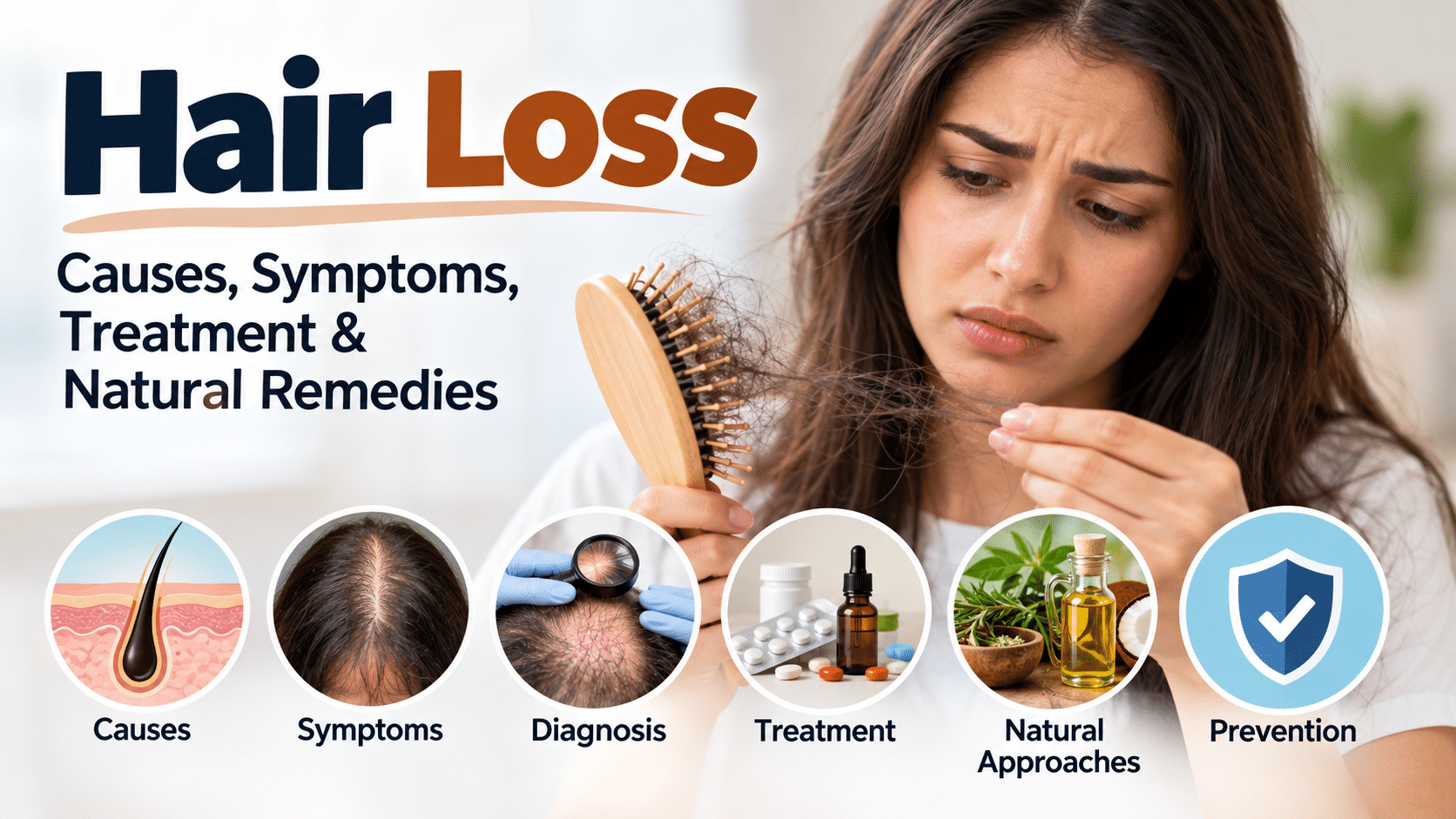
Hair loss is a common concern that affects people of all ages and genders. Finding hair on a pillow, in the shower, or on a hairbrush is usually normal, but excessive shedding, visible thinning, or bald patches may indicate an underlying problem. Hair loss can develop gradually over time or appear suddenly, depending on its cause.
Hair loss is medically known as alopecia. It can occur because of genetics, hormonal changes, nutritional deficiencies, stress, certain medications, scalp conditions, or medical illnesses. Some forms are temporary and improve when the underlying cause is treated, while others may require long-term management.
Understanding the reasons behind hair loss is the first step toward choosing an appropriate treatment. Although many oils, shampoos, supplements, and herbal remedies are marketed for hair growth, not all have strong scientific evidence supporting their effectiveness.
This guide explains the major causes, symptoms, diagnosis, medical treatments, natural approaches, prevention strategies, and frequently asked questions about hair loss.
What Is Hair Loss?
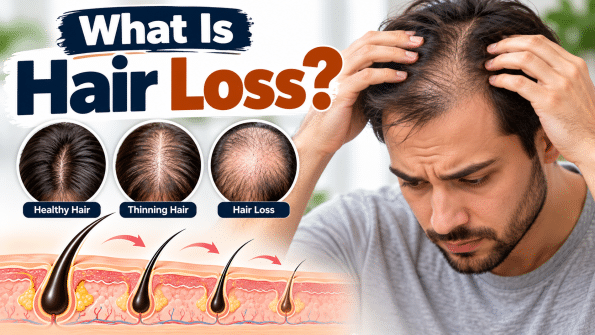
Hair loss occurs when hair falls out faster than it is replaced, when the normal hair growth cycle changes, or when hair follicles become damaged. It may affect the scalp, eyebrows, eyelashes, beard, or other areas of the body.
Hair grows in repeating cycles consisting of three main phases:
- Anagen (growth phase): Hair actively grows from the follicle. This phase can last several years.
- Catagen (transition phase): Hair growth slows, and the follicle begins to shrink.
- Telogen (resting phase): Hair rests before eventually shedding and being replaced by new growth.
Losing approximately 50–100 hairs daily is generally considered normal, although the amount varies between individuals. More noticeable shedding does not always mean permanent hair loss.
The pattern and duration of hair loss can help determine its cause. For example, hereditary hair loss usually develops gradually, whereas hair shedding after a major illness or stressful event may begin several months later.
What Causes Hair Loss?
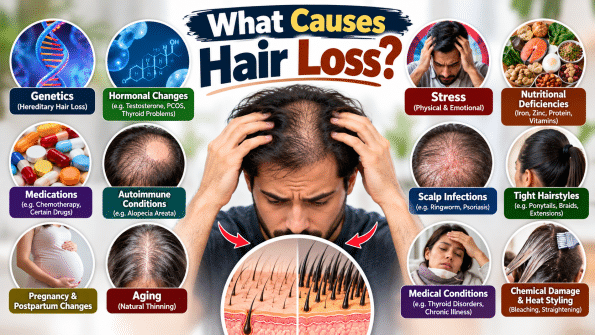
Hair loss can have several causes, and more than one factor may contribute to the same person’s symptoms. The most common causes include the following.
American Academy of Dermatology+1
1. Hereditary Hair Loss
Hereditary hair loss, also called androgenetic alopecia, is one of the most common causes of gradual hair thinning. It can affect both men and women.
In men, it often begins with a receding hairline or thinning around the crown. In women, it commonly appears as thinning over the top of the scalp or a widening part.
This type of hair loss develops because genetically susceptible hair follicles gradually become smaller. Treatment may slow the progression and help maintain or regrow some hair, particularly when started early.
2. Stress and Emotional Pressure
Physical or emotional stress can disrupt the hair growth cycle. This may lead to a condition called telogen effluvium, in which more hairs than usual enter the resting phase and shed.
Common triggers include:
- Prolonged emotional stress or anxiety.
- Major surgery or serious illness.
- High fever or significant infection.
- Rapid weight loss or restrictive dieting.
- Childbirth and other major hormonal changes.
Hair shedding often becomes noticeable two to three months after the triggering event. In many cases, it gradually improves once the trigger has resolved, although recovery can take several months.
American Academy of Dermatology+1
3. Nutritional Deficiencies
Hair follicles require adequate energy, protein, vitamins, and minerals to function normally. A diet that lacks essential nutrients may contribute to hair shedding.
Potential nutritional factors include:
- Iron deficiency: Particularly important in people with heavy menstrual bleeding or inadequate iron intake.
- Protein deficiency: Can occur with restrictive diets or inadequate food intake.
- Zinc deficiency: May affect normal hair growth.
- Other nutritional deficiencies: Certain vitamin deficiencies can contribute in specific circumstances.
Not everyone with hair loss has a nutritional deficiency. Taking supplements without identifying a deficiency may be ineffective or harmful, so testing and professional guidance are preferable.
4. Hormonal Changes
Hormonal changes may affect hair growth in both men and women. Pregnancy, childbirth, menopause, and some hormonal disorders can influence the hair cycle.
Women with polycystic ovary syndrome (PCOS) may experience scalp hair thinning, particularly when androgen levels are elevated. They may also develop acne, irregular periods, or increased facial hair.
Thyroid disorders can also cause diffuse thinning or increased shedding. Treating the underlying hormonal condition may improve hair growth, although regrowth depends on the cause and how long the condition has been present.
American Academy of Dermatology+1
5. Medical Conditions and Scalp Disorders
Some health conditions can directly affect hair follicles or the scalp.
Examples include:
- Alopecia areata: An autoimmune condition that commonly causes smooth, round patches of hair loss.
- Scalp ringworm: A fungal infection that may cause scaling, itching, broken hairs, and bald patches.
- Scalp psoriasis or other inflammatory conditions: May contribute to shedding or hair loss.
- Scarring alopecia: Certain inflammatory disorders can permanently damage hair follicles.
Early diagnosis is especially important when the scalp is painful, inflamed, scaly, or developing permanent-looking bald areas.
American Academy of Dermatology+1
6. Medications and Medical Treatments
Some medications may cause hair shedding as a side effect. Cancer treatments such as chemotherapy are well-known examples, but other medicines may also affect hair growth.
If hair loss begins after starting a new medicine or changing a dose, discuss the timing with the prescribing clinician. Do not stop a prescribed medicine on your own, because doing so may create other health risks.
7. Tight Hairstyles and Hair Damage
Repeated pulling on the hair can cause traction alopecia. Tight ponytails, braids, extensions, and other styles that place constant tension on the roots can contribute to this condition.
Frequent bleaching, chemical straightening, excessive heat, and rough brushing can also weaken hair shafts and cause breakage.
Reducing tension and chemical damage early can help protect the follicles. Long-standing traction or scarring damage may cause permanent hair loss.
American Academy of Dermatology+1
Symptoms of Hair Loss
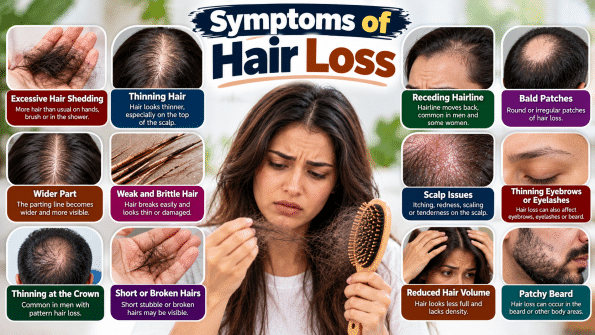
The symptoms depend on the underlying cause. Some people experience gradual thinning, while others develop sudden shedding or distinct bald patches.
Common signs include:
- More hair than usual on pillows, clothing, or hairbrushes.
- Increased shedding during washing or combing.
- A receding hairline or thinning around the crown.
- A wider part or reduced hair volume.
- Round or irregular bald patches.
- Broken hairs or short stubble in affected areas.
- Thinning eyebrows, eyelashes, or beard hair.
- Scalp itching, redness, scaling, tenderness, or burning.
Hair breakage is not the same as hair shedding from the roots. A clinician can help distinguish between these problems and identify whether the follicles are likely to recover.
Seek prompt medical evaluation if hair loss is sudden, rapidly progressing, associated with scalp pain or inflammation, or accompanied by other unexplained symptoms.
How Is Hair Loss Diagnosed?
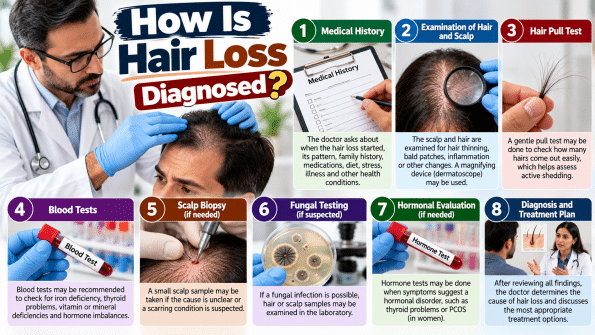
Correct diagnosis is important because treatments differ significantly according to the cause.
1. Medical History
A healthcare professional may ask when the hair loss began, whether it is sudden or gradual, whether other family members have similar symptoms, and whether you have recently experienced an illness, major stress, weight loss, childbirth, or a medication change.
They may also ask about your diet, hair care routine, menstrual history when relevant, and other medical symptoms.
2. Examination of the Hair and Scalp
The clinician examines the distribution of hair loss, the condition of the scalp, and the appearance of individual hairs. A magnifying device or dermatoscope may help identify changes in the follicles.
A gentle hair-pull test may sometimes be used to assess active shedding.
3. Blood Tests
Blood tests are not necessary for every person. Depending on the history and examination, a clinician may recommend tests such as:
- Complete blood count (CBC).
- Ferritin or other iron studies.
- Thyroid function tests.
- Selected vitamin or mineral tests.
- Hormone tests when symptoms suggest a hormonal disorder.
Testing should be guided by clinical findings rather than ordering every available test.
American Academy of Dermatology+1
4. Scalp Biopsy or Other Tests
A small scalp biopsy may be considered when the diagnosis remains uncertain or a scarring condition is suspected. If a fungal infection is possible, the clinician may examine scalp hairs or take a sample for laboratory testing.
Treatment Options for Hair Loss
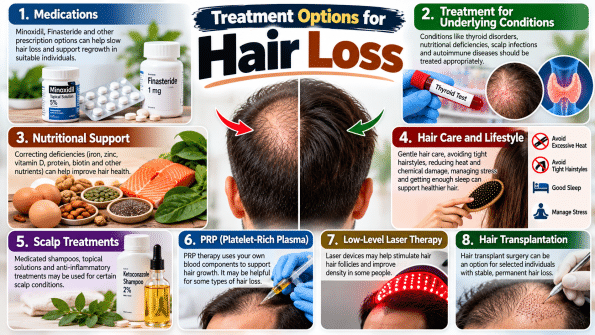
There is no single treatment that works for every type of hair loss. The best option depends on the diagnosis, severity, age, medical history, and individual circumstances.
1. Minoxidil
Topical minoxidil is an established treatment for certain types of hereditary hair loss in adults. It may help slow thinning and stimulate some regrowth. Results generally take several months, and continued use is usually necessary to maintain benefits. It is not effective for every cause of hair loss.
American Academy of Dermatology+1
2. Prescription Medications
Finasteride may be prescribed for selected men with hereditary hair loss. Other prescription options may be considered for certain patients, including some women, depending on the cause. These medicines have important contraindications and potential side effects, so a clinician should assess suitability. Finasteride is not appropriate during pregnancy.
3. Treatment for Specific Conditions
Alopecia areata may respond to corticosteroids or other immune-targeting treatments. Fungal scalp infections require appropriate antifungal medicine, while thyroid disorders and confirmed nutritional deficiencies need targeted treatment.
4. Hair Transplantation
Hair transplantation may be suitable for selected people with stable, permanent pattern hair loss. Hair follicles are moved from a donor area to areas with thinning. It is a surgical procedure, and not everyone is an appropriate candidate.
Other options, including selected low-level laser devices or specialist treatments, may be appropriate for particular cases. Their benefits, limitations, costs, and risks should be discussed before starting.
Natural Ways to Support Hair Growth
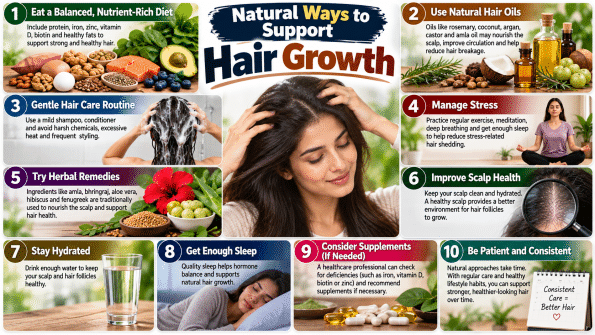
Natural approaches can support scalp health and help prevent avoidable breakage. However, they cannot reliably reverse genetic hair loss or treat every medical cause.
1. Eat a Balanced, Protein-Rich Diet
Hair is largely made of keratin, a protein. Eating enough protein and a variety of nutrient-rich foods supports normal hair production.
Include foods such as:
- Eggs, fish, chicken, or other protein sources.
- Beans, lentils, and chickpeas.
- Nuts and seeds.
- Leafy green vegetables.
- Fruit and whole grains.
- Iron-rich foods, particularly if iron deficiency is a concern.
People following vegetarian or restrictive diets should plan their meals carefully to meet their nutritional needs.
2. Consider Nutritional Testing When Needed
If you have persistent shedding, a highly restrictive diet, heavy menstrual bleeding, or other signs of deficiency, ask a clinician whether testing is appropriate.
Iron, zinc, biotin, and other supplements should not be taken in high doses simply because hair is falling out. Supplementation is most useful when a deficiency or another clear indication has been identified. Excessive intake of certain nutrients can itself cause health problems or hair loss.
American Academy of Dermatology+1
3. Use Gentle Hair Care
A gentle routine can reduce breakage and protect existing hair:
- Use a shampoo suited to your scalp.
- Apply conditioner to help reduce friction and tangling.
- Avoid vigorous towel rubbing and aggressive brushing.
- Reduce frequent high-heat styling and chemical treatments.
- Avoid tight hairstyles that pull on the roots.
- Detangle gently, particularly when hair is wet and more vulnerable to damage.
These steps can improve hair condition, although they do not treat every form of follicular hair loss.
4. Manage Stress and Maintain Sleep
Stress management may help people whose shedding is associated with physical or emotional stress. Consider regular physical activity, adequate sleep, relaxation exercises, and manageable daily routines.
Hair shedding related to stress often improves gradually after the trigger resolves. Persistent stress or ongoing illness may prolong the problem, so address the underlying cause where possible.
5. Choose Hair Oils Carefully
Coconut oil may reduce protein loss and damage to the hair shaft when used appropriately as a hair-care product. This is different from proving that it stimulates new hair growth.
Some people use rosemary oil or other herbal oils, but evidence for their effectiveness remains limited compared with established treatments. Essential oils can cause irritation or allergic reactions, especially when applied undiluted.
If you use an oil, follow its safety instructions, test a small area first, and stop if irritation occurs. Avoid applying irritating preparations to inflamed or broken skin.
6. Be Cautious With Herbal Hair Remedies
Herbal preparations are widely promoted for reducing hair fall, but evidence varies by ingredient and formulation. A traditional remedy should not replace assessment of sudden hair loss, scalp infection, autoimmune disease, or a nutritional deficiency.
Do not assume that a product is safe simply because it is labelled natural. Some herbal products can irritate the scalp, interact with medicines, or contain undeclared ingredients. People who are pregnant or breastfeeding should seek appropriate professional advice before using medicinal herbal preparations.
How to Prevent Hair Loss
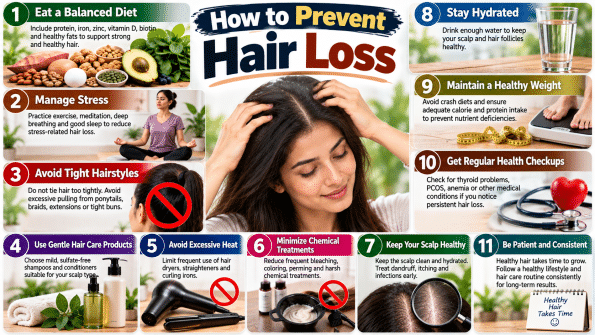
Not every type of hair loss can be prevented, particularly hereditary hair loss. However, several practical habits can reduce avoidable damage and support healthier hair.
- Eat nutritious meals: Maintain a balanced diet with adequate protein, iron, and other essential nutrients.
- Avoid tight hairstyles: Reduce repeated pulling from tight braids, ponytails, and extensions.
- Limit chemical damage: Avoid excessive bleaching, straightening, and other harsh treatments.
- Use heat carefully: Reduce frequent use of high-temperature hair dryers, curling irons, and straighteners.
- Treat scalp problems early: Get medical advice for persistent itching, scaling, redness, or painful areas.
- Avoid crash diets: Rapid weight loss and inadequate calorie intake may trigger excessive shedding.
- Review medicines with a clinician: Discuss possible medication-related hair loss without stopping prescribed treatment independently.
- Seek early assessment: Early treatment can improve the chances of controlling some types of hair loss. American Academy of Dermatology+1
When Should You See a Doctor?
Arrange a medical assessment if you notice:
- Sudden or unexplained hair loss.
- Rapidly increasing shedding or visible thinning.
- Round bald patches or loss of eyebrow hair.
- A painful, itchy, red, or scaly scalp.
- Hair loss accompanied by fatigue, unexplained weight changes, or other new symptoms.
- Persistent shedding that does not improve.
A dermatologist can identify the underlying cause and recommend an appropriate treatment plan. Early evaluation is particularly important if a condition could permanently damage hair follicles.
Frequently Asked Questions About Hair Loss
1. What is the most common cause of hair loss?
Hereditary hair loss, also called androgenetic alopecia, is one of the most common causes. Other important causes include stress-related shedding, hormonal changes, nutritional deficiencies, medications, and scalp disorders. The most likely cause depends on the person’s age, symptoms, and pattern of hair loss.
American Academy of Dermatology+1
2. Is hair loss reversible?
Some types of hair loss are reversible. For example, shedding caused by a temporary illness or nutritional deficiency may improve when the underlying problem is addressed. However, hair loss caused by permanent scarring of follicles may not be reversible. Hereditary hair loss can often be managed, but complete regrowth is not guaranteed.
3. Can stress cause hair loss?
Yes. Significant physical or emotional stress can trigger telogen effluvium, a condition that causes increased shedding. The shedding often begins a few months after the stressful event and may gradually improve after recovery.
4. Which vitamin deficiency causes hair loss?
Iron deficiency is an important potential cause. Deficiencies involving zinc, protein, and certain other nutrients can also contribute. However, hair loss does not automatically mean that a vitamin deficiency is present. Appropriate evaluation can help determine whether supplementation is necessary.
5. Does coconut oil stop hair fall?
Coconut oil may help protect the hair shaft from damage and reduce breakage in some circumstances. However, there is insufficient evidence that it reliably stops hair loss caused by genetics, hormonal disorders, or autoimmune conditions.
6. Does rosemary oil help with hair growth?
Some preliminary research suggests that rosemary oil may have potential for certain types of hair loss, but the evidence is limited and does not establish it as a dependable replacement for proven treatments. Essential oils should be used cautiously because they can irritate the skin.
7. Does shampoo cause hair loss?
A shampoo that irritates the scalp may contribute to scalp problems, while harsh hair-care practices can damage hair shafts. Ordinary shampooing does not usually cause hereditary hair loss. Hair that sheds during washing may already have entered its natural shedding phase.
8. How long does hair take to grow back?
The timeline varies according to the cause. After temporary stress-related shedding, improvement may take several months, and recovery of normal fullness may take six to nine months or longer. Hereditary hair loss often requires ongoing treatment, and visible improvement may take six months or more.
9. Can men and women use the same hair loss treatments?
Some treatments, such as topical minoxidil, are used by both men and women, but the recommended formulation, instructions, and suitability may differ. Other medicines have sex-specific considerations or pregnancy-related risks. Treatment should be selected according to the individual and the cause of hair loss.
10. When should I worry about hair loss?
Consult a healthcare professional if hair loss is sudden, severe, persistent, or associated with bald patches, scalp inflammation, or other unexplained symptoms. Early diagnosis can help prevent further damage and identify treatable medical causes.
11. Can a healthy diet alone stop hair loss?
A balanced diet can help prevent or correct nutritional problems that contribute to shedding. However, diet alone is unlikely to reverse every type of hair loss, especially hereditary hair loss or conditions that require specific medical treatment.
12. Are hair growth supplements always safe?
No. Taking unnecessary or excessive supplements can cause harm. High doses of some nutrients, including vitamin A and selenium, can contribute to hair loss. Supplements should be chosen according to nutritional needs and professional advice.
Conclusion
Hair loss is a common condition with many possible causes, ranging from hereditary factors and hormonal changes to stress, nutritional deficiencies, medication effects, and scalp disorders. Although some hair shedding is a normal part of the hair growth cycle, persistent thinning or sudden hair loss deserves attention.
The most effective approach is to identify the underlying cause before choosing a treatment. A balanced diet, gentle hair care, stress management, and suitable scalp care can support healthy hair, while medical treatments may help control specific types of hair loss.
Natural oils and herbal remedies may have a role in hair care, but their benefits should not be overstated. They cannot reliably replace appropriate treatment for medical conditions or permanent follicle damage.
The key takeaway: Early diagnosis, evidence-based treatment, and consistent hair care offer the best opportunity to manage hair loss and protect existing hair.