If you’ve ever followed a British recipe and come across the word courgette, you may have paused and wondered what exactly it is. The simple answer is that a courgette is a type of summer squash. However, there’s much more to this versatile vegetable than its name suggests. From its botanical background to its culinary uses around the world, the courgette has a fascinating story and an impressive range of benefits.
In this comprehensive guide, you’ll discover what a courgette vegetable is, where it comes from, how it differs from similar vegetables, how it’s grown, its nutritional profile, and how you can use it in your kitchen.
Understanding the Name: Courgette vs. Zucchini
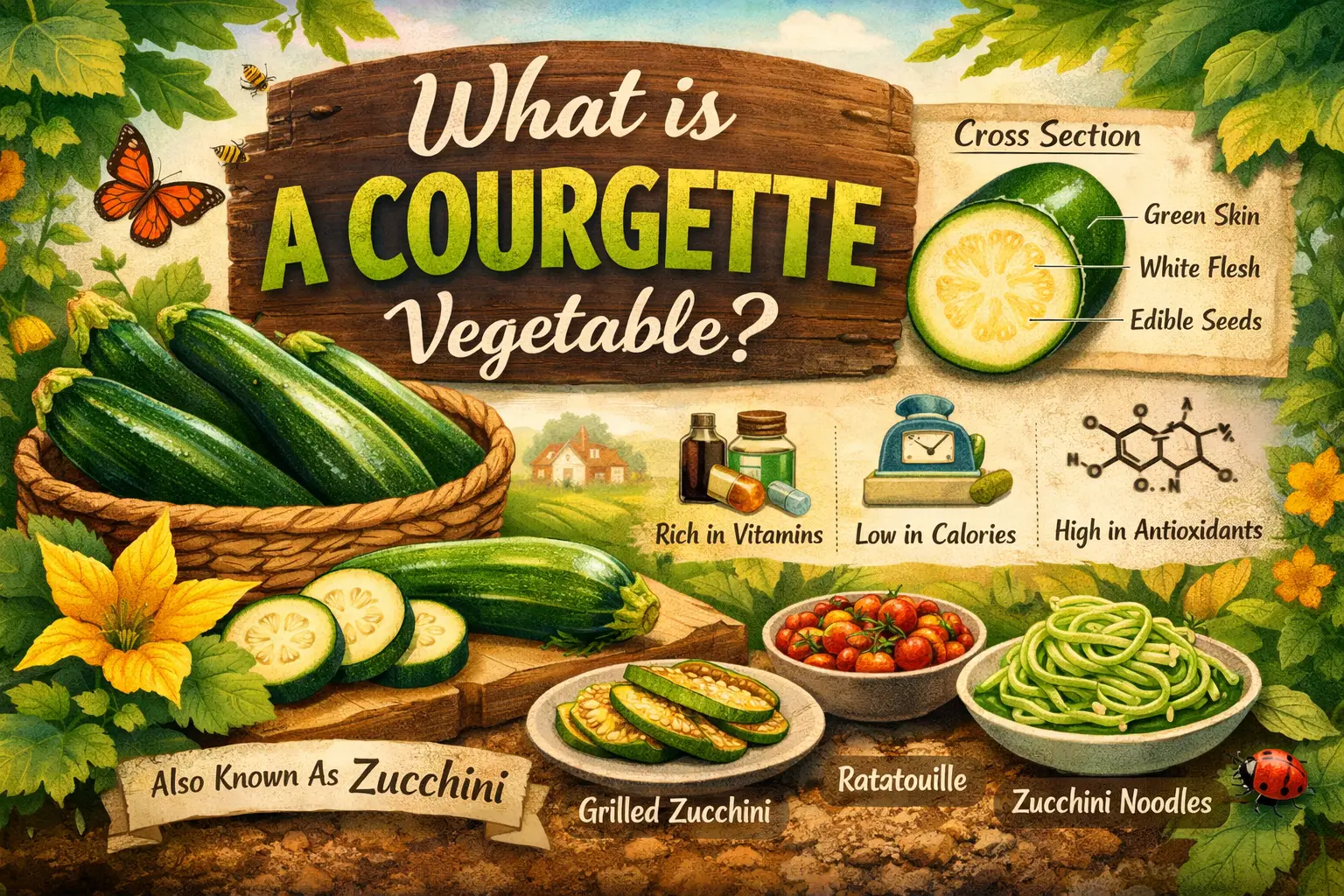
One of the most common sources of confusion is the terminology. The word “courgette” is used primarily in the United Kingdom, Ireland, New Zealand, and South Africa. In the United States, Canada, and Australia, the same vegetable is known as zucchini.
Both names refer to the same plant: Cucurbita pepo. The term “zucchini” comes from Italian, while “courgette” is derived from French. The vegetable gained popularity in Europe before spreading to English-speaking countries, which explains the linguistic differences.
So whether you call it courgette or zucchini, you are talking about the same green, cylindrical summer squash.
Botanical Classification of Courgette
To understand what a courgette truly is, it helps to look at its botanical classification.
Courgettes belong to the Cucurbitaceae family, also known as the gourd family. This plant family includes:
- Pumpkins
- Cucumbers
- Melons
- Squash varieties
Scientifically, courgettes are classified as a fruit because they develop from the flower of the plant and contain seeds. However, in culinary contexts, they are treated and prepared as vegetables.
The plant itself is bushy rather than vine-like, producing large leaves and bright yellow flowers. Interestingly, the flowers of the courgette plant are also edible and considered a delicacy in many cuisines.
What Does a Courgette Look Like?
The most common courgette variety is dark green, smooth-skinned, and cylindrical in shape. It typically measures between 6 to 8 inches (15–20 cm) long when harvested for eating.
However, courgettes come in several varieties and appearances:
- Light green
- Striped
- Yellow (often called golden zucchini)
- Round varieties
Young courgettes are tender with soft skin and small, edible seeds. If left to grow larger, they become more fibrous and watery. Overgrown courgettes may resemble marrow, another closely related vegetable.
Flavor and Texture
Courgettes have a mild, slightly sweet flavor with a subtle earthy note. Their taste is not overpowering, which makes them extremely versatile in cooking.
When raw, courgettes are crisp and juicy. Once cooked, they become soft and tender, absorbing the flavors of spices, herbs, and sauces easily.
Because of their neutral flavor profile, they work well in both savory and surprisingly even some sweet dishes.
Where Do Courgettes Come From?
Although widely associated with Italian and French cuisine, courgettes trace their ancestry back to Central and South America. Squash varieties were cultivated by Indigenous peoples thousands of years ago.
European explorers brought squash plants back to Europe in the 16th century. Over time, plant breeders in Italy developed the modern zucchini (courgette) variety we recognize today.
From Italy, it spread across Europe and eventually to the rest of the world, becoming a staple in home gardens and commercial agriculture.
How Courgettes Grow
Courgettes are warm-season vegetables that thrive in sunny conditions. They are relatively easy to grow, which makes them popular among home gardeners.
Here’s how the plant develops:
- Seeds are planted in late spring after the last frost.
- The plant grows large leaves and spreads outward in a bush formation.
- Bright yellow flowers appear.
- Pollination occurs (often by bees).
- The fruit develops rapidly — sometimes growing noticeably in just a few days.
Courgettes are known for being highly productive. A single plant can yield numerous fruits throughout the growing season.
Nutritional Value of Courgettes
Courgettes are often praised for being low in calories but rich in nutrients. They are an excellent addition to a balanced diet.
Low in Calories
Courgettes are composed mostly of water — about 90–95%. A medium courgette contains very few calories, making it ideal for weight-conscious individuals.
Rich in Vitamins
Courgettes provide:
- Vitamin C (supports immunity)
- Vitamin A (good for vision and skin)
- Vitamin K (important for blood clotting)
- Several B vitamins
Contains Antioxidants
Courgettes contain antioxidants such as lutein and zeaxanthin, which may support eye health.
Provides Fiber
Though not extremely high in fiber, courgettes do contribute to digestive health when eaten regularly, especially with the skin on.
Culinary Uses of Courgettes
One of the main reasons courgettes are so popular worldwide is their versatility in cooking. They can be eaten raw, grilled, roasted, sautéed, baked, steamed, or even spiralized.
Raw in Salads
Thinly sliced or spiralized courgettes can be eaten raw in salads. They add crunch and freshness without overpowering other ingredients.
Grilled or Roasted
Grilling enhances their mild sweetness and adds a smoky flavor. Roasted courgettes pair beautifully with olive oil, garlic, and herbs.
Stir-Fries and Sautés
Because they cook quickly, courgettes are perfect for stir-fries. They absorb flavors well and blend easily with other vegetables and proteins.
Baking
Courgettes can be incorporated into baked goods like breads and muffins. Similar to carrot cake, courgette cake uses grated courgette to add moisture without strongly affecting flavor.
Spiralized as Noodles
In recent years, spiralized courgettes (often called “zoodles”) have become popular as a low-carb alternative to pasta.
Stuffed Courgettes
Larger courgettes can be hollowed out and filled with meat, rice, cheese, or vegetables before baking.
Courgette Flowers: An Edible Delicacy
The bright yellow blossoms of the courgette plant are edible and considered a gourmet ingredient in many cuisines.
They are often:
- Stuffed with ricotta or soft cheese
- Lightly battered and fried
- Added to soups or salads
Because the flowers are delicate and perishable, they are typically found at farmers’ markets rather than large supermarkets.
Differences Between Courgette and Marrow
Another common point of confusion is the difference between courgette and marrow.
A marrow is essentially a mature courgette that has been left to grow larger. As courgettes grow:
- The skin thickens
- The seeds enlarge
- The flesh becomes softer and more watery
Marrows are often used for stuffing due to their size, while courgettes are preferred when young and tender.
Health Benefits of Eating Courgettes
Beyond their basic nutritional content, courgettes offer several potential health benefits.
Supports Heart Health
The potassium content in courgettes may help regulate blood pressure. Combined with fiber and antioxidants, this contributes to cardiovascular support.
Aids Digestion
Water and fiber together help maintain healthy digestion and prevent constipation.
May Help Manage Blood Sugar
Courgettes are low in carbohydrates and have a low glycemic index, making them suitable for people managing blood sugar levels.
Hydration Support
Because they contain so much water, courgettes can contribute to daily hydration needs.
Storage and Shelf Life
To keep courgettes fresh:
- Store them in the refrigerator
- Keep them unwashed until ready to use
- Use within 3–5 days for best quality
If they become soft, wrinkled, or develop dark spots, they may be past their prime.
Courgettes can also be frozen after blanching, though their texture may soften when thawed.
Growing Courgettes at Home
If you are interested in gardening, courgettes are one of the easiest vegetables to grow.
Basic Growing Tips
- Plant in well-drained soil
- Ensure full sunlight
- Water consistently
- Harvest regularly to encourage more production
Frequent harvesting actually stimulates the plant to produce more fruit.
Popular Courgette Dishes Around the World
Courgettes appear in numerous global cuisines.
In Italian cuisine, zucchini is often grilled or added to pasta dishes. In French cooking, courgettes are featured in ratatouille. In Middle Eastern cuisine, stuffed courgettes are a traditional dish.
The vegetable’s adaptability makes it suitable for countless recipes across cultures.
Are Courgettes Good for Weight Loss?
Yes, courgettes are often included in weight-loss meal plans due to:
- Low calorie content
- High water content
- Satisfying volume
- Versatility as a pasta substitute
They allow people to eat larger portions without consuming excessive calories.
Common Myths About Courgettes
Myth 1: Courgettes Have No Nutritional Value
While low in calories, they still provide essential vitamins and antioxidants.
Myth 2: Bigger Courgettes Taste Better
In reality, smaller courgettes are usually more tender and flavorful.
Myth 3: You Must Peel Courgettes
The skin is edible and contains nutrients. Peeling is optional.
Final Thoughts: What Is a Courgette Vegetable?
A courgette is a tender, green summer squash belonging to the species Cucurbita pepo. Known as zucchini in some parts of the world, this vegetable is technically a fruit but used culinarily as a vegetable. It is mild in flavor, easy to cook, nutrient-rich, and incredibly versatile.
From its origins in the Americas to its development in European kitchens, the courgette has become a staple ingredient around the globe. Whether grilled, baked, spiralized, or stuffed, it adapts beautifully to countless dishes.
Understanding what a courgette vegetable is goes beyond just recognizing it in the grocery store. It involves appreciating its botanical roots, cultural journey, health benefits, and culinary flexibility.
If you haven’t already experimented with courgettes in your kitchen, there has never been a better time to start.