What Is PCOS?
Polycystic Ovary Syndrome (PCOS) is a common hormonal and metabolic condition that can affect women of reproductive age. It may affect menstrual cycles, ovulation, hormone levels, skin, hair, weight management and fertility.
PCOS is not simply an ovarian condition. It can involve several aspects of a woman’s overall health, including insulin resistance and metabolic health.
According to the World Health Organization, PCOS affects approximately 10–13% of women of reproductive age worldwide, although many cases remain undiagnosed.
Because symptoms can vary significantly from one woman to another, understanding the condition and getting an appropriate medical evaluation is important.
Common Symptoms of PCOS
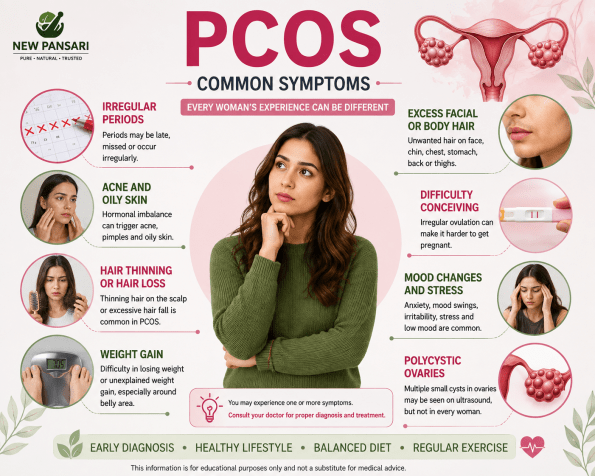
PCOS symptoms are not identical for every woman. Some women may experience several symptoms, while others may have only a few.
1. Irregular Periods
One of the most common signs of PCOS is an irregular menstrual cycle.
Periods may:
- Arrive late
- Be missed
- Occur unpredictably
- Become unusually heavy
- Occur less frequently than expected
Irregular periods can occur because PCOS may interfere with regular ovulation.
2. Excess Facial or Body Hair
Higher levels of androgen hormones may cause unwanted hair growth on areas such as:
- Face
- Chin
- Chest
- Abdomen
This is commonly referred to as hirsutism.
3. Acne and Oily Skin
Hormonal changes associated with PCOS may contribute to:
- Persistent acne
- Oily skin
- Breakouts around the face, jawline or other areas
4. Weight Gain or Difficulty Managing Weight
Some women with PCOS experience weight gain or find weight management difficult.
However, it is important to understand that PCOS can affect women of all body sizes. Being overweight is not required for a PCOS diagnosis.
5. Hair Thinning
Some women with PCOS may experience thinning scalp hair or female-pattern hair loss due to hormonal changes.
6. Difficulty Becoming Pregnant
PCOS can interfere with regular ovulation. As a result, some women may experience difficulty becoming pregnant.
However, having PCOS does not mean that pregnancy is impossible.
What Causes PCOS?
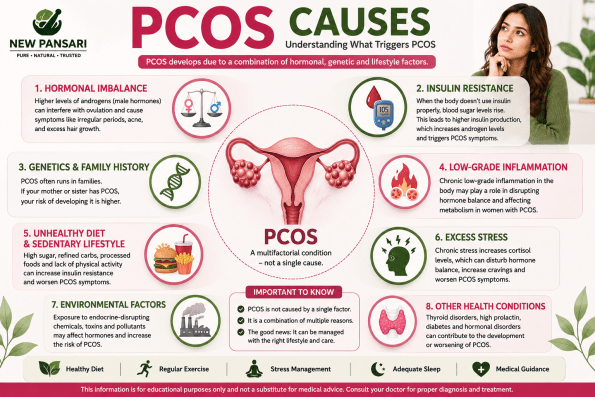
The exact cause of PCOS is not completely understood.
Researchers believe that several factors may contribute to its development, including:
- Genetics
- Hormonal imbalance
- Insulin resistance
- Metabolic factors
- Family history
PCOS can also occur alongside other metabolic health problems.
Insulin Resistance and PCOS
Insulin is a hormone that helps the body regulate blood glucose.
When the body becomes less responsive to insulin, the pancreas may produce more insulin to compensate.
Higher insulin levels may contribute to increased androgen production and can interfere with normal ovulation in some women with PCOS.
This is one reason why blood sugar regulation, physical activity and a balanced diet can be important parts of PCOS management.
Does PCOS Always Cause Ovarian Cysts?
No.
Despite the name “Polycystic Ovary Syndrome,” not every woman with PCOS has polycystic ovaries.
PCOS diagnosis is based on a combination of factors, including menstrual/ovulatory problems, signs of elevated androgen levels and, in appropriate cases, ovarian findings.
Therefore, seeing ovarian cysts on an ultrasound does not automatically mean that someone has PCOS.
How Is PCOS Diagnosed?
There is no single test that can diagnose every case of PCOS.
A healthcare professional may evaluate:
- Menstrual history
- Symptoms
- Physical examination
- Hormone levels
- Blood glucose or metabolic markers
- Cholesterol and lipid levels
- Ultrasound findings
- Other possible medical conditions
Other causes of irregular periods or elevated androgen symptoms may need to be ruled out before a diagnosis is made.
If you suspect PCOS, it is better to seek professional medical evaluation rather than relying on an online symptom checklist.
PCOS Treatment
There is currently no single permanent cure for PCOS, but the condition can often be effectively managed.
Treatment depends on a woman’s symptoms, age, health status and goals.
Treatment may focus on:
- Managing irregular periods
- Improving metabolic health
- Managing acne
- Reducing unwanted hair growth
- Supporting fertility
- Managing weight where appropriate
- Reducing long-term health risks
A doctor may recommend lifestyle changes, medication or fertility treatment depending on individual circumstances.
PCOS Diet: What Should You Eat?

There is no single diet that works for every woman with PCOS.
A sustainable eating pattern generally focuses on nutrient-dense foods and overall dietary quality rather than extreme restrictions.
Protein-Rich Foods
Good options may include:
- Eggs
- Fish
- Chicken
- Lentils
- Beans
- Greek yogurt
- Nuts and seeds
Protein can help make meals more filling and support overall nutritional needs.
High-Fiber Foods
Include foods such as:
- Vegetables
- Fruits
- Beans
- Lentils
- Whole grains
- Seeds
Fiber-rich foods can be useful as part of a balanced diet and may support metabolic health.
Healthy Fats
Examples include:
- Nuts
- Seeds
- Olive oil
- Avocado
- Fatty fish
Foods to Limit
Rather than completely eliminating foods, many women may benefit from reducing frequent consumption of:
- Sugary beverages
- Highly processed foods
- Excess refined carbohydrates
- High-sugar snacks
- Excessively calorie-dense foods
The best PCOS diet is one that is nutritionally balanced and realistic enough to follow consistently.
PCOS and Weight Loss

Weight management can be an important part of PCOS care for women who are overweight or have obesity.
Even relatively modest lifestyle improvements may provide health benefits.
However, PCOS should not be reduced to a weight-loss problem.
Women with a healthy body weight can also have PCOS, and lifestyle management can provide benefits even when significant weight loss does not occur.
The goal should be better overall health rather than focusing exclusively on the number on the scale.
Exercise for PCOS
Regular physical activity is one of the most useful lifestyle strategies for PCOS management.
Possible activities include:
- Brisk walking
- Cycling
- Swimming
- Strength training
- Yoga
- Dancing
- Home workouts
A combination of aerobic activity and resistance training can be useful for general fitness and metabolic health.
If you are currently inactive, start gradually and choose activities that you can maintain long term.
PCOS and Fertility
PCOS is one of the common causes of ovulatory infertility.
Irregular ovulation can make conception more difficult for some women.
However, PCOS does not mean infertility.
Many women with PCOS become pregnant naturally, while others may benefit from medical fertility treatment.
If you are trying to conceive and have irregular periods, discussing your situation with a gynecologist or fertility specialist can help identify the appropriate treatment options.
Natural Lifestyle Management for PCOS
Many people search online for “natural PCOS treatment.” It is important to distinguish between supportive lifestyle habits and claims of curing PCOS.
Healthy lifestyle habits that may support overall PCOS management include:
Maintain a Balanced Diet
Prioritize vegetables, fruits, whole grains, legumes, protein sources and healthy fats.
Stay Physically Active
Regular exercise can support cardiovascular fitness, metabolic health and weight management.
Get Adequate Sleep
Poor sleep can negatively affect energy, appetite and metabolic health.
Manage Stress
Long-term stress can affect overall wellbeing. Useful approaches may include:
- Walking
- Meditation
- Yoga
- Breathing exercises
- Relaxation techniques
- Spending time outdoors
Monitor Your Health
Regular medical checkups can help identify blood sugar, cholesterol, blood pressure and other health concerns.
Can Herbal Remedies Cure PCOS?
Herbal products and supplements are widely promoted online for PCOS.
However, no herbal remedy should be marketed as a guaranteed cure for PCOS.
Some supplements have been studied for specific PCOS-related outcomes, but evidence varies considerably between products, doses and individuals.
Women who are pregnant, trying to conceive, taking prescription medication or managing diabetes should speak with a qualified healthcare professional before using herbal supplements.
Natural does not automatically mean risk-free.
PCOS and Mental Health
PCOS can affect more than reproductive and metabolic health.
Some women with PCOS experience:
- Stress
- Anxiety
- Depression
- Body-image concerns
- Reduced quality of life
These issues should not be ignored.
If PCOS symptoms are affecting your mental wellbeing, discussing them with a healthcare professional can be an important part of comprehensive care.
Long-Term Health Risks Associated With PCOS
PCOS can be associated with several longer-term health concerns.
Depending on individual circumstances, women with PCOS may have increased risk of:
- Insulin resistance
- Type 2 diabetes
- High cholesterol
- Cardiovascular risk factors
- Sleep apnea
- Endometrial hyperplasia
- Endometrial cancer
- Anxiety and depression
This does not mean every woman with PCOS will develop these conditions.
Regular health monitoring and appropriate management can help identify and address risk factors early.
When Should You See a Doctor?
Consider speaking with a healthcare professional if you experience:
- Repeatedly irregular periods
- Frequently missed periods
- Persistent acne
- Excess facial or body hair
- Unexplained scalp hair thinning
- Difficulty becoming pregnant
- Significant or unexplained weight changes
- Concerns about blood sugar or metabolic health
Very long gaps between periods should not simply be ignored, particularly if they happen repeatedly.
Common PCOS Myths
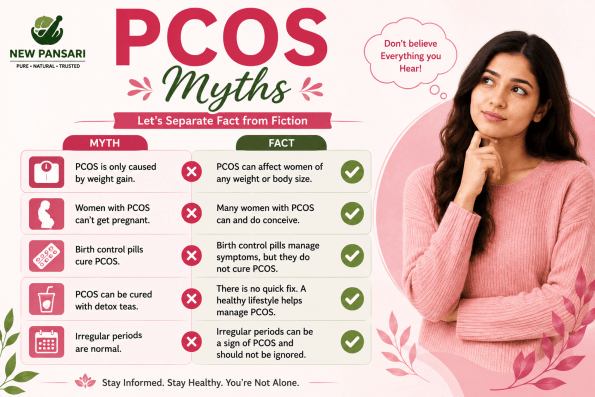
Myth 1: PCOS Only Affects Overweight Women
False.
PCOS can occur in women across different body sizes.
Myth 2: PCOS Means You Cannot Get Pregnant
False.
PCOS can interfere with ovulation, but many women with PCOS can become pregnant.
Myth 3: Every Woman With PCOS Has Ovarian Cysts
False.
Polycystic ovaries are not required in every case of PCOS.
Myth 4: PCOS Is Only a Period Problem
False.
PCOS can involve reproductive, metabolic, dermatological and psychological health.
Myth 5: One Herb Can Permanently Cure PCOS
There is not sufficient evidence to support this claim.
PCOS is generally managed through individualized lifestyle strategies, medical treatment and ongoing health monitoring.
Simple Daily Lifestyle Routine for PCOS
A practical daily routine could include:
Morning:
A balanced breakfast containing protein and fiber.
Daytime:
Regular movement and a balanced lunch with vegetables and a protein source.
Evening:
A walk, workout or strength-training session according to your fitness level.
Dinner:
A balanced meal with vegetables, protein and a suitable carbohydrate source.
Night:
Maintain a consistent sleep schedule and avoid excessive late-night snacking.
Consistency is more important than following a complicated routine.
Frequently Asked Questions About PCOS
What does PCOS stand for?
PCOS stands for Polycystic Ovary Syndrome, a hormonal and metabolic condition that can affect ovulation, menstrual cycles and other aspects of women’s health.
What are the most common symptoms of PCOS?
Common symptoms include irregular periods, acne, excess facial or body hair, scalp hair thinning and difficulty with ovulation or pregnancy.
Can PCOS go away permanently?
PCOS is generally considered a long-term condition. Symptoms can be managed effectively, but there is currently no definitive permanent cure.
Can PCOS patients get pregnant?
Yes. Many women with PCOS can become pregnant naturally or with appropriate medical fertility treatment.
What is the best diet for PCOS?
There is no single best diet for every woman. A balanced, sustainable eating pattern containing vegetables, fiber-rich foods, protein and healthy fats is generally a good foundation.
Is exercise good for PCOS?
Yes. Regular physical activity can support fitness, metabolic health and weight management and is an important part of PCOS lifestyle management.
Does PCOS always cause weight gain?
No. PCOS can affect women of different body sizes, including women who are not overweight.
Can herbal remedies treat PCOS?
Some herbs and supplements have been studied for particular symptoms or metabolic outcomes, but evidence is variable. Herbal products should not be considered a guaranteed cure or replacement for appropriate medical care.
Final Thoughts
PCOS (Polycystic Ovary Syndrome) is a common hormonal and metabolic condition that can affect menstrual cycles, ovulation, skin, hair, metabolism and fertility.
Although PCOS can be challenging, many symptoms and associated health risks can be managed with a combination of healthy lifestyle habits, appropriate medical care and regular monitoring.
A balanced diet, regular physical activity, adequate sleep and stress management can form an important foundation for PCOS management. Women experiencing persistent symptoms should seek professional medical advice for proper diagnosis and an individualized treatment plan.
Important: This article is for educational purposes only and is not a substitute for diagnosis or treatment from a qualified healthcare professional.