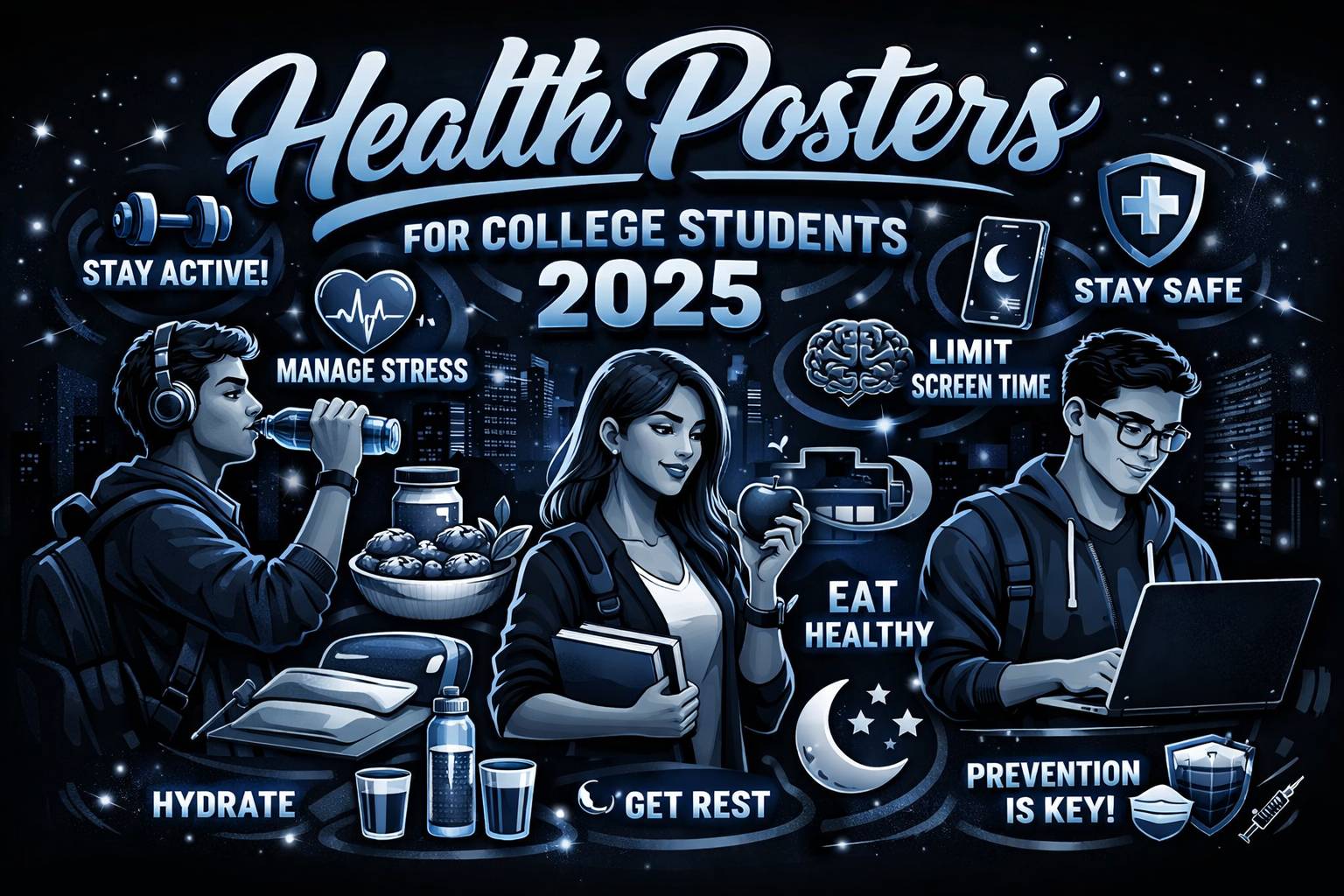
Health posters for college students in 2025 are no longer simple bulletin-board decorations with generic advice. They are strategic communication tools designed to address the evolving physical, mental, and social health challenges faced by students in modern academic environments. With increasing academic pressure, digital overload, mental health concerns, changing lifestyle habits, and global health awareness shaped by recent years, health posters play a crucial role in shaping safer, healthier campus communities.
In 2025, colleges are focusing more on prevention, inclusivity, and accessibility. Posters must be visually engaging, culturally sensitive, research-informed, and aligned with the digital habits of Gen Z and emerging Gen Alpha students. This in-depth guide explores the purpose, themes, design strategies, psychological principles, and future trends shaping health posters for college students in 2025.
Why Health Posters Still Matter in 2025
In an age dominated by smartphones and social media, some may question whether printed posters still have an impact. The answer is yes — and in some cases, more than ever.
College campuses are high-traffic environments. Students pass through dormitories, libraries, cafeterias, health centers, gyms, and lecture halls daily. Posters placed strategically in these spaces provide repeated exposure to important health messages. Repetition builds familiarity, and familiarity builds action.
Posters are also accessible. Not every student engages with email campaigns or university apps. Physical posters provide immediate, visible reminders without requiring a login or notification click.
In 2025, the most effective health campaigns combine physical posters with QR codes, augmented reality elements, and social media integration. The poster becomes the entry point to deeper engagement.
Key Health Topics for College Posters in 2025
College health priorities continue to evolve. The most relevant poster themes in 2025 reflect current student needs and emerging trends.
Mental Health Awareness
Mental health remains one of the most urgent concerns for college populations. Anxiety, depression, burnout, academic stress, and social isolation affect students across disciplines.
Posters in 2025 focus on:
- Normalizing therapy and counseling services
- Promoting crisis hotline numbers
- Encouraging peer support
- Addressing burnout and perfectionism
- Promoting emotional regulation techniques
Rather than using fear-based messaging, modern posters use supportive language such as “It’s okay to ask for help” or “Your mental health matters.” Visuals often feature diverse students to ensure representation.
Some campuses also include QR codes linking to mental health self-assessment tools or appointment booking systems.
Sleep Hygiene and Academic Performance
Sleep deprivation continues to be common among college students. Posters in dorms and libraries promote:
- The importance of 7–9 hours of sleep
- Reducing late-night screen use
- Managing caffeine intake
- Creating consistent sleep schedules
In 2025, sleep health is often connected to productivity and academic success, making the message more relatable: “Better Sleep = Better Grades.”
Nutrition and Smart Eating on Campus
With busy schedules and limited budgets, students often rely on fast food or skip meals. Health posters address:
- Balanced plate visuals
- Affordable healthy meal tips
- Hydration reminders
- Reducing energy drink overconsumption
- Mindful eating practices
Many campuses partner with dining services to promote healthy options available directly on-site.
Physical Activity and Movement
Sedentary behavior is increasing due to online learning components and digital lifestyles. Posters encourage:
- Walking between classes
- Campus fitness programs
- Stretch breaks during study sessions
- Recreational sports participation
Some posters include short “study break workout” suggestions or QR codes linking to 5-minute exercise videos.
Substance Use Education
Responsible education around alcohol, vaping, and drug use remains critical. Effective 2025 posters focus on:
- Informed decision-making
- Risk awareness
- Peer pressure resistance
- Support resources for addiction
The tone has shifted away from moralizing. Instead, posters present facts and encourage self-awareness.
Sexual Health and Consent
Sexual health education remains a key campus priority. Posters address:
- STI testing availability
- Condom distribution locations
- Birth control education
- Clear consent messaging
- Respectful relationship communication
In 2025, inclusivity is central. Posters reflect LGBTQ+ identities and diverse relationship dynamics.
Digital Wellness and Screen Time
A newer and growing category in 2025 is digital health. College students spend significant time online for both academic and social reasons.
Posters now address:
- Reducing doom-scrolling
- Managing social media comparison
- Taking tech breaks
- Protecting online privacy
- Preventing digital burnout
These posters resonate strongly with tech-savvy students.
Design Principles for Effective College Health Posters
A poster’s effectiveness depends on more than just information. Design psychology plays a major role in capturing attention and influencing behavior.
Clarity and Simplicity
Students are busy. Posters must communicate their message in seconds.
Effective posters use:
- Bold headlines
- Minimal text
- Clear calls to action
- Clean layouts
Cluttered posters are ignored.
Relatable Language
In 2025, conversational tone works better than clinical wording. Instead of saying “Utilize institutional mental health services,” posters say “Book a free counseling session today.”
The language should feel supportive, not authoritative.
Inclusive Visual Representation
Students come from diverse cultural, racial, gender, and socioeconomic backgrounds. Posters must reflect that diversity.
Representation builds trust. When students see themselves reflected in visuals, they are more likely to engage.
Behavioral Science Integration
Modern health posters often incorporate principles from behavioral science, such as:
- Social proof (“80% of students use campus health services”)
- Implementation cues (“Scan here to book your appointment”)
- Positive framing (“Feel energized this semester”)
These techniques subtly increase engagement.
QR Codes and Interactive Elements
In 2025, static posters are less common. QR codes allow instant connection to:
- Appointment scheduling
- Educational videos
- Campus resource maps
- Event registration pages
Some campuses experiment with augmented reality features where scanning a poster activates interactive content.
Strategic Placement of Health Posters on Campus
Where a poster is placed can be just as important as what it says.
High-impact locations include:
- Residence hall elevators
- Bathroom stalls
- Dining halls
- Library study areas
- Student unions
- Campus gyms
- Counseling centers
For example, hydration posters work best near cafeterias and gyms. Mental health resource posters are effective in quiet study areas and dormitories.
Repeated exposure in multiple locations reinforces the message.
Student Involvement in Poster Creation
In 2025, student co-creation is becoming standard practice. When students design or contribute to health campaigns, engagement increases significantly.
Colleges often:
- Host poster design competitions
- Involve student health ambassadors
- Conduct focus groups
- Gather peer feedback before printing
Student-generated messaging feels authentic and less institutional.
Sustainability and Eco-Friendly Printing
Environmental awareness is high among college students. Health posters in 2025 increasingly use:
- Recycled paper
- Eco-friendly inks
- Digital display boards instead of paper
- Reusable poster frames
Some universities rotate digital health messages on large campus screens to reduce paper waste.
Measuring the Impact of Health Posters
Modern campuses no longer rely on guesswork to measure success. Data tracking plays a larger role.
Methods include:
- QR code scan analytics
- Appointment booking increases
- Event attendance numbers
- Student surveys
- Health center utilization statistics
Data-driven evaluation ensures that posters are not just visible but effective.
Addressing Emerging Health Trends in 2025
The student health landscape continues to shift. Posters in 2025 reflect several emerging priorities.
Climate Anxiety
Many students express concern about climate change. Posters now promote:
- Eco-anxiety coping strategies
- Campus sustainability initiatives
- Outdoor wellness activities
Financial Stress and Health
Economic pressure affects student well-being. Health campaigns increasingly address:
- Budgeting workshops
- Food assistance programs
- Financial counseling resources
Recognizing financial stress as a health issue is a growing trend.
Neurodiversity Awareness
Colleges are placing more emphasis on supporting neurodivergent students. Posters may include:
- Study accommodations information
- Sensory-friendly spaces
- Inclusive learning resources
Public Health Preparedness
Post-pandemic awareness remains strong. Posters may still address:
- Vaccination clinics
- Hygiene reminders
- Illness reporting protocols
However, messaging is balanced to avoid fear-based communication.
The Psychology Behind Poster Effectiveness
Understanding how students process information improves campaign outcomes.
Students typically glance at a poster for less than five seconds. Therefore, the headline must capture attention immediately.
Color psychology also plays a role. Blue and green are often associated with calmness and trust, making them popular for mental health messaging. Bright colors like orange or yellow may be used for high-energy campaigns like fitness or hydration.
Images of peers performing healthy behaviors increase relatability and credibility.
Common Mistakes to Avoid
Even well-intentioned campaigns can fail if poorly executed. Common mistakes include:
- Overloading posters with text
- Using small, unreadable fonts
- Employing stigmatizing language
- Ignoring cultural sensitivity
- Failing to include clear action steps
Health messaging must empower, not shame.
Digital Health Posters and Smart Screens
Many campuses now use digital screens across buildings. These rotating displays allow:
- Frequent message updates
- Animated content
- Real-time announcements
- Seasonal health campaigns
Digital posters are especially useful for time-sensitive information like flu clinics or stress-relief events during exams.
Exam Season Health Campaigns
One of the most important periods for health messaging is exam season. Posters during this time focus on:
- Stress management techniques
- Time management tips
- Sleep reminders
- Campus quiet hours
- Free snack or wellness events
Short, actionable tips work best: “Take a 5-minute breathing break” or “Stretch before your next study session.”
Collaboration Between Departments
Successful health poster campaigns involve multiple campus stakeholders:
- Student health services
- Counseling centers
- Academic departments
- Student government
- Campus recreation
- Diversity and inclusion offices
Collaboration ensures consistent messaging and wider reach.
The Future of Health Posters Beyond 2025
Looking ahead, health posters will likely become even more interactive and personalized. Artificial intelligence may tailor digital messages based on time of day or campus activity trends.
For example:
- Stress-relief messaging during midterms
- Hydration reminders during heat waves
- Mental health check-ins during winter months
Integration with campus apps could allow students to save resources directly to their phones.
However, the core goal will remain unchanged: improving student well-being through accessible, engaging communication.
Conclusion
Health posters for college students in 2025 are strategic, data-informed, and student-centered communication tools. They address mental health, sleep, nutrition, substance use, sexual health, digital wellness, and emerging concerns like climate anxiety and financial stress.
Their effectiveness depends on thoughtful design, inclusive representation, behavioral science principles, and strategic placement. When combined with digital integration and student involvement, posters become powerful catalysts for positive health behavior.
As college campuses continue to evolve, health communication must evolve with them. In 2025 and beyond, the most successful health posters will not simply inform — they will connect, empower, and inspire action.